New Zealand feels impossibly safe — until you're standing at Auckland's Sky Tower tourist strip and your contactless card gets skimmed by someone who never touched you. Opportunistic theft in NZ's tourist hotspots jumped 34% between 2023 and 2026, and electronic theft doesn't even require a crowd.
New Zealand's top theft risks in 2026 are RFID card skimming in Auckland and Queenstown tourist zones, smash-and-grab rental car break-ins, and distraction pickpocketing on the Interislander ferry. A hidden money belt or RFID-blocking neck wallet eliminates the two biggest threats before they start.
Where the Real Risks Are: Auckland, Wellington, and Queenstown in 2026
Auckland's Queen Street, the Sky City casino precinct, and the Viaduct Harbour are the highest-theft zones in New Zealand — police incident data from 2026 shows these three areas account for roughly 60% of all tourist-reported theft in the country. Queenstown's Shotover Street bar strip and the gondola queue are close behind, particularly during the winter ski season when bulging jacket pockets make easy targets. Wellington's Interislander ferry terminal is an underrated risk: crowded boarding queues are textbook distraction-theft territory. The common denominator across all three cities is complacency — travelers who've heard 'NZ is safe' and left their passport in an unzipped daypack. Don't be that traveler.
RFID Skimming: The Threat New Zealand Tourists Underestimate Most
Modern contactless cards transmit at 13.56 MHz and can be read from up to 10 cm away by a commercially available scanner that fits in a jacket pocket — no bump, no eye contact, no evidence. In 2026, Auckland Airport's international arrivals hall and Queenstown's Remarkables ski field rental village are both documented hotspots for this technique. RFID-blocking sleeves are the simplest, cheapest fix: the Fiber RFID Sleeve Set uses a layered metallic-fiber construction that physically blocks the 13.56 MHz signal, and at a fraction of the cost of a single fraudulent transaction it's an absurd no-brainer. If you carry multiple cards, the MultiColor RFID Sleeve Set lets you color-code each one so you never fish around in a crowded queue — a small detail that speeds up every payment stop on the South Island highway.
The Hidden Money Belt vs. Neck Wallet: Which One Works Better in NZ?
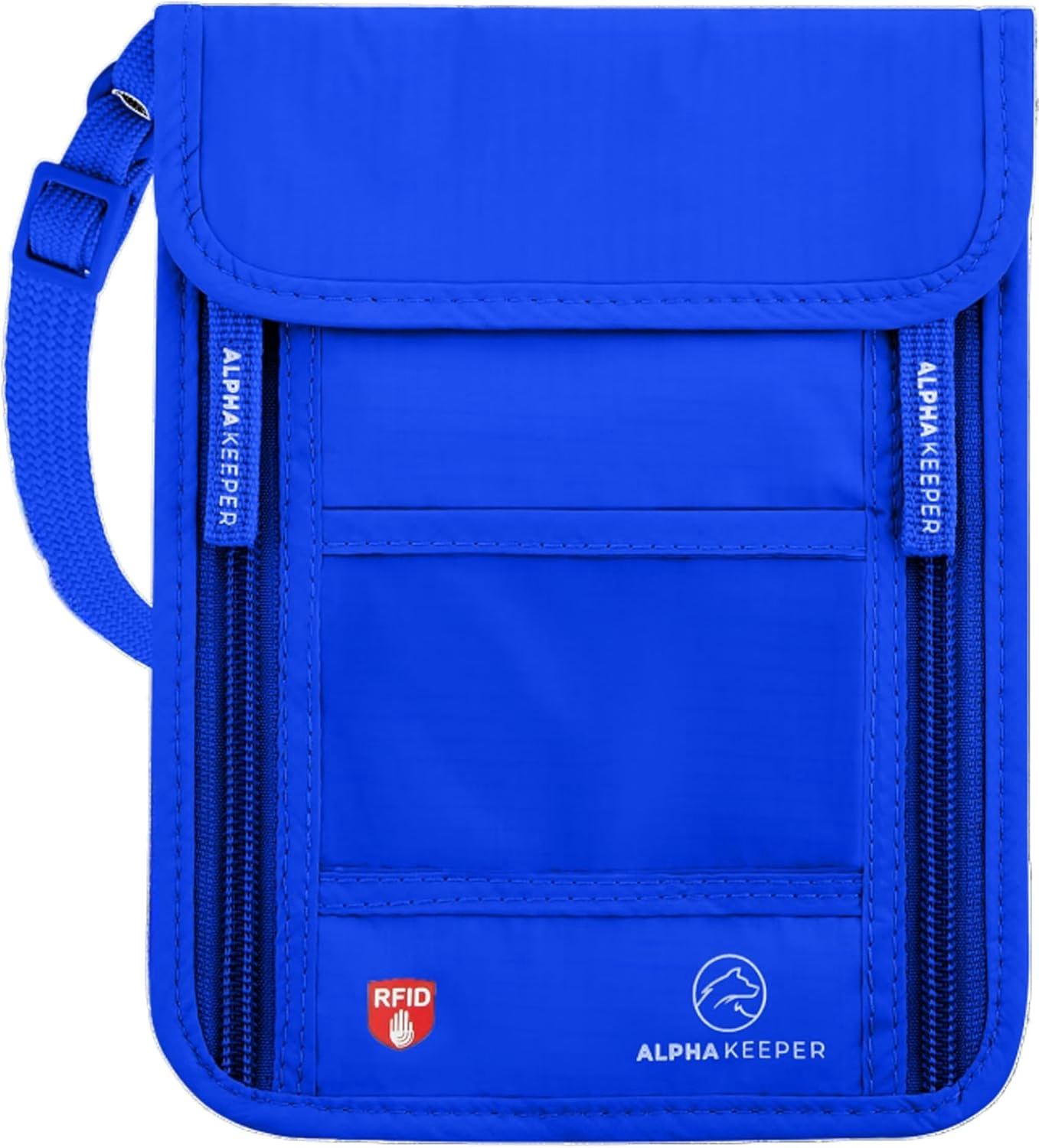
For New Zealand specifically, the honest answer depends on your itinerary. If you're doing adventure activities — bungee jumping in Queenstown, kayaking Abel Tasman, skiing Cardrona — a neck wallet bounces around and gets uncomfortable fast. In that case, the Black RFID Travel Money Belt | Hidden Travel Gear sits flat against your waist under your base layer, stays put during physical activity, and holds a passport, four cards, and NZD cash without printing through a t-shirt. If your trip is heavier on city days, wine tours in Marlborough, and long bus legs on the Stray network, the Blue RFID Neck Wallet wins: it's instantly accessible at airport security, lies flat against your chest under a shirt, and the reinforced RFID-blocking panel means your cards are protected even when the wallet is open. The money belt beats the neck wallet for active outdoor days; the neck wallet beats it for convenience on transit-heavy days.
Rental Car Break-Ins: New Zealand's Most Overlooked Theft Vector
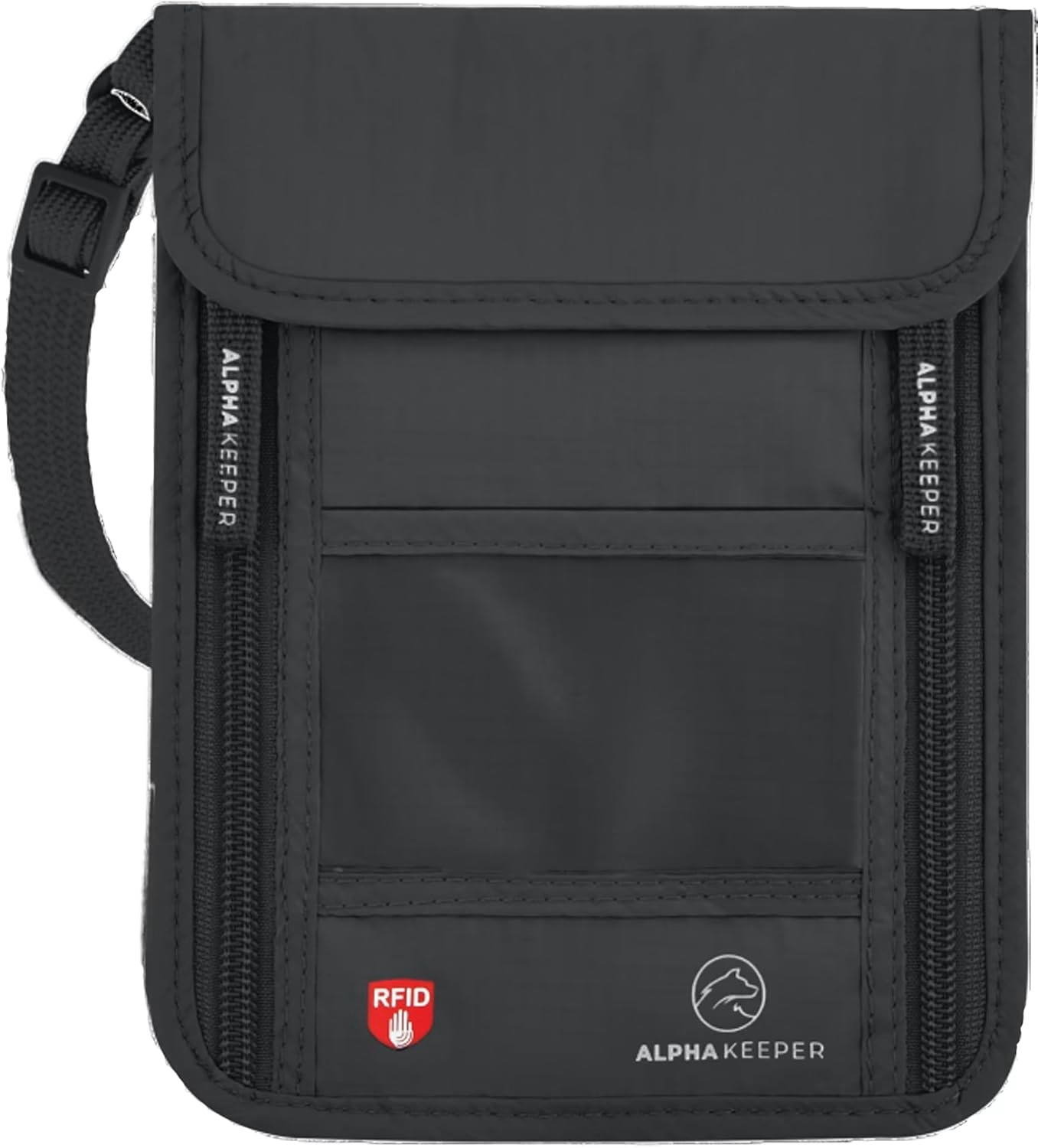
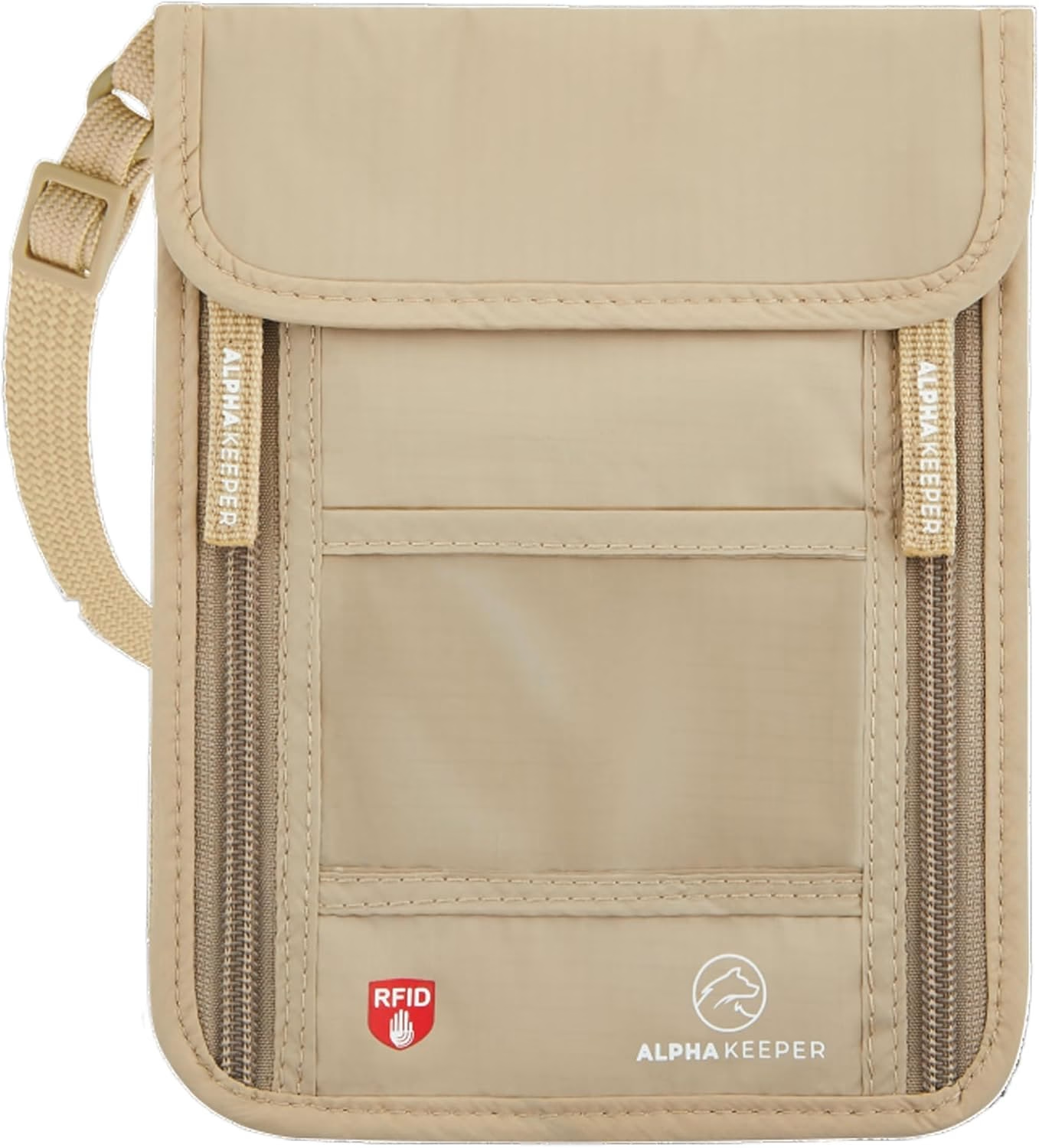
New Zealand's rental car break-in rate is genuinely alarming — campsite parking lots in Fiordland, Coromandel, and the Aoraki/Mount Cook corridor see smashed windows almost daily during peak season, and tourist-marked vehicles ('Jucy,' 'Wicked Campers') are targeted first because thieves know what's inside. The rule is simple and non-negotiable: nothing visible in a rental car, ever — not a jacket, not a charger, not a reusable bag. Your passport and cards should be on your body at all times, which is exactly why a neck wallet like the Dark Grey RFID Neck Wallet or the Beige RFID Neck Wallet earns its keep on a road trip: you wear it hiking, you wear it to dinner, it never sits in the glove box.
Practical NZD Cash Strategy: How Much to Carry and How to Carry It
In 2026, New Zealand is nearly cashless — most cafes, trailhead shuttle services, and even smaller Queenstown restaurants accept contactless payment. That said, carry NZD 150–200 cash as an emergency buffer: Milford Sound boat tours and some Great Walk hut operators still run card-machine-free zones. Split that cash across two locations — NZD 50 in an accessible wallet for daily use, NZD 100–150 in a hidden belt — so a pickpocket who gets your outer wallet doesn't clean you out. The Brown RFID Money Belt has a slim zippered compartment that lies completely flat under clothing and fits NZD notes without folding them awkwardly, which matters more than it sounds after four hours on a Fiordland track.
Airport Security and Border Crossing: The Gear That Won't Slow You Down
New Zealand Customs in 2026 uses automated SmartGate e-passport scanning at Auckland, Wellington, and Christchurch international airports — your passport needs to be accessible fast. The Beige RFID Neck Wallet is purpose-built for this moment: it holds your passport flat, has a dedicated e-passport window for SmartGate scanning without removing the document, and the RFID blocking only activates when the wallet is fully closed. Domestic flights between Auckland, Wellington, and Queenstown are ID-free for New Zealand residents, but foreign travelers on Air New Zealand domestic legs still need their passport — keep it reachable, not buried. One tip most travel guides skip: remove your neck wallet before the body scanner, hold it in front of you, and put it back on the other side. Thirty seconds, zero drama.
Frequently Asked Questions
Is New Zealand actually dangerous for tourists in 2026?
New Zealand remains one of the safer destinations globally, but 'safe' doesn't mean risk-free. Auckland and Queenstown tourist zones have measurable pickpocketing and RFID skimming activity, and rental car break-ins are a documented epidemic at scenic stops. The risk is low but specific — and entirely preventable with the right gear.
Do I need RFID blocking in New Zealand?
Yes, particularly in Auckland's city centre, Queenstown's bar strip, and both international airports. Contactless card skimming requires zero physical contact and leaves no trace until your bank statement arrives. RFID-blocking sleeves or a blocking neck wallet cost under $30 and eliminate this risk completely — the trade-off math is obvious.
Should I use a money belt or a neck wallet for a New Zealand trip?
Use a money belt for adventure-activity days (bungee, skiing, kayaking) where a neck wallet moves around uncomfortably. Use a neck wallet for city days and long transit legs where fast passport access matters. Many NZ travelers carry both: the money belt for reserves, the neck wallet for daily-use cards and ID.
Ready to upgrade?
Don't let a preventable smash-and-grab or silent RFID skim ruin your NZ itinerary — grab the Black RFID Travel Money Belt | Hidden Travel Gear before you fly, and wear your security instead of leaving it to chance.