Travelers successfully claim only about 40% of what they're owed after theft — not because insurers are heartless, but because most people show up to the claims process with a receipt-sized hole where their documentation should be. Here's how to not be that person.
To file a travel insurance theft claim in 2026, report the theft to local police within 24 hours and get a written report, notify your insurer immediately, photograph all missing or damaged items, gather purchase receipts or bank statements, and submit everything through your insurer's portal within the policy's claim window — typically 30–90 days.
Step 1 — Report the Theft Immediately (the 24-Hour Rule)
Most travel insurance policies require a police report filed within 24 hours of the theft — miss that window and your claim can be denied outright, regardless of how airtight everything else is. Go to the nearest police station, not just a tourist help desk, and ask explicitly for a stamped, signed incident report with a case number. In countries where police stations are remote or language is a barrier, ask your hotel concierge to help — they've done this before. Keep the original; your insurer will want a copy, but customs agents sometimes ask too. If you were digitally skimmed rather than physically pickpocketed, a police report still matters: file it, note 'electronic card fraud during travel,' and add a bank fraud confirmation letter.
Step 2 — Notify Your Insurer Before You Book Replacement Flights or Gear
Call or message your travel insurer the same day as the theft — not when you get home, not after you've replaced your camera. Why? Because many policies require 'pre-authorization' for emergency replacement purchases over a certain threshold (often $200–$500), and buying first then asking forgiveness rarely works. Most major insurers in 2026 now have 24/7 claims apps or WhatsApp lines; use them. When you notify, get a claim reference number in writing — screenshot the chat if it's digital. Ask specifically: what is my per-item limit, what is my aggregate limit, and is there a sub-limit for electronics or cash? Cash theft coverage is notoriously capped, often at just $200–$500, which is why keeping large sums in a visible wallet is a double mistake.
Step 3 — Document Every Stolen Item Like a Prosecutor Building a Case
For each stolen item, you need: a description (brand, model, color, approximate age), original purchase price, current replacement value, and proof of ownership. Bank statements, credit card records, email order confirmations, even old social media photos showing you with the item work as ownership proof. No receipt for that three-year-old Canon lens? Check your Amazon order history, eBay purchase records, or the manufacturer's warranty registration — insurers accept all of these in 2026. Photograph your remaining belongings immediately after the theft to establish what survived; adjusters sometimes ask 'why isn't X also listed as stolen?' Having a before/after inventory is powerful. If your passport was taken, note it separately — passport replacement costs (often $150–$200 expedited) may be covered under a different clause than personal property.
Step 4 — Assemble the Exact Claims Package (Checklist)
A complete 2026 travel insurance theft claim package contains: (1) Signed police report with case number, (2) Your insurance policy number and travel dates, (3) Itemized loss list with descriptions and values, (4) Proof of ownership documents for each item, (5) Bank or card statements showing unauthorized transactions if relevant, (6) Receipts for emergency replacement purchases, (7) Photos of the scene if you have them, (8) Hotel or airline records confirming your location at the time. Submit everything in one organized upload — PDFs labeled 'ClaimantName_ItemName_Doc' — because fragmented submissions get deprioritized and delayed. Insurers in 2026 use AI document triage; a clean, complete package routes to a human adjuster faster than a chaotic one.
Step 5 — Follow Up Strategically and Know Your Appeal Rights
After submission, set a calendar reminder for 10 business days: if you haven't received an acknowledgment, follow up in writing (email creates a paper trail). Standard processing runs 15–45 days, but complex cases can stretch to 90. If your claim is partially denied — common with electronics depreciation or cash sub-limits — request the adjuster's written rationale and compare it line-by-line against your policy wording. Most insurers have a formal appeals process, and roughly 30% of appealed partial denials result in improved payouts when travelers cite specific policy language. Small claims courts are a legitimate backstop for amounts under $5,000 if the insurer acts in bad faith; mention this professionally, not aggressively.
The Real Prevention Side: Why the Claims Process Should Be a Last Resort
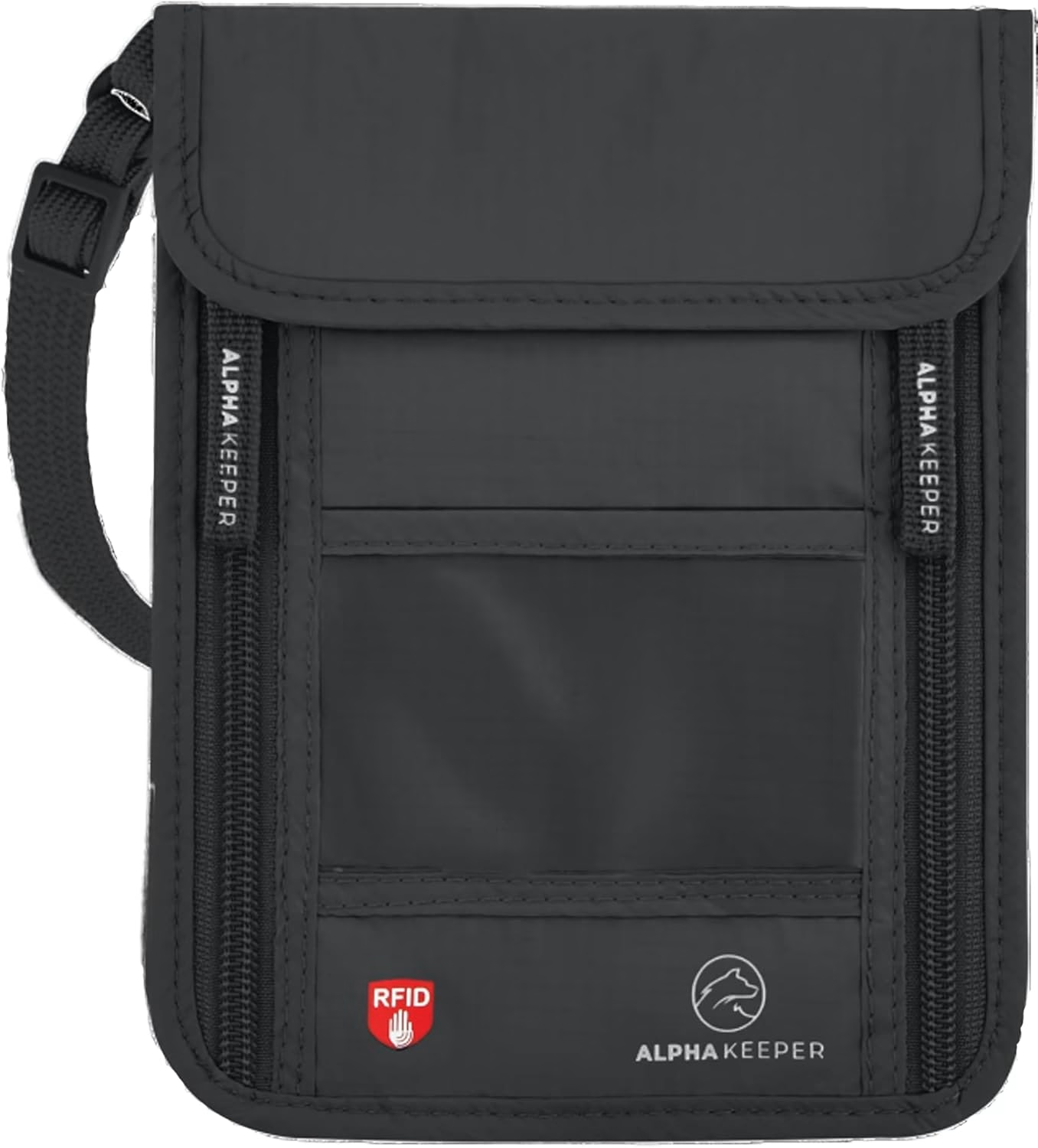
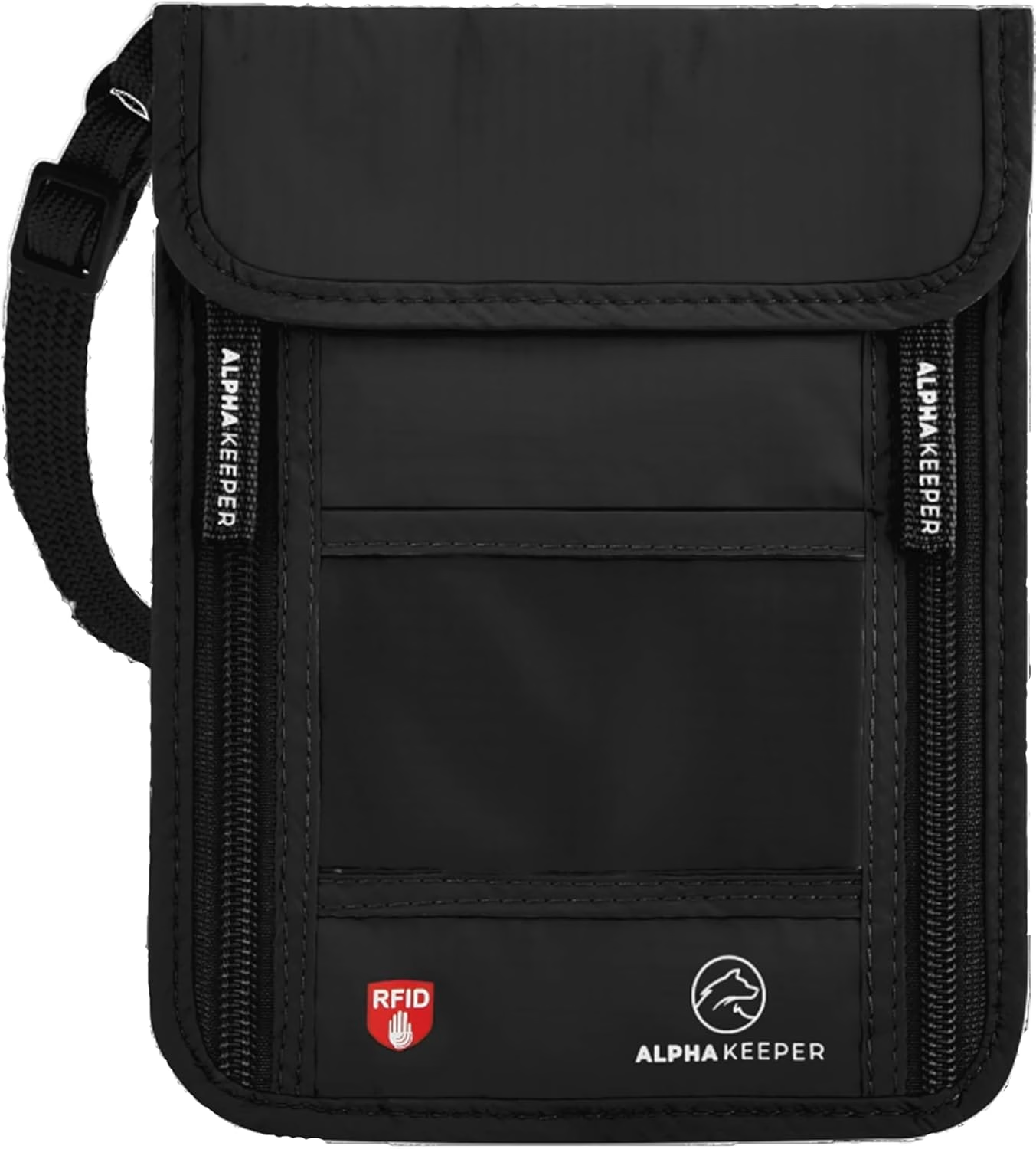
Filing a theft claim is stressful, time-consuming, and never fully compensates for the disruption — the best outcome is getting most of your money back weeks later while your trip is already over. The smarter play is making theft unlikely enough that you never need to test your insurer. Keeping your passport, backup card, and emergency cash in a worn-under-clothing neck wallet means a pickpocket on the Barcelona Metro gets your decoy wallet, not your identity. The [Dark Grey RFID Neck Wallet](https://www.alpha-keeper.com/product/grey-rfid-neck-wallet/) and [Blue RFID Money Belt](https://www.alpha-keeper.com/product/blue-rfid-money-belt/) are designed exactly for this split: one layer of decoy, one layer of genuine security against both physical theft and contactless RFID skimming. Pair either with a [Fiber RFID Sleeve Set](https://www.alpha-keeper.com/product/fiber-rfid-sleeve-set/) for your cards and you've removed the three most common theft vectors — without looking like a paranoid tourist.
Honest Comparison: Filing a Claim vs. Preventing the Theft
Insurance pays out an average of 60–80 cents on the dollar after depreciation and sub-limits, takes weeks, requires significant documentation effort, and can affect future premiums. Prevention — specifically a quality RFID-blocking money belt or neck wallet — costs $20–$40 once, requires zero paperwork, and works every trip for years. That's not a knock on travel insurance, which you absolutely need; it's a statement about the correct order of operations: prevent first, insure second, claim only if prevention fails.
Frequently Asked Questions
How long do I have to file a travel insurance theft claim?
Most policies require you to notify your insurer within 24–72 hours of the theft and submit a full claim within 30–90 days of the incident. Check your specific policy, because missing these windows — even by a day — is the most common reason claims are denied outright. Always file the police report and call your insurer the same day the theft occurs.
What if I don't have receipts for stolen items?
Receipts are ideal but not the only accepted proof in 2026. Insurers routinely accept credit card or bank statements showing the purchase, Amazon or eBay order history, warranty registration records, manufacturer serial number records, and even timestamped photos of you using the item on social media. Provide whatever combination you have and label each document clearly.
Does travel insurance cover RFID skimming or contactless card fraud?
Coverage for electronic skimming varies significantly by policy. Some insurers treat it as 'theft' and cover it under personal property or financial fraud riders; others exclude it as a banking matter. Read your policy's 'electronic theft' and 'fraudulent charges' clauses carefully before you travel. Regardless of coverage, using RFID-blocking card sleeves — like those in the Fiber RFID Sleeve Set — is the only guaranteed way to prevent contactless skimming in the first place.
Ready to upgrade?
Before your next trip, slip your passport and backup card into a [Black RFID Neck Wallet](https://www.alpha-keeper.com/product/black-rfid-neck-wallet/) — it sits flat under your shirt, blocks RFID scanners, and makes the whole claims process above something that only happens to other people.