Pickpockets lifted an estimated $10 billion from tourists last year — and the sneakiest ones never touched your pocket. A contactless card reader held close to your bag can drain a card in under two seconds, silently, in a crowd.
The best travel wallet for international trips in 2026 is an RFID-blocking option worn against your body — either a money belt under clothing or a neck wallet beneath your shirt. These physically separate your valuables from opportunists while blocking electronic skimming of contactless cards and e-passports, the two fastest-growing theft vectors abroad.
Why RFID Blocking Actually Matters in 2026 (It's Not Hype Anymore)
RFID and NFC skimming hardware is now cheap, pocket-sized, and widely available — criminal groups in tourist-heavy cities like Barcelona, Rome, and Bangkok have been documented using it in metro stations and markets. Modern passports (issued after 2007 in most countries) carry an NFC chip readable from up to 10 cm. Your tap-to-pay Visa or Mastercard broadcasts card data at 13.56 MHz, the same frequency a $30 skimmer picks up. A proper RFID-blocking wallet uses a woven metallic mesh — usually aluminum or carbon fiber — that forms a Faraday cage, reducing that signal to effectively zero. The key word is 'proper': foil-lined paper sleeves sold at airport kiosks fail within weeks; you need a structured, tested sleeve or wallet that keeps that cage intact.
The Rankings: Best RFID Travel Wallets for International Trips in 2026
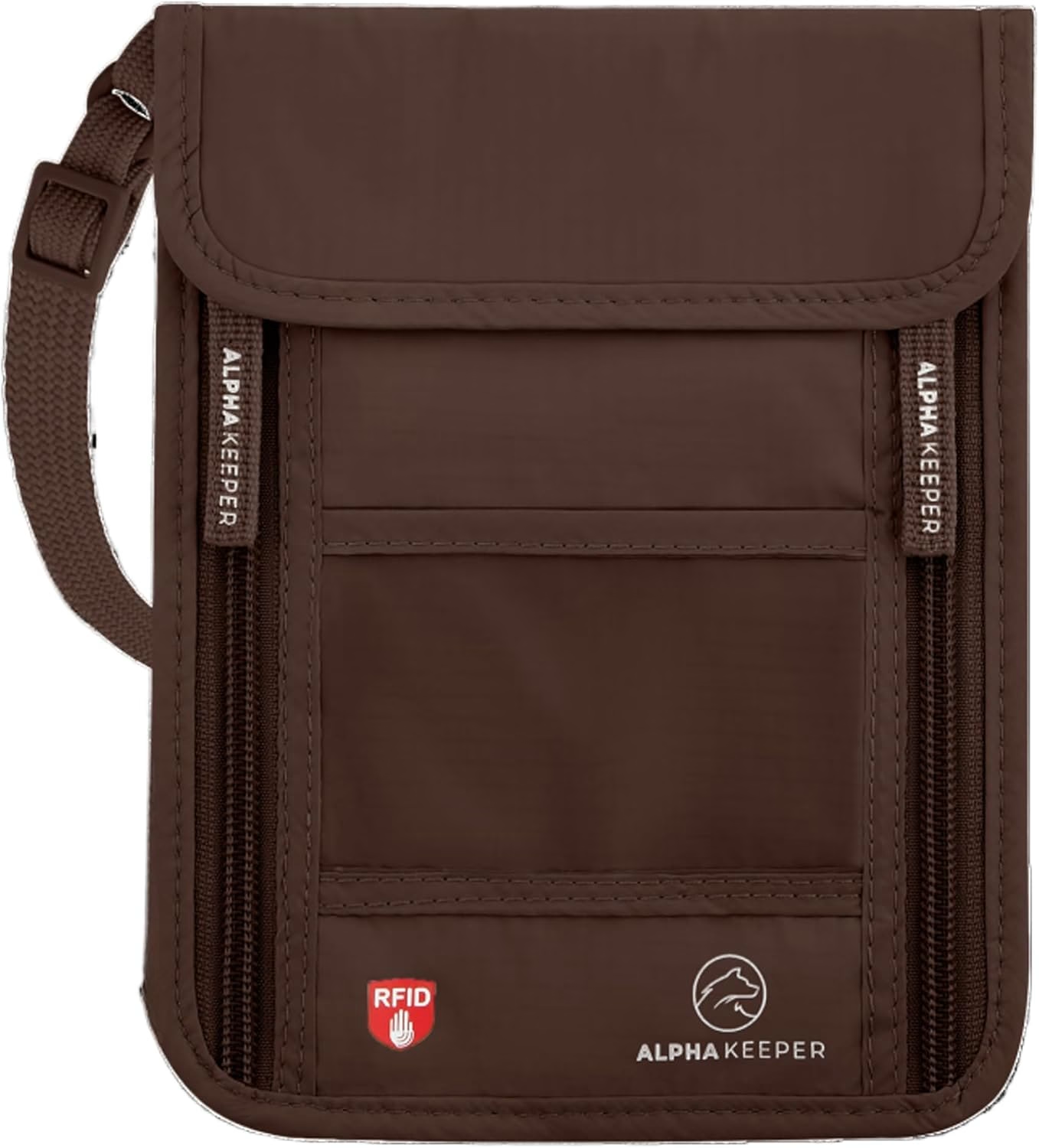
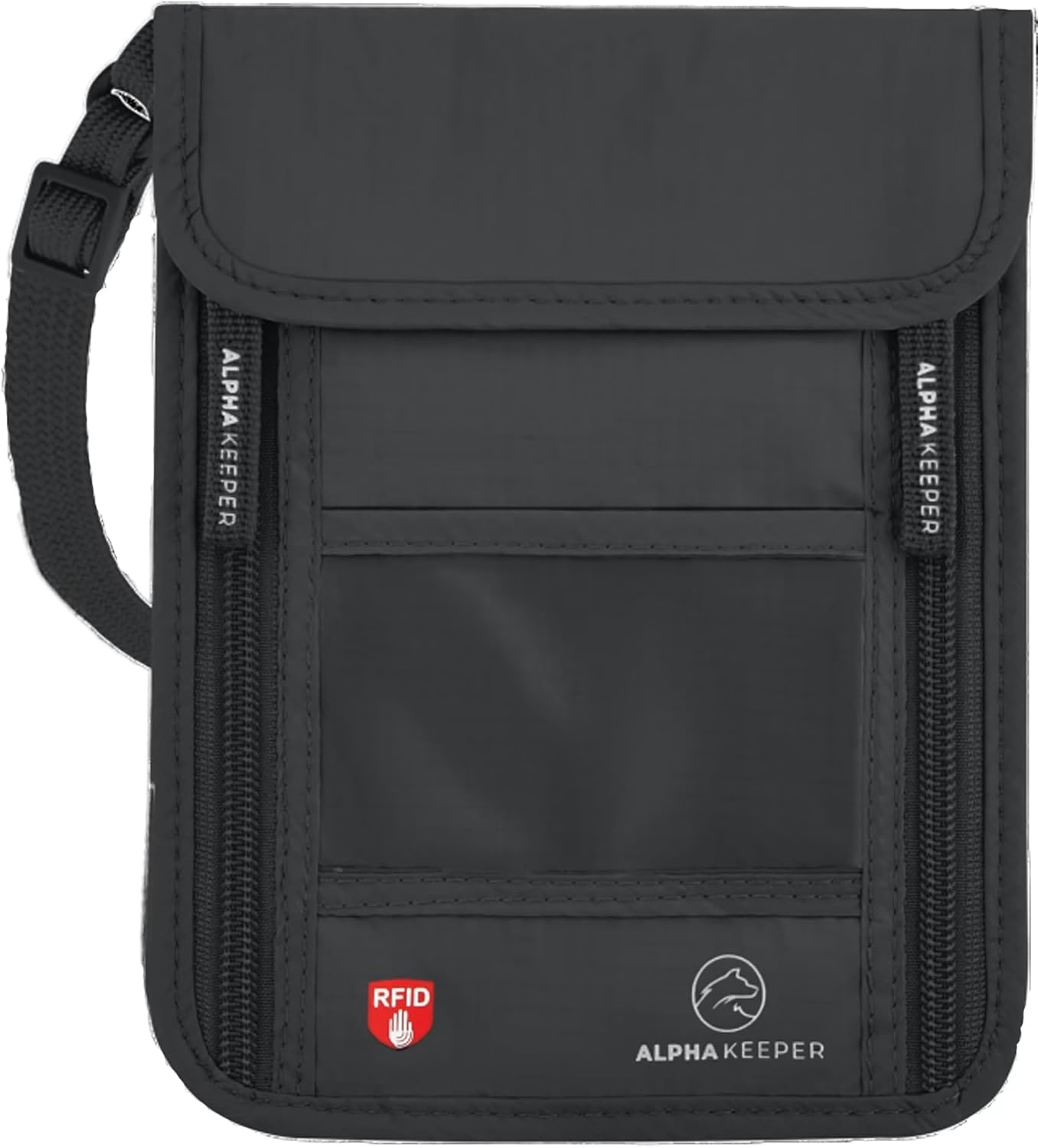
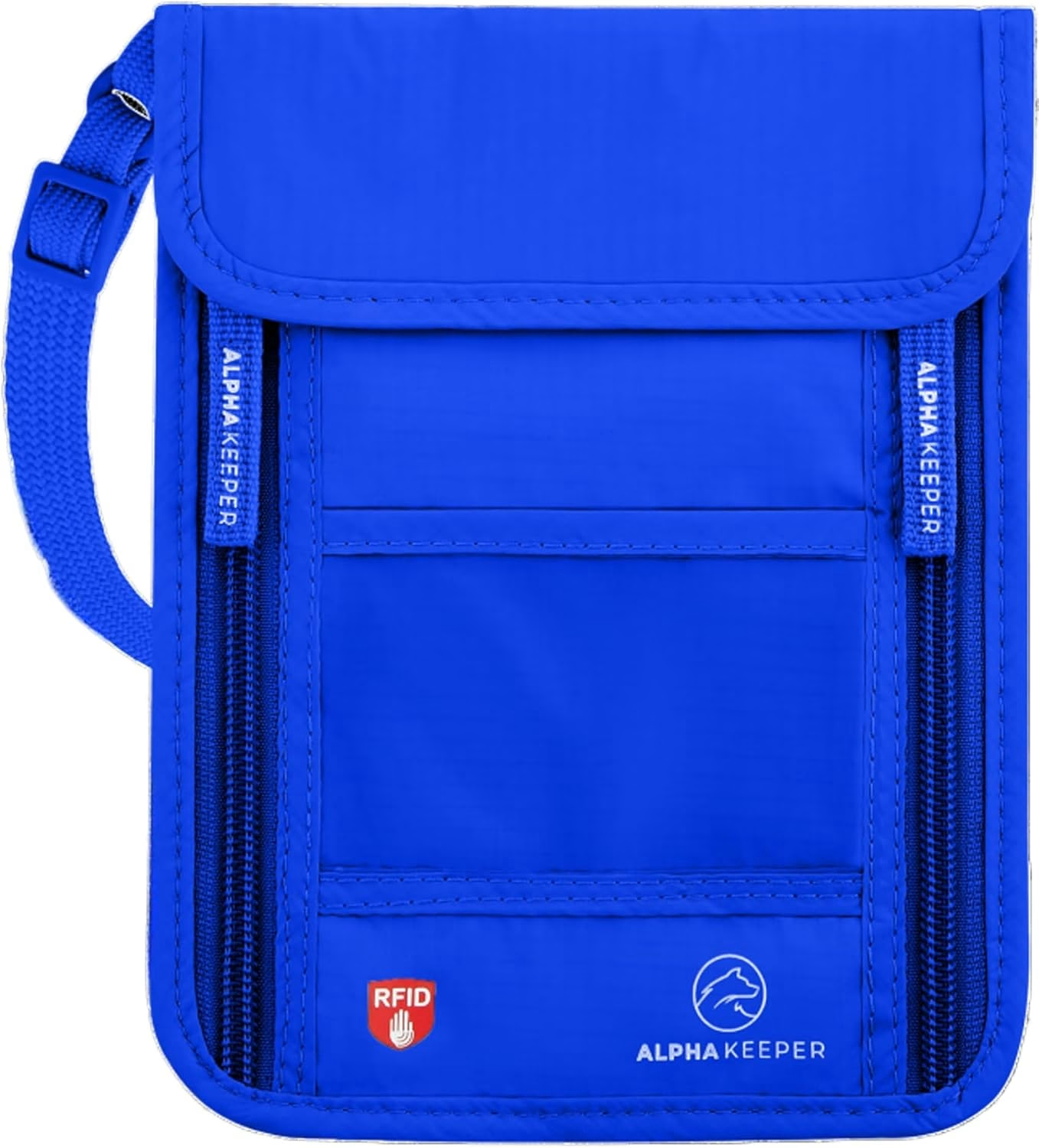
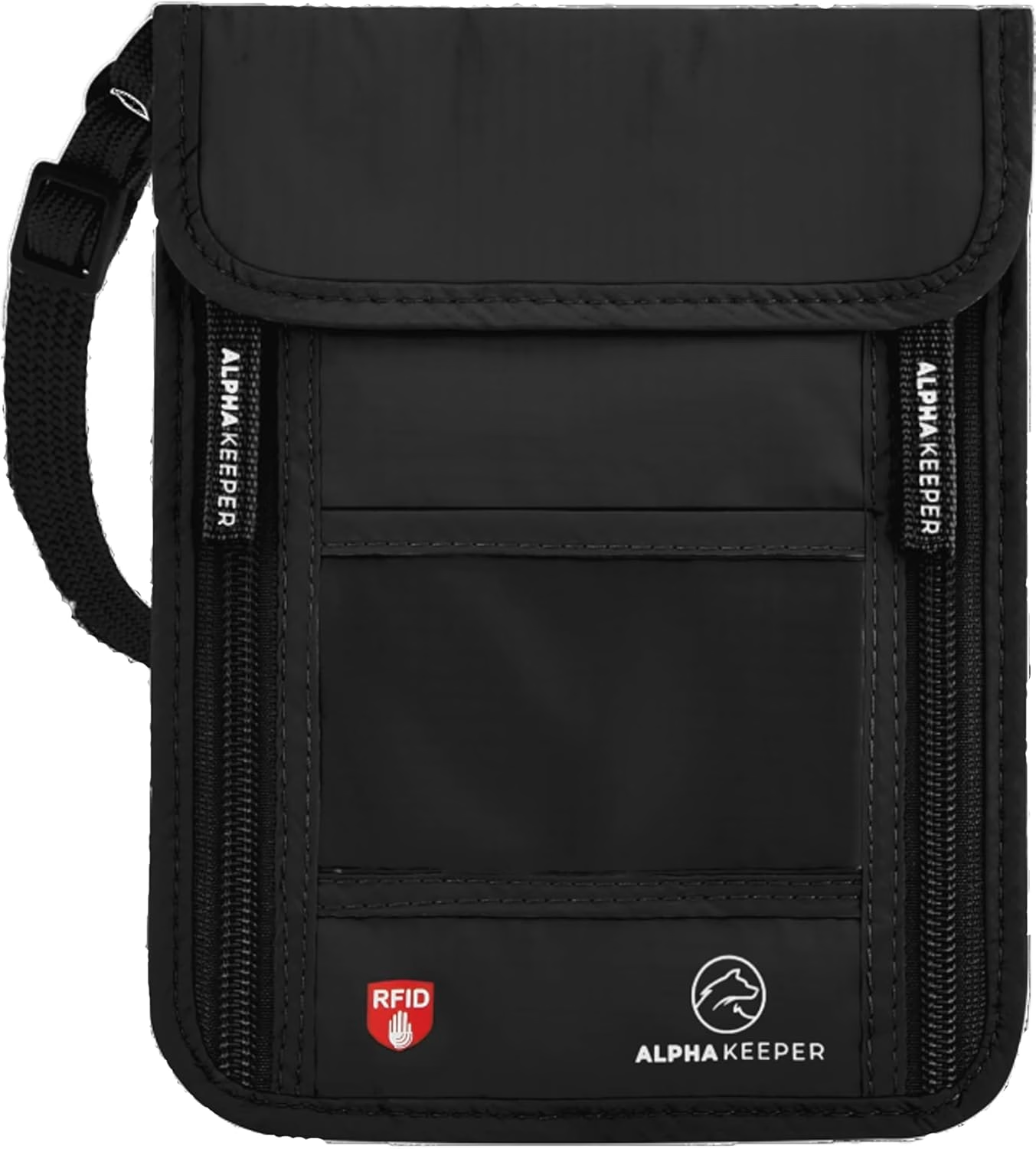
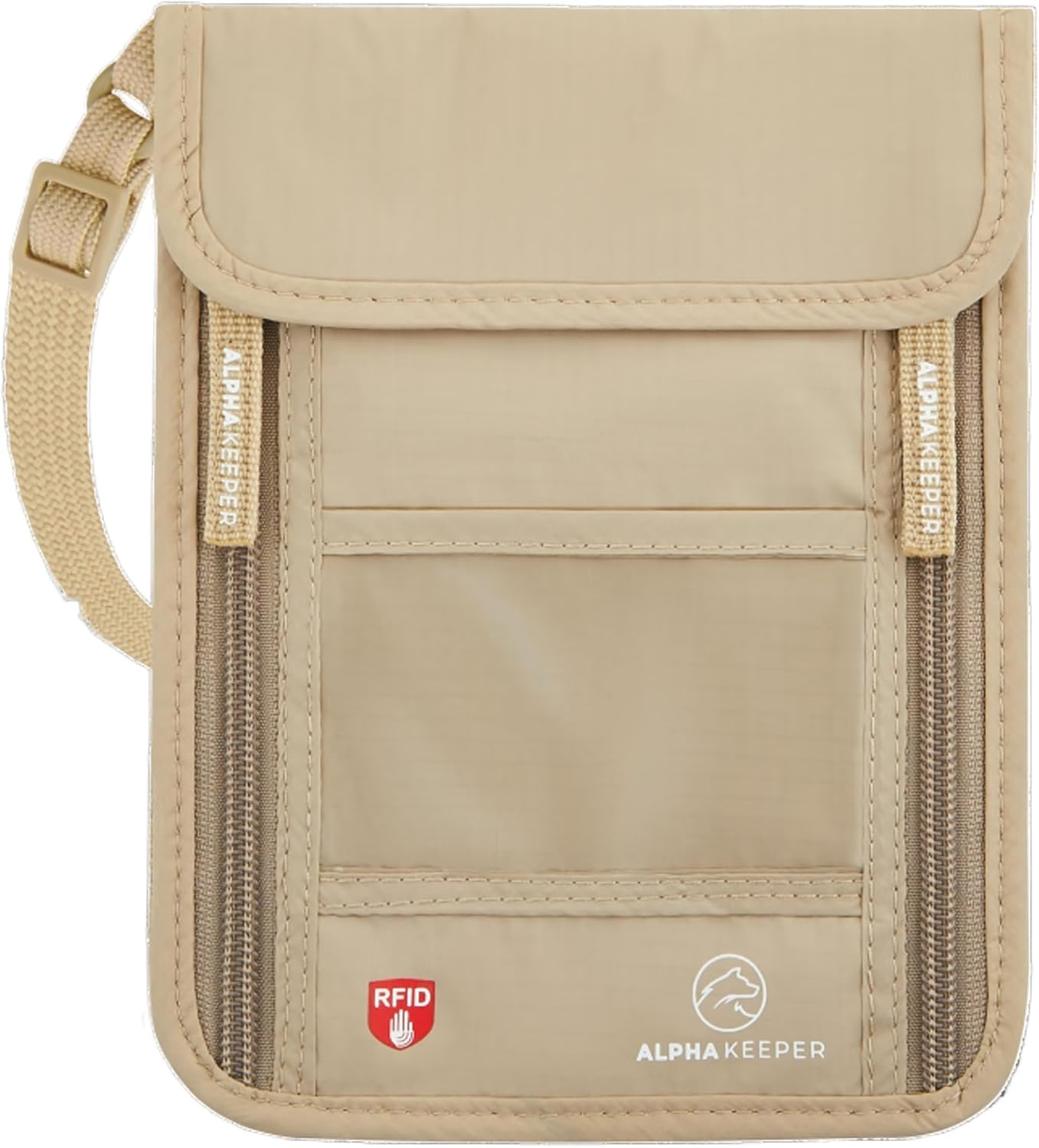
**#1 — Hidden Money Belt (Best Overall for High-Risk Destinations):** For trips to pickpocket hotspots — Lisbon, Paris, Prague, any major market in Southeast Asia — nothing beats a flat, under-clothing money belt. The Black RFID Travel Money Belt | Hidden Travel Gear from Alpha Keeper sits flush against your torso, holds a passport, folded bills, and up to four cards, and blocks both RFID and NFC. At roughly 7.5 × 4 inches flat, it disappears under a light travel shirt. The Azure RFID Money Belt and Blue RFID Money Belt offer the same architecture in colors that are easier to grab quickly in a hostel locker or hotel safe. **#2 — Neck Wallet (Best for Quick-Access Situations):** A neck wallet hangs under your shirt on an adjustable lanyard and is the go-to for travelers who need their passport out frequently — think multi-country rail trips or anywhere you're crossing borders every few days. The Black RFID Neck Wallet is the cleanest everyday option; the Beige RFID Neck Wallet adds a unique bonus: two luggage tags included, which is genuinely useful on a packed itinerary. The Dark Grey RFID Neck Wallet and Azure RFID Neck Wallet are worth considering if you run warm — lighter-weight fabric makes a real difference on 12-hour bus rides. **#3 — RFID Card Sleeves (Best Lightweight Backup):** Not every traveler wants something strapped to their body all day. RFID card sleeves slide into your existing wallet and block skimming at the card level. The Fiber RFID Sleeve Set uses a carbon-fiber-texture hard shell that survives serious daily abuse; the MultiColor RFID Sleeve Set is ideal for families or group travelers because color-coding cards across multiple people eliminates the fumbling-at-customs chaos. The Retro RFID Sleeve Set has a leather-grain finish that looks at home in a dress blazer, not just a hiking pack.
Honest Comparison: Money Belt vs. Neck Wallet vs. Card Sleeves
Each format solves a different problem, and pretending one wins every scenario would be dishonest. Money belts offer maximum concealment and the largest capacity — passport + cash + cards — but accessing them in public requires a bathroom stop or confident maneuvering under your shirt. Neck wallets are faster to access and fine for passports plus a card or two, but the lanyard can be visible above a low collar and can feel uncomfortable in extreme heat. Card sleeves are the lightest and least intrusive option — you don't change your packing at all — but they protect only the cards you sleeve, not loose cash, and won't save your wallet if it's physically stolen. The smart move for most international trips: use a money belt or neck wallet for your passport and emergency card, and keep a daily-spend card in a sleeved conventional wallet. Layered protection, not a single solution.
How to Choose: Match the Wallet to Your Trip Type
Backpacker on a 30-day multi-country trip? The Brown RFID Neck Wallet or Silver RFID Neck Wallet gives you document access at every border crossing without digging through your pack. Business traveler doing three cities in five days with a suit? The Retro RFID Sleeve Set or Black RFID Sleeve Set slots invisibly into a billfold and doesn't add bulk to a jacket pocket. Family vacation with kids in tow? The Colorful RFID Sleeve Set or MultiColor RFID Sleeve Set means each family member's cards are instantly distinguishable — a small thing that saves enormous friction at busy turnstiles. For anyone visiting known high-theft corridors (Eiffel Tower area, Barcelona's La Rambla, Rome's Colosseum queues), double up: Beige RFID Money Belt under clothing for passport and emergency funds, card sleeve in your accessible wallet for daily spend. That two-layer approach costs under $40 total and eliminates the two most common tourist-theft scenarios in one shot.
What to Look for in Any RFID Travel Wallet (The Non-Negotiables)
Material integrity is the first filter: the blocking layer must be a continuous metallic mesh or laminate, not a printed metallic pattern that has gaps at folds and corners. Check that the product explicitly states it blocks 13.56 MHz (the NFC/RFID frequency used by passports and contactless cards) — vague 'RFID protection' language without frequency specifics is a red flag. Durability matters because this wallet will be shoved into security bins, crammed into daypacks, and sweat through in humid climates; look for reinforced stitching and abrasion-resistant outer fabric. Capacity is often overlooked: make sure it realistically fits your passport flat without bending it, which can crack the NFC chip over time. Finally, consider retrieval speed — in a market or transit hub you need to access your passport in under 10 seconds without looking like you're fumbling, which is why zipper placement and the number of internal pockets genuinely matter, not just aesthetics.
Frequently Asked Questions
Does RFID blocking actually work, or is it marketing?
It works when the blocking layer forms a complete Faraday cage — typically aluminum or carbon fiber mesh covering all sides of the card pocket. Lab-tested products that explicitly block 13.56 MHz (the frequency of contactless credit cards and e-passports) provide real protection. Cheap foil-lined paper sleeves often have gaps at seams and fail quickly; structured metal-mesh wallets and sleeves like Alpha Keeper's do not.
Should I use a money belt or a neck wallet for international travel?
Use a money belt if you want maximum concealment and rarely need to access your passport in public — ideal for city tourism and high-pickpocket-risk areas. Use a neck wallet if you're crossing multiple borders frequently and need fast document access. Many experienced travelers use both: a money belt for the passport and backup cash, a neck wallet for the active travel day. Alpha Keeper's RFID Money Belt and RFID Neck Wallet lines cover both scenarios.
Can I go through airport security with an RFID-blocking wallet?
Yes, without issue. RFID-blocking materials are passive — they block incoming signals but emit nothing themselves. Airport scanners use X-ray imaging, not RFID readers, so your wallet goes through the bin exactly like any other wallet. You will still need to remove your passport from the wallet for document checks at border control, as the officer's reader needs direct proximity to the chip.
Ready to upgrade?
Ready to travel without the anxiety? Grab the Black RFID Travel Money Belt | Hidden Travel Gear — it sits invisible under your shirt, blocks every contactless threat, and holds everything that matters. Pair it with the Fiber RFID Sleeve Set for your daily-spend card and you've covered every angle for under $40.