Vienna consistently ranks among the top five European cities for pickpocketing — and the thieves targeting Stephansplatz and the U-Bahn don't look like thieves. They look like tourists, just like you.
Vienna is a low-violence city but a high-pickpocket city, especially on trams, the U3 metro line, and crowded tourist sites like the Naschmarkt and Prater. Travelers should carry minimal cash in accessible pockets, use RFID-blocking sleeves for contactless cards, and keep passports in a hidden money belt or neck wallet worn under clothing.
How Risky Is Vienna, Really? The Honest Safety Picture for 2026
Vienna is one of the world's safest cities for violent crime — the Economist Intelligence Unit's 2026 Safe Cities Index places it in the global top five for personal security. But 'safe' does not mean 'no theft.' Pickpocketing reports in the 1st and 2nd districts have climbed steadily as post-pandemic tourism surged back past 17 million annual visitors. Organized distraction teams work the U3 metro corridor, the Naschmarkt on Saturday mornings, and the queues outside the Kunsthistorisches Museum with remarkable efficiency. The risk is real, it's specific, and it's completely avoidable with the right habits and the right gear.
The Exact Vienna Hotspots Where Valuables Go Missing
The U3 line between Stephansplatz and Westbahnhof is ground zero — crowded carriages, frequent stops, and distracted tourists staring at Google Maps make it a pickpocket's ideal environment. The Naschmarkt on weekends draws massive crowds where a jostled shoulder disguises a lifted wallet in under two seconds. Prater's Würstelstand strip and the Ringstrasse tram routes (D and 1) are also well-documented hotspot corridors in 2026 Viennese police advisories. Notably, hotel lobbies in the 1st district see a surprising volume of opportunistic bag theft — your daypack on the floor while you check in is a target. Knowing the geography of risk is half the battle.
RFID Theft in Vienna: Real Threat or Overhyped Fear?
Austria's contactless payment infrastructure is among the most advanced in the EU — almost every café, tram ticket machine, and museum entrance accepts tap-to-pay, which means your cards are perpetually 'on.' RFID skimming devices can read a standard contactless card from up to 10 cm away in a crowd, and Vienna's tightly packed metro carriages close that gap to centimeters. The threat is not science fiction: Austrian consumer protection group AK Wien documented skimming incidents in 2026 transit environments. A simple fix is slipping your cards into an RFID-blocking sleeve — the Black RFID Sleeve Set from Alpha Keeper uses a dual-layer metallic shielding that blocks 13.56 MHz HF signals entirely, the frequency all modern contactless bank cards operate on. It costs less than one Viennese Melange and adds zero bulk to your wallet.
The Best Way to Carry Your Passport in Vienna
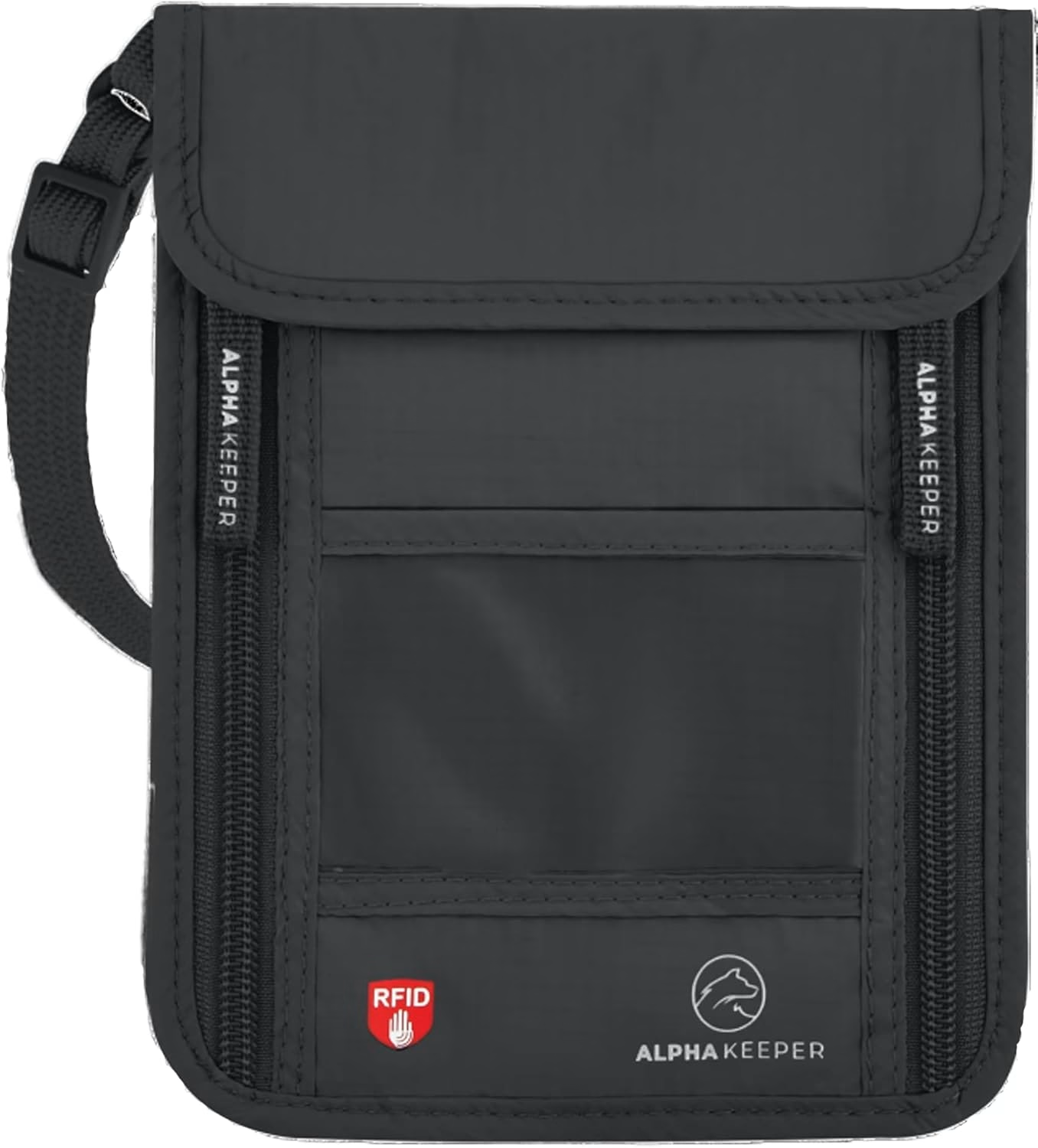
Austrian law requires travelers to carry ID at all times, but you absolutely do not need your actual passport on you every hour — a phone photo of your passport bio page satisfies most routine checks, and your original should stay secured. For day trips where you genuinely need the passport (border excursions to Bratislava are a popular 90-minute train ride away), a hidden neck wallet worn under your shirt is the gold standard. The Dark Grey RFID Neck Wallet sits flat against the sternum, holds a full passport plus two cards and folded euros, and its ripstop nylon construction is both water-resistant and lightweight enough to forget you're wearing it through a four-hour Schönbrunn Palace visit. Crucially, the zipper faces inward — there is nothing for a pickpocket to access from outside your clothing.
Money Belt vs. Neck Wallet for Vienna: An Honest Comparison
Both options beat a front-pocket wallet, but they suit different travel styles. A money belt — like the Black RFID Travel Money Belt | Hidden Travel Gear — wraps around your waist under your shirt and is essentially invisible under a light jacket or tucked blouse; it's ideal for longer walking days, museum marathons, or anyone who finds neck straps uncomfortable over hours. A neck wallet is faster to access discreetly (one shirt lift versus unbuckling a waistband) and works brilliantly for quick cash grabs at a Würstelstand. The honest trade-off: money belts hold more and stay more stable during active days; neck wallets offer quicker single-item retrieval. For Vienna's mix of long museum queues and lively Naschmarkt crowds, having one of each — belt for the passport and backup card, neck wallet for the day's spending cash — is the smartest split.
A Vienna Packing List for Valuables Security (Specific and Opinionated)
Here is exactly what a prepared traveler carries into Vienna in 2026: RFID-blocking card sleeves for every contactless card (the Colorful RFID Sleeve Set is a smart choice — the color-coding means you never dig for the right card), a hidden money belt for your passport and emergency €200, a neck wallet for the day's €50–80 spending cash and one debit card, and a sacrificial 'mugger wallet' in your jacket pocket holding a defunct loyalty card, a small amount of local cash, and nothing else. Leave the passport in your hotel safe on any day you're not crossing a border. This setup costs under €40 total, weighs under 80 grams, and eliminates the single biggest stressor of European travel.
Vienna-Specific Habits That Make Gear Work Even Better
Gear is only as good as the habits around it. On the U-Bahn, stand with your back to a wall or door rather than in the middle of the carriage — it eliminates the approach angle pickpockets rely on. At restaurant terraces along the Graben (notoriously targeted), loop your bag strap around a chair leg, never hang it on the back of your chair. Use Vienna City Card tap-to-pay for transit so your contactless card never leaves your RFID sleeve in a rush. When someone approaches you on Kärntner Strasse with a clipboard or a 'survey,' it is almost always a distraction technique — the polite Viennese word for 'no thank you' is 'Nein, danke,' said while keeping both hands on your bag. Vienna rewards confident, aware tourists who look like they belong.
Frequently Asked Questions
Is Vienna safe for tourists in 2026?
Yes — Vienna is one of Europe's safest capitals for violent crime and consistently ranks in the global top five for personal security. The primary risk for tourists is pickpocketing, particularly on the U3 metro line, at the Naschmarkt, and around Stephansplatz. Using a hidden money belt or neck wallet and RFID-blocking card sleeves reduces that risk to near zero.
Do I need RFID protection in Vienna?
Austria has one of the EU's most advanced contactless payment networks, and Vienna's crowded metro and tourist sites create conditions where RFID skimming is a documented risk. Slipping your contactless cards into RFID-blocking sleeves — like the Black RFID Sleeve Set or Colorful RFID Sleeve Set — is a cheap, weightless precaution that permanently blocks 13.56 MHz skimming attempts.
Should I carry my passport with me in Vienna?
Austrian law requires travelers to carry identity documents, but a smartphone photo of your passport bio page satisfies most routine checks. Keep your physical passport in your hotel safe on normal sightseeing days, and use a hidden neck wallet — such as the Dark Grey RFID Neck Wallet — only when you genuinely need the document, such as on day trips to Bratislava or Salzburg.
Ready to upgrade?
Don't hand Vienna's pickpockets an easy win — grab the Dark Grey RFID Neck Wallet and pair it with the Colorful RFID Sleeve Set before your trip, and you'll explore the Ringstrasse, the Naschmarkt, and the U-Bahn with zero anxiety about your passport, cards, or cash.