A 2026 survey of adventure travelers found that 1 in 3 reported a theft or attempted theft during an international trek — and the majority were hit while wearing an external belt bag or loose hip pack. The thing about pickpockets is they know exactly where tourists stash their stuff.
The best money belt for hiking in 2026 is slim, moisture-wicking, RFID-blocking, and worn flat against skin under a base layer — not clipped outside a pack. Look for nylon or ripstop fabric under 5mm thin, a silicone-grip waistband, and card slots rated to block 13.56 MHz NFC signals.
What Makes a Money Belt Actually Trail-Ready (Most Fail This Test)
A hiking money belt has to survive three enemies a city wallet never faces: sustained sweat, repeated crouching and scrambling, and tight base layers that can't afford a bulge. That means fabric matters enormously — cheap polyester turns into a damp, chafing mess after 4 hours on a switchback trail, while high-denier ripstop nylon or woven fiber composites stay flat and dry against skin. Thickness is the other killer spec: anything over 6mm creates a visible ridge under a merino base layer, which defeats the whole point of hiding your valuables. The Alpha Keeper Black RFID Travel Money Belt | Hidden Travel Gear uses a flat-profile design engineered specifically to lie flush under clothing, with RFID blocking rated to 13.56 MHz — the frequency every contactless card and passport chip broadcasts on. If your belt can't clear those two bars — moisture management and sub-6mm profile — it's a city accessory, not a trail accessory.
Neck Wallet vs. Waist Belt for Hiking: Pick the Right Tool for the Terrain
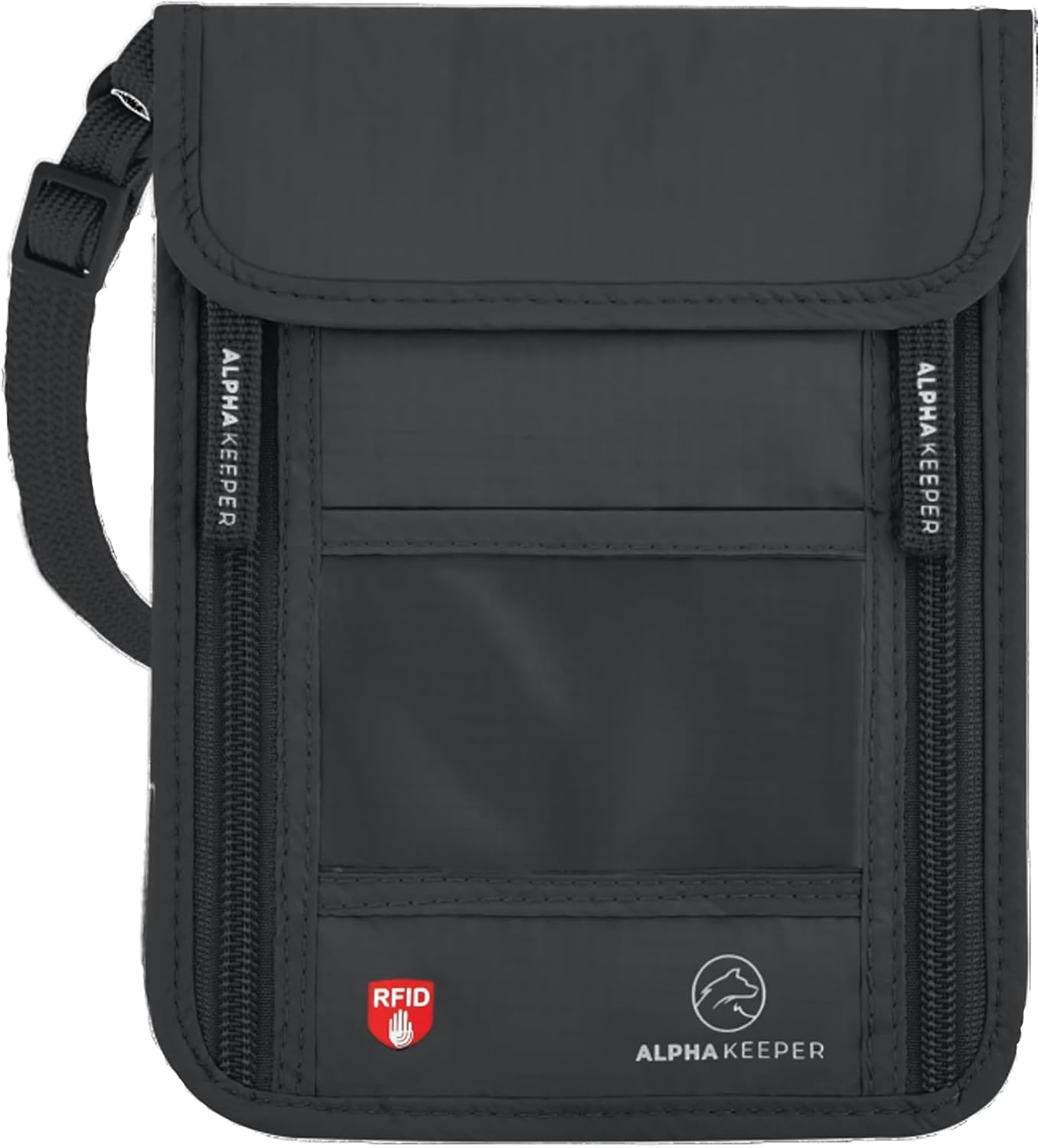
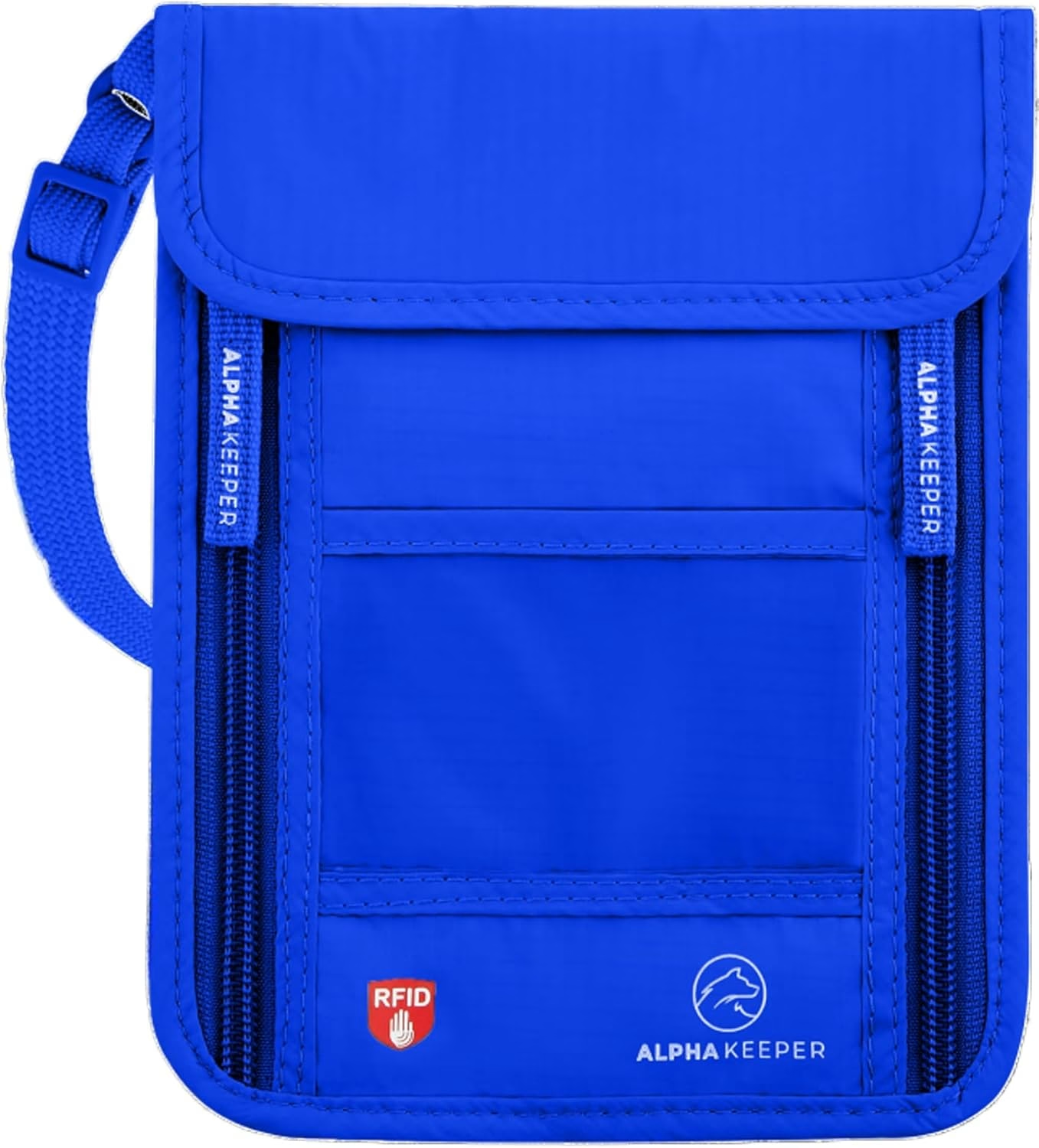
On day hikes and multi-day treks where you're constantly bending, scrambling over boulders, or wearing a hipbelt from your pack, a waist money belt can ride up or get compressed uncomfortably — that's when a neck wallet wins. Neck wallets hang flat against the sternum, naturally tucked under a shirt, and don't shift even when you're crawling through a slot canyon or rappelling. The Dark Grey RFID Neck Wallet and Blue RFID Neck Wallet from Alpha Keeper are slim enough to wear under a mid-layer without printing through the fabric, and their adjustable breakaway cords mean no awkward bulk at the back of the neck. For multi-week adventure travel where you're moving between cities, overnight buses, and trailheads, the smarter play is to use both: a neck wallet for documents and emergency cash, and a waist belt for daily-spend cards — layered security beats a single point of failure every time.
RFID Blocking on the Trail: Still Relevant in 2026?
Yes — and increasingly so. Adventure travel hubs like Cusco, Chiang Mai, Kathmandu, and Medellín have all seen documented rises in electronic pickpocketing as NFC-enabled card skimmers get smaller and cheaper to build. A criminal with a concealed reader can pull card data from up to 10 cm away in a crowded trailhead market or hostel common room — no physical contact required. Every Alpha Keeper money belt and neck wallet uses certified RFID-blocking material that attenuates signals at both 13.56 MHz (contactless cards, passports) and 125 kHz (older access cards), so even if someone bumps you in a gear shop in Queenstown, your data stays yours. Pairing a waist belt like the Azure RFID Money Belt with individual card sleeves from the Fiber RFID Sleeve Set means you get belt-level blocking plus an extra shielding layer around each card — useful when you're pulling cards in and out multiple times a day at gear checkpoints or border crossings.
Honest Comparison: Alpha Keeper vs. Generic Hiking Money Belt
Generic nylon money belts sold on marketplaces often advertise RFID blocking without publishing the actual attenuation spec or frequency range — that's a red flag, because a belt that only blocks 125 kHz does nothing against modern contactless cards running at 13.56 MHz. Alpha Keeper's belts publish dual-frequency blocking and use a ripstop or woven fiber shell that resists snag and abrasion on rocky terrain — relevant if you're scrambling and your shirt rides up. The price delta is real: Alpha Keeper sits in the $20–$35 range versus $8–$12 for unbranded options, but consider that a stolen credit card or cloned passport on day two of a three-week trek costs infinitely more than the price difference. Build quality under sustained sweat and UV is the other gap — cheaper belts delaminate at the RFID blocking layer after a few weeks of hard use, which you won't discover until it's too late.
Best Alpha Keeper Picks by Adventure Travel Scenario
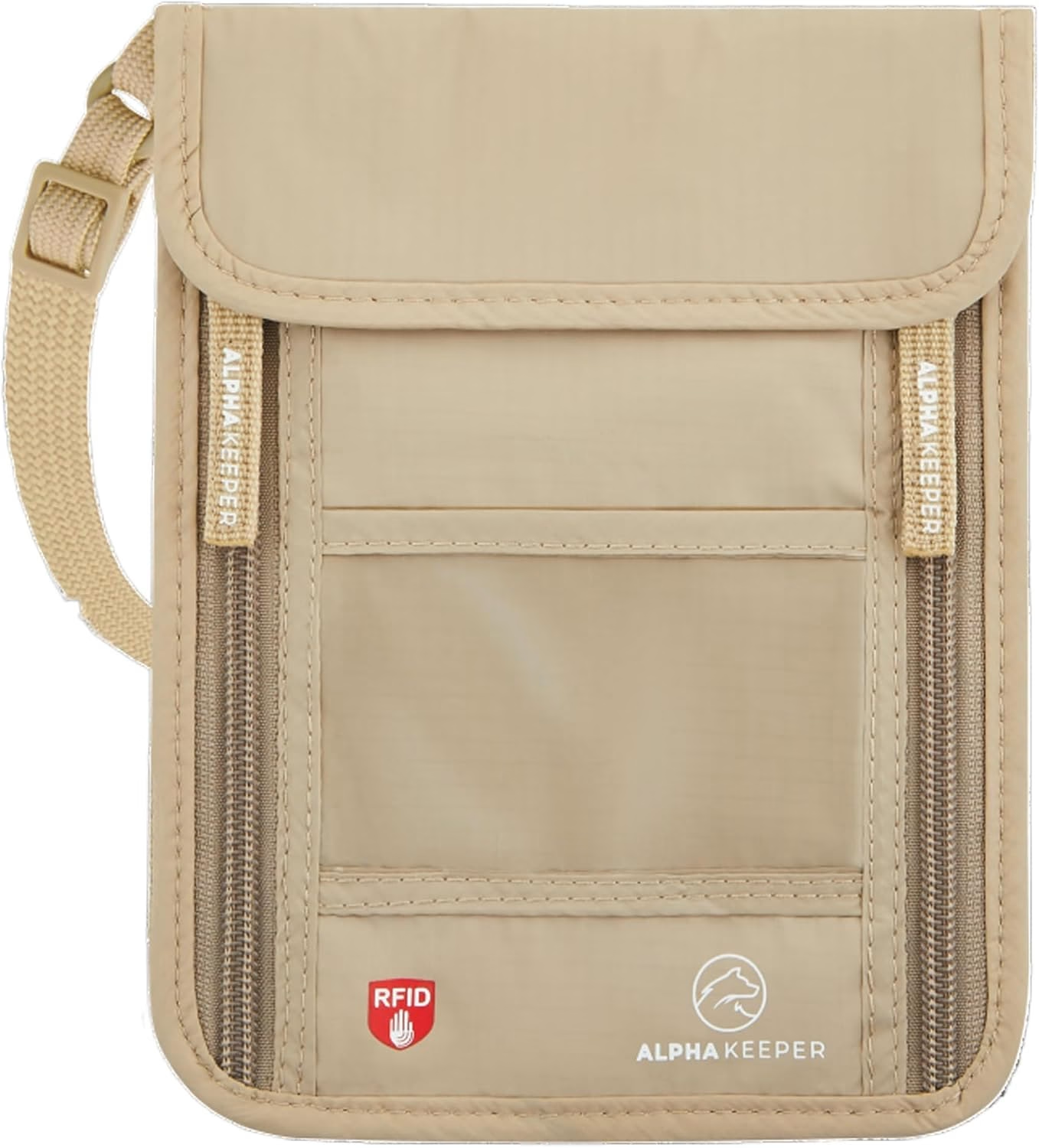
For thru-hikers and trekkers on multi-day routes (think Camino de Santiago, Everest Base Camp, Torres del Paine): the Black RFID Travel Money Belt | Hidden Travel Gear is the workhorse pick — flat profile, durable shell, fits under any base layer without chafing over 8+ hours of daily movement. For travelers bouncing between trailheads and cities (Southeast Asia loop, Andean circuit): pair the Blue RFID Neck Wallet with the Fiber RFID Sleeve Set so your passport lives at your chest and your daily cards stay individually shielded in your pack's hip pocket. For adventure travel couples sharing documents at checkpoints: the Beige RFID Neck Wallet includes two luggage tags, which is a genuinely clever detail for keeping bag ID and passport holder in one organized grab. Whatever your scenario, the non-negotiable spec is the same: RFID-blocking, sub-6mm profile, and a silicone or textured grip band that doesn't migrate when you're moving hard.
Frequently Asked Questions
Can I wear a money belt hiking if I'm also wearing a backpack hipbelt?
Yes, but placement matters. Wear a slim waist money belt positioned above the hipbelt line — roughly at your natural waist rather than your hips — so the pack's hipbelt doesn't compress it against your skin for hours. Alternatively, switch to a neck wallet like the Dark Grey RFID Neck Wallet, which sits on your sternum and is completely unaffected by pack hipbelts.
Will sweat damage the RFID blocking in a money belt?
Not if the RFID-blocking layer is properly laminated and sealed inside the belt's shell fabric — which is the case with Alpha Keeper's construction. Cheap belts with exposed or poorly bonded RFID foil can delaminate with repeated sweat and washing, degrading protection over time. Always air-dry rather than machine-dry to extend the blocking layer's lifespan.
How much should I expect to spend on a quality hiking money belt in 2026?
A genuinely trail-capable RFID-blocking money belt runs $20–$40 in 2026. Below $15, you're typically getting untested RFID claims, thin fabric that chafes, and hardware that fails within a season. Above $60, you're usually paying for a brand name rather than meaningfully better security. Alpha Keeper's range sits squarely in the sweet spot: real dual-frequency RFID blocking, trail-durable materials, and sub-$35 pricing.
Ready to upgrade?
Ready to hike without the paranoia? The Black RFID Travel Money Belt | Hidden Travel Gear is your trail-tested starting point — grab yours at Alpha Keeper and leave the pickpockets with nothing to find.