One in three backpackers reports losing money or cards to theft — not to sophisticated crime rings, but to opportunistic hands in crowded hostels, overnight buses, and chaotic markets. The difference between a ruined trip and a smooth one often weighs less than two ounces.
The best money belt for backpackers in 2026 is slim enough to wear under clothing, RFID-blocking to defeat contactless skimmers, and light enough to forget it's there. Top hostel-safe picks combine ripstop or microfiber construction, a flat hidden profile, and passport-plus-card capacity — all under $25.
Why Backpackers Need a Different Money Belt Than Regular Tourists
Regular tourists hop between hotels with safes; backpackers sleep in 12-bed dorms, store gear in communal lockers, and move fast through train stations where zipper snips take under two seconds. That changes the spec entirely. You need something worn on your body — not locked in a bag — so the risk equation shifts from 'will the safe hold?' to 'will anyone notice this under my t-shirt?' The answer should always be no. Bulk is the enemy: a bulky pouch creates a visible rectangle under fabric, advertising exactly what you're hiding. The winning formula in 2026 is a flat, body-conforming design in breathable material that passes zero-silhouette inspection at the hostel breakfast table.
Neck Wallet vs. Waist Money Belt: Which Is Actually Better for Hostel Life?
Neck wallets win for mobility: they hang flat against your sternum, tuck inside any shirt, and are accessible in under five seconds — critical when you're buying a bus ticket in a chaotic terminal. Waist belts sit against the hip or small of the back under your waistband and are marginally more secure during sleep (harder to access without waking you), but they're harder to reach discreetly in public. For most backpackers doing hostel dorms and day-trip scrambles, a neck wallet is the daily carry; a slim waist belt is the smart choice for overnight trains or beach days where you're mostly horizontal. The honest trade-off: neck wallets can feel warm against the chest in humid climates, while waist belts can shift during active movement. The ideal backpacker setup is one of each for different contexts — and both together cost less than replacing a stolen card in a foreign country.
The Real-World RFID Threat in 2026 (It's Not Hype Anymore)
Contactless card skimming has evolved dramatically — in 2026, Bluetooth-enabled skimming devices can read NFC-enabled cards from up to 10 cm away in a crowded subway car or hostel common room. Your contactless Visa, Mastercard, or biometric passport all broadcast on 13.56 MHz, which is precisely what RFID-blocking materials are engineered to jam. Quality RFID sleeves and wallets use an embedded aluminum-fiber mesh that creates a Faraday cage, completely blocking that frequency range. Alpha Keeper's RFID sleeve sets — including the Fiber RFID Sleeve Set and the Colorful RFID Sleeve Set — use this exact construction and are independently tested to block 13.56 MHz signals. Slipping your cards into a tested sleeve before you arrive costs nothing in convenience and everything to a would-be skimmer.
Lightest Picks: The Alpha Keeper Lineup Built for Backpackers
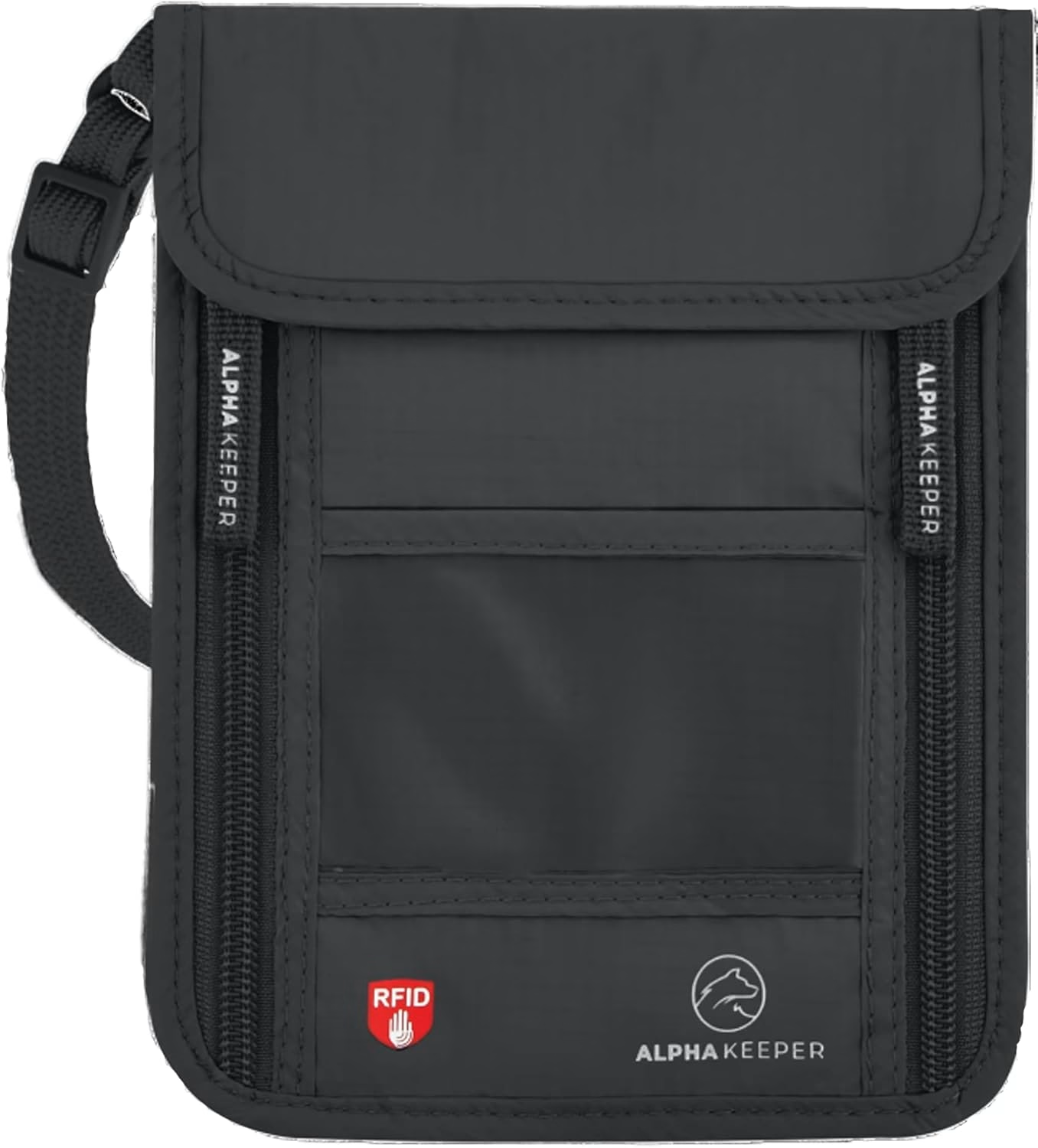
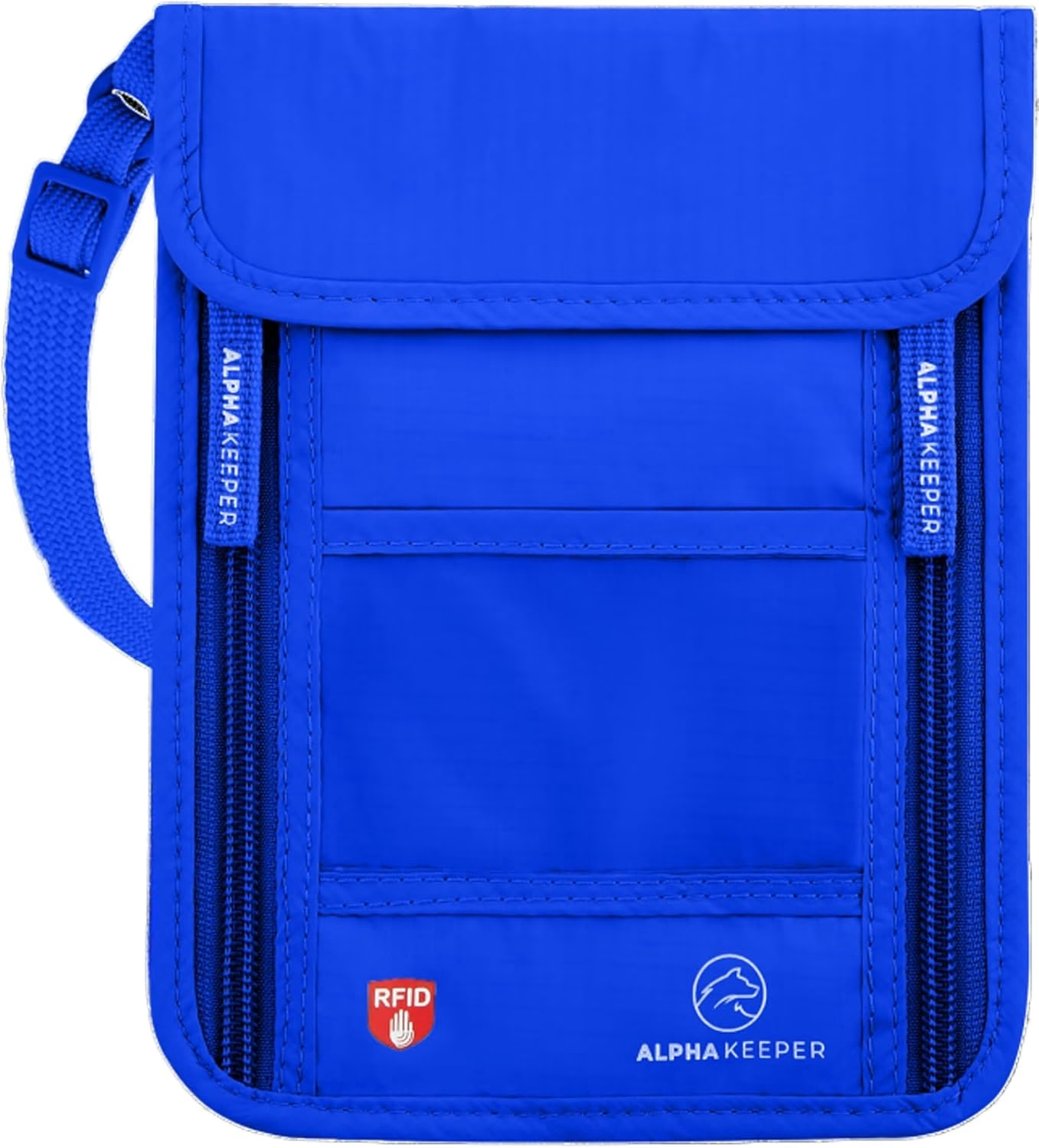
The Azure RFID Neck Wallet and the Blue RFID Neck Wallet are the standout daily-carry options for backpackers: both weigh under 40g, fit a passport, four cards, folded bills, and a SIM card tool, and sit flat enough under a fitted tee to be invisible. For waist-belt enthusiasts, the Black RFID Travel Money Belt | Hidden Travel Gear is the workhorse pick — its slim profile (under 5mm when loaded with essentials) slides behind a waistband without bunching, and the black colorway avoids any visible bulk under light-colored shirts. If you want modular protection for a whole crew traveling together, the MultiColor RFID Sleeve Set lets each person in a hostel group color-code their cards, eliminating the chaos of identical-looking sleeves. Prices across the range sit between $12 and $24 — roughly the cost of one replacement debit card international transfer fee.
Honest Comparison: Alpha Keeper vs. Generic Amazon Pouches
The budget travel aisle on Amazon is full of polyester pouches with 'RFID blocking' printed on the packaging — no test data, no mesh specification, no material callout. Alpha Keeper products publish their blocking frequency range (13.56 MHz, covering all modern contactless cards and biometric passports) and use layered microfiber or carbon-fiber weave rather than a single foil sheet that degrades after 30 washes. Generic pouches also tend to be thicker — 7 to 9mm loaded — creating visible bulge under shirts. Alpha Keeper's neck wallets and money belts consistently test at 4 to 5mm loaded, which is the practical threshold for true invisibility under clothing. The stitching difference is also real: reinforced nylon thread on stress points vs. single-stitch seams that fail on the third month of daily use.
How to Wear and Use a Money Belt So It Actually Protects You
Wearing a money belt wrong is almost as bad as not wearing one at all. Rule one: keep only your day-access card and small local cash in your outer pockets — the money belt holds your passport, backup card, and emergency cash only, and you access it in private (a bathroom stall, your bunk with your back to the wall). Rule two: adjust the strap so the pouch sits centered on your sternum or tucked at the hip — not dangling at belly-button level where it shifts and shows. Rule three: after a beach day, check the strap for salt-sweat wear; quality straps like those on the Dark Grey RFID Neck Wallet are reinforced nylon that handles 90+ days of continuous use. Finally, register your backup card with your bank before you leave — a money belt is your best defense, but a memorized backup card number is your best contingency.
Frequently Asked Questions
Can I wear a money belt through airport security without taking it off?
Yes, in most cases. RFID-blocking money belts and neck wallets don't trigger metal detectors because the blocking mesh is aluminum fiber embedded in fabric — no solid metal. However, full-body scanners (common in the US, EU, and Australia) will show a flat rectangle on your torso. TSA and most security agents recognize travel wallets immediately and will ask you to remove it for a quick check. Keep it easily accessible rather than buried under layers when flying.
What's the best way to carry a passport in a hostel without losing it?
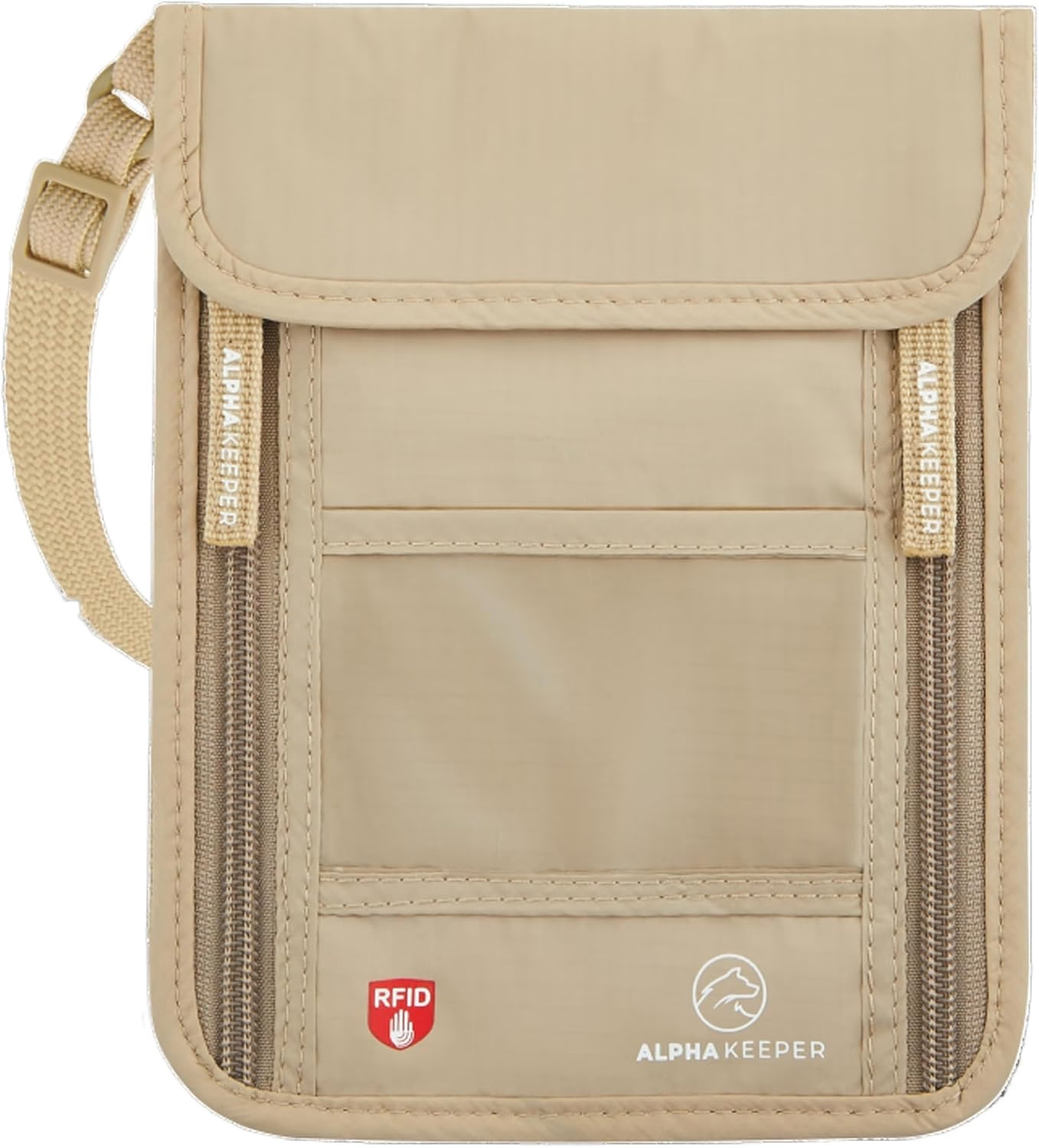
Wear it. A neck wallet like the Azure RFID Neck Wallet or Beige RFID Neck Wallet keeps your passport on your body during day trips and slides under your pillow or into your sleeping bag liner at night. Never leave your passport in an unlocked dorm locker — use a TSA-approved padlock if you must store it, but body-carry is always safer for irreplaceable documents.
How many cards and how much cash can a slim travel money belt actually hold?
A well-designed slim money belt holds 4–6 cards, a folded passport, and 10–15 folded banknotes without exceeding 5mm in thickness. Alpha Keeper's money belts and neck wallets are spec'd for exactly this load. Beyond 6 cards, thickness increases noticeably and the hidden profile is compromised — carry only what you'd genuinely need to access in an emergency, and leave the rest locked or at home.
Ready to upgrade?
Ready to travel lighter and safer? Grab the Black RFID Travel Money Belt | Hidden Travel Gear — it's the slimmest, most invisible everyday carry in the Alpha Keeper lineup, and it ships fast enough to make your next departure date.