Sydney's Circular Quay ranks among the top five tourist pickpocket hotspots in the Asia-Pacific region — and most victims never feel a thing. If your passport, cards, and cash are sitting in a daypack or back pocket right now, you're essentially handing a stranger a head start.
To protect valuables in Australia in 2026, wear an RFID-blocking money belt or neck wallet under your clothing, keep only daily spending cash in an accessible pocket, and use RFID card sleeves for contactless cards. These three steps neutralize both physical pickpocketing and electronic skimming — the two dominant theft methods targeting travelers in Australian cities.
The Real Theft Landscape in Australia: What Travelers Actually Face
Australia feels safe — and by global standards, it largely is — but that comfort is exactly what pickpockets exploit. The Australian Institute of Criminology's 2026 data shows personal theft remains a persistent issue in high-density tourist zones: Sydney's Circular Quay, Melbourne's Flinders Street Station, the Queen Victoria Market, and Brisbane's South Bank precinct are all flagged hotspots. The method is rarely dramatic; it's a bump near a tram door, a distraction at a coffee queue, or a 'helpful' stranger at an ATM. Electronic theft via RFID skimming is the newer threat — a reader hidden in a bag or jacket can silently clone a contactless card within 4 cm, no physical contact required. The good news is both threat types are almost entirely preventable with the right layered gear strategy.
RFID Skimming in Australia: Is It Actually a Real Risk in 2026?
Yes — and it's more specific than the vague warnings you usually read. Australia's tap-and-go infrastructure is among the most developed on earth; Australians complete over 12 billion contactless transactions annually, which means both consumers and criminals are fluent in the technology. Modern ISO/IEC 14443 cards (Visa payWave, Mastercard PayPass, most passports issued after 2006) broadcast on 13.56 MHz and can be read by off-the-shelf hardware available for under $50. Crowded environments — a packed Melbourne CBD tram at 8 a.m., the queue for Sydney Harbour Bridge climb, a Byron Bay music festival — provide perfect cover for a reader-equipped thief to work a crowd without anyone noticing. RFID-blocking sleeves rated to block 13.56 MHz signals are the cheapest, simplest countermeasure: the Fiber RFID Sleeve Set and Colorful RFID Sleeve Set both use multi-layer metallic shielding fabric tested to block these frequencies entirely, and they add zero bulk to a wallet.
Hidden Carry: Why a Neck Wallet or Money Belt Beats Every Other Option
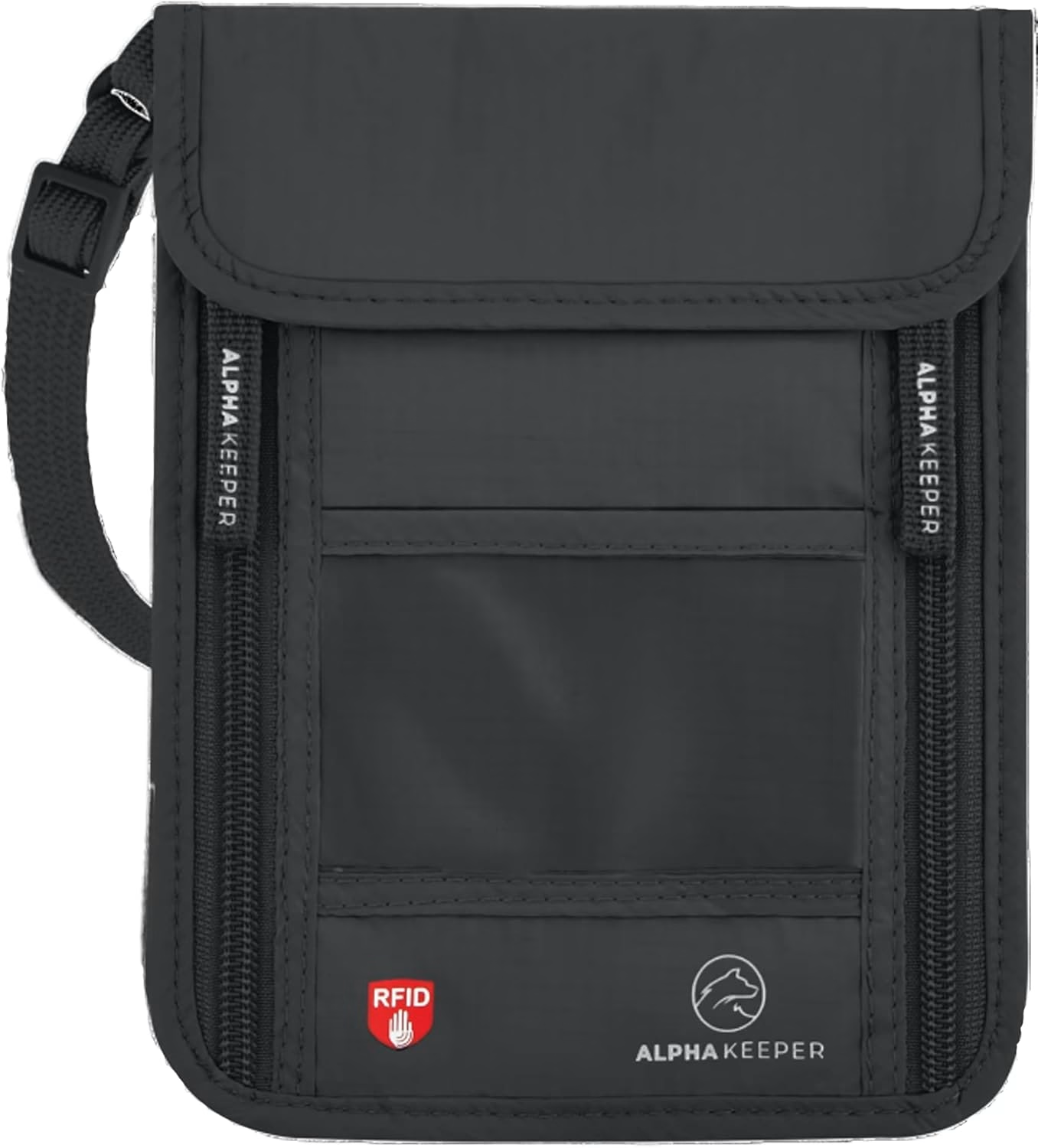
The single most effective physical security upgrade you can make is moving your primary valuables — passport, backup card, emergency cash — off your body's surface and under your clothing. A neck wallet hangs flat against your chest under a shirt; a money belt sits flush under a waistband. Neither is accessible to a pickpocket without a scene. The Dark Grey RFID Neck Wallet fits a standard passport, three cards, and folded currency in a profile under 8 mm — invisible under any travel shirt or dress. For warmer Australian climates (think Darwin, the Gold Coast, or a Queensland road trip in January), the Azure RFID Money Belt is cut from breathable ripstop nylon with a moisture-wicking inner lining, so it stays comfortable even in 35°C heat and high humidity. The rule is simple: your passport and your 'emergency $200' live in the hidden carrier, always — everything else can be accessible.
City-by-City Guide: Sydney, Melbourne, and Beyond
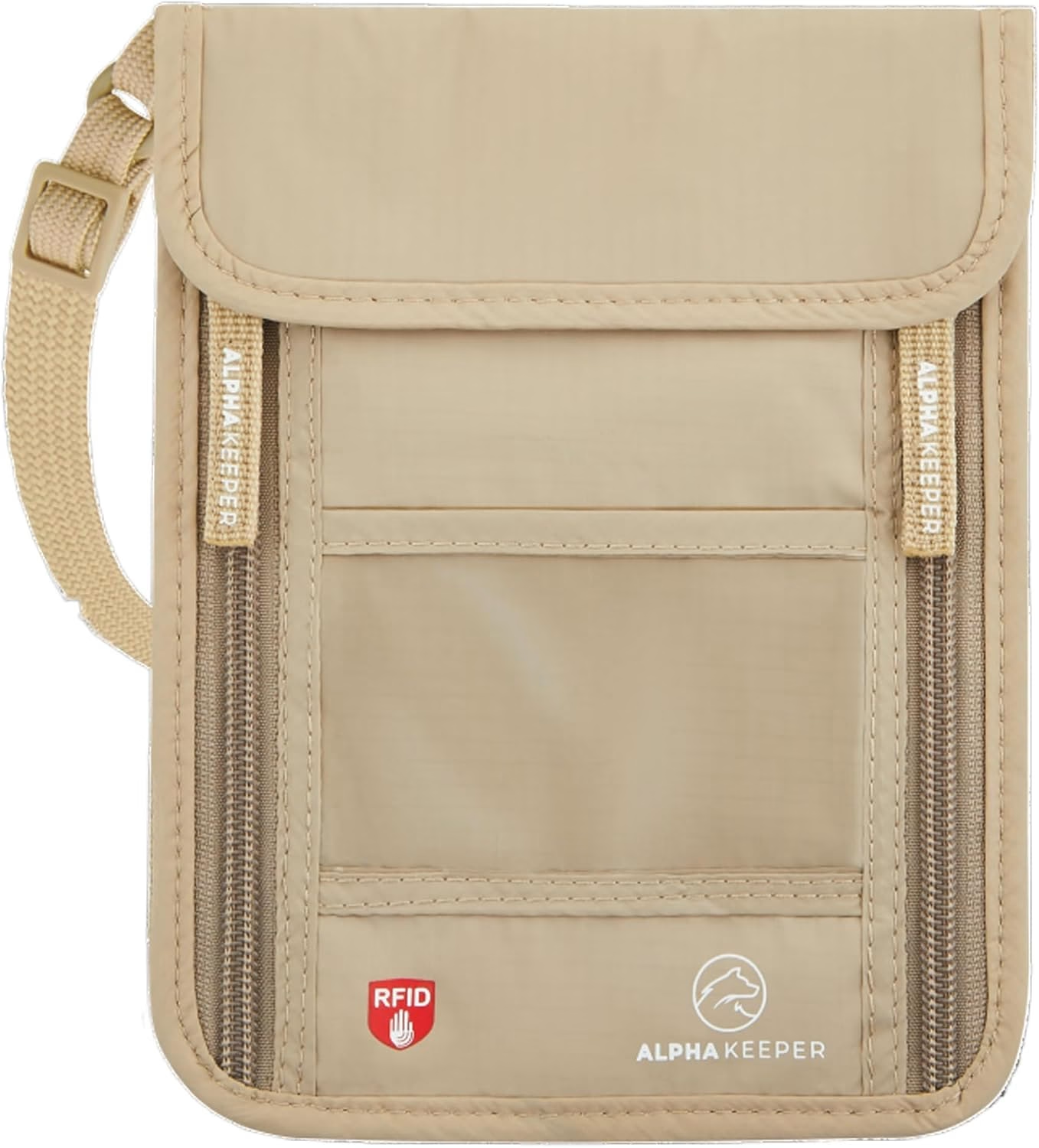
Sydney's biggest risk zones are Circular Quay (ferry terminals, peak tourist density), the QVB shopping area, and the Eastern Suburbs nightlife strip — all high foot-traffic, high-distraction environments. Melbourne adds a tram network that is genuinely excellent cover for bag-dippers; stand-up commuters on Routes 96, 86, and 16 should always front-carry or use a hidden belt during rush hour. In regional Australia — the Great Ocean Road, Uluru, the Whitsundays — physical theft risk drops significantly, but car break-ins at trailhead car parks are a documented problem, so never leave valuables visible in a vehicle. The Beige RFID Neck Wallet doubles cleverly as a passport holder with two integrated luggage tags, making it a single-item solution for multi-stop itineraries across Sydney, Melbourne, Cairns, and Perth without juggling separate accessories.
Honest Gear Comparison: Hidden Neck Wallet vs. Standard Travel Pouch
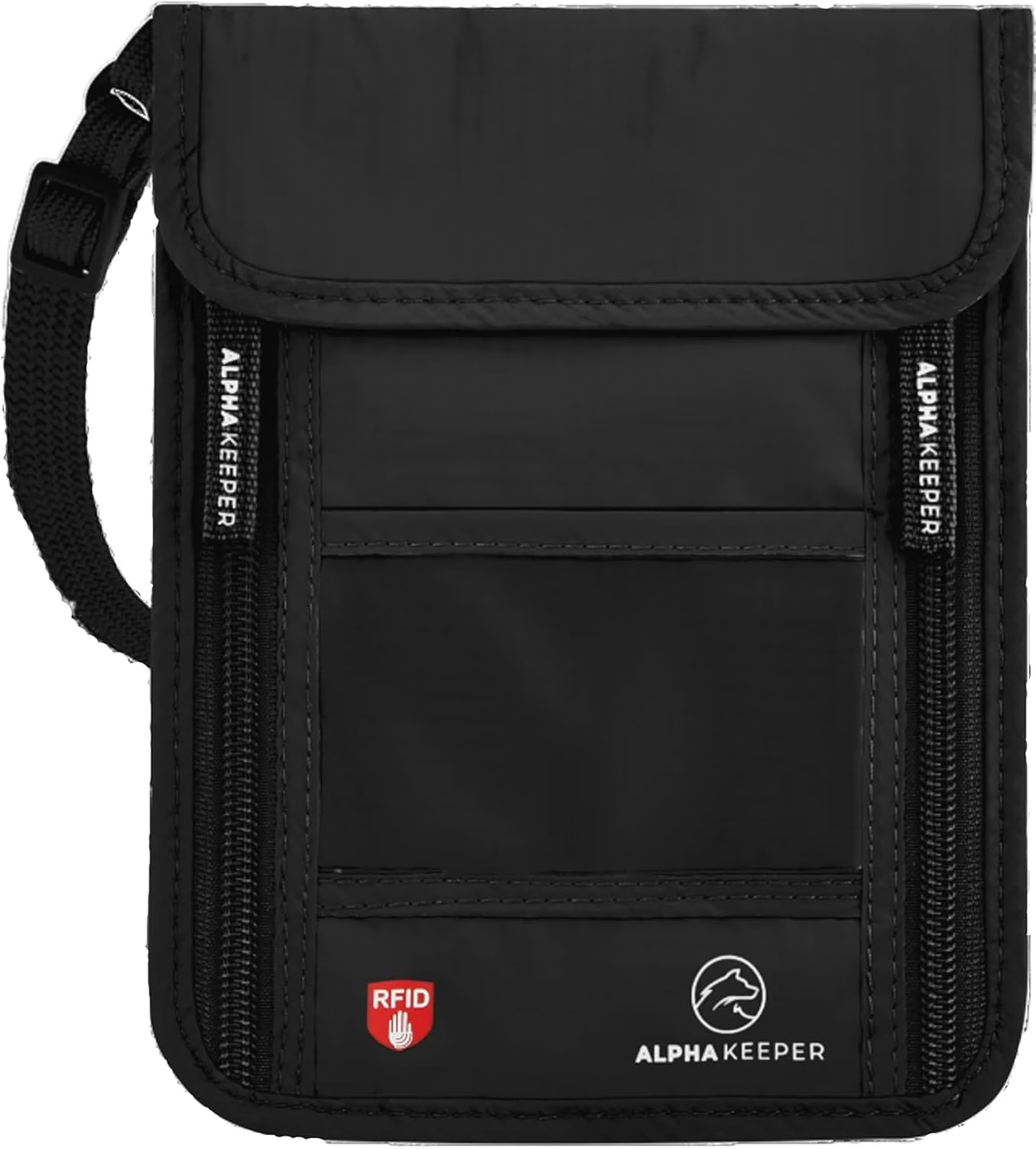
Most travelers default to a cheap zip-around travel pouch worn outside the shirt — visible, bulky, and ironically a theft signal ('person with visible pouch = carries passport and cards'). The Black RFID Neck Wallet by Alpha Keeper sits inside the shirt, measures 18 cm × 12 cm, includes three card slots with RFID-blocking lining, a passport sleeve, and a zip-close cash pocket, all in a package weighing 42 g. A generic external travel pouch typically weighs 90–120 g, has no RFID protection, telegraphs its presence, and creates an uncomfortable chest lump in the heat. The trade-off against the hidden option is near zero: the neck wallet is cooler, lighter, invisible, and genuinely RFID-blocking — the external pouch wins on nothing except initial familiarity.
Building Your Full Australia Valuables-Protection System
The most theft-proof setup for an Australia trip in 2026 runs three layers: first, RFID sleeves on every contactless card (the MultiColor RFID Sleeve Set gives you a visually distinct sleeve per card so you never mix them up — a small but genuinely useful daily-life benefit); second, a hidden neck wallet or money belt for passport, backup card, and emergency cash; third, a front-pocket carry habit for your daily-use wallet containing only what you need that day. This three-layer system means a successful pickpocket scores at most one day's cash — never your identity documents or backup funds. Total cost for the full system is under $60. Compared to the average cost of an emergency passport replacement abroad ($200–$400 AUD in fees alone, plus lost travel days), it's not even a financial decision worth deliberating.
Frequently Asked Questions
Is RFID skimming a genuine threat in Australian cities in 2026?
Yes. Australia processes over 12 billion contactless transactions annually, and contactless card technology operates on a frequency readable by inexpensive off-the-shelf hardware. Crowded trams, tourist queues, and festival crowds in Sydney and Melbourne are the highest-risk environments. RFID-blocking card sleeves — like the Fiber RFID Sleeve Set — block the 13.56 MHz signal entirely and eliminate this risk at negligible cost and zero added bulk.
What is the safest way to carry a passport in Australia?
Carry your passport in an RFID-blocking neck wallet worn under your clothing. Options like the Beige RFID Neck Wallet or Dark Grey RFID Neck Wallet fit a standard passport flat against your chest, invisible under a shirt, with blocking material protecting the biometric chip. Only bring your actual passport when legally required (international flights, some car rentals); a photo on your phone suffices for most daily ID checks.
Do I need a money belt for Australia, or is it overkill?
Not overkill — proportionate. Australia is a low-to-moderate risk destination, but 'low risk' is not 'zero risk,' and the cost of losing a passport plus emergency card plus $300 cash dwarfs the $25–$35 cost of an RFID money belt. In hot destinations like Queensland or the Northern Territory, choose a breathable option like the Azure RFID Money Belt or Blue RFID Money Belt, which use moisture-wicking materials that stay comfortable in 35°C heat. Wear it only for high-density tourist zones and long travel days; at your resort or Airbnb, use the in-room safe.
Ready to upgrade?
Don't let a 10-second distraction at Sydney Harbour cost you your passport and backup funds — grab the Dark Grey RFID Neck Wallet, wear it under your shirt from day one, and travel Australia knowing your essentials are genuinely unreachable.