One in three foreign tourists who report theft in Colombia never even felt it happen — no confrontation, no drama, just an empty pocket discovered hours later. Bogotá's La Candelaria, Medellín's El Centro, and Cartagena's walled-city corridors are among the most skilled pickpocket environments on the continent, and your standard front-pocket wallet is not a plan.
To protect money in Colombia in 2026, carry only daily-spend cash in a decoy wallet, lock your passport and backup cards in an RFID-blocking neck wallet or money belt worn under clothing, and never use back pockets. This layered approach stops both physical pickpocketing and electronic card skimming in one move.
Why Colombia's Three Tourist Cities Demand Different Tactics
Bogotá, Medellín, and Cartagena each have distinct theft profiles, and a one-size approach fails you. Bogotá's TransMilenio buses are notorious for 'express' pickpocket teams — one person bumps you, another lifts your wallet in under two seconds. Medellín has improved dramatically since 2015, but El Centro and crowded metro stations still see daily incidents targeting tourists carrying visible phones and wallets. Cartagena is more tourist-polished but runs a different scam: charming distraction near the Clock Tower gate, where vendors or 'helpers' occupy your attention while a partner reaches into bags. The common thread across all three cities is opportunity — and your job is to remove it entirely.
RFID Skimming in Colombia: Real Threat or Overhyped?
Electronic skimming via rogue NFC readers is a genuine and growing risk in Latin America's high-tourism corridors — security researchers documented active skimming operations in Colombia as recently as early 2026, particularly in crowded markets and bus terminals where a device can pass within 10 cm of an unprotected contactless card. Your Visa or Mastercard contactless chip broadcasts card data readable up to 10 cm by consumer-grade equipment; a criminal with a $30 reader and a coffee-shop seat needs nothing else. RFID-blocking sleeves like the Fiber RFID Sleeve Set or the Colorful RFID Sleeve Set create a Faraday-cage barrier that blocks 13.56 MHz signals completely — tested to ISO 14443 standards — adding zero bulk to your card stack. It takes five seconds to slide your cards in; it takes one unlucky subway ride to lose them without protection.
The Decoy Wallet System: Colombia's Most Practical Street Defense
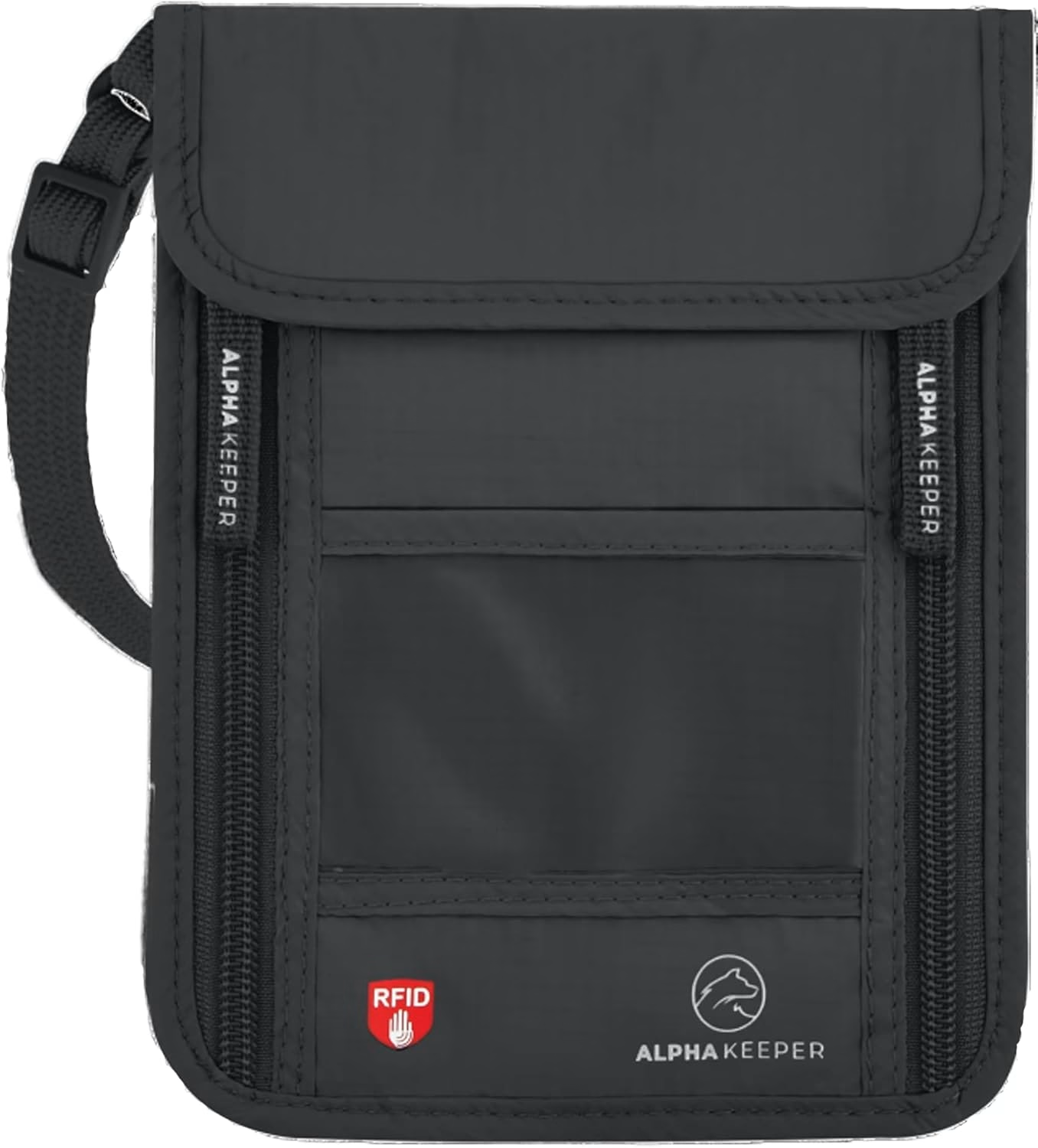
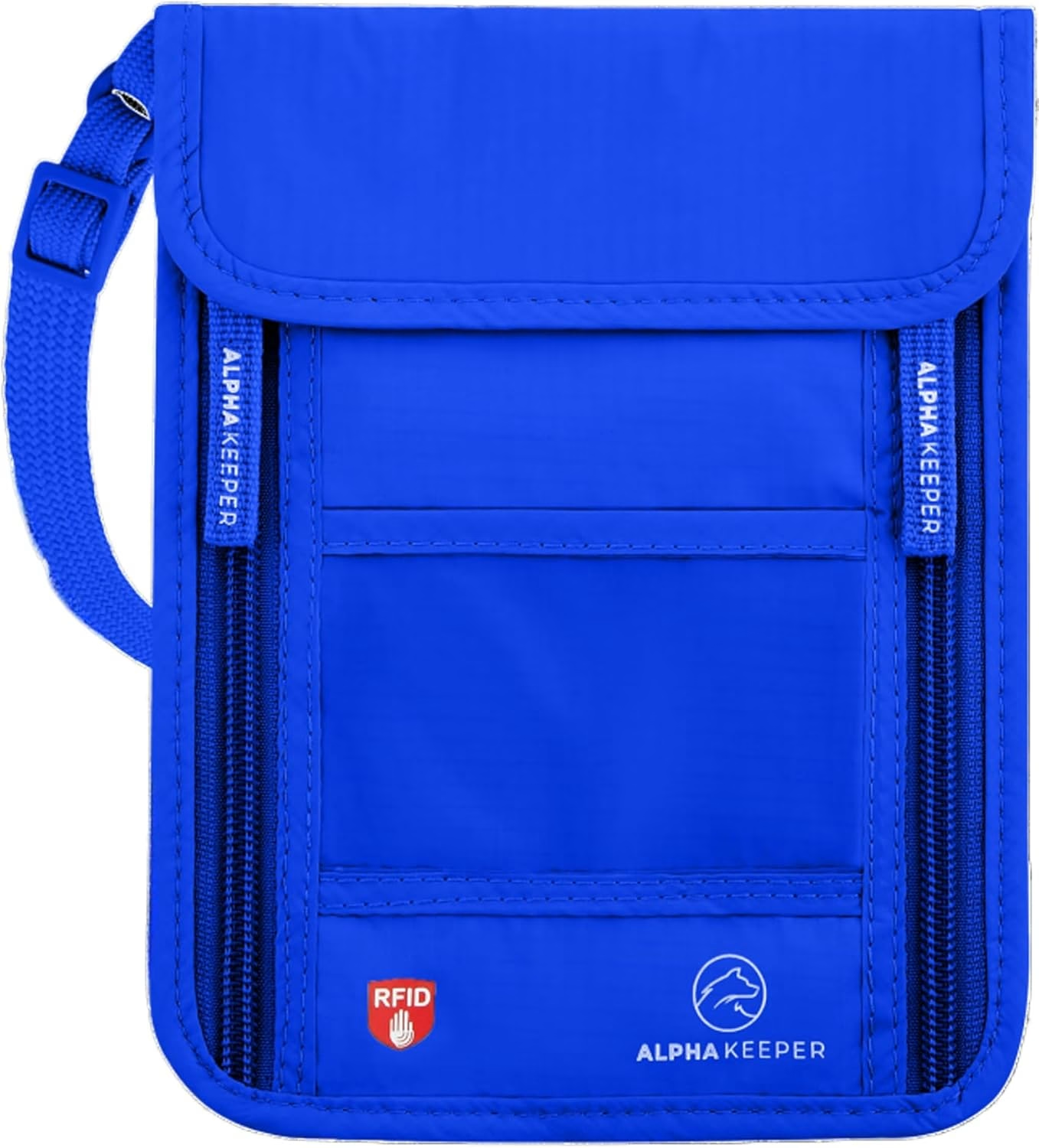
Every seasoned Colombia traveler runs a two-wallet system: a cheap, visible 'bait' wallet holding 50,000–80,000 COP (roughly $12–$20 USD) and one expired card, carried in an accessible pocket, and a hidden primary holding your real cards, passport copy, and emergency cash. If you are confronted — which is rare but possible — handing over the decoy wallet ends the interaction fast and costs you almost nothing. Your actual valuables meanwhile sit flat against your torso in a Black RFID Travel Money Belt | Hidden Travel Gear or a Blue RFID Neck Wallet, invisible under a loose shirt. The decoy system sounds theatrical until the moment you actually need it, at which point it feels like the smartest $15 you ever spent.
Choosing Between a Money Belt and a Neck Wallet for Colombia
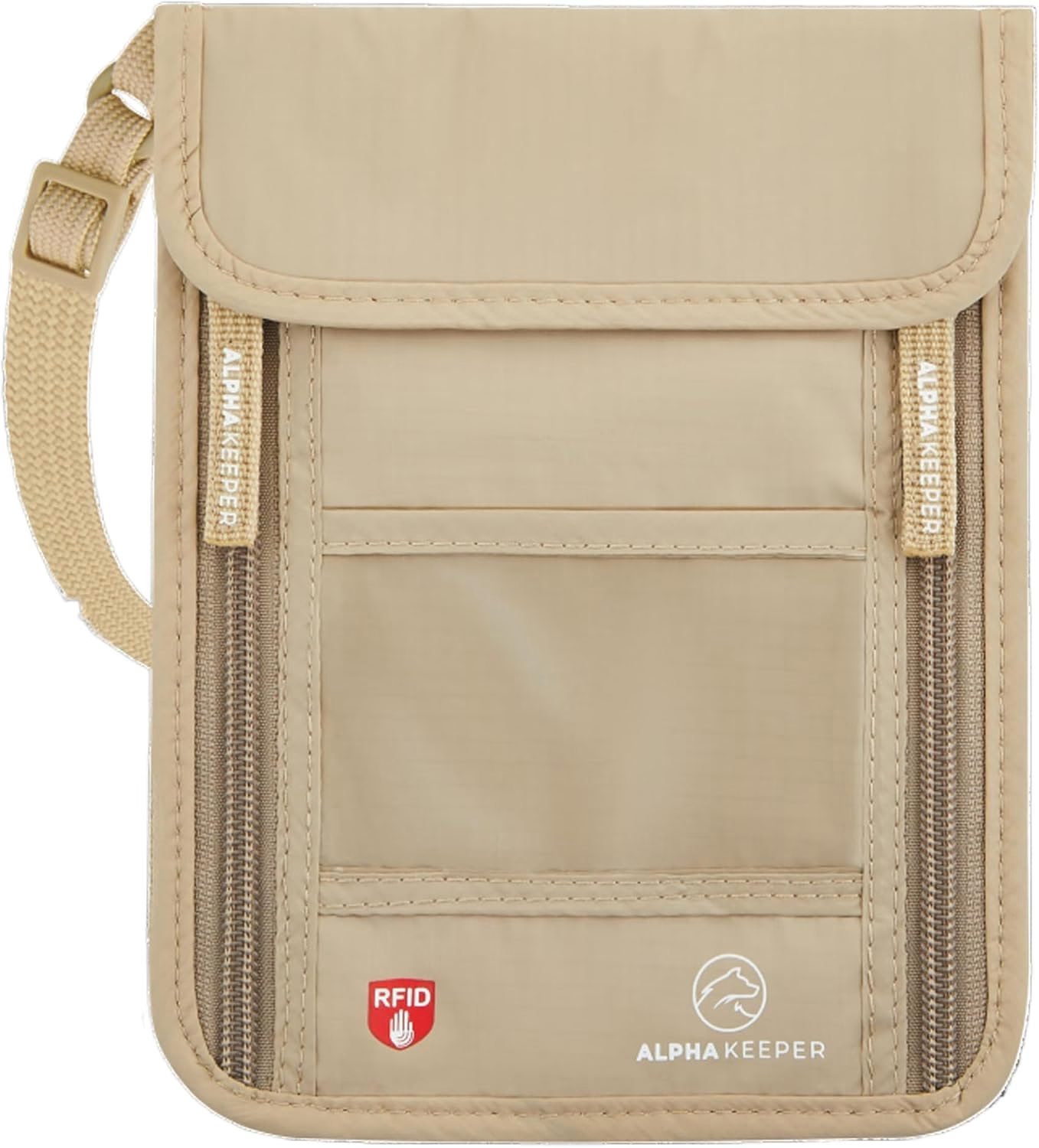
Money belts sit at hip level under your waistband — they excel in hot climates like Cartagena's coast (35 °C / 95 °F days) because they stay put even when you sweat, and the slim profile disappears under linen pants or board shorts. Alpha Keeper's Azure RFID Money Belt, for example, measures roughly 25 × 14 cm, holds a passport flat plus four cards and folded bills, and uses a water-resistant nylon-spandex shell that breathes against skin. Neck wallets hang on a break-away cord under a shirt — they're faster to access in a hostel or café, and the Beige RFID Neck Wallet adds two bonus luggage tags for checked bags. The honest trade-off: neck wallets can feel warmer and occasionally create a visible chest bump under fitted clothing; money belts are more discreet but slower to access. For Bogotá's cooler altitude (average 14 °C / 57 °F) where you are wearing layers anyway, either works beautifully — in Cartagena heat, the belt wins on comfort.
City-by-City Gear Checklist: What to Carry Where
In Bogotá, prioritize a money belt for the TransMilenio commute and Candelaria walks — the Black RFID Travel Money Belt | Hidden Travel Gear stays invisible under a jacket or hoodie, and you will want that extra coverage on crowded bus platforms. In Medellín, the cable-car barrios (Comunas 1 and 2) are genuinely rewarding but require maximum situational awareness; wear a Dark Grey RFID Neck Wallet under your shirt and keep your phone in a front zip pocket. In Cartagena, heat dictates lighter gear — the Silver RFID Neck Wallet in lightweight ripstop nylon sits flat and breathes, while a MultiColor RFID Sleeve Set keeps every card in your wallet individually shielded for beach-day wallet access at Bocagrande. Across all three cities: leave your actual passport locked in the hotel safe and carry a certified photocopy plus a digital copy on encrypted cloud storage.
Honest Comparison: RFID Neck Wallet vs. Generic Zip Pouch
Travelers sometimes grab a basic zip pouch from an airport shop thinking it does the same job — it does not. A generic nylon pouch has zero RFID shielding (your cards are still broadcasting), the cord is typically non-break-away (creating a strangulation risk if grabbed), and the material is often thin enough that card outlines are visible through the fabric. Alpha Keeper's neck wallets use dual-layer RFID-blocking fabric with a tested blocking range covering 13.56 MHz (credit cards, passports) and 125 kHz (older keycards), plus a safety-release lanyard. That is not a marketing bullet point — it is the specific technical difference between a product engineered for travel security and a bag shaped like one.
Frequently Asked Questions
Is Bogotá safe for tourists in 2026?
Bogotá is very visitable in 2026 but requires active precautions. Stick to Chapinero, Zona Rosa, and Usaquén; avoid La Candelaria after dark; never take unofficial taxis. Use an RFID money belt or neck wallet under your clothing to protect cards and passport from the city's highly skilled pickpocket teams on TransMilenio buses and crowded markets.
Do I need RFID blocking in Colombia specifically?
Yes. Security analysts confirmed active NFC skimming operations in Colombian tourist corridors in 2026, particularly in bus terminals and crowded markets. RFID-blocking sleeves or a blocking wallet add zero bulk and eliminate this risk entirely. Given that modern contactless cards broadcast readable data up to 10 cm, unshielded cards in a crowded Colombian market are a tangible vulnerability.
Should I carry my real passport in Colombia or leave it at the hotel?
Leave the original passport in a hotel safe whenever legally possible and carry a high-quality color photocopy plus a cloud-stored digital backup. When you must carry the original — border crossings, some domestic bus routes — store it in an RFID-blocking neck wallet or money belt worn under your clothing, never in a bag, backpack, or outer jacket pocket.
Ready to upgrade?
Before your first Colombian bus ride, set up your layered carry: slide your cards into the Fiber RFID Sleeve Set for instant skimming protection, then secure your passport and backup cash in the Black RFID Travel Money Belt | Hidden Travel Gear — worn flat under your shirt, it is the single upgrade that removes you from the target list entirely.