One in five tourists who visit Havana's Old Town reports a theft or attempted pickpocket — and most of them were carrying their passport in a back pocket. Cuba's cash-only economy means the stakes are higher than almost anywhere else: lose your money here, and there's no ATM rescue plan.
To stay safe in Cuba in 2026, carry only daily spending cash in your pocket and lock your passport, backup cash, and cards in a flat RFID-blocking money belt worn under your clothing. Cuba's cash-only economy and limited banking mean a single theft can strand you — physical concealment beats any digital security measure here.
Why Cuba Is Uniquely High-Stakes for Travelers Carrying Cash
Cuba remains one of the last truly cash-dependent travel destinations in 2026 — most international credit and debit cards still face severe restrictions, and ATMs are unreliable even in Havana. That means you're walking around with significantly more physical currency than you'd carry anywhere in Europe or Southeast Asia. The average traveler entering Cuba carries between $500 and $1,500 USD or EUR in cash for a one-week trip, all of which must survive the entire journey. Opportunistic theft in dense tourist corridors like Obispo Street, the Malecón waterfront, and Plaza Vieja is the primary risk — not violent crime. The math is brutal: one bad moment in a crowded street market can end your trip financially with zero digital recourse.
The Pickpocket Hotspots Every Havana Visitor Needs to Know
Havana's Old Town (La Habana Vieja) is the single highest-risk zone — UNESCO-listed, gorgeous, and crawling with distraction scams like the 'spilled drink,' the 'friendly guide,' and classic bump-and-grab maneuvers near Floridita bar and the Capitol building. Trinidad and Varadero present similar crowd-density risks. The pattern is consistent: peak vulnerability hits during the first 48 hours when travelers are jet-lagged, orienting themselves, and still figuring out which pesos are worth what. Shoulder bag snatch-and-runs on mopeds are documented in the Vedado neighborhood after dark. The single most protective behavior is removing anything worth stealing from your outer clothing entirely — not just 'being careful.'
RFID Theft in Cuba: Real Risk or Overhyped?
Electronic pickpocketing via RFID skimmers is a genuine but secondary threat in Cuba compared to physical theft — the infrastructure for sophisticated skimming operations is less developed than in Western Europe. That said, contactless-enabled passports (which nearly all 2026 passports carry) do broadcast data within a few centimeters, and there are documented cases of credential harvesting in transit hubs like José Martí International Airport. The real reason to use RFID-blocking sleeves in Cuba is layered protection: your passport sleeve prevents opportunistic scanning while your documents are in a bag or jacket pocket you haven't fully secured. The MultiColor RFID Sleeve Set is ideal here — it includes multiple sleeves so you can protect your passport, backup card, and travel ID simultaneously without bulk. It's a $15 insurance policy on a trip where replacing a lost passport could mean a consulate trip and days of lost travel.
The Best Way to Carry Cash and Documents in Cuba: A Frank Breakdown
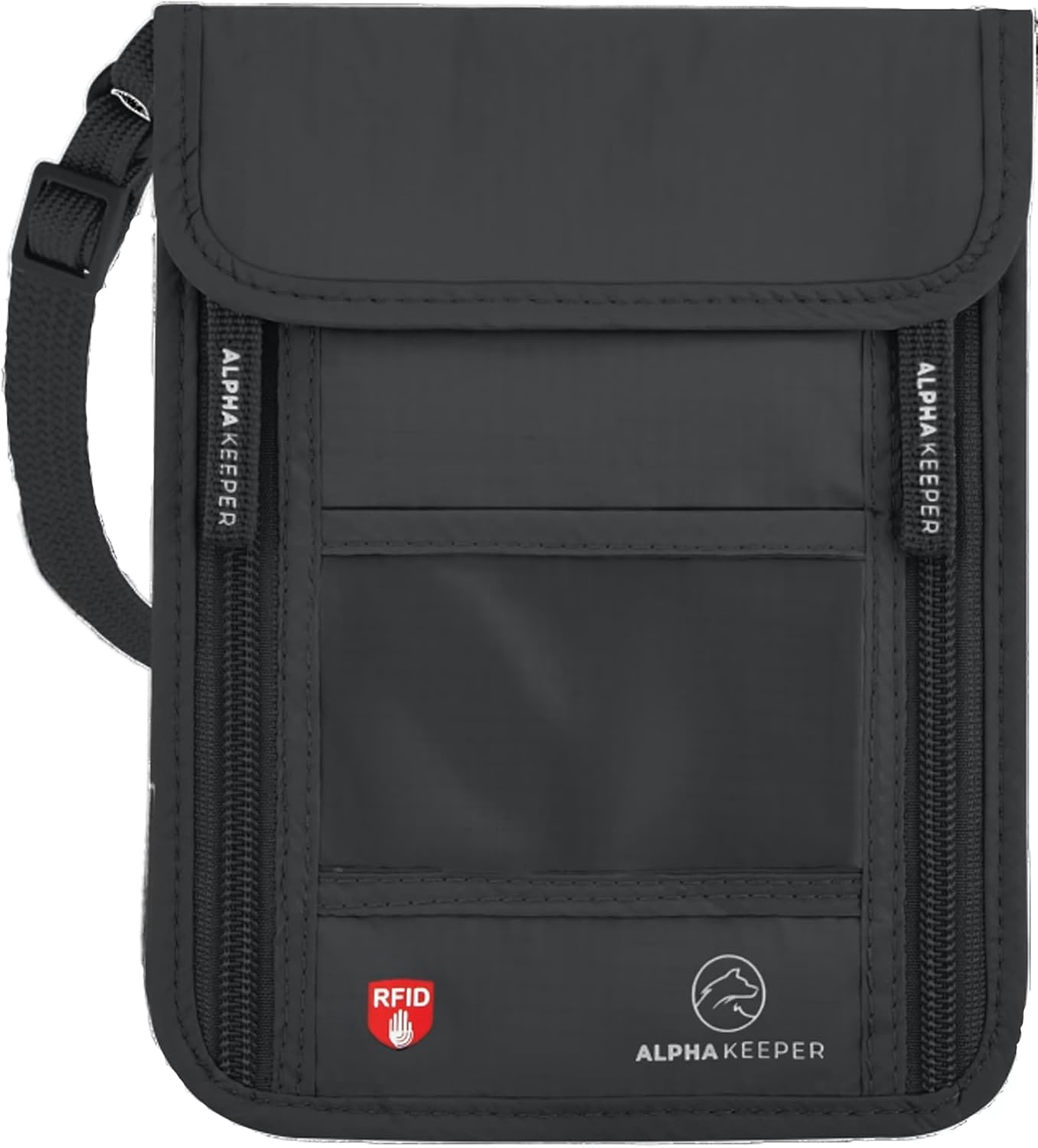
The gold standard for Cuba is a two-layer system: a flat money belt worn against your skin for your main cash reserve and passport, plus a small decoy wallet in your pocket with $20-$40 in local currency for daily transactions. The Black RFID Travel Money Belt | Hidden Travel Gear sits flat under a waistband or shirt — roughly 9 inches wide and under 4mm thick when loaded — making it genuinely invisible under a linen shirt in Havana's heat. For people who find waist belts uncomfortable in tropical climates, the Dark Grey RFID Neck Wallet is a compelling alternative: it hangs under your shirt, holds a passport flat, and has a breakaway-resistant cord. The honest trade-off is access speed — a neck wallet requires slightly more fumbling at checkpoints versus a hip belt, but both beat a stolen passport by an infinite margin.
Honest Comparison: RFID Money Belt vs. a Regular Travel Pouch
Generic travel pouches from airport gift shops look similar to purpose-built security gear but fail on three counts: no verified RFID-blocking lining, flimsier zipper pulls that yield to a sharp tug, and fabric that telegraphs 'I have a hidden pouch' through thin clothing. Alpha Keeper's money belts use a multi-layer construction with an embedded metallic RFID-blocking mesh that passes the ISO 14443 frequency test — meaning a skimmer held within 10cm won't read your chip. The zipper is also recessed and low-profile. Budget option? A sock. Seriously — rolling $100 in a sock inside your shoe works for day trips in low-risk zones. But for passport carry over a two-week Cuba trip, the Blue RFID Money Belt at its price point is simply the right tool: purpose-built, washable, and inconspicuous in the humidity.
Day-by-Day Security Strategy for Cuba (That Won't Kill Your Vibe)
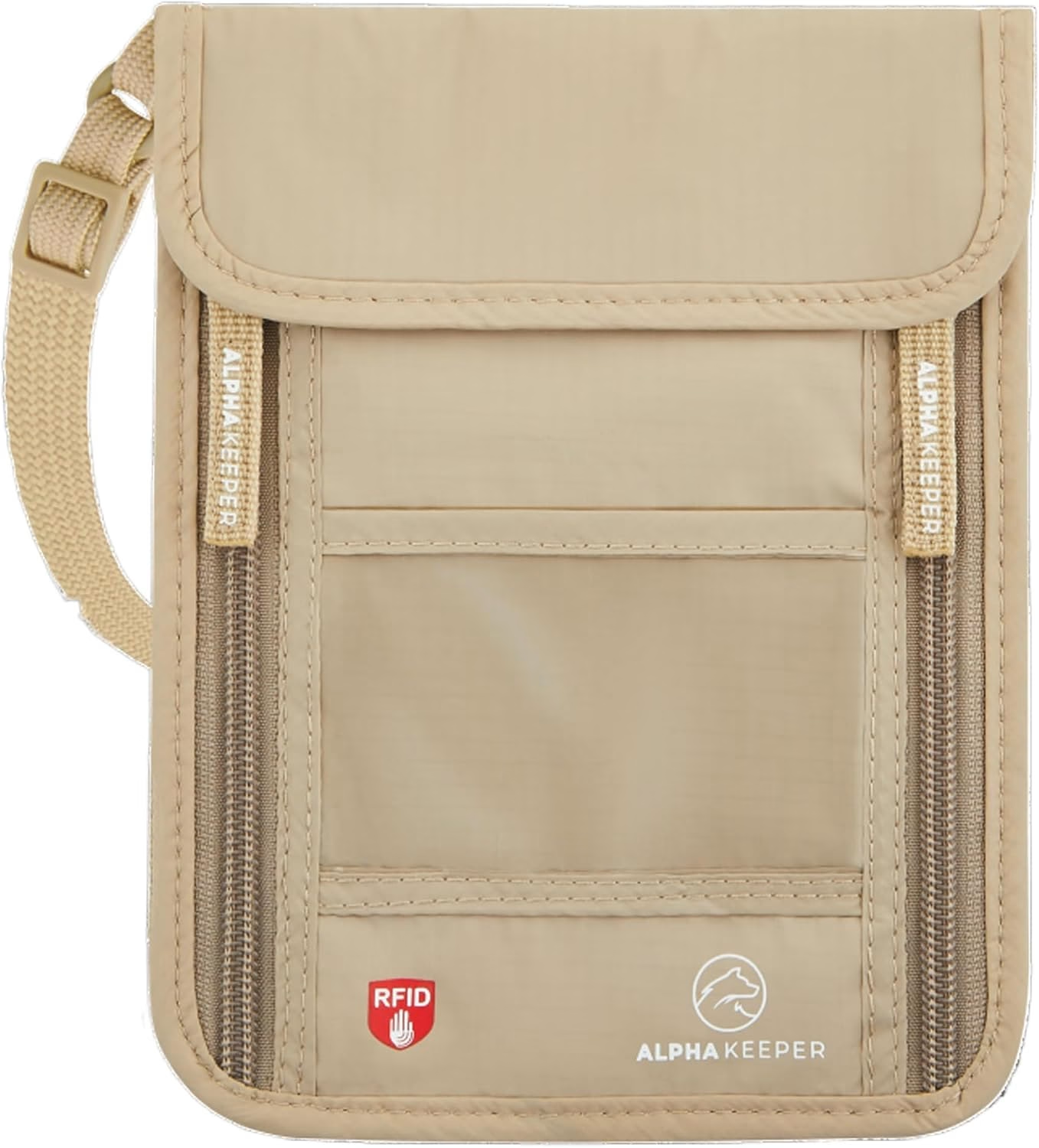
Day one arrival: change your target cash in the airport and immediately split it — bulk into your money belt, daily float into a front pocket. Never flash the money belt at exchange bureaus (Cadecas); step into a bathroom stall to retrieve cash from it. On day trips to Trinidad or Viñales, the Beige RFID Neck Wallet works beautifully because it blends against skin tones visible at open shirt collars and holds your passport plus two cards in separate zippered compartments. At night in Havana when you want to dress up and leave the full belt at the hotel safe, carry only that evening's cash in a slim front-pocket card holder. The rule is simple: anything you can't afford to lose physically cannot be in your outer clothing — full stop.
What to Do If You're Robbed in Cuba (and How to Minimize the Damage)
If theft happens, your two priorities are reporting to the PNR (Cuban National Police) for an official denuncia document — required for any insurance claim — and contacting your country's embassy or consulate in Havana. US citizens should note the US Embassy in Havana has operated with reduced staffing since 2017; emergency passport services are available but expect delays. This is the exact scenario that makes a backup card in a separate RFID sleeve so valuable: if your wallet is stolen but your primary cash reserve was in a money belt under your shirt, you've lost a decoy $30, not your trip. Travelers who run a split-carry system consistently report that even when victimized, they recovered and continued their trip. The ones who didn't were carrying everything together.
Frequently Asked Questions
Can I use credit cards in Cuba in 2026?
Most international credit and debit cards remain restricted or unreliable in Cuba in 2026, particularly US-issued cards. European and Canadian cards work at some hotels but not universally. Assume cash is your primary — and often only — payment method, and budget accordingly before you arrive.
Should I carry my passport with me at all times in Cuba?
Cuban law technically requires tourists to carry their passport, but in practice a high-quality photocopy kept in your day bag satisfies most routine checks. Store your actual passport in a neck wallet or money belt against your body, and leave a second photocopy at your casa particular or hotel. Only produce the original at official checkpoints.
Are RFID-blocking products actually necessary for Cuba travel?
RFID skimming is a lower-tier threat in Cuba compared to physical pickpocketing, but all modern passports broadcast RFID data and the cost of a blocking sleeve is negligible. The real value in Cuba is the combination: RFID protection plus the physical concealment of keeping your documents against your body, not in a bag or pocket.
Ready to upgrade?
Before your flight lands in Havana, get the Black RFID Travel Money Belt | Hidden Travel Gear locked in — it's the flattest, most heat-comfortable option for Cuba's climate and the one piece of gear that separates a setback from a ruined trip.