A pickpocket in Barcelona needs less than 2 seconds to empty a rear pocket — yet 63% of international travelers still carry their passport in an easily accessible bag or pocket. The gear you choose before you board could be the single decision that saves your entire trip.
For long international trips, a money belt wins on maximum security — it sits hidden under clothing, making it nearly impossible to pickpocket. A travel wallet wins on daily convenience. The smartest travelers use both: a money belt for passport and backup cash, a slim wallet for daily spending cards.
What Each One Actually Is (And Isn't)
A money belt is a flat, zippered pouch — typically 10–12 inches wide and 4–5 inches tall — worn under your shirt against your skin, usually around the waist or hip. A travel wallet, by contrast, sits in your pocket or bag, but is slimmer, more organized, and often RFID-blocking compared to a standard billfold. The confusion kicks in because marketers slap 'travel wallet' on everything from neck pouches to passport holders — so before comparing them, you need to be honest about where each one actually lives on your body during a 14-hour transit day.
Security: Money Belt Wins — But Not by Magic
A money belt tucked under a fitted shirt is functionally invisible to a casual observer, which is its entire point — a thief cannot steal what they cannot find. RFID-blocking fabric (look for materials that block 13.56 MHz NFC signals used by contactless cards and modern e-passports) adds a second layer against electronic skimming, a threat that has grown sharply in crowded transit hubs like Heathrow T5 and Bangkok's Suvarnabhumi. Alpha Keeper's Azure RFID Money Belt and Black RFID Travel Money Belt | Hidden Travel Gear both use multi-layer blocking fabric and sit flat enough to disappear under a light travel shirt. The honest caveat: a money belt only works if you actually wear it against your skin — the moment you drape it over your bag strap for 'easy access,' you've erased its advantage entirely.
Daily Convenience: Travel Wallet Wins — Decisively
Reaching under your shirt at a busy café checkout, a toll booth, or a pharmacy queue is slow, awkward, and frankly signals to everyone nearby that something valuable is hidden there — the opposite of discreet. A slim RFID travel wallet lives in your front pocket and gives you card-and-cash access in under three seconds. For everyday city use — metro cards, museum entries, restaurant bills — a front-pocket travel wallet is faster and less conspicuous than repeatedly unbuttoning your shirt. Pair it with individual RFID card sleeves like the Fiber RFID Sleeve Set or the Colorful RFID Sleeve Set so every card stays shielded even when you pull it out.
The Real-World System That Works on Long Trips
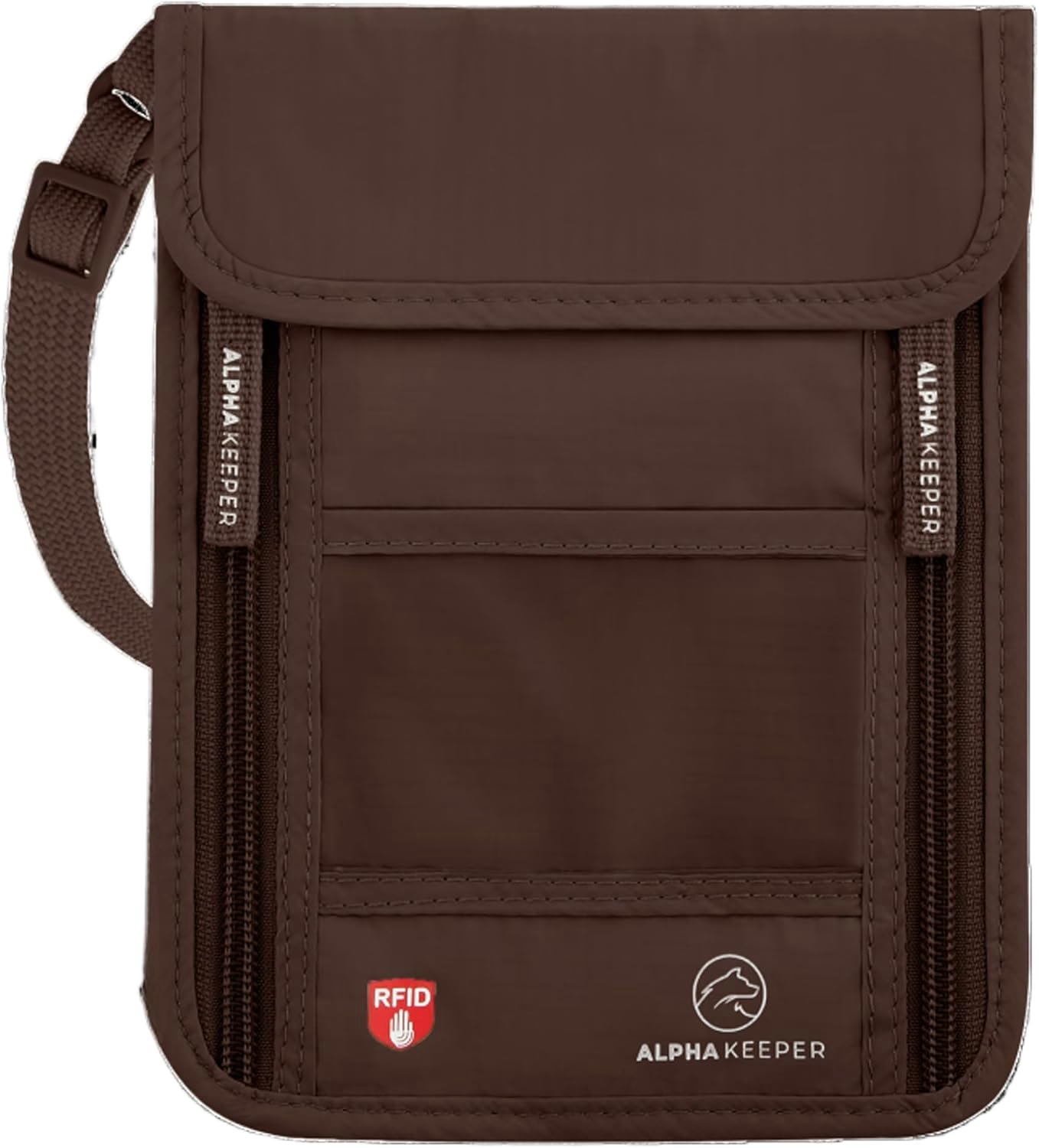
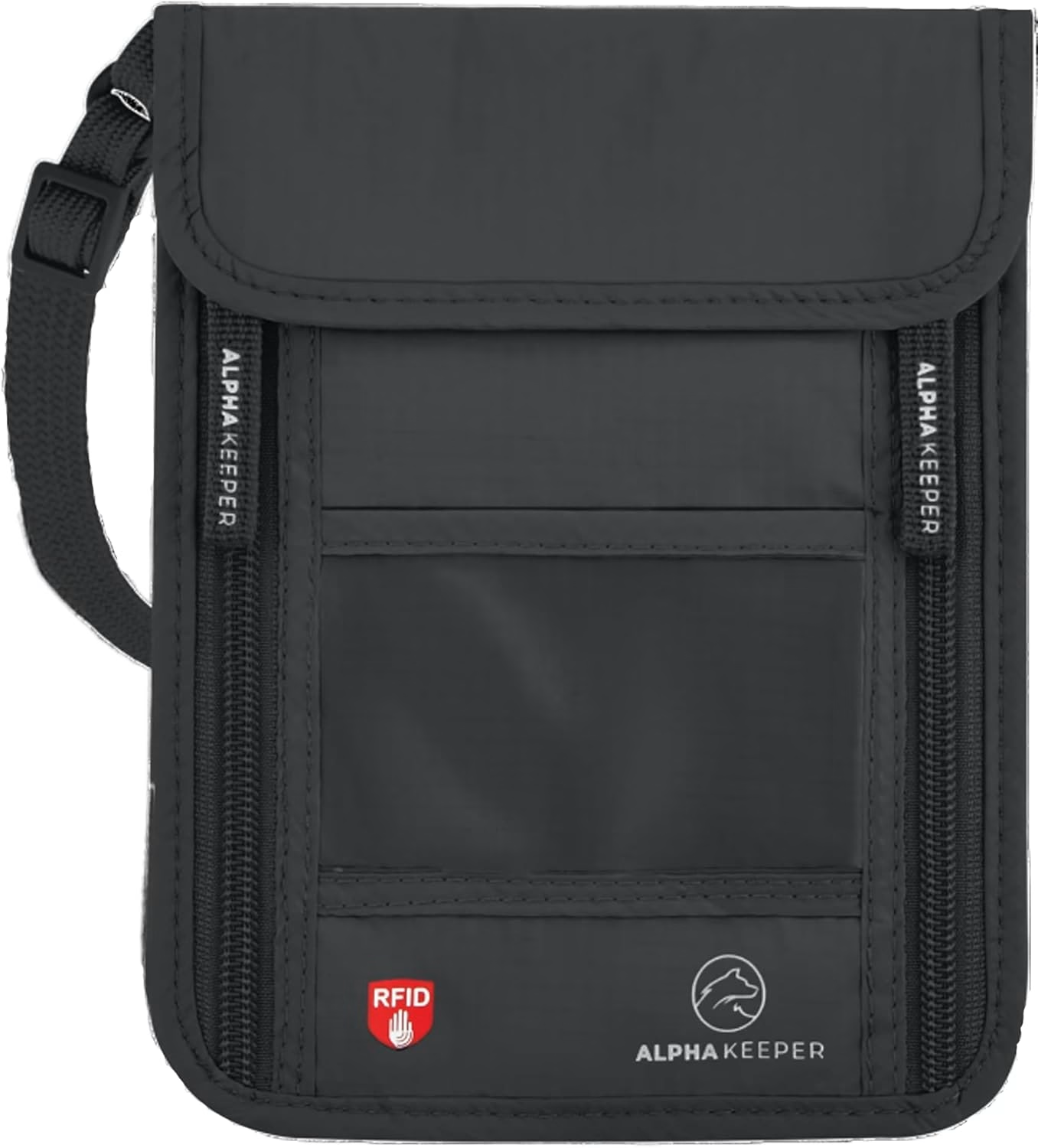
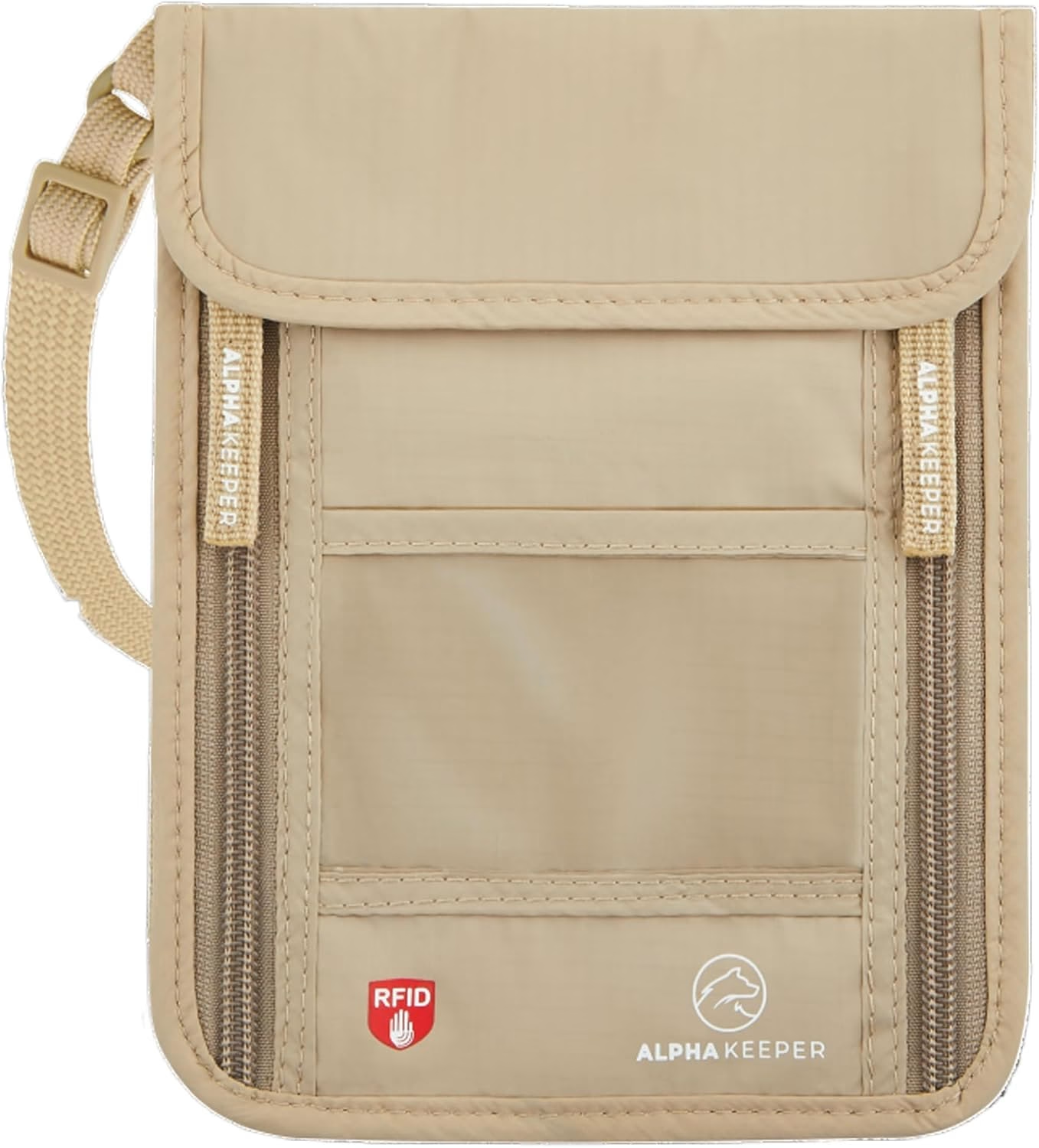
Experienced long-haul travelers — think 3-week Southeast Asia circuits or 6-country Eurail passes — almost universally run a two-layer system: a money belt carries the passport, backup credit card, and emergency cash (say $200 USD in local currency equivalent), while a slim front-pocket wallet handles the day's spending budget. You access the money belt once a day at most — at the hotel in the morning — and the travel wallet handles everything on the street. This split means a pickpocket who gets lucky with your wallet loses maybe $40 and one card you can cancel within minutes, not your passport and entire trip budget. The Brown RFID Neck Wallet is a strong alternative to a waist belt if you find under-shirt waist pouches uncomfortable — it sits flat against your chest under a shirt and fits a passport plus four cards cleanly.
Neck Wallet vs. Waist Money Belt: The Sub-Decision Nobody Talks About
Within the 'hidden pouch' category, waist money belts and neck wallets solve slightly different problems. Waist belts (like the Beige RFID Money Belt or Silver RFID Money Belt) are better for people wearing tucked shirts or layers — they stay genuinely hidden and don't swing when you move. Neck wallets (like the Dark Grey RFID Neck Wallet or the Beige RFID Neck Wallet with dual luggage tags) work better for lighter clothing like linen shirts or sundresses where a waist bulge would show, though they can become uncomfortable on very long walking days if they bounce. The key fit tip: the neck wallet cord should be short enough to keep the pouch flat against your sternum, not dangling at stomach level where it creates a visible outline.
Price, Materials & What to Actually Look For in 2026
Budget $20–$45 for a quality RFID-blocking money belt or neck wallet in 2026 — anything under $12 typically uses thin, non-laminated 'RFID-blocking' fabric that independent lab tests have repeatedly shown to be inconsistent at blocking 13.56 MHz signals. Look for ripstop nylon or recycled PET outer shells (abrasion-resistant and quick-drying), YKK or equivalent zippers (they last 50,000+ cycles vs. cheap alternatives that fail at 5,000), and a flat profile under 0.4 inches when loaded. For daily travel wallets, slim card sleeves in the Multicolor RFID Sleeve Set or Retro RFID Sleeve Set drop straight into any existing wallet and cost under $15 — a genuinely low-friction upgrade if you're not ready to switch wallets entirely.
Honest Comparison: Alpha Keeper Black RFID Money Belt vs. a Generic Travel Wallet
The Black RFID Travel Money Belt | Hidden Travel Gear measures approximately 11 × 4.5 inches, fits a passport flat without folding it, holds four cards and a reasonable stack of folded bills, and uses laboratory-verified RFID-blocking laminate rated to block 13.56 MHz NFC and 125 kHz LF signals. Compare that to a typical 'RFID travel wallet' sold at airport shops: those are usually front-pocket bifolds with a single shielding panel that may or may not cover all card slots, no passport fit, and zero concealment from physical theft. The money belt solves a fundamentally harder problem — hiding valuables from human hands, not just electronic signals — which is why it wins as the primary security layer on a long international trip.
Frequently Asked Questions
Can I use a money belt as my only wallet on a long trip?
Technically yes, but it's impractical. Digging under your shirt every time you pay is slow and draws attention. Most experienced travelers use a money belt for passport, backup card and emergency cash — accessed once daily — and a slim front-pocket wallet for everyday spending. This two-layer system limits your exposure if something is stolen.
Do RFID-blocking money belts actually work against modern card skimming?
Yes, if the blocking material is properly rated. Look for belts that block 13.56 MHz NFC (used by modern contactless Visa/Mastercard and e-passports) and 125 kHz LF signals. Alpha Keeper money belts use multi-layer blocking fabric tested against both frequencies. Cheap belts with a single foil layer often have gaps at the seams where signals can still penetrate.
Is a neck wallet or waist money belt better for hot climates like Southeast Asia?
For humid, hot climates, a neck wallet in moisture-wicking nylon (like the Azure RFID Neck Wallet or Silver RFID Neck Wallet) generally outperforms a waist belt because it sits away from the waistband sweat zone and dries faster. That said, under lightweight linen shirts, a waist belt like the Beige RFID Money Belt creates a flatter profile. Try both styles against your typical travel wardrobe before your trip.
Ready to upgrade?
Ready to travel smarter? Grab the Black RFID Travel Money Belt | Hidden Travel Gear — it fits your passport flat, blocks RFID signals at every frequency that matters, and disappears completely under a shirt. One purchase, zero compromises.