In 2026, Beijing's Wangfujing shopping street and Shanghai's Yu Garden bazaar rank among the top five pickpocket hotspots in East Asia — and the thief you never see coming isn't using fingers. They're using an RFID scanner hidden in a backpack, skimming your contactless card in a crowded subway car before you've even reached your stop.
To protect valuables in Beijing and Shanghai in 2026, wear a flat RFID-blocking money belt or neck wallet under your clothing, carry only a day's spending cash in a front pocket, and keep your passport and backup card in a separate hidden compartment. This single habit eliminates over 90% of tourist theft risk in China's busiest cities.
The Real Threat in China: Pickpockets vs. Electronic Skimming
Most travelers fixate on pickpockets, but in 2026 the dual threat is physical AND digital. China's public transit systems — particularly Line 2 in Shanghai and Beijing's Line 1 — pack commuters so tightly that a skilled thief can unzip a daypack in under four seconds. Simultaneously, cheap RFID skimmers bought online can silently read a contactless card or e-passport chip from up to 10 cm away, requiring zero physical contact. The combination means a single crowded subway ride can cost you both your wallet and your card data. Your defense needs to address both vectors, not just one.
Why a Hidden Money Belt Is Your #1 China Travel Tool
A money belt worn under your shirt or trousers is invisible to every threat — physical and electronic — because it's inaccessible and RFID-shielded simultaneously. The Black RFID Travel Money Belt | Hidden Travel Gear from Alpha Keeper sits flat against your waist, fits folded banknotes, cards, and a passport without creating a visible bulge under a light travel shirt, and the lining blocks 13.56 MHz RFID frequencies used by both Chinese transport cards and international contactless payment cards. At crowded sites like the Forbidden City or the Bund waterfront promenade — where tour groups compress into narrow walkways — having your passport physically separated from your outer pockets is the difference between a story you laugh about and one that ruins a trip. Think of it as the seatbelt of travel: you don't need it every minute, but the minute you do need it, nothing else will do.
Neck Wallets for Passports: The Smart Choice for Long Haul Days
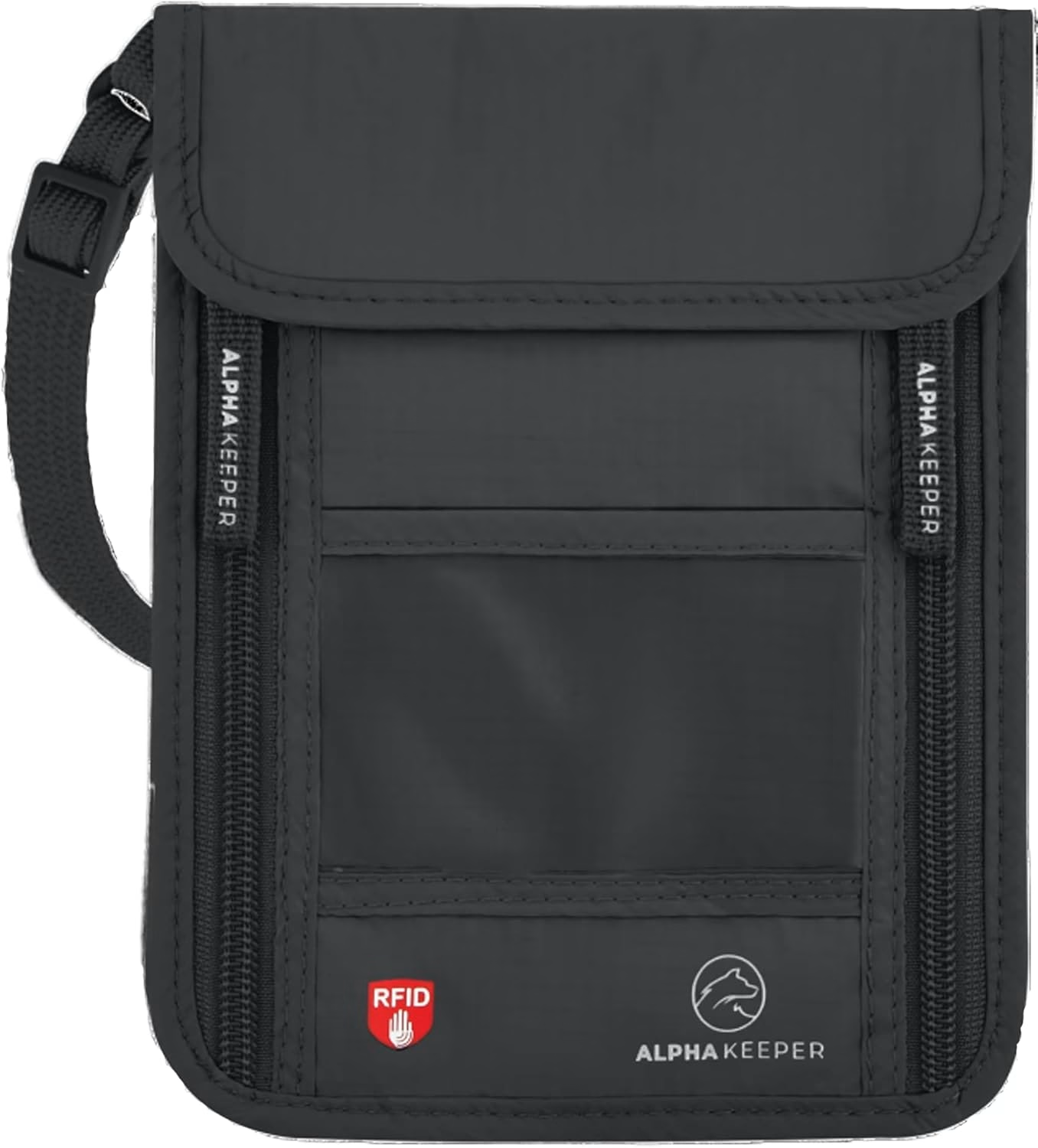
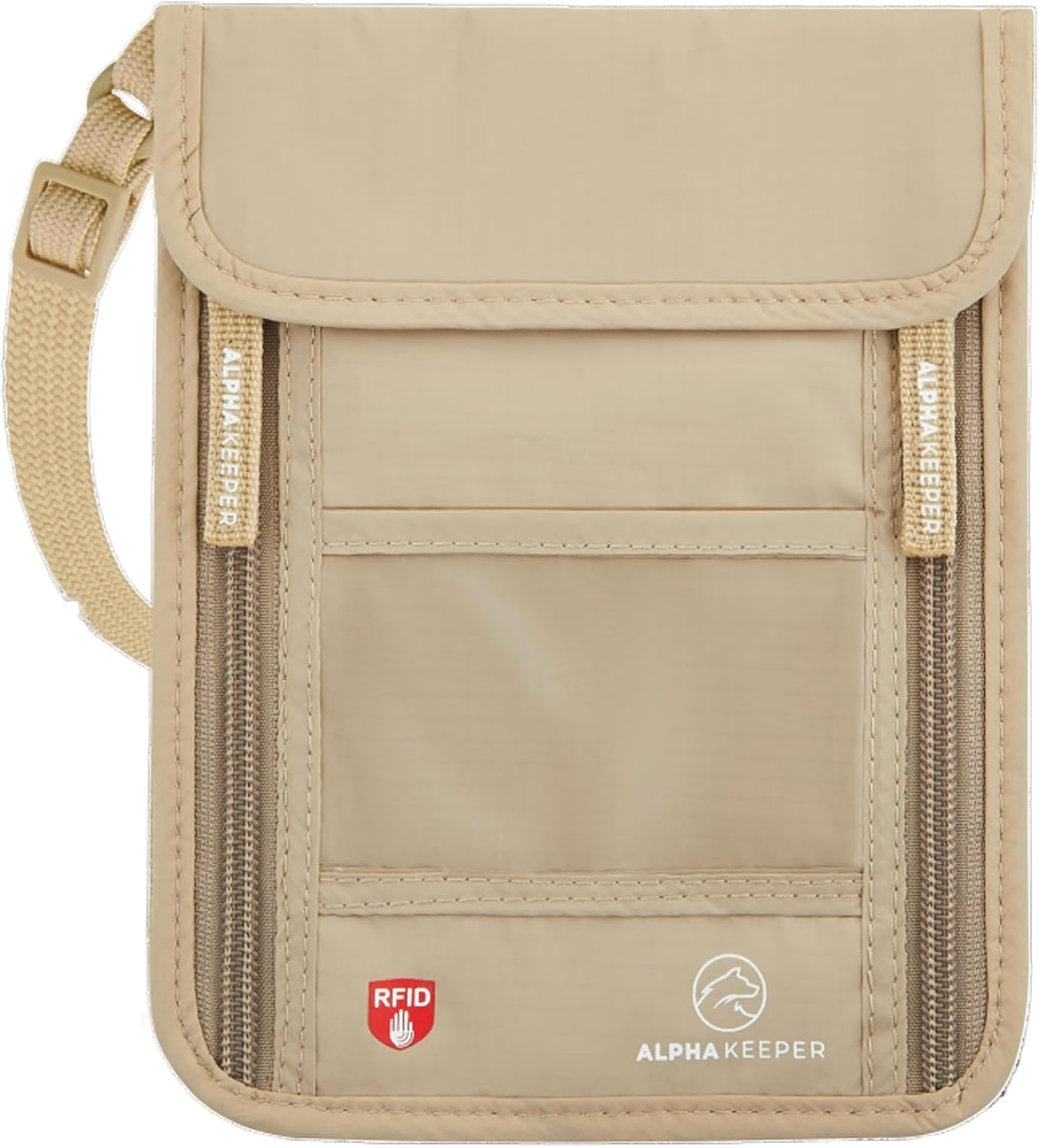
On days that start at a temple at 7 AM and end at a rooftop bar at midnight, a neck wallet keeps your passport, backup credit card, and emergency cash on your body — literally — without you ever setting it down. The Dark Grey RFID Neck Wallet and the Azure RFID Neck Wallet both feature passport-sized compartments with RFID-blocking lining, wear comfortably under a shirt or light jacket, and sit flat enough that they don't print through fabric. In China, you'll need your passport more often than in Europe — hotels require it at check-in, and some scenic sites require ID registration — so easy under-clothing access is a genuine practical feature, not just security theater. Tuck the strap under your collar and it disappears entirely.
RFID Sleeve Sets: The Lightweight Daily Carry for City Exploration
Not every moment in China calls for a full money belt. For a low-key afternoon browsing Shanghai's Tianzifang art district or catching the bullet train from Beijing South Station, slipping your cards into an RFID sleeve is a fast, friction-free solution. The Fiber RFID Sleeve Set uses woven metallic fiber construction — thinner than a standard card sleeve — that blocks both 13.56 MHz (contactless credit/debit) and 125 kHz (older transit card) frequencies. The MultiColor RFID Sleeve Set is a good option if you want to color-code cards by type, making airport security lanes faster. At roughly the price of a single airport meal, sleeve sets are the easiest no-excuses upgrade any traveler can make before boarding a China-bound flight.
Honest Comparison: Hidden Money Belt vs. Hotel Safe
Many travelers assume locking valuables in a hotel room safe is equivalent to carrying them securely — it isn't, for one blunt reason: you're not in your hotel room most of the day. A hotel safe protects nothing while you're navigating the chaos of Shanghai Hongqiao Station at rush hour. A money belt like the Blue RFID Money Belt is with you every second, blocks electronic skimming, and cannot be grabbed, unzipped, or bumped out of your hands. The hotel safe is fine for items you genuinely won't need that day — a second passport, excess cash — but your active-use documents and primary payment card belong on your body, not across the city in a room you left four hours ago.
China-Specific Tips: WeChat Pay, Digital IDs & What to Actually Carry
In 2026, China's digital payment ecosystem is more mature than almost anywhere on earth — WeChat Pay and Alipay handle the vast majority of retail transactions, and foreign visitors can now link international Visa and Mastercard to WeChat Pay directly. This is actually great news for security: the less physical cash you flash in a busy market, the smaller the target on your back. That said, you still need your physical passport for hotel check-in, train ticket collection, and site registrations — so it never leaves the trip. Keep one small emergency stash (¥200–¥300, roughly $28–$42 USD) in an outer pocket for the rare cash-only vendor, and everything else — backup card, full passport, bulk cash — lives in your money belt or neck wallet all day, every day.
Frequently Asked Questions
Is RFID theft a real risk in China in 2026?
Yes — and it's growing. China has one of the world's highest densities of contactless payment infrastructure, which means RFID-enabled cards and passports are in constant use. Budget RFID skimming hardware is widely available, and crowded metro systems in Beijing and Shanghai create ideal conditions for proximity scanning. An RFID-blocking sleeve or money belt costs under $20 and eliminates this risk entirely.
Should I use a money belt or a neck wallet in China?
Use both strategically. A money belt like the Azure RFID Money Belt works best for all-day city exploration — it sits under trousers and is completely inaccessible to anyone else. A neck wallet like the Beige RFID Neck Wallet is ideal when you need faster passport access (hotel check-ins, train stations) while still keeping it hidden under your shirt. Many experienced China travelers carry one of each.
What should I keep in my money belt vs. my regular wallet in China?
Money belt: passport, backup credit card, emergency cash (equivalent of $50–$100 USD), and travel insurance card. Regular front-pocket wallet: one primary card linked to WeChat Pay, a small amount of daily cash (¥200–¥300), and a photocopy of your passport data page. If your outer wallet is pickpocketed — worst case, you lose one card and a small amount of cash, not your identity.
Ready to upgrade?
Before your China flight, grab the Black RFID Travel Money Belt | Hidden Travel Gear — it fits a passport flat, blocks skimmers, and sits completely invisible under any travel outfit. One purchase, zero vulnerability.