A pickpocket in Barcelona can strip a leg wallet in under four seconds — most travelers never feel it happen. Before you strap anything to your body, you need to know exactly where each hiding spot fails and where it wins.
A money belt worn under your waistband is harder to access and better for passports and cards; a leg wallet suits quick cash access in crowded markets but is vulnerable when seated. For RFID protection and all-day concealment, a money belt wins in most travel scenarios.
How Each Option Actually Hides Your Valuables
A money belt sits flat against your abdomen under your shirt — typically 10–12 inches wide and less than 4mm thick when loaded — making it essentially invisible under a fitted tee. A leg wallet straps around the calf or thigh, usually secured with velcro or elastic, sitting outside your undergarment layer. The leg wallet is exposed every time you sit down, cross your legs, or roll up a pant cuff in heat, which is precisely the kind of micro-moment a professional thief is watching for. Money belts win on pure concealment because fabric-on-skin contact under a waistband gives zero visual tell from any angle. If stealth is the goal, under-waistband is the benchmark.
RFID Blocking: Where Leg Wallets Typically Fall Short
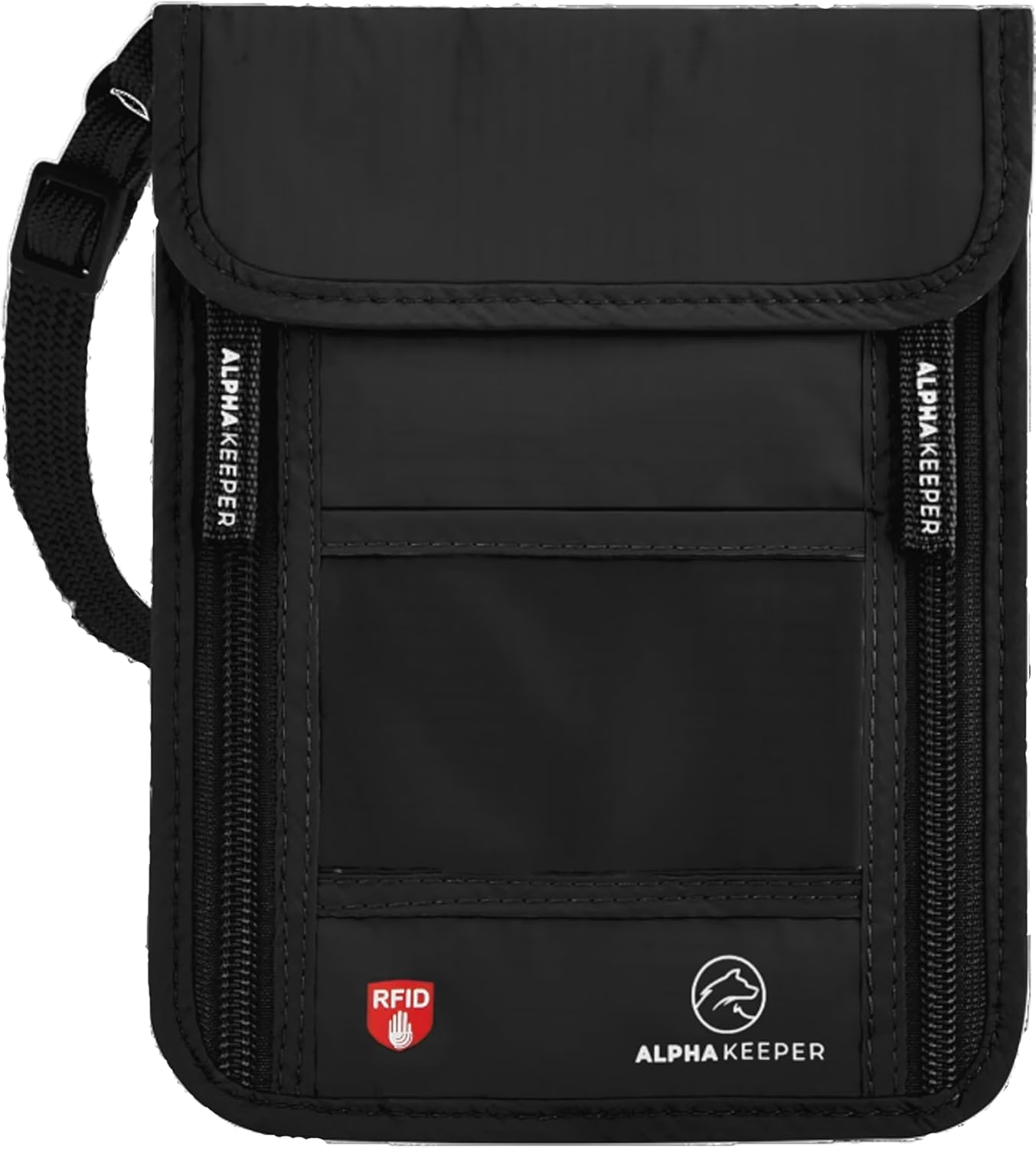
Most leg wallets on the market in 2026 are basic neoprene or nylon pouches with zero RFID shielding — they hide your card from eyes, not from scanners. Modern contactless cards and e-passports broadcast on 13.56 MHz, and a motivated thief with a reader wand can skim data from 10–15 centimeters away in a dense crowd. Alpha Keeper's money belts, like the Black RFID Travel Money Belt | Hidden Travel Gear, are built with multilayer metallic fabric that blocks 13.56 MHz signals and meets ISO/IEC 14443 card protection standards — verified blocking, not marketing fluff. The Azure RFID Money Belt and Blue RFID Money Belt offer the same shielding in lighter colorways if you prefer something less stark. If your leg wallet doesn't explicitly state RFID blocking with a tested frequency, assume it's offering zero electronic protection.
Comfort Over Long Days: The Honest Trade-Off
Leg wallets chafe. That's the blunt reality after hour six of walking cobblestones in summer heat — the elastic band traps sweat, and the pouch shifts with every stride, especially on thighs. Calf placement is more stable but becomes genuinely awkward when you need to access it in public (you're pulling up your pant leg like you're checking a wound). A slim money belt like the Beige RFID Money Belt or Brown RFID Money Belt, made from soft moisture-wicking fabric, lies flat and stays put even during 10-hour travel days. The one real comfort edge a leg wallet holds: for people who can't wear anything at the waist due to a medical reason or tight dress code, it's a viable alternative. For everyone else, the money belt is simply more wearable across a full travel day.
Access Speed and Practicality in the Field
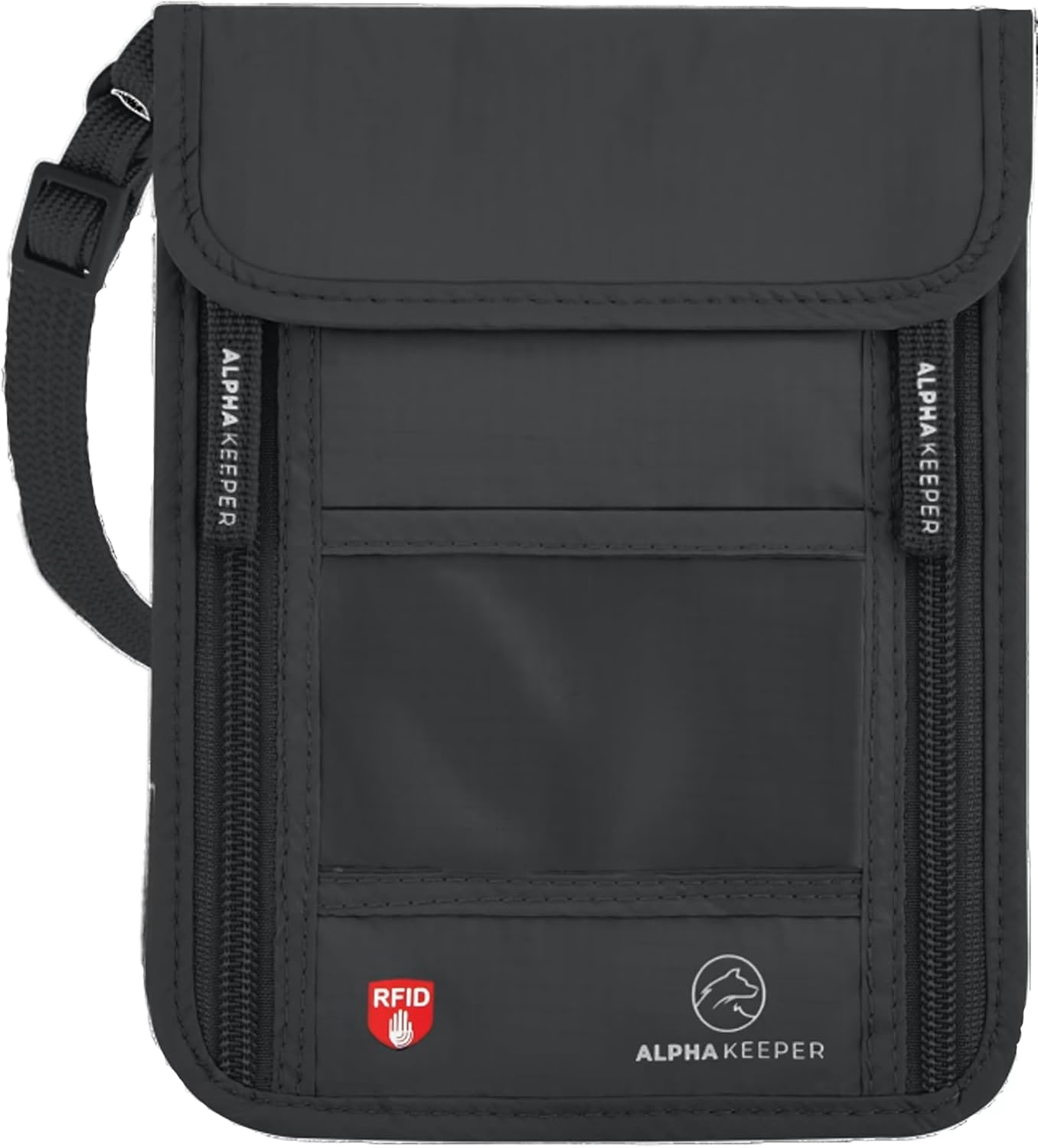
Here's where leg wallets make a credible argument — if you store small-denomination spending cash there, you can dip into a restroom stall and pull euros without lifting your shirt in public. But in practice, most experienced travelers keep a decoy wallet with 20–30 USD equivalent in their front pocket for daily spending, and access their money belt only at the hotel. That workflow makes the leg wallet's 'convenience' argument mostly moot. Alpha Keeper neck wallets like the Dark Grey RFID Neck Wallet or Black RFID Neck Wallet are worth mentioning here: they hang inside your shirt and offer slightly faster access than a waistband belt, bridging the gap between concealment and convenience. Choose based on your actual retrieval habit, not theoretical scenarios.
Honest Comparison: Money Belt vs. Leg Wallet at a Glance
No single product solves every scenario, but the data points in one clear direction for most travelers. Money belts score higher on concealment (under-waistband is invisible), RFID protection (most leg wallets have none), comfort over long days (flat fabric vs. elastic band chafe), and security (harder to pickpocket while seated or in crowds). Leg wallets score one narrow win: accessing cash in a private setting without fully undressing. For multi-week international travel with cards, a passport, and multiple currencies, a quality RFID money belt is objectively the more complete solution. The leg wallet is a specialist tool, not a daily driver.
Frequently Asked Questions
Can a pickpocket reach a leg wallet more easily than a money belt?
Yes. A leg wallet strapped to the calf or thigh is accessible whenever you sit, and a skilled pickpocket can unvelcro or slip a hand under loose trousers in seconds. A money belt tucked under your waistband and shirt requires lifting two layers of clothing and is far harder to access without you noticing.
Do leg wallets block RFID skimming?
Most do not. The majority of leg wallets sold in 2026 are basic fabric or neoprene pouches with no metallic shielding layer. If RFID protection matters — and it should for anyone carrying contactless cards or an e-passport — choose a product that explicitly states tested 13.56 MHz blocking, like Alpha Keeper's RFID money belts.
What should I actually carry in a money belt vs. keeping accessible?
Keep your passport, backup credit card, emergency cash (roughly 200–300 USD equivalent), and travel insurance details in your money belt. Carry one debit card and 20–40 USD in local currency in a front-pocket decoy wallet for daily spending. You should almost never need to open your money belt in public.
Ready to upgrade?
Ready to ditch the chafe and the risk? Grab the Black RFID Travel Money Belt | Hidden Travel Gear — tested RFID blocking, ultra-slim profile, and built to disappear under any outfit from day one of your trip.