Pickpockets in Barcelona's Las Ramblas lifted over €1.3 million from tourists in a single year — and most victims never felt a thing. The right money belt doesn't just store your valuables; it makes you an invisible target in a crowd of obvious ones.
The best travel money belt in 2026 is slim, RFID-blocking, sits flat against your body under clothing, and holds a passport, cards, and folded cash without visible bulk. For most travelers, a waist-worn hidden belt or an RFID neck wallet offers the strongest combo of security and all-day comfort.
What Actually Makes a Money Belt 'Best'? (It's Not What You Think)
Most people fixate on the lock or the zipper — the wrong things. The three factors that actually determine whether a money belt keeps you safe are: RFID-blocking integrity (look for 13.56 MHz shielding that stops modern contactless card skimming), wearability under clothes (anything thicker than 4 mm creates a visible ridge that advertises itself to thieves), and quick-access design for border crossings without a full strip show. A belt that scores high on all three is rare, which is why most gas-station travel wallets fail within one trip. Material matters too: ripstop nylon resists moisture and tearing, while cheap polyester wears through at stress points by week two of a long haul.
Money Belt vs. Neck Wallet: Which One Should You Actually Wear?
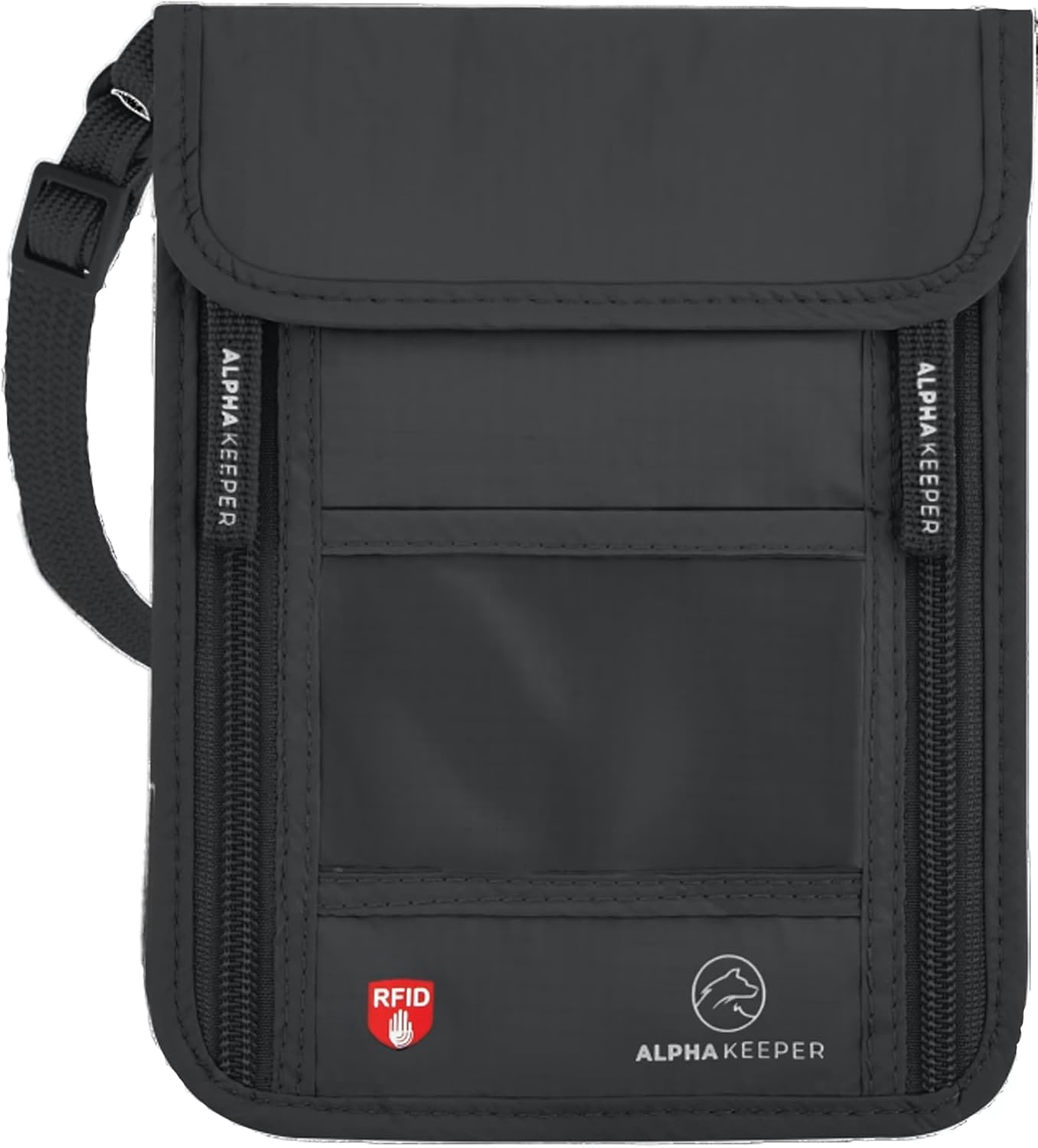
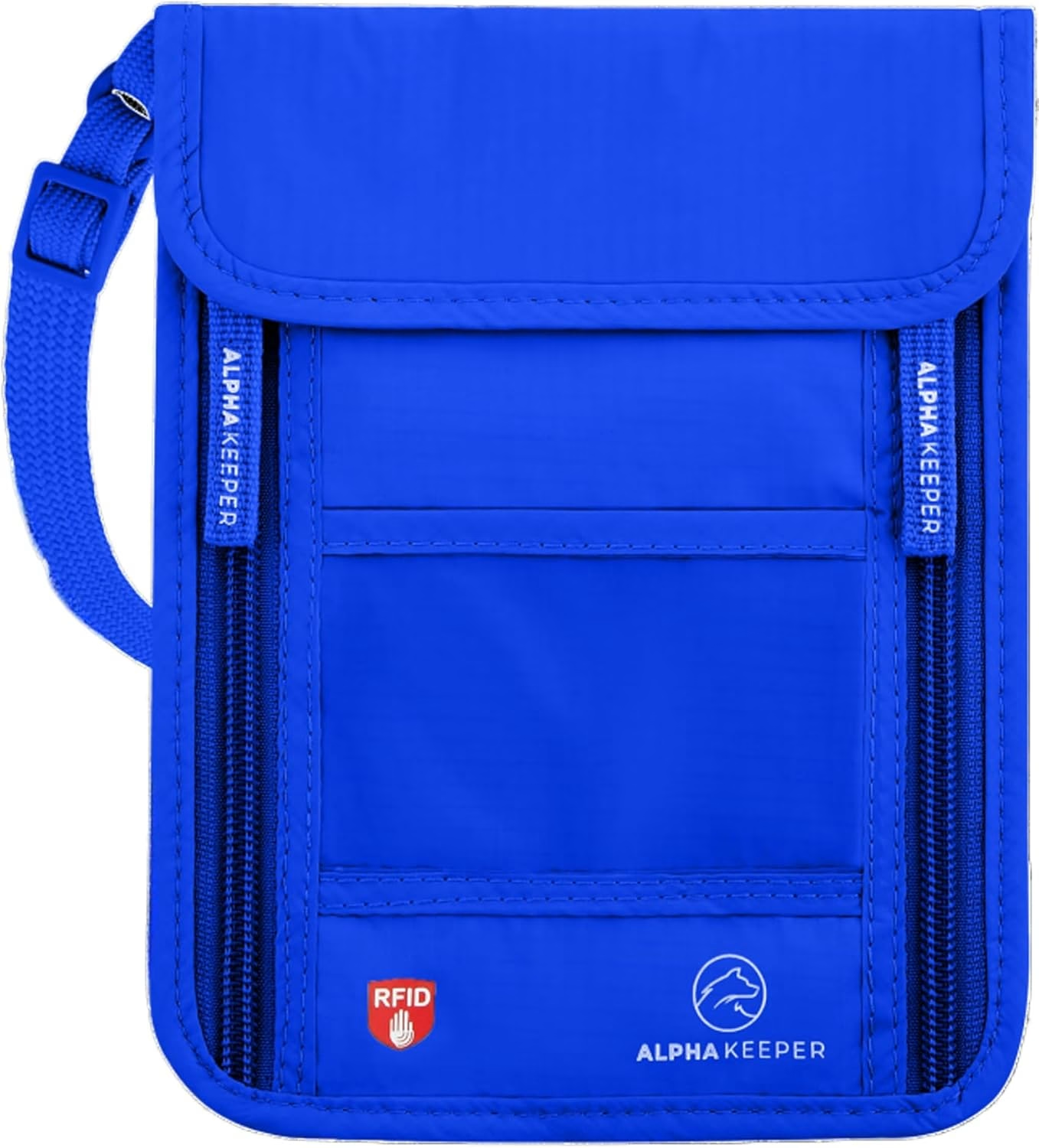
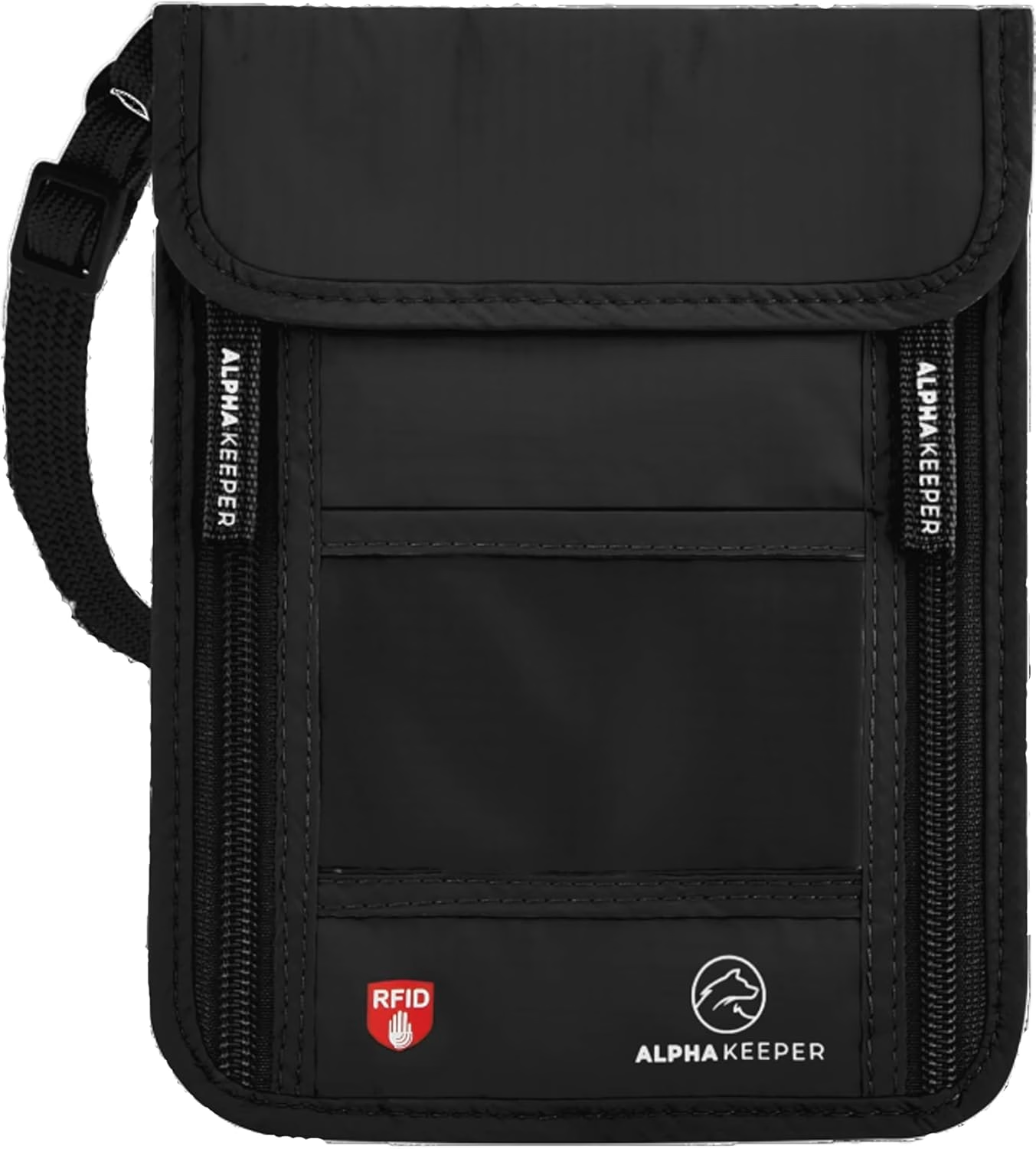
Waist money belts — worn under your waistband against skin — are the gold standard for all-day urban sightseeing. They're completely invisible under a tucked shirt or lightweight layer, hold a full passport plus six cards and a stack of folded bills, and don't swing or bounce when you move. Neck wallets hang from an adjustable cord and sit against your chest; they're faster to access at airports and customs but can show a cord outline under thin fabrics. The honest trade-off: money belts win on concealment, neck wallets win on speed. If you're hopping between three countries in ten days, a neck wallet like the Black RFID Neck Wallet or the Blue RFID Neck Wallet gives you that immigration-line speed without fumbling. If you're spending a week in Rome's tourist-dense centro storico, the Black RFID Travel Money Belt | Hidden Travel Gear disappears under your shirt and gives thieves nothing to target.
RFID Blocking: Real Threat or Marketing Hype?
This debate is legitimate, so here's the honest answer: contactless card skimming in crowded transit hubs and tourist markets is a documented, growing threat in 2026, particularly across Western Europe and Southeast Asia, where tap-to-pay infrastructure is dense. Modern NFC-enabled credit and debit cards broadcast on 13.56 MHz and can be read from up to 10 cm by a concealed reader in a tight subway car. A properly shielded sleeve or wallet interrupts that signal entirely. Alpha Keeper's RFID sleeves — like the Fiber RFID Sleeve Set and the Retro RFID Sleeve Set — use metallic-fiber laminate construction tested to block both 13.56 MHz (cards) and 125 kHz (older ID chips). The MultiColor RFID Sleeve Set is a smart pick for families or travel partners who need to color-code cards across multiple wallets without mixing them up at checkout.
The Best Money Belts for Every Type of Traveler
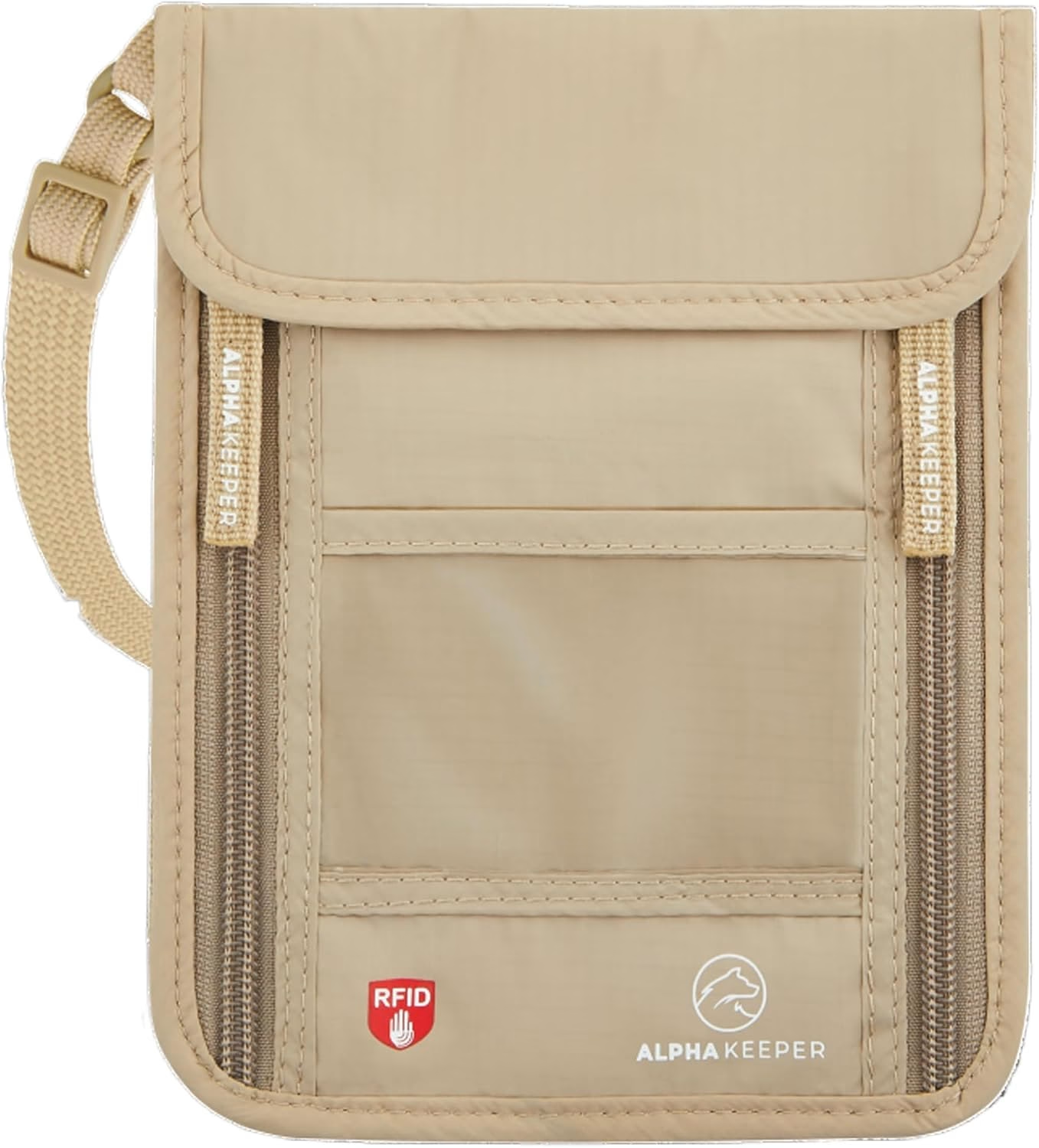
For the minimalist solo traveler on a two-week backpacking loop: the Azure RFID Money Belt keeps things flat and discreet under slim jeans or hiking pants. For cruise passengers who need to carry cards, a small amount of cash, and their ship card through port excursions: the Beige RFID Money Belt blends under light summer clothing without the stark outline that black creates. For travelers who want a neck wallet that doubles as a passport organizer with luggage tags already built in — which is genuinely useful if you're checking bags at multiple airports — the Beige RFID Neck Wallet includes two luggage tags, making it one of the most practical all-in-one options on the market. Couples traveling together should each carry their own; never put both passports in one belt.
Fit, Comfort & Real-World Wearability Over a Full Travel Day
A money belt you take off after two hours because it's uncomfortable is worse than no money belt — it ends up in your bag where thieves can grab it. The benchmark for all-day wearability is a belt that weighs under 60 g fully loaded, has a breathable mesh backing to minimize sweat, and a low-profile clasp that doesn't dig into your hip when you sit. Alpha Keeper's belts use an adjustable elastic band that fits waist sizes from 28 to 44 inches and a flat-lay design tested to sit flush against the body whether you're walking, sitting at a café, or squeezed into a budget airline seat. The Silver RFID Money Belt and the Brown RFID Money Belt both offer neutral colorways that are practical if any portion of the belt is occasionally visible during access — no bright branding, no loud logos.
Honest Comparison: Alpha Keeper vs. Generic Travel Belts
Budget travel belts from generic marketplace sellers typically offer a pouch, a clip, and zero RFID shielding — they're security theater. The material is usually uncoated polyester that absorbs sweat, the zippers are single-layer and catch within days of use, and the 'slim' profile on the product page is photographed empty. Alpha Keeper's money belts are designed with double-layer zipper tape, metallic-fiber RFID blocking sewn into the lining (not a removable insert that shifts around), and a tested flat profile of under 8 mm when fully loaded with a passport, four cards, and folded currency. The price difference — typically $10–15 more than a generic — pays for itself the first time you don't have to file a police report in a foreign city.
Frequently Asked Questions
Can airport security scanners detect a money belt?
Yes — metal detectors and body scanners can detect a money belt if it contains metal items like coins or card chips. Most RFID-blocking belts themselves pass through scanners fine since the shielding material is thin metallic fabric, not solid metal. Remove coins before going through security, and you typically won't need to remove the belt itself.
Should I put my passport in a money belt or a neck wallet?
Either works, but match the product to your itinerary. Money belts are better for long sightseeing days where you won't need your passport until you return to the hotel. Neck wallets like the Beige RFID Neck Wallet or Dark Grey RFID Neck Wallet are better for travel days with multiple border crossings or airport check-ins, since you can access them without undressing.
Are RFID-blocking money belts actually necessary in 2026?
For anyone carrying NFC-enabled credit cards, debit cards, or a biometric passport issued after 2020, yes. Contactless skimming readers are small, cheap, and used in crowded tourist environments worldwide. An RFID-blocking belt or sleeve set adds zero inconvenience and eliminates a real, documented vulnerability. It's cheap insurance compared to the cost of a compromised card abroad.
Ready to upgrade?
Ready to travel without that low-level anxiety of pat-down crowds and tight metros? Pick up the Black RFID Travel Money Belt | Hidden Travel Gear — it sits invisible under any shirt, blocks contactless skimming, and holds your full travel load for under $30.