Every 4 seconds, a traveler somewhere in the world loses a bag to a snatch-and-grab — and in most cases, the thief was done before the victim even flinched. The good news: bag snatching is almost entirely preventable, and it doesn't require paranoia, just the right habits and the right gear.
To prevent bag snatching while traveling, keep valuables in a hidden carrier worn under clothing — a money belt or neck wallet — rather than in an exposed bag. Walk on the building side of sidewalks, use slash-resistant straps, never hang bags on chair backs, and stay off your phone in crowded transit hubs.
Understand How Bag Snatching Actually Works (So You Can Outsmart It)
Most bag snatches aren't random — they're profiled. Thieves scan for the distracted tourist with a crossbody dangling loose on their dominant side, a phone out, and earbuds in. A 2026 Interpol regional crime briefing notes that opportunistic street theft remains the single most reported crime against tourists in Mediterranean, Southeast Asian, and Latin American tourist corridors. The snatch itself takes under two seconds: a motorbike pull-by, a shoulder bump with a follow-through grab, or a deliberate crowd-crush. Knowing the playbook means you can stop being the easiest target in the frame — because thieves always pick the easiest target.
The Single Best Anti-Snatch Move: Move Your Valuables Off Your Bag Entirely
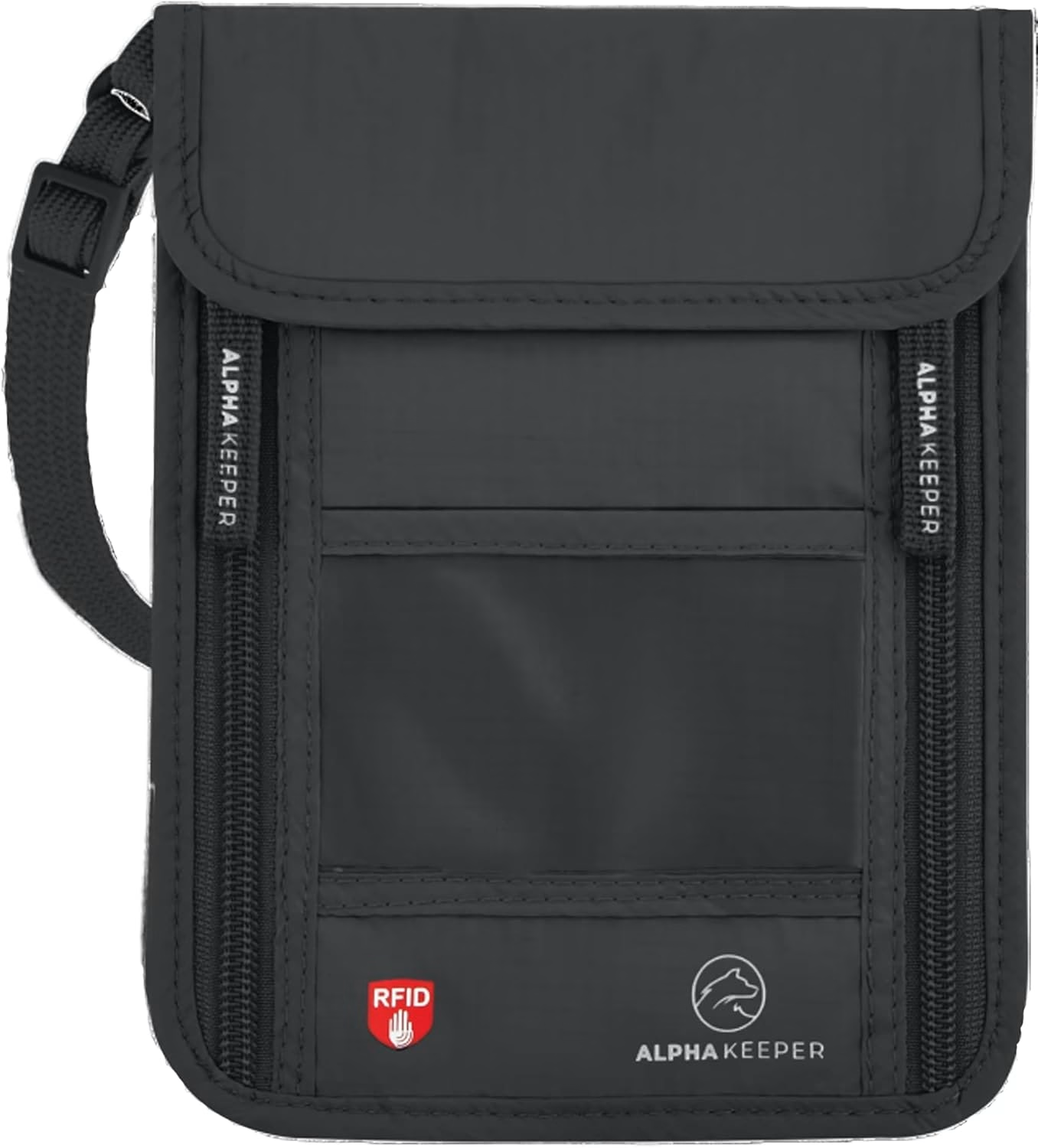
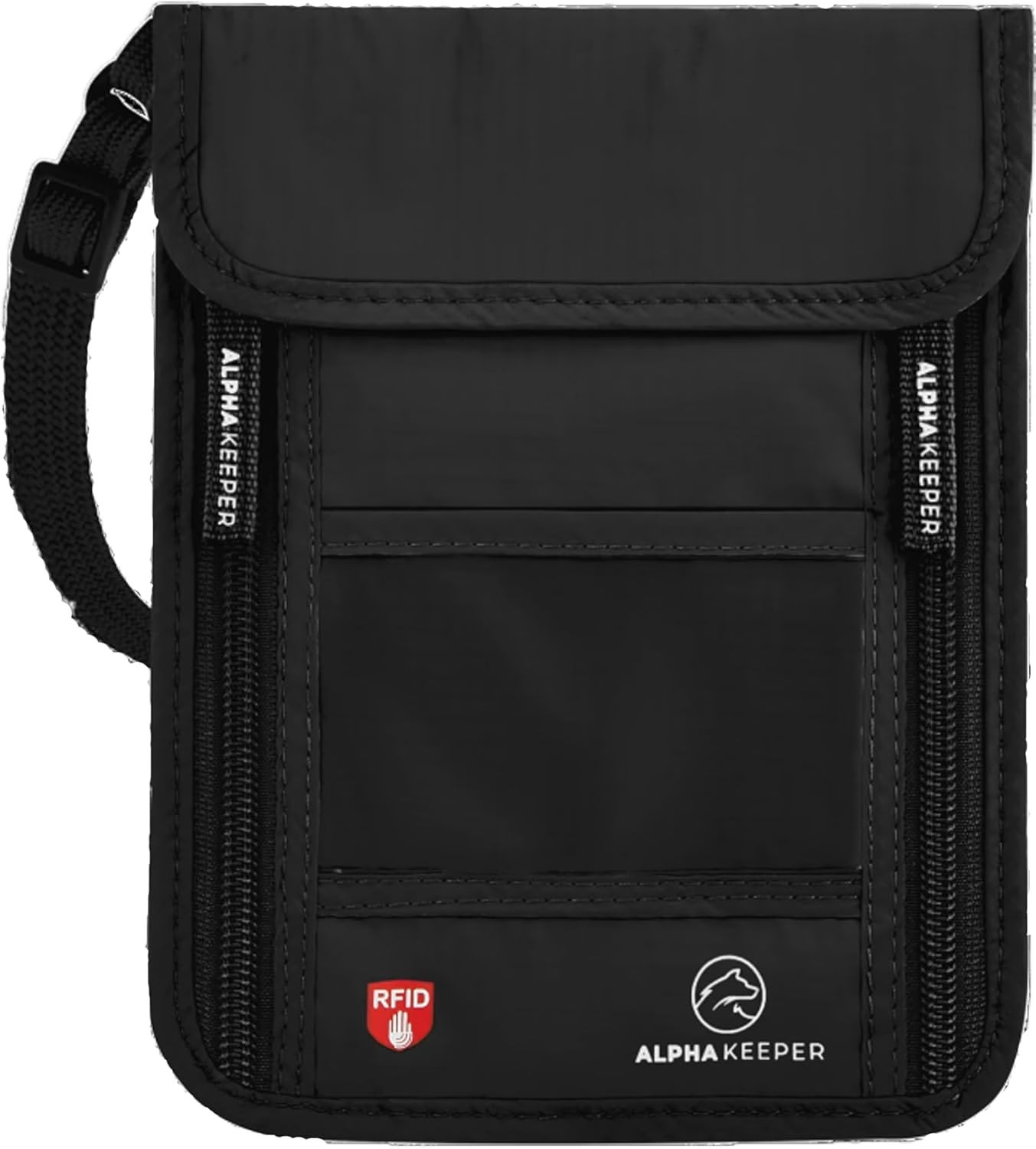
If your passport, cards, and emergency cash are on your body — not in your bag — a bag snatch becomes an inconvenience, not a catastrophe. A slim neck wallet worn under your shirt or a flat money belt tucked under your waistband is completely invisible and completely unreachable in a snatch scenario. Alpha Keeper's Dark Grey RFID Neck Wallet, for example, sits flat against your chest under a t-shirt with zero visible bulk, holds a passport, four cards, folded bills, and a SIM card, and blocks RFID skimming simultaneously — one product solving two theft vectors at once. The Azure RFID Money Belt goes under your waistband and is genuinely undetectable under normal travel clothes; no thief can snatch what they cannot see or feel. This is the foundational move — everything else is a layer on top of it.
Bag-Carrying Techniques That Dramatically Cut Your Risk
Where and how you carry a bag matters more than what kind of bag it is. Walk on the building side of the sidewalk so motorbikes approaching from the street cannot reach your bag without mounting the curb — a simple lane shift that eliminates the drive-by snatch almost entirely. Wear crossbody straps diagonally across your chest and position the bag in front of your body at hip level, not dangling at your side. In markets, on metro platforms, and in restaurants, hold the bag in your lap or hook the strap around your leg under the table — never hang it on a chair back, where it can be lifted without you noticing for minutes. When standing in a crowd, hold your bag against your stomach with one arm across it; this is not paranoia, it is a two-second habit that closes the grab window entirely.
The Honest Gear Comparison: Hidden Carriers vs. Anti-Theft Bags
Anti-theft bags — reinforced panels, locking zippers, slash-resistant straps — are marketed heavily, but they have a real ceiling: they're still external, still visible, and still snatchable if the thief is fast or on a motorbike. A slash-resistant strap only helps if the thief uses a blade on the strap rather than just yanking the whole bag off your shoulder or out of your hands. Hidden body carriers — neck wallets and money belts — have no such ceiling because there is nothing external to grab. The trade-off is capacity: a money belt holds essentials, not your DSLR. The smart play is to combine both — a hidden carrier for documents, cards, and emergency cash, and a modest anti-theft bag for your phone, guidebook, and daily spending money. If the day bag gets snatched, you lose convenience items, not your identity.
RFID Blocking: The Theft Vector Most Travelers Forget About
Bag snatching is physical, but electronic pickpocketing — RFID skimming of contactless cards and e-passports — requires zero physical contact and leaves no trace you were victimized until you check your bank statement. In high-density tourist areas in 2026, skimming hardware is smaller and cheaper than ever, making this a genuine threat in metro stations, queues, and café lines. RFID-blocking sleeves like the Fiber RFID Sleeve Set or the Colorful RFID Sleeve Set slide over individual cards and block the 13.56 MHz frequency used by both contactless credit cards and biometric passports — for a few dollars per card, it is the cheapest theft prevention on this list. If you want a one-product solution, any of Alpha Keeper's neck wallets and money belts include built-in RFID-blocking lining, so your cards and passport are physically hidden and electronically shielded at the same time.
The Behavioral Habits That Make You a Hard Target
Gear is only half the equation — behavior is the other half, and it's free. Put your phone in your pocket before you exit a vehicle; the moment you step onto a street in a busy city with your phone at eye level, you have self-identified as an oblivious, high-value target. Don't stop in the middle of a sidewalk to check a map — step fully inside a shop or against a wall. Be especially alert in the first and last 10 minutes of any transit journey, which is when most opportunistic theft happens because everyone is distracted by arrivals and departures. If someone approaches you with unsolicited conversation, petitions to sign, or something to show you, it is almost certainly a distraction technique — scan for a second person near your bag immediately. Situational awareness is not anxiety; it's a learnable skill that sharpens quickly once you know what to look for.
Destination-Specific Risk in 2026: Where to Be Extra Careful
Bag snatching risk is not uniform across the world, and in 2026 certain corridors remain significantly elevated. Motorbike snatching is endemic in Ho Chi Minh City, Rome, Naples, Barcelona's La Rambla, Rio de Janeiro, and Marrakech's medina — in all of these, the building-side-of-the-sidewalk rule and a under-shirt neck wallet are non-negotiable, not optional. Paris's RER B line from CDG airport to the city center and the London Underground's Zone 1 stations remain high-pressure pickpocket environments. Barcelona's public transit remains the most-warned European destination in 2026 travel advisories. Cruiser port disembarkation points worldwide are predictable snatch hotspots because thieves know a crowd of disoriented, cash-carrying tourists will appear at a specific time every morning — if you're getting off a ship, get your valuables under your clothing before you step off the gangway, not after.
Frequently Asked Questions
What is the safest way to carry your passport while traveling to prevent it being stolen?
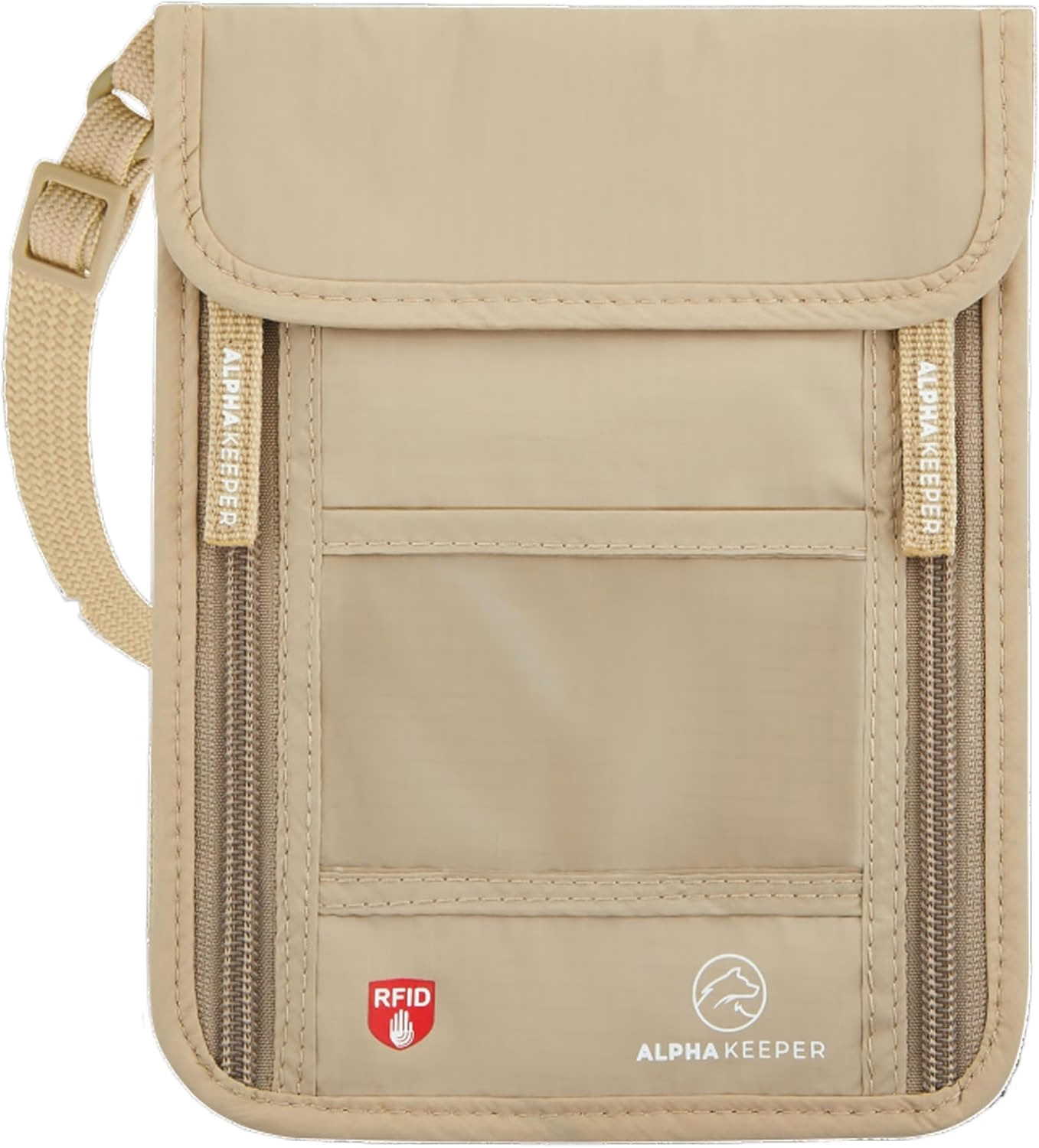
Carry your passport in an RFID-blocking neck wallet worn under your shirt, such as the Black RFID Neck Wallet or the Beige RFID Neck Wallet. It's physically inaccessible to a snatcher, invisible under clothing, and shields your e-passport chip from electronic skimming. Leave a certified photocopy in your hotel safe as a backup.
Do money belts actually prevent bag snatching, or are they just for pickpockets?
Money belts prevent both. Because they sit against your skin under your clothing, they eliminate the snatch vector entirely — there is nothing external to grab. They're equally effective against pickpockets since the pouch is unreachable in a crowd. Options like the Blue RFID Money Belt or Silver RFID Money Belt also block RFID skimming, making them a three-in-one defense against snatch theft, pickpocketing, and electronic theft.
Is an anti-theft bag enough, or do I need a hidden carrier too?
An anti-theft bag is a useful layer but not sufficient on its own. Slash-resistant panels and locking zippers don't stop a motorbike pull-by or a fast grab in a crowd. The most resilient setup is a hidden carrier — a neck wallet or money belt — for your passport, bank cards, and emergency cash, plus a low-profile anti-theft day bag for secondary items. If the day bag is snatched, your critical documents and funds are untouched.
Ready to upgrade?
Stop making your passport and cards snatchable — slip the Dark Grey RFID Neck Wallet under your shirt before your next trip and travel knowing that the thing thieves want most is the one thing they physically cannot reach.