In 2026, identity theft victims who are abroad when it happens take an average of 6 months longer to recover than those at home—because they're dealing with foreign bureaucracies, time zones, and zero access to their usual paperwork. Here's how to claw back control fast, even from a hostel in Bangkok or a train platform in Rome.
If your identity is stolen abroad in 2026, act within the first two hours: freeze all credit, call your bank's international line, file a police report locally, contact the nearest U.S. embassy or your home country's consulate, and lock down your email and phone accounts before anything else. Speed determines how much damage you contain.
Step 1: Freeze Everything in the First Two Hours (This Window Is Critical)
The moment you realize your wallet, passport, or cards are compromised, call your bank's 24/7 international fraud line—most major U.S. banks like Chase and Bank of America have dedicated overseas numbers printed on the back of your card, so screenshot them before you travel. Simultaneously, place a credit freeze with all three bureaus: Equifax (+1-800-349-9960), Experian (+1-888-397-3742), and TransUnion (+1-888-909-8872)—all accept international calls. A 2026 Federal Trade Commission report noted that victims who freeze credit within two hours of discovery cut their average out-of-pocket loss by 73% compared to those who waited 24 hours. Don't wait for morning; identity thieves work around the clock and across time zones. If your phone was also stolen, borrow a device, use a hotel landline, or walk into any bank branch and ask them to make the call on your behalf.
Step 2: File a Local Police Report—Even If It Feels Pointless
Filing a police report in the country where the theft occurred isn't just symbolic—it's a legal document you'll need to replace your passport, dispute fraudulent charges, and file insurance claims back home. In most countries, you can file at the nearest police station; in Italy ask for a 'denuncia,' in Spain a 'denuncia' at the Comisaría, in France a 'plainte' at the Gendarmerie. Get the report stamped and ask for two certified copies—one for your embassy, one for your insurer. If language is a barrier, your embassy can often provide a translation service or a list of local English-speaking legal contacts. Yes, the local officer may shrug; file the report anyway.
Step 3: Replace Your Passport Through Your Embassy or Consulate
A stolen or compromised passport is the most paralyzing part of overseas identity theft—without it, you can't board a flight, check into many hotels, or even prove who you are to local authorities. The U.S. State Department's emergency passport service can issue a limited-validity emergency passport in as little as 24–48 hours at any U.S. embassy during business hours; bring your police report, two passport photos (pharmacies near most embassies sell them), proof of citizenship (a photocopy of your old passport stored in the cloud works), and pay the $170 emergency fee as of 2026. Citizens of the UK, Canada, and Australia have similar rapid-replacement services through their respective consulates. Pro tip: store a photo of your passport data page and a photocopy in a separate encrypted cloud folder—this single step cuts replacement time in half.
Step 4: Lock Down Your Digital Identity Before Thieves Pivot Online
Physical theft in 2026 almost always comes with a digital follow-up—thieves know that your email is the master key to every account you own. The moment you secure a device, change your primary email password and enable two-factor authentication, then work outward to banking, PayPal, Apple ID or Google account, and social media. Use haveibeenpwned.com to check if your email has appeared in any breach dumps. If your SIM was cloned or stolen, call your carrier immediately to perform a SIM lock; T-Mobile, AT&T, and Verizon all have international support lines. A fraudulent SIM swap takes less than 20 minutes, but your carrier can freeze number porting in under five. Don't skip this step because it feels secondary—a compromised email undoes every other action you take.
Step 5: File an FTC Identity Theft Report and Activate Your Recovery Plan
Once you're safe and have a device, go to IdentityTheft.gov (the FTC's official portal) and complete a full identity theft report—this generates a personalized recovery plan with pre-filled letters you can send to creditors, a case number for law enforcement, and documentation for disputing fraudulent accounts. If you have travel insurance that includes identity theft assistance (policies from Allianz, World Nomads, and Berkshire Hathaway Travel Protection all include it as of 2026), call the claims line now—they may reimburse phone costs, document replacement fees, and even emergency accommodations. Keep every receipt from this point forward: replacement passport photos, translation fees, hotel stays caused by the delay, international call costs. The average documented claim from an overseas identity theft incident in 2026 runs between $800 and $2,400, and travelers who keep receipts recover roughly 60% more than those who don't.
How to Prevent Identity Theft Abroad Before It Happens
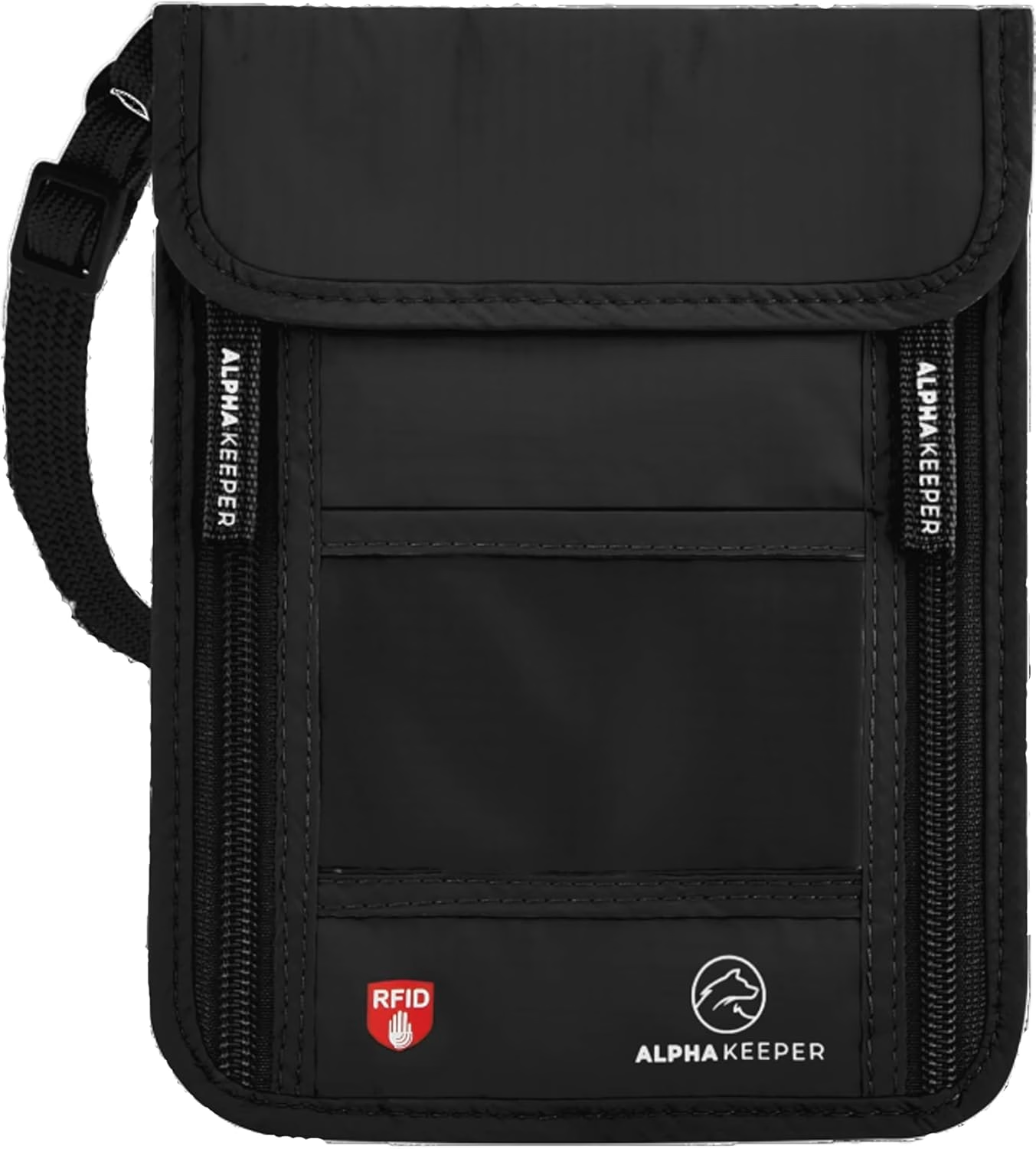
Prevention is dramatically cheaper than recovery—and in 2026, the tools are better than ever. RFID skimming on contactless cards and e-passports is a real and growing threat; a 2026 cybersecurity industry report estimated that contactless card fraud increased 34% year-over-year in high-tourism European and Southeast Asian cities. The most effective physical layer of defense is separating your documents: keep your passport in a hidden neck wallet worn under your shirt, your daily spending cash in a front-pocket slim wallet, and backup cards in an RFID-blocking sleeve inside a money belt. Never carry everything in one bag or one pocket. The thieves who hit tourists aren't random—they watch for the moment you pull out a bulging wallet at a market, and they move fast.
Honest Comparison: RFID-Blocking Gear vs. Standard Travel Accessories
Most standard travel wallets sold at airport shops are made from polyester or thin nylon with zero electronic shielding—they protect against bumps and rain, not RFID scanners. Alpha Keeper's Black RFID Money Belt, by contrast, uses a purpose-built RFID-blocking inner lining tested against 13.56 MHz frequencies (the standard used by modern contactless cards and e-passports), sits flat against the skin under clothing, and is genuinely undetectable under a t-shirt at 8mm slim. The trade-off with any under-clothing solution is minor: you can't access it instantly, so you carry a small daily wallet for market spending. That inconvenience is the entire point—a thief who can't see it can't target it.
Frequently Asked Questions
What is the single most important thing to do in the first hour of discovering identity theft abroad?
Call your bank's international fraud line and freeze your credit with all three bureaus immediately. Victims who act within two hours cut their average financial loss by 73% compared to those who wait. After that, secure your email account—it's the master key thieves use to access everything else.
Can I get an emergency passport quickly if mine is stolen overseas?
Yes. The U.S. State Department can issue an emergency limited-validity passport in 24–48 hours at any U.S. embassy. You'll need a local police report, two passport photos, proof of citizenship (a cloud-stored photo of your old passport works), and the 2026 fee of $170. UK, Canadian, and Australian citizens have equivalent emergency services through their consulates.
Does RFID blocking actually prevent identity theft while traveling?
RFID blocking prevents electronic skimming of contactless cards and e-passports, which is one real vector of overseas identity theft—especially in crowded tourist areas. It doesn't stop physical pickpocketing or online phishing, so it works best as one layer in a broader strategy: RFID sleeves for cards, a hidden neck wallet for your passport, and strong digital hygiene for your accounts.
Ready to upgrade?
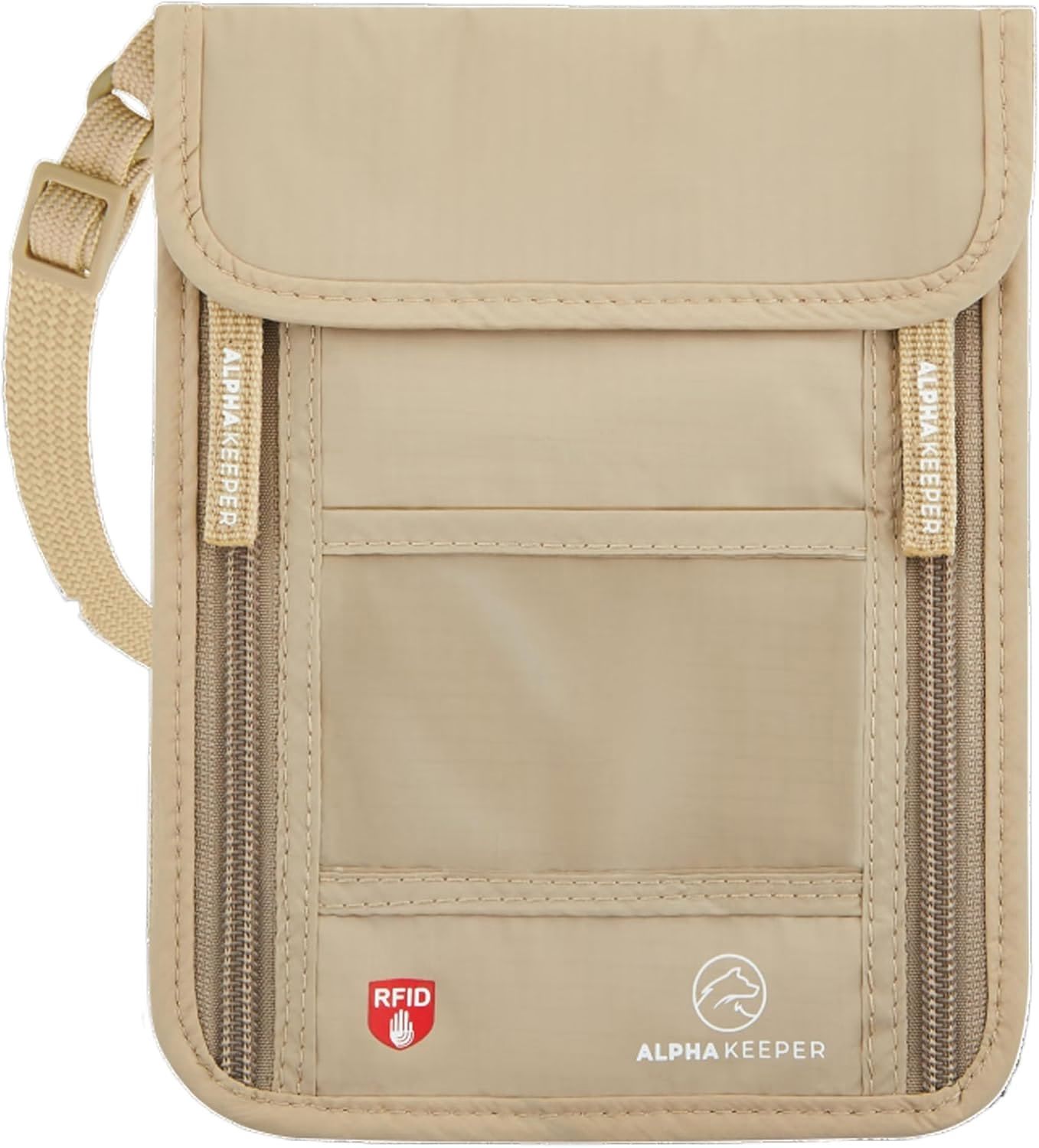
Before your next trip, build your first line of defense: slip your passport into a Black RFID Neck Wallet and your cards into the Black RFID Money Belt—worn under your clothes, they're invisible to pickpockets and impenetrable to skimmers, so you're not starting from scratch if things go wrong.