In 2026, Interpol estimates that over $200 million in counterfeit banknotes circulate globally at any given moment — and tourist hotspots in Southeast Asia, Eastern Europe, and Latin America are ground zero. The person most likely to hand you a fake bill isn't a shady back-alley dealer; it's a taxi driver giving change at 11pm.
To spot fake currency abroad in 2026, run these 7 checks: feel for raised ink and paper texture, tilt for color-shifting ink, hold up to light for the watermark and security thread, check microprinting, test UV glow under a blacklight, look for holograms, and verify serial number spacing. Takes under 10 seconds per note.
Test 1 — The Feel Test: Real Banknotes Have Texture You Can't Fake Cheaply
Genuine banknotes in most major currencies — euros, US dollars, British pounds, Thai baht — are printed on cotton-linen composite paper (roughly 75% cotton, 25% linen for USD), not regular paper. Run your thumbnail over the portrait or large numerals: you should feel distinct raised ridges from intaglio printing. A fake feels flat, slightly waxy, or weirdly smooth. Budget counterfeiters printing on inkjet can't replicate intaglio — the industrial press process costs millions. If the bill feels like it came out of a home printer, it did.
Test 2 — The Tilt Test: Color-Shifting Ink Is a Forger's Nightmare
Tilt a US $100 bill and watch the numeral '100' in the bottom-right corner shift from copper to green. Tilt a €50 note and the emerald number shifts from emerald to deep blue. This is optically variable ink (OVI), and it's one of the most expensive security features to replicate — a single OVI application line costs tens of millions to set up. Counterfeit notes either show no color shift at all or a dull, unconvincing smear. Do this tilt test in any decent light, takes two seconds, catches probably 60% of fakes immediately.
Test 3 — The Light Test: Watermarks and Security Threads Don't Lie
Hold any note up to a light source — your phone flashlight works perfectly. A genuine US $50 or $100 will show a faint portrait watermark embedded in the paper itself (not printed on it) and a vertical security thread that reads 'USA FIFTY' or 'USA 100' in microtext. Euro notes display the denomination in the watermark. Counterfeiters typically print fake watermarks on the paper's surface — they look too sharp, too dark, or disappear when you tilt slightly. The thread should be embedded, not a drawn line. If it peels, it's fake.
Test 4 — The Microprint Test: Grab Your Phone Camera
Legitimate high-value banknotes contain microprinting — tiny text readable only under magnification. On a US $100: look along the security thread for 'USA 100,' and around Benjamin Franklin's collar for 'THE UNITED STATES OF AMERICA.' On euros: microprint appears in the main printed area visible under a loupe. Your smartphone camera in macro mode or a simple $3 pocket magnifier reveals this instantly. Counterfeit microtext either blurs into a smudge or is entirely absent. This test alone has saved travelers hundreds of dollars in places like Istanbul's Grand Bazaar and Bangkok's Khao San Road.
Test 5 — The UV Test: A $15 Blacklight Pen Pays for Itself on Day One
Under ultraviolet light (365nm wavelength), genuine US dollar bills show red and blue security fibers scattered randomly through the paper, and the security thread glows pink for $100, yellow for $50. Euro notes display a constellation of stars and the denomination in UV-reactive ink. A compact UV pen or keychain blacklight costs $8–$15 on Amazon and fits in any travel wallet. Counterfeit bills either glow uniformly (they've been bleached and reprinted) or show none of the correct patterns. This is the test used by cashiers worldwide — carry the tool they use.
Test 6 — The Hologram Test: Know What You're Looking For Before You Land
Euro notes from the Europa series (2013–present) feature a holographic emerald stripe on the left side that displays a '€' symbol and the denomination when tilted. British £20 and £50 polymer notes have a see-through window with a holographic image of the monarch that changes color. The key: research the specific holograms for the currency of your destination country BEFORE you travel — spend 10 minutes on the central bank's official website. A bad hologram looks flat, has fuzzy edges, or simply shows a static image with zero dimension. Knowing what 'right' looks like makes 'wrong' obvious.
Test 7 — The Serial Number Test: Spacing, Font, and Ink Tell the Story
On legitimate bills, serial numbers are printed with perfectly even spacing, consistent font weight, and sharp ink that matches the note's color scheme. On fakes, look for: uneven spacing between digits, slightly different font sizes within the same number, or ink that bleeds or looks lighter than the surrounding print. For US dollars specifically, the serial number should be the same color as the Treasury and Federal Reserve seals. Two notes with identical serial numbers are an instant red flag — counterfeiters often run the same plate repeatedly. If you receive multiple bills in a transaction (like bus tickets or market change), fan them out and compare.
Honest Comparison: Carrying Cash vs. Going Card-Only Abroad
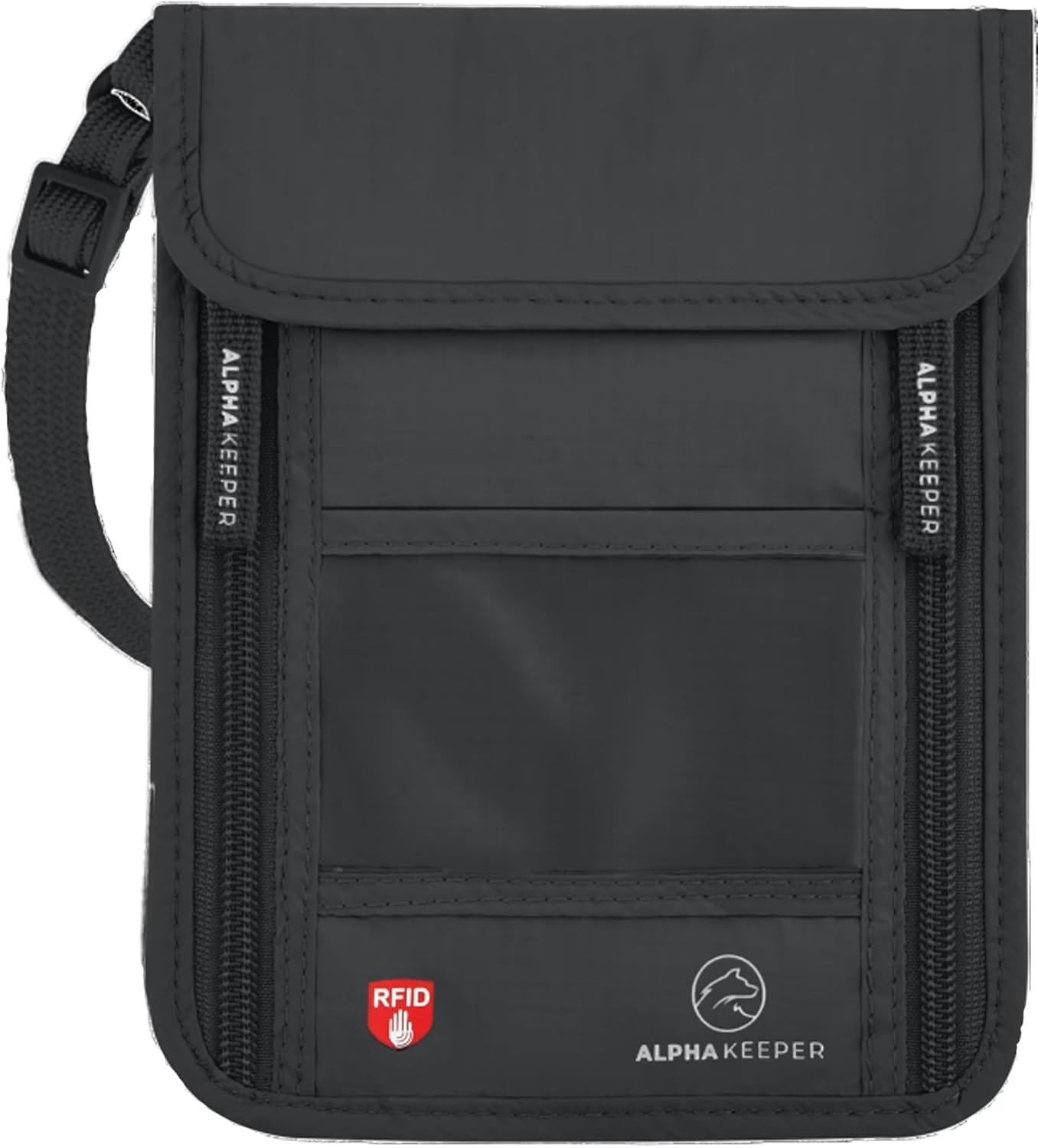
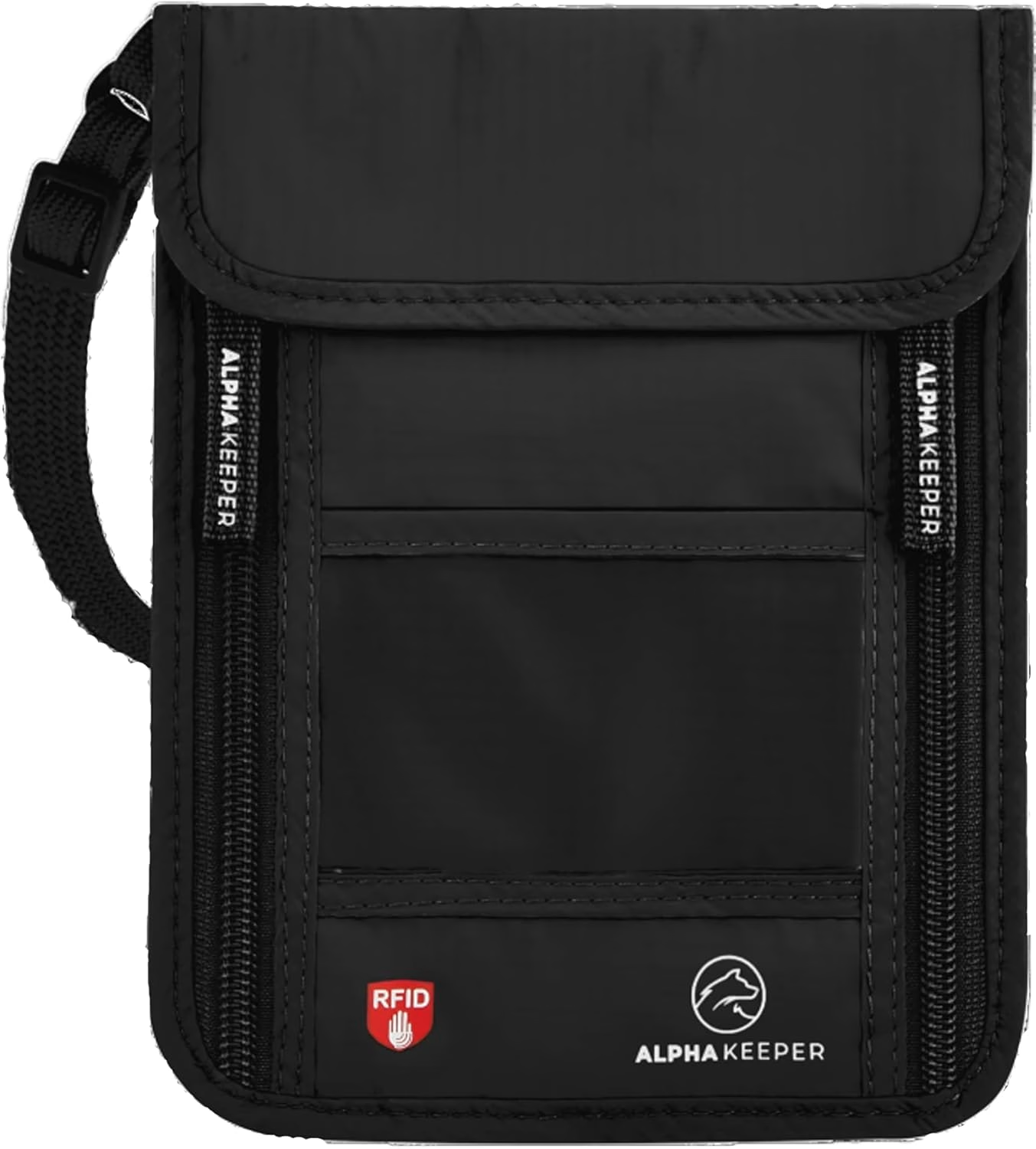
Card-only travel sounds safer, but it fails at rural markets, small guesthouses, overnight buses, and anywhere a card machine 'mysteriously' doesn't work when you need it. The real answer is carrying a sensible cash reserve — typically $50–$150 USD equivalent in local currency — and storing it somewhere a pickpocket or accidental loss can't clean you out in one move. A hidden money belt worn under your clothes, like the Black RFID Travel Money Belt | Hidden Travel Gear from Alpha Keeper, means even if you're handing out bills at a busy souk, your main cash reserve is invisible and inaccessible. Cards for big purchases, cash for everything else, hidden belt for the backup.
Where Fake Currency Scams Happen Most in 2026 (And How to Refuse Gracefully)
The highest-risk scenarios identified by traveler reports in 2026: taxi change in Cairo and Istanbul, currency exchange booths just outside airport security in Bangkok and Ho Chi Minh City, market vendors in Morocco and Mexico City, and ATM-adjacent 'helpers' in Barcelona and Prague. The refusal technique is simple: slow down. Pull out the bill, hold it to the light, tilt it once. You don't need to accuse anyone — just take your time. Scammers rely on the rushed, embarrassed traveler who accepts change without looking. Being deliberate is the entire defense. Practice on your own home currency first so the checks become muscle memory.
Frequently Asked Questions
What is the fastest single test to spot a fake banknote abroad?
The tilt test for color-shifting ink is the fastest — takes two seconds and no tools. Tilt the note and watch the denomination numeral change color. If it doesn't shift, the bill is almost certainly counterfeit. This works on USD, euros, GBP, and dozens of other major currencies.
Should I use a counterfeit detection pen when traveling abroad?
Detection pens (iodine-based) test for starch in regular paper and work on USD, but they fail against washed-and-reprinted counterfeits where real paper is used. They're a useful backup, not a primary tool. A UV blacklight and the tilt test together are more reliable for international travel across multiple currencies.
What should I do if I accidentally receive a counterfeit bill abroad?
Don't try to pass it on — that's a criminal offense in most countries. Report it to local police or your hotel for documentation, then contact your travel insurance provider. Write the date, location, and transaction details on the back in pencil before surrendering it. Most travel insurance policies do not cover counterfeit currency losses, which is why prevention — checking before you accept — is the only real protection.
Ready to upgrade?
Your best counterfeit defense starts before any bill hits your hand — keep your real cash reserve invisible and secure in the Black RFID Travel Money Belt | Hidden Travel Gear, worn flat against your body where no opportunist can access it while you're busy checking change.