One in eight international tourists is targeted by a pickpocket or financial scam every year — and most of them never saw it coming. The good news: a few deliberate habits and the right gear make you a genuinely hard target.
To keep money safe while traveling, split your cash across multiple hidden locations, carry only a day's spending in an accessible wallet, use RFID-blocking sleeves or a hidden neck wallet for cards and your passport, and stay situationally aware in crowded transit hubs. Layered protection beats any single solution.
Tip 1: Split Your Money Across Three Separate Locations
Never carry everything in one place — this is the single most effective thing you can do before you even leave your hotel room. Divide your trip budget into three pools: a 'sacrifice wallet' in your front pocket with $20–40 in local currency for daily spending, a hidden money belt or neck wallet with your main cash reserve and backup card, and a locked amount left in the hotel safe. If a pickpocket or a 'helpful stranger' gets your front wallet, they get almost nothing. Real travelers who practice this report losing an average of under $30 even in high-theft destinations like Rome, Barcelona, or Bangkok.
Tip 2: Use an RFID-Blocking Sleeve for Every Card You Carry
Contactless card skimming is real and growing in crowded tourist corridors — a thief with a cheap NFC reader can silently lift your card data from inches away without touching you. RFID-blocking sleeves stop that cold by sandwiching your card in a layer of metallic shielding that blocks 13.56 MHz signals. Alpha Keeper's Fiber RFID Sleeve Set is a standout pick: the sleeves are slim enough to slide into any wallet without adding bulk, they're made from a durable woven fiber material, and a set covers all your cards at once. Color-coding with the MultiColor RFID Sleeve Set is a smart trick — you'll instantly know which card you're grabbing without fumbling.
Tip 3: Wear a Hidden Neck Wallet for Your Passport and Emergency Cash
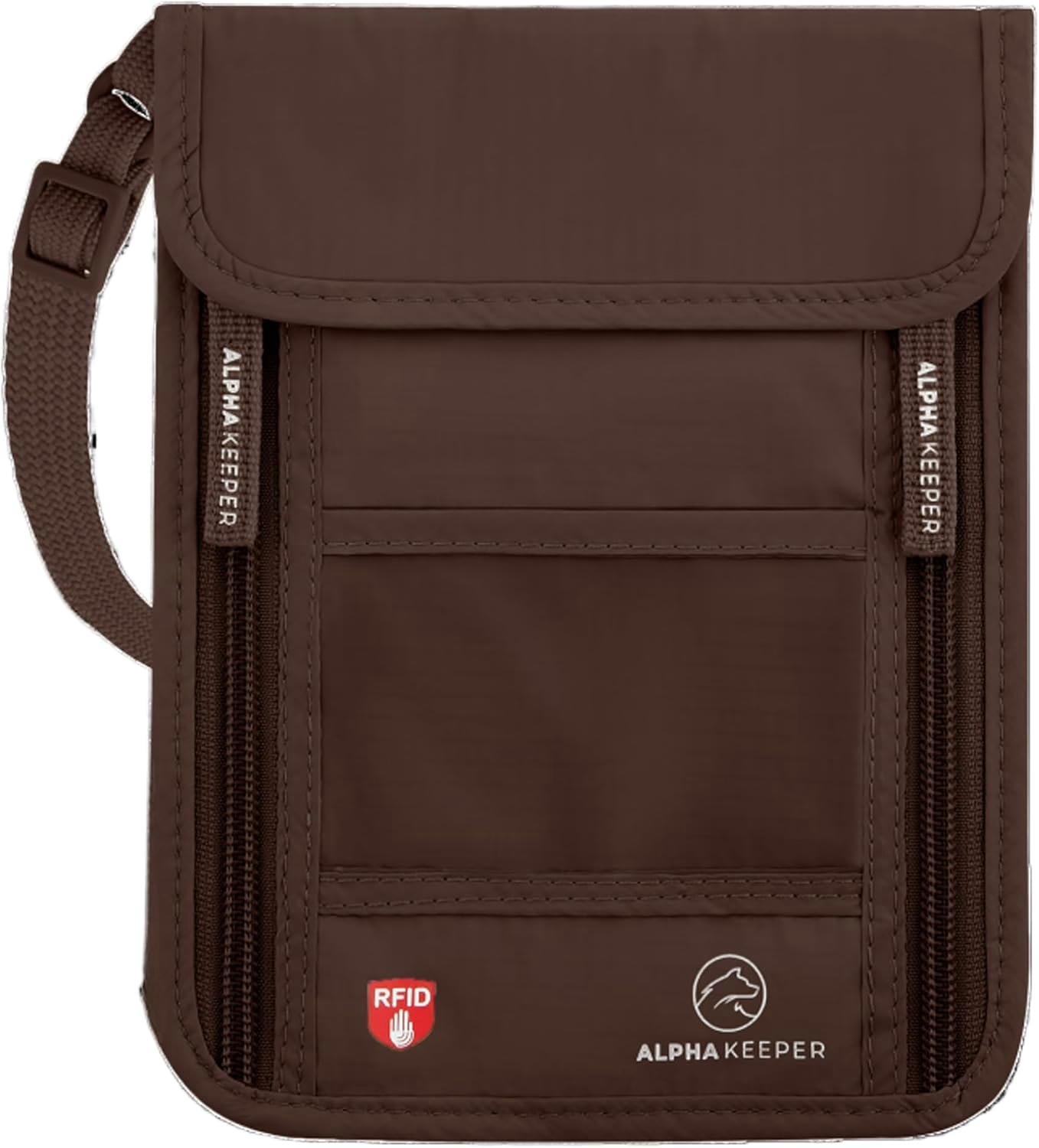
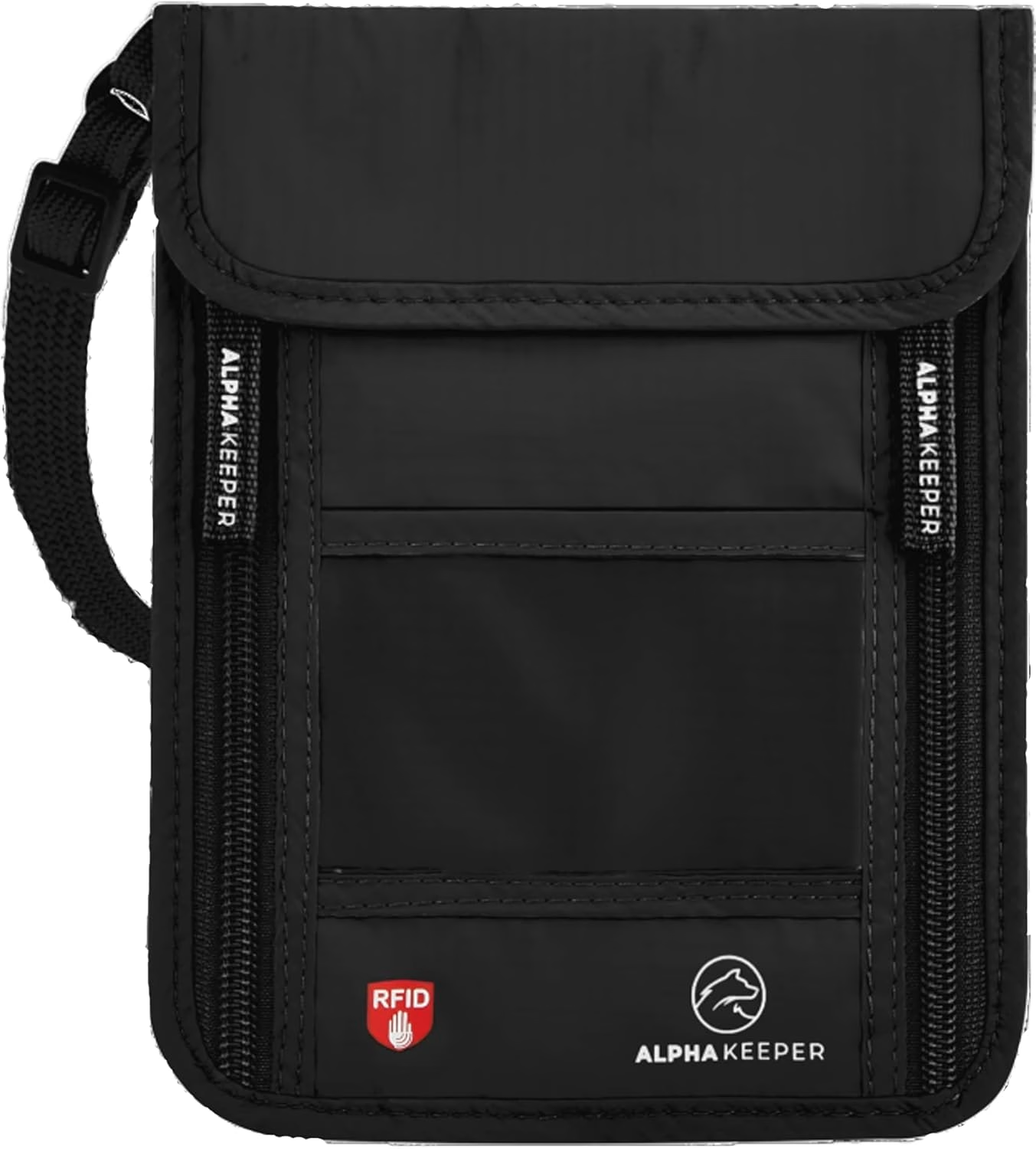
A neck wallet worn under your shirt is invisible to every pickpocket working a crowd — they're targeting pockets and outer bags, not a pouch pressed against your chest. Alpha Keeper's Black RFID Neck Wallet fits a passport flat, holds four cards, and includes a breakaway safety clasp so no one can yank it off without alerting you. The adjustable nylon cord sits comfortably even in summer heat, and the slim profile disappears under a light t-shirt. Keep your passport, one emergency credit card, and your 48-hour emergency cash reserve here, and access it only in private — a bathroom stall, your hotel room, never on a busy street.
Tip 4: Strap On a Money Belt for Long Travel Days
On travel days — airports, overnight trains, long bus rides — a money belt worn flat against your waist under your clothes is the hardest possible target. Alpha Keeper's Blue RFID Money Belt is a great all-day option: it's 11 inches wide with a low-profile clasp that sits flat against the hip bone and doesn't print through clothing. The interior RFID-blocking lining protects cards and chipped passports simultaneously. For lighter packing, the Beige RFID Money Belt blends with skin tones under sheer fabrics. The honest trade-off: you'll need to duck into a restroom to access it, so transfer your day's cash to your sacrifice wallet before you board.
Tip 5: Use ATMs Inside Banks, Not Street-Side Machines
Skimming devices are overwhelmingly installed on standalone ATMs — at convenience stores, tourist kiosks, and street-corner machines. Withdrawing cash from an ATM physically inside a bank branch during business hours cuts your skimming risk dramatically because staff are present and machines are inspected regularly. Always cover the keypad with your other hand, regardless of location. Pull out enough cash for two to three days at once to reduce the number of transactions and exposure events. And when you're done, tuck that cash immediately into your money belt or neck wallet — not your front jeans pocket.
Tip 6: Notify Your Bank and Set Tight Transaction Limits Before You Leave
Most banks now let you set a per-transaction and daily spend cap directly in their mobile app. Set it to something realistic for your destination — say, $200/day — so even if your card data is compromised, the damage is capped. Always notify your bank of your travel dates and countries before departure; a flagged card frozen at a foreign ATM at midnight is a travel nightmare. Enable real-time transaction alerts so every charge pings your phone the second it happens. Catching fraud in minutes instead of days is the difference between a canceled card and a ruined trip.
Tip 7: Dress Down and Ditch the Visible Wealth Signals
Professional pickpockets are profilers — they scan for tourists who look distracted, wealthy, or unfamiliar with their surroundings. Expensive cameras worn loosely around the neck, luxury watches, flashy jewelry, and bulging back pockets broadcast opportunity. Leave your nicest watch at home, use a crossbody camera strap that locks against your body, and carry your bag in front of you in crowded markets or on metro cars. This isn't about paranoia — it's about being the least interesting person in the crowd. Pickpockets are opportunists working on volume; they move past anyone who looks like effort.
Tip 8: Keep a Digital and Physical Backup of Every Document
If your passport is stolen or lost, a certified color photocopy stored separately (in your luggage, not your wallet) can get you into the embassy and moving again within hours rather than days. Upload clear photos of your passport data page, visa pages, insurance card, and credit cards to an encrypted cloud folder — Google Drive with two-factor authentication works fine. Write your embassy's local phone number on a slip of paper kept in your money belt and in your phone's contacts. The $0 cost of these 20 minutes of prep before you leave has an outsized return when something actually goes wrong.
Tip 9: Stay Alert in the Specific High-Risk Moments
Pickpockets don't operate randomly — they cluster around statistically predictable moments: the chaotic rush off a subway train, the queue at a busy tourist attraction, the restaurant table where your bag hangs on a chair, and the ATM vestibule. Research shows 80% of travel theft happens in fewer than a dozen distinct scenario types. Train yourself to do one quick pat-check — money belt, phone, wallet — at every transition point: boarding, disembarking, sitting down, standing up. That five-second habit, practiced until it's automatic, is what separates travelers who get robbed from those who don't.
Frequently Asked Questions
What is the safest way to carry money while traveling internationally?
The safest method is layered: wear a hidden RFID-blocking money belt or neck wallet under your clothes for your passport, backup card, and emergency cash, carry only a day's spending in a front-pocket sacrifice wallet, and leave the rest locked in your hotel safe. No single method is foolproof — the combination is what makes you a hard target.
Do RFID-blocking wallets and sleeves actually work?
Yes, for the specific threat they're designed for. RFID-blocking sleeves and wallets with metallic shielding reliably block 13.56 MHz NFC signals used by modern contactless cards and e-passports, preventing electronic skimming. They do not protect against physical theft, card cloning from a data breach, or phishing — use them as one layer of a broader security strategy.
Should I use a money belt or a neck wallet while traveling?
It depends on your itinerary. A money belt worn at the waist is more comfortable for full travel days — airports, long trains — and distributes weight better. A neck wallet is faster to access discreetly and works better for day trips and sightseeing. Many experienced travelers use both: the money belt on heavy travel days, the neck wallet for exploring cities. Alpha Keeper makes both in slim, RFID-blocking designs.
Ready to upgrade?
Stop leaving your passport and cards one crowded metro ride away from disaster — grab the Black RFID Neck Wallet from Alpha Keeper and travel with the kind of confidence that comes from knowing your most important documents are completely invisible to everyone around you.