In Barcelona's Gothic Quarter last spring, a tourist lost her passport, €400 and three credit cards in the eight seconds it took to point at a map. Pickpocketing isn't bad luck — it's a script, and once you know the script, you stop being the target.
To prevent pickpocketing while traveling, split your valuables across two hidden locations, wear an RFID-blocking money belt or neck wallet under your clothing, keep a slim decoy wallet with small bills, stay alert in known hotspots (transit, landmarks, crowds), and never store anything important in back pockets or open totes.
Know the 5 Scams That Account for Most Tourist Thefts in 2026
Europol's 2026 tourist crime briefing flagged five recurring tactics: the 'map distraction' (someone unfolds a map across your chest while a partner lifts your wallet), the petition scam, the spilled-drink cleanup, the staged metro shove at closing doors, and the friendly bracelet tie. They all share one design — create a 3-second cognitive overload, then strike. If a stranger touches you, gets unusually close, or asks you to read or sign something, your hands should instantly go to your valuables. Not subtly. Obviously.
Split Your Valuables Into Three Layers (This Is the #1 Rule)
Professional pickpockets work fast and rarely double back. So make one hit insufficient. Layer 1: a decoy slim wallet in a front pocket with €20-40 and one expired card. Layer 2: your daily-spend cards and cash in a zipped front pocket or crossbody. Layer 3: passport, backup card, and emergency cash hidden under your clothing in a money belt or neck wallet. If you lose layers 1 or 2, your trip continues. Travelers who skip layer 3 are the ones calling embassies at 11pm.
Choose the Right Hidden Carrier: Money Belt vs. Neck Wallet
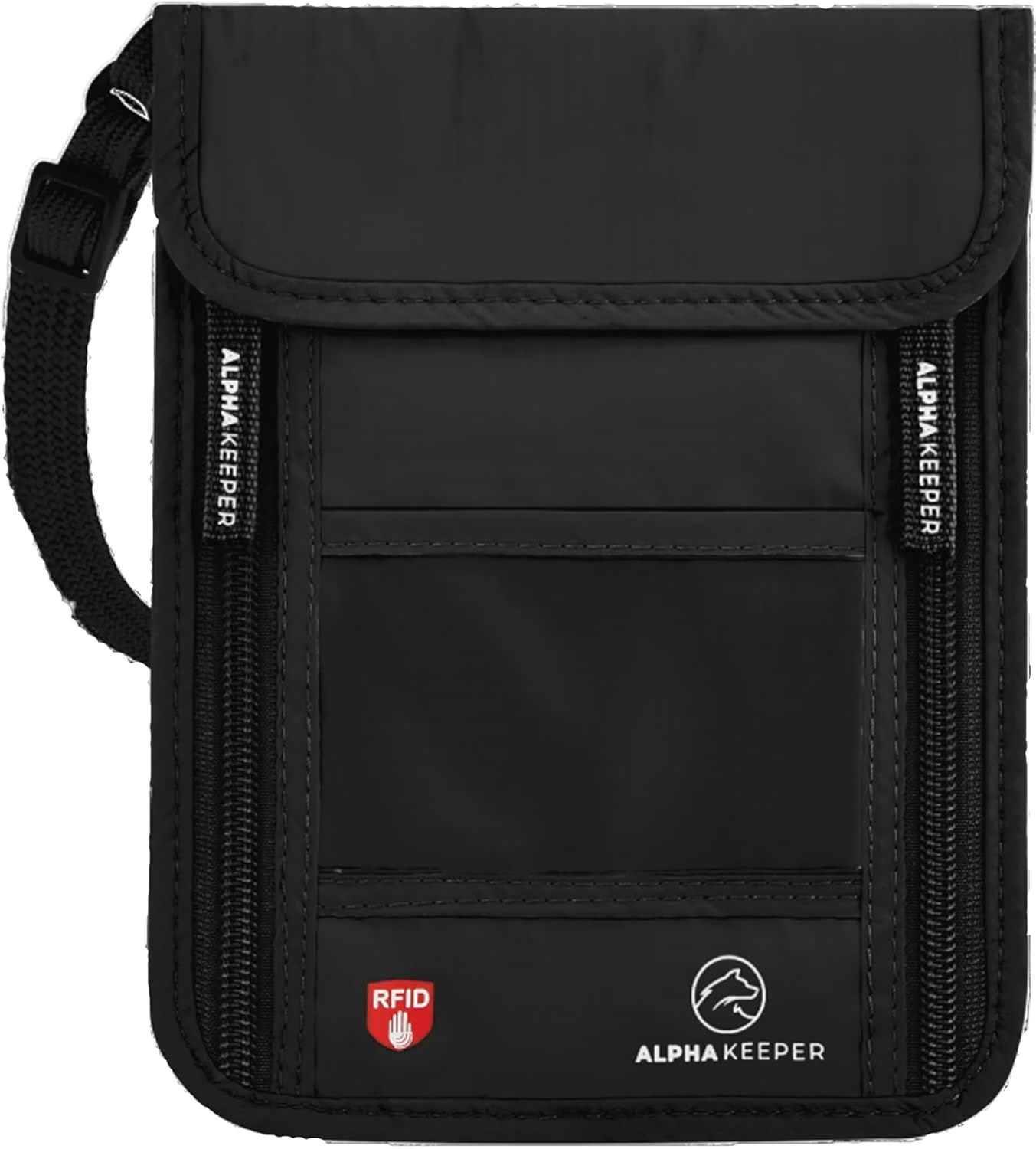
A money belt sits flat against your waist under a shirt — invisible under a t-shirt, comfortable in heat, and ideal for long transit days. The Black RFID Travel Money Belt | Hidden Travel Gear is the workhorse here: low-profile, sweat-resistant lining, and RFID shielding for passport chips and contactless cards. A neck wallet, like the Black RFID Neck Wallet or Azure RFID Neck Wallet, is faster to access at airport checkpoints because you can pull it out from a collar without unbuckling anything. My honest take: money belt for cities and trains, neck wallet for flight days and border crossings.
Yes, RFID Skimming Is Still a Real (and Quiet) Threat
Contactless card limits jumped again in 2026 across the EU and UK (now up to €100 / £100 tap-free), which means a successful skim is worth more than ever. Walk-by readers built into backpacks have been seized in Rome, Prague and Bangkok in the last 18 months. A simple fix: drop each card into an RFID sleeve. The Fiber RFID Sleeve Set and Black RFID Sleeve Set are 0.3mm thin, fit any wallet, and block 13.56 MHz reads — the frequency virtually all bank cards and passports use. If your wallet doesn't shield, your sleeves should.
The 30-Second Habits That Matter More Than Any Gear
Gear fails if behavior is sloppy. Four rules I follow on every trip: (1) Back pockets are off-limits, always — they're called 'sucker pockets' by pickpockets for a reason. (2) Bag in front, zipper toward your body, on every metro and in every crowd. (3) Never pull out your hidden wallet in public; transfer cash to your day wallet in a bathroom stall or hotel. (4) Photograph your passport and cards and email them to yourself before you leave. The travelers who recover fastest aren't the luckiest — they're the most boring about routines.
Where Pickpocketing Spikes in 2026 (And Where It's Quietly Falling)
Based on 2026 tourism safety data, the highest-risk zones remain Paris Metro Line 1, Rome Termini, Barcelona's Las Ramblas, Prague's Charles Bridge, and Buenos Aires' Subte. New hotspots: Lisbon's Tram 28 (up sharply since 2024) and Athens' Syntagma metro. Quietly improving: Madrid and Amsterdam, where uniformed undercover units have cut reported incidents by roughly 20%. Translation: don't relax just because a city has a good reputation. Pickpockets follow tourist density, not Yelp reviews.
Frequently Asked Questions
Is a money belt or neck wallet better for preventing pickpocketing?
A money belt is more discreet under light clothing and better for daily city wear, while a neck wallet is faster to access at airports and border checkpoints. Most experienced travelers in 2026 carry both: money belt for sightseeing days, neck wallet for transit days.
Do RFID-blocking wallets actually work in 2026?
Yes. Independent lab testing in 2026 still confirms that properly constructed RFID sleeves and shielded wallets block the 13.56 MHz frequency used by contactless cards and biometric passports. With tap limits now up to €100, the financial case for shielding is stronger than ever.
What should I do immediately if I'm pickpocketed?
Freeze your cards via your banking app within 60 seconds, file a police report (you'll need it for insurance and embassy replacements), then contact your embassy if your passport was taken. This is exactly why your backup card and passport copy should live in a separate hidden wallet.
Ready to upgrade?
Don't let an eight-second distraction end your trip. Gear up with the Black RFID Travel Money Belt | Hidden Travel Gear for everyday city safety, and pair it with the Fiber RFID Sleeve Set to lock down every card in your wallet.