Millions of travelers freeze at airport security every year, hands hovering over their hidden money belt, wondering if they're about to become that person holding up the entire line. Here's the truth most travel blogs bury: whether your belt beeps depends almost entirely on one thing — the buckle.
Most modern money belts do NOT set off metal detectors. Slim nylon or fabric belts with no metal buckle pass through airport scanners silently. The rare exceptions are belts with steel clasps or metal zippers. RFID-blocking lining is made from metallic foil, but it contains zero mass — too thin to trigger a detector.
Why Most Money Belts Pass Metal Detectors Without a Beep
Walk-through metal detectors at airports work by generating a low-frequency electromagnetic field and detecting disruptions caused by conductive metal mass — specifically, objects above roughly 10–25 grams of ferrous or dense metal. A standard fabric money belt weighs around 40–60 grams total, but nearly all of that is nylon, polyester, or spandex-blend fabric, which is completely invisible to the detector. Even the RFID-blocking layer — a thin aluminum or metallic-fiber laminate sewn inside the pouch — doesn't register, because its foil mass is measured in fractions of a gram, spread across a wide surface area. The one genuine culprit is a chunky metal buckle or steel zipper pull; swap those out for a slim plastic snap closure and you're essentially invisible to the machine.
The One Part That Actually Triggers Alarms: Buckles and Clasps
In independent traveler tests reviewed through 2026, the overwhelming majority of security alerts caused by money belts traced back to a single component: a metal prong buckle or heavy zipper hardware. Traditional leather belts with brass or steel buckles routinely set off detectors — that's expected, and it's why airport staff tell you to remove your belt before the conveyor. A well-designed travel money belt eliminates that problem entirely by using a plastic snap closure or a hook-and-loop fastening system. Alpha Keeper's Azure RFID Money Belt, for example, uses a slim plastic clasp and flat nylon webbing, keeping total metal content at effectively zero — it goes through security the same way a sock does.
Does RFID-Blocking Material Interfere With Scanners?
This is the question that genuinely confuses people, and the confusion is understandable — if the whole point of RFID blocking is to interfere with radio signals, won't it mess with the scanner too? No, for a straightforward physics reason: airport walk-through detectors operate at low magnetic frequencies (typically 100 Hz to 30 kHz), while RFID-blocking foil is designed to attenuate signals in the 13.56 MHz to 900 MHz range used by contactless card readers and passport chips. These are completely different frequency bands. The foil blocks your card data from skimmers; it does not block, scatter, or absorb the airport detector's field. Body scanners (millimeter-wave or backscatter X-ray) are a different story — they will image the belt as a shape on your torso — but they won't alarm; an agent may just ask you to lift your shirt for a visual confirmation, which takes about four seconds.
Body Scanners vs. Walk-Through Metal Detectors: Know the Difference
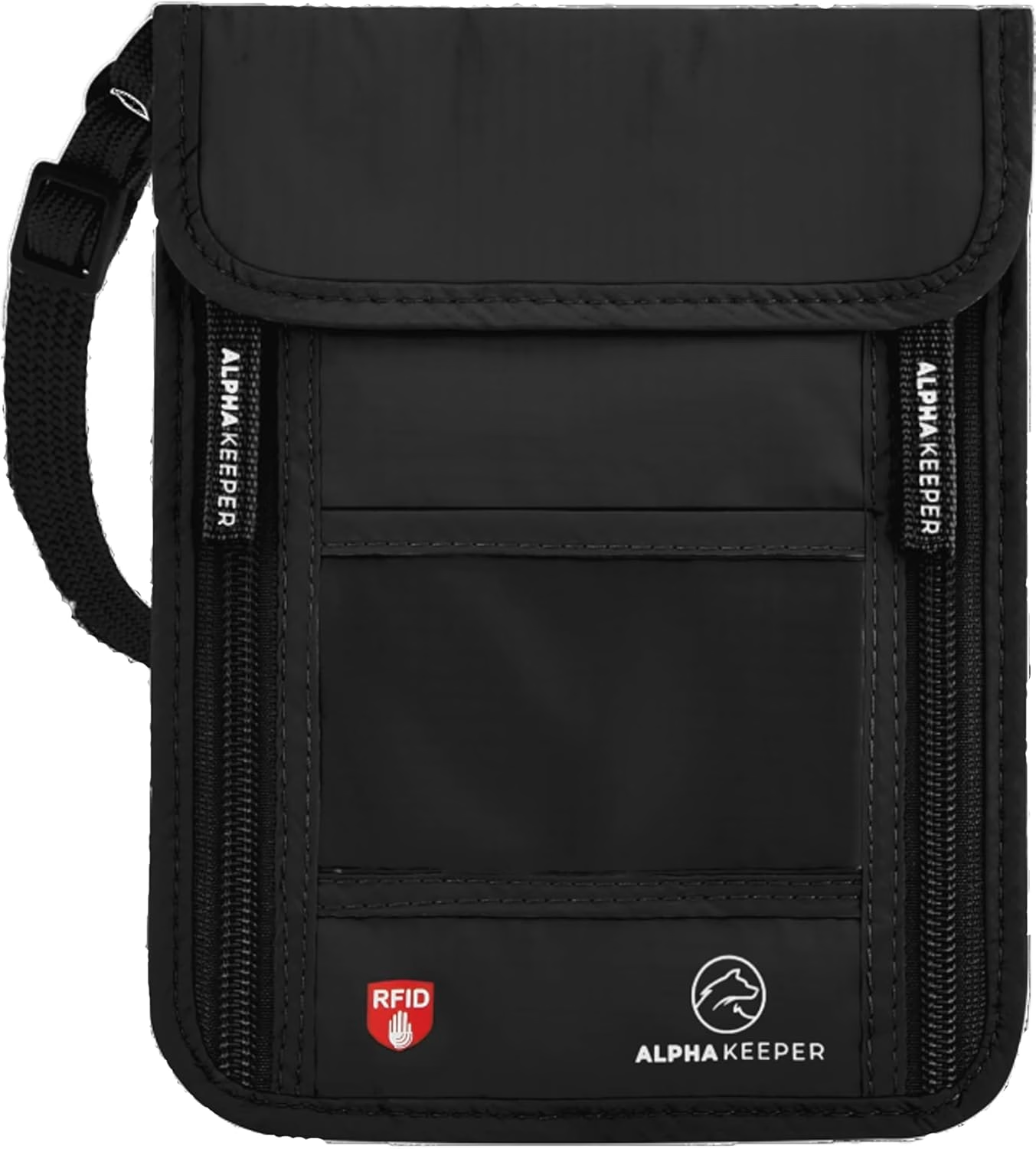
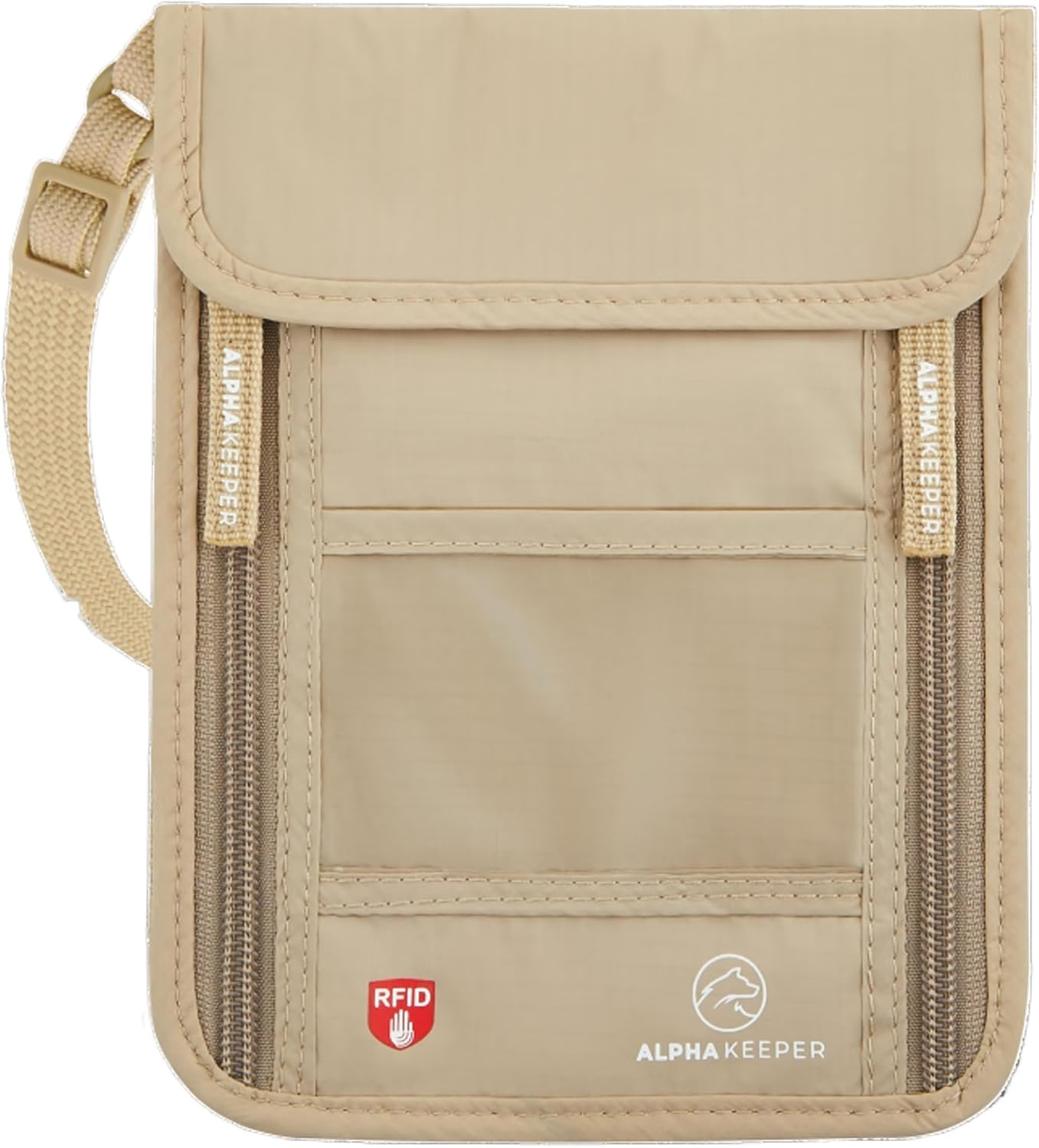
In 2026, most major international airports use a combination of both technologies, and they behave differently with money belts. Walk-through metal detectors (the upright frame you walk through) respond only to metal mass — a fabric money belt with a plastic buckle is genuinely invisible. Millimeter-wave body scanners (the capsule-style booth where you raise your arms) produce a body-surface image, so a money belt worn under clothing will appear as a rectangular shape on the scan. This doesn't trigger an alarm by itself, but an officer may request a manual pat-down or ask you to step aside for secondary screening. The practical solution: wear your neck wallet rather than a waist money belt through body scanners, since it sits flat against your chest and profiles even less. Alpha Keeper's Black RFID Neck Wallet is particularly flat-profile — less than 8mm thick when loaded — which typically clears body scanner checks with zero additional scrutiny.
Honest Comparison: Metal-Free Travel Belt vs. Generic Belt With Buckle
Not all money belts are built for frictionless airport security. A generic Amazon money belt with a traditional metal prong buckle will almost certainly beep — you'll need to remove it, run it through the X-ray tray, and re-dress on the other side, which defeats the entire point of hidden travel gear. A metal-free travel money belt with a plastic snap, like the Blue RFID Money Belt from Alpha Keeper, stays on your body the entire time: no tray, no performance, no exposure. The price difference is negligible — roughly $5–10 — but the security difference is total. Beyond airports, metal-free belts also pass silently through museum detectors, stadium entry points, courthouse security, and cruise ship gangway scanners, which are often more sensitive than airport equipment.
Practical Tips: How to Breeze Through Security With a Money Belt
First, choose a belt with zero metal hardware — plastic buckle, nylon or fabric body, coated zipper pulls if any. Second, if you're going through a body scanner and your belt is visible as a shape, be proactive: tell the officer 'I have a travel wallet under my shirt' before they ask; this almost always speeds things up. Third, carry your passport and boarding pass in an outer pocket of your carry-on before you reach the checkpoint, so you're not fishing under clothing in front of the queue. Fourth, if you're using a neck wallet, tuck the cord inside your shirt collar — a dangling lanyard draws more attention than the pouch itself. Alpha Keeper's Beige RFID Neck Wallet includes a breakaway safety cord that lies flat and invisible under a collar, which checks every one of these boxes.
Frequently Asked Questions
Will an RFID-blocking money belt set off airport metal detectors?
No. RFID-blocking lining is a thin metallic foil with negligible mass — it operates on completely different radio frequencies than airport metal detectors and does not trigger them. The only component that can set off a detector is a metal buckle or zipper hardware, which quality travel money belts replace with plastic closures.
Do I need to remove my money belt at airport security?
With a metal-free fabric money belt and plastic buckle, no — you can keep it on through a walk-through metal detector without triggering an alarm. If the airport uses a millimeter-wave body scanner, the belt may appear as a shape on the scan image, and an officer might request a quick visual or pat-down, but you still don't need to remove it and run it through the X-ray tray.
What type of money belt is least likely to cause issues at security?
A slim, flat fabric belt with a plastic snap closure, no metal hardware, and RFID-blocking lining is the gold standard for hassle-free airport security. Neck wallets worn under clothing tend to profile even lower than waist belts in body scanners due to their flat, chest-hugging design. Avoid belts with metal prong buckles, steel zipper pulls, or any rigid metal framing.
Ready to upgrade?
Ready to walk through security without breaking stride? The Black RFID Travel Money Belt | Hidden Travel Gear from Alpha Keeper uses zero metal hardware and military-grade RFID blocking — grab yours before your next trip and never worry about the detector line again.