One in five international travelers reports a theft in 2026 — and the phone is the #1 target, not the wallet. Thieves in Barcelona, Bangkok, and Rome now work in coordinated teams, and your phone is gone before you finish your coffee.
To prevent phone theft while traveling in 2026: keep your phone in a front zip pocket or hidden pouch, enable Find My / Google Find My Device with offline mode on, use a wrist strap, never set it on a café table, and carry only a decoy amount of cash so a mugging stays low-stakes. These five habits stop the vast majority of opportunistic theft.
Why Phone Theft Is Worse in 2026 Than It's Ever Been
Modern thieves aren't lone pickpockets — they're organized. In 2026, Europol documented a 34% rise in coordinated 'distraction theft' crews across Southern Europe, where one person bumps you while another swipes your device in under 1.2 seconds. iPhones and flagship Androids now resell for $400–$900 on gray markets even with activation lock, because thieves force victims to disable it at knifepoint — a crime pattern that surged 60% in London between 2024 and 2026. Understanding the threat model is step one: this isn't about carelessness, it's about an evolved, professional industry targeting tourists specifically.
The Single Best Physical Habit: Never Let Your Phone Be Grabbable
The fastest fix costs nothing: stop putting your phone on café tables, restaurant counters, or in your back pocket. Studies from travel-safety consultancy SaferAbroad show that 78% of phone thefts in tourist zones happen when the device is already in plain sight — the thief doesn't dig for it. Use a front trouser pocket with a zip, a crossbody bag with a hidden inner pocket, or a wrist lanyard rated to at least 110 lbs of tensile strength. When you're done navigating, the phone goes away — full stop. This one behavioral shift eliminates most risk before you spend a cent on gear.
Digital Locks That Make a Stolen Phone Worthless
Enable every layer Apple and Google offer in 2026: Stolen Device Protection (iOS 17.3+) requires Face ID for sensitive changes even when the thief knows your PIN, and Google's new Theft Detection Lock uses AI motion sensors to auto-lock if your phone is snatched and someone runs with it. Set a 6-digit alphanumeric passcode — not a 4-digit PIN, which a shoulder-surfer can memorize in one glance. Turn on offline Find My mode so the phone pings its location even with no SIM. Finally, photograph your IMEI (dial *#06#) before you leave home; carriers can blacklist a stolen phone globally within 24 hours if you have it.
The Gear Layer: Pouches, Straps, and Hidden Carriers That Work
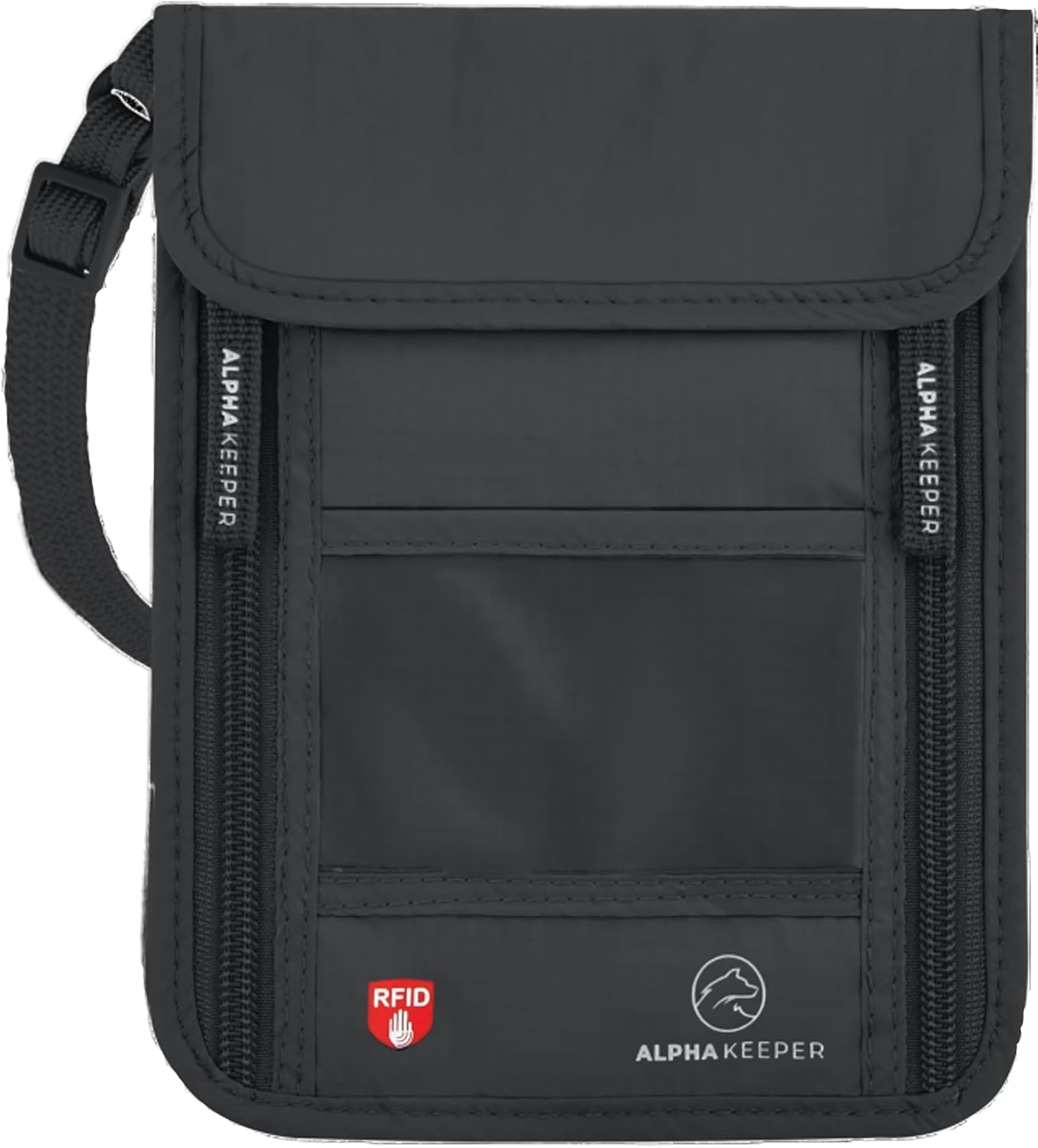
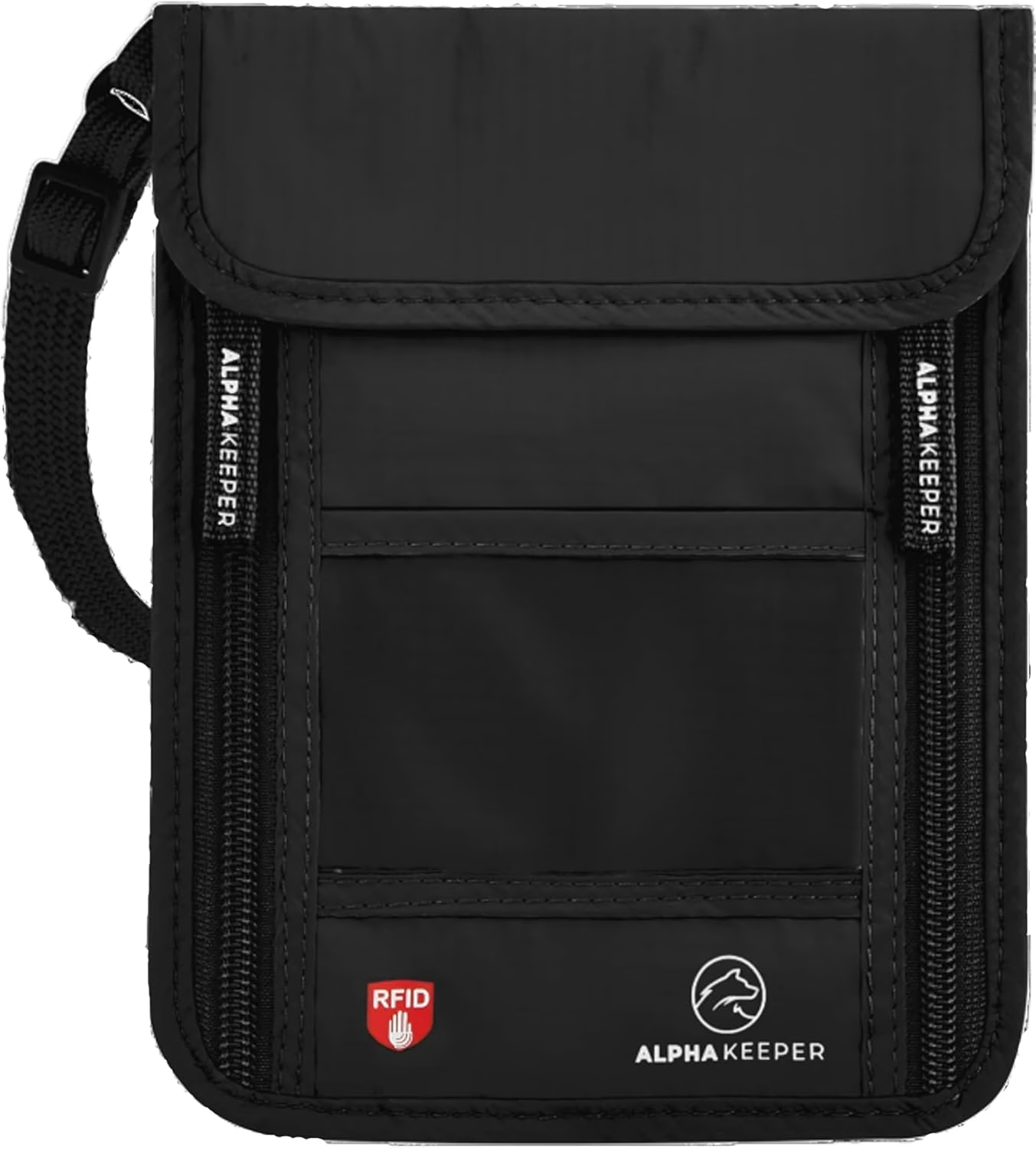
A wrist strap rated to 110+ lbs adds a physical deterrent: a thief has to yank hard enough to knock you over, which creates a scene — something they desperately want to avoid. For hands-free situations like navigating a market or boarding a bus, a neck wallet worn under your shirt is the gold standard. Alpha Keeper's Black RFID Neck Wallet sits flat against your chest, fits a phone up to 6.7 inches, and blocks RFID skimming simultaneously — one piece of gear solving two problems. If you prefer waist carry, the Black RFID Travel Money Belt | Hidden Travel Gear tucks under a waistband invisibly and has a dedicated slim phone sleeve alongside passport and card slots.
RFID Theft vs. Physical Theft: Don't Confuse the Two Threats
Physical grab-and-run theft and contactless RFID skimming are different attack vectors that need different defenses. Your phone's NFC chip and tap-to-pay credentials can be skimmed in a crowd without anyone touching you — a real risk in high-density transit hubs like Tokyo Shinjuku or Paris Châtelet. RFID-blocking sleeves on your cards (such as Alpha Keeper's Fiber RFID Sleeve Set or the MultiColor RFID Sleeve Set) stop that cold. But no sleeve protects against a phone being physically stolen, which is why layering both behavioral habits and RFID-blocking card protection covers the full threat surface — one without the other leaves a gap.
Honest Comparison: Neck Wallet vs. Regular Travel Crossbody Bag
A crossbody bag is convenient but slashable — thieves carry box cutters and can cut a strap or bag base in one motion, a technique documented extensively in Rome and Lisbon in 2026. A hidden neck wallet worn under clothing simply cannot be slashed or snatched without undressing you. The trade-off is capacity and access speed: a neck wallet holds your phone, two cards, cash, and a passport, not a full day's gear. For most urban transit days, that's exactly what you need on your body; the rest stays in a locked hostel safe or hotel room. For travelers who want maximum pickpocket resistance without sacrificing comfort, the Dark Grey RFID Neck Wallet hits the sweet spot of profile, capacity, and build quality.
City-by-City Risk Snapshot for 2026
Not all destinations carry equal risk — calibrate your precautions accordingly. Barcelona's Las Ramblas and the Gothic Quarter remain the highest-density phone-theft corridors in Europe; moped snatches targeting phones in hand are the dominant method. In Southeast Asia (Ho Chi Minh City, Bali), motorbike-mounted grab-and-ride theft spikes near traffic lights — keep your phone in a bag, not your hand. New York's subway saw a 28% uptick in platform snatches in 2025–2026, specifically targeting earbuds-in riders who are slow to react. Tokyo and Zurich remain genuinely low-risk. Knowing your destination's threat profile lets you decide whether a wrist strap is sufficient or whether a full under-shirt concealment setup is warranted.
Frequently Asked Questions
What is the safest way to carry your phone while traveling in 2026?
The safest method is to keep your phone in a hidden pouch worn under your clothing — such as a neck wallet or money belt — when you're not actively using it. When you do use it in public, hold it with a wrist strap rated to at least 110 lbs. Never place it on tables or in back pockets. Pair this with Stolen Device Protection (iOS) or Theft Detection Lock (Android) so that even if a theft succeeds, the device is rendered worthless.
Does RFID blocking protect my phone from being stolen?
No — RFID blocking protects the contactless payment data on your cards and passport from electronic skimming; it does not prevent someone from physically grabbing your phone. You need both: RFID-blocking sleeves for your cards (like Alpha Keeper's Fiber RFID Sleeve Set) and physical concealment habits or a secure pouch for your phone. They address completely different threats.
Should I use a neck wallet or a money belt for phone security while traveling?
It depends on your phone's size and your activity. A neck wallet (like Alpha Keeper's Black RFID Neck Wallet) fits phones up to 6.7 inches and is ideal for city days — it hangs flat against your chest under a shirt, invisible to thieves. A money belt sits at the waistband and works better under pants at transit hubs or on overnight trains. Both are far more secure than any external bag. Many travelers carry both: neck wallet for active city days, money belt for high-risk transit moments.
Ready to upgrade?
Ready to make your phone unstealable? Pair the Black RFID Neck Wallet with the Fiber RFID Sleeve Set — one hides your phone against your chest, the other blocks card skimmers in the same crowd. Grab both at Alpha Keeper before your next trip.