Here's something most Jordan travel guides won't tell you: the biggest theft risk at Petra isn't a pickpocket in the Siq — it's leaving your bag unattended on a towel at the Dead Sea while you float. One minute, one unguarded daypack, and your passport, cards, and JD cash are gone.
Jordan is relatively safe for tourists, but opportunistic theft in Amman's souks, Petra's crowded canyon, and Dead Sea beach areas is real. The smartest defense is a flat RFID-blocking money belt or neck wallet worn under clothing — keeping your passport, cards, and emergency cash completely inaccessible without your knowledge.
How Safe Is Jordan for Travelers in 2026? The Real Numbers
Jordan consistently ranks as one of the Middle East's safest tourist destinations — violent crime against travelers is genuinely rare, and the country welcomed over 7.7 million international visitors in 2025 with incident rates that most European capitals would envy. That said, petty theft and opportunistic scams are a different story. Amman's downtown medina, the Roman Theatre area, and the Wadi Musa bazaar near Petra all see regular bag-snatching and pickpocket reports, particularly in peak season (March–May and September–November) when crowds are dense. The U.S. State Department maintains a Level 2 advisory for Jordan as of mid-2026 — 'exercise increased caution' — driven more by regional geopolitics than street crime, but travelers should still treat their valuables seriously. Bottom line: Jordan rewards the prepared traveler, not the careless one.
Amman: Where RFID Theft and Pickpockets Are Most Active
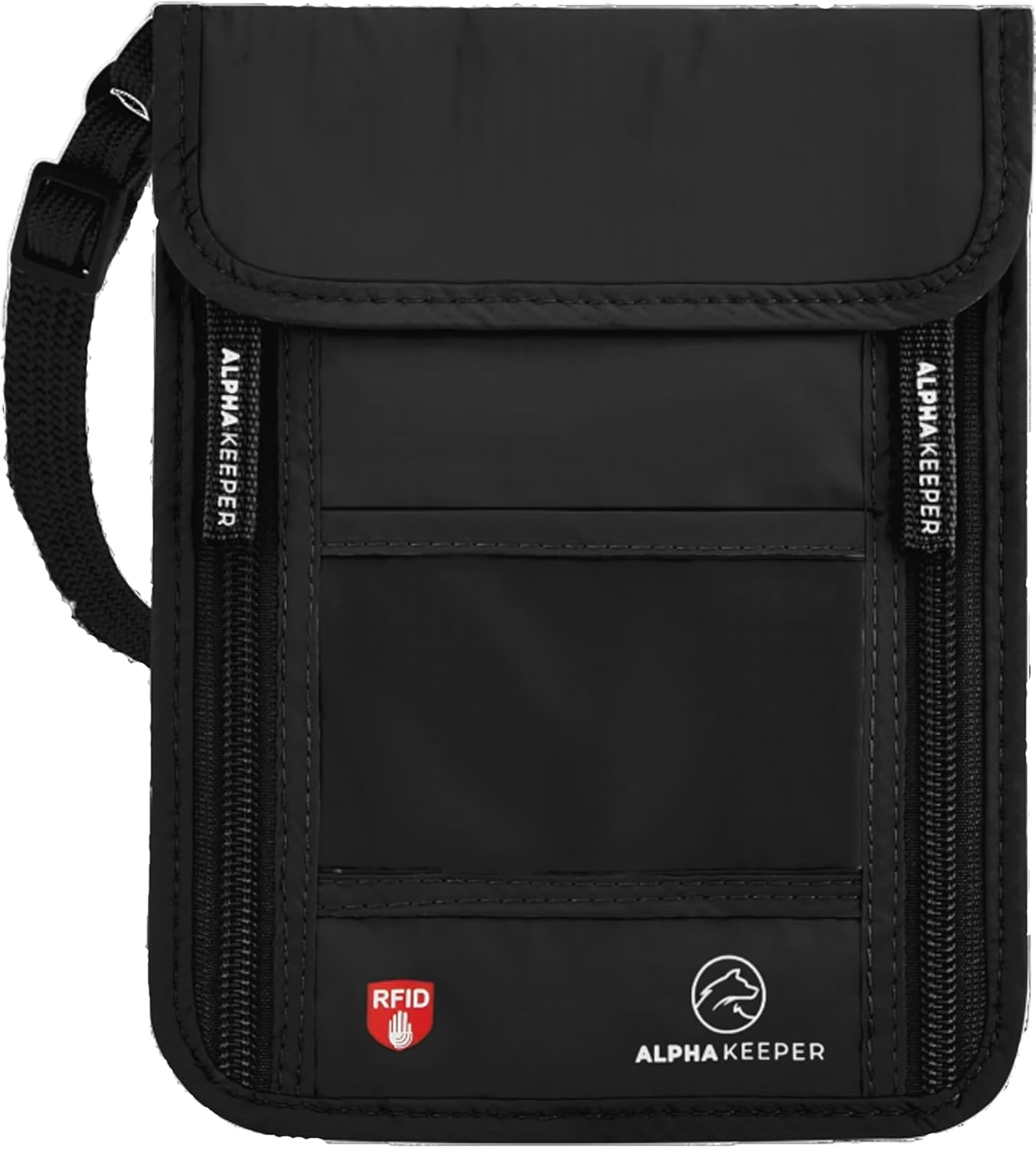
Downtown Amman — Al-Balad — is a brilliant, chaotic market where contactless payment cards are being scanned in increasingly creative ways; RFID-equipped portable readers can skim a card through a bag at distances up to 10 cm. The Rainbow Street night scene and the Abdali Boulevard mall draw tourist foot traffic thick enough for a skilled pickpocket to work comfortably. Your single most effective move: move your cards and passport out of your bag entirely and into an RFID-blocking layer worn against your body. The Fiber RFID Sleeve Set slots individual cards into hard-blocked aluminum-fiber sleeves (blocks 13.56 MHz and 125 kHz frequencies) — tuck one in a money belt and your Visa, passport chip, and contactless transit card are electronically invisible. For your whole document kit — passport, two cards, emergency JOD cash — the Black RFID Neck Wallet sits flat against your chest under a shirt, completely invisible through light clothing, and the adjustable cord keeps it locked to your body through every crowded alley.
Petra: The Canyon Is Spectacular, the Crowds Are a Pickpocket's Playground
Petra drew an estimated 1.1 million visitors in 2025, and the Siq — the narrow 1.2 km sandstone gorge leading to the Treasury — is exactly the kind of bottleneck where shoulder-to-shoulder crowds let a practiced thief work without anyone noticing. The Treasury viewpoint is the single highest-risk spot: tourists stop, phones come out, bags hang loose, and focus goes entirely upward. Horse-and-carriage rides through the canyon are another classic distraction theft scenario. Our strong recommendation for Petra specifically is a flat-profile money belt worn under your waistband: the Azure RFID Money Belt (roughly 28 cm × 12 cm, 2 mm thin) holds a folded passport, up to four cards, and a folded stack of JOD notes without any visible bulk under a tucked shirt. You tour the entire site hands-free, camera-ready, and completely unbothered — because there's nothing to grab.
Dead Sea: The Beach Theft Risk Nobody Warns You About
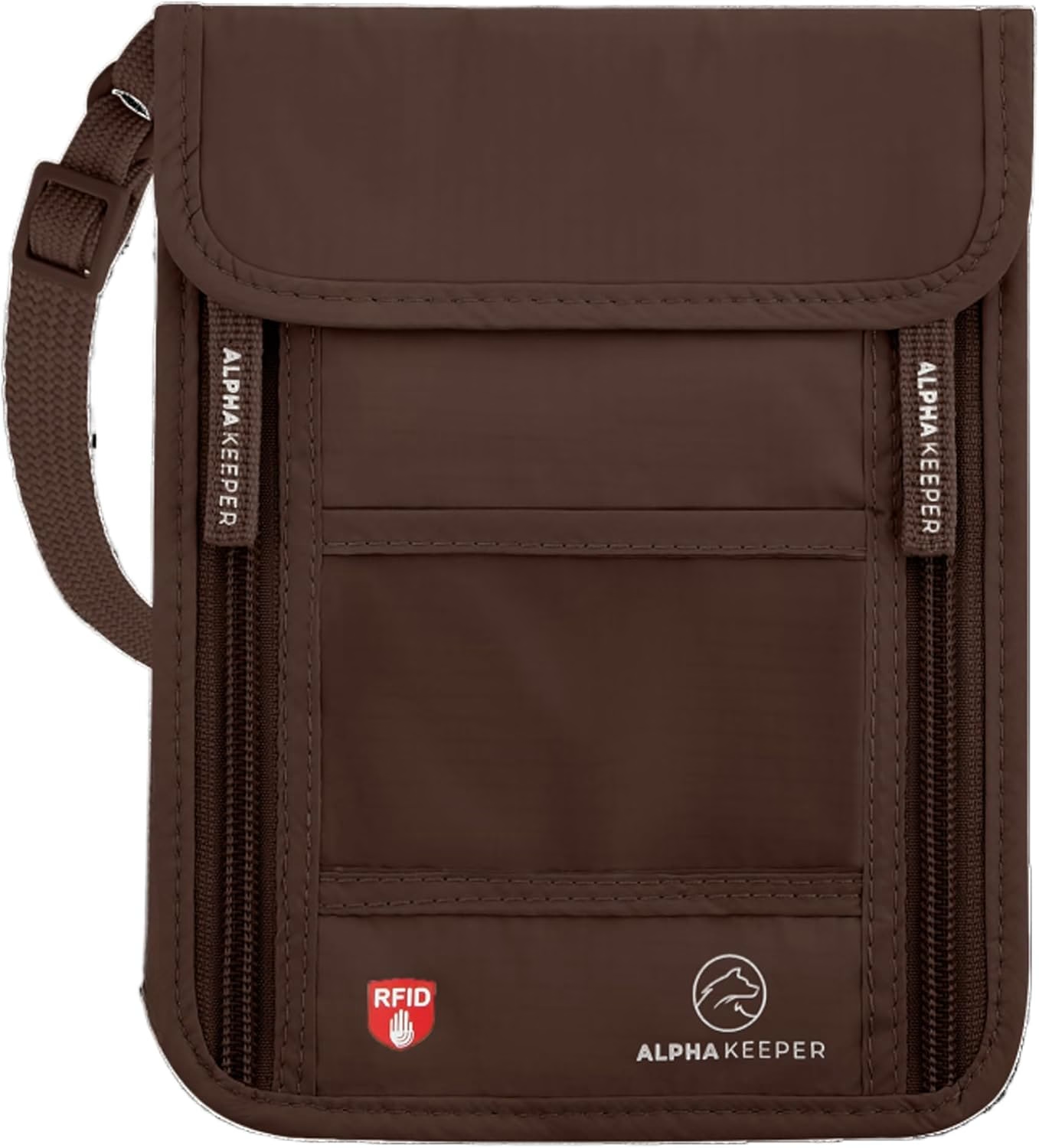
The Dead Sea is where otherwise-careful travelers get lazy, and thieves know it. You physically cannot wear a bag or wallet in the hyper-saline water — the salt concentration is roughly 34%, the water is corrosive to metals, and most visitors spend 20–40 minutes floating while their daypack sits unattended on a towel or plastic lounger. The smarter system: leave your main wallet, hotel room card, and non-essential cards locked in your accommodation safe, and bring only a single backup card plus the day's JOD spending money in a waterproof neck wallet to the beach. The Brown RFID Neck Wallet has a wipe-clean polyester shell and a sealed zip that handles splashes well; hang it on the back of your chair within arm's reach, or hand it to a trusted travel companion who stays dry. Never leave a bag unattended at Ein Bokek beach — ever.
RFID Blocking in Jordan: Do You Actually Need It?
Yes — more than in many destinations. Jordan's contactless payment infrastructure has expanded rapidly since 2023, and where contactless terminals proliferate, so does the skimming hardware. Wadi Musa, Amman's covered markets, and the Queen Alia Airport duty-free area all have dense contactless environments. Modern RFID-blocking sleeves block the 13.56 MHz frequency used by Visa PayWave, Mastercard PayPass, and NFC passport chips — the three things most worth protecting. The MultiColor RFID Sleeve Set gives you six individually-colored sleeves so you can organize cards by type (travel card, backup card, ID) and grab the right one without fumbling — genuinely useful when you're paying at a Petra entrance booth with a queue behind you. These sleeves add roughly 0.5 mm per card and fit in any standard wallet slot — low friction, high protection.
Honest Comparison: RFID Neck Wallet vs. a Regular Travel Wallet
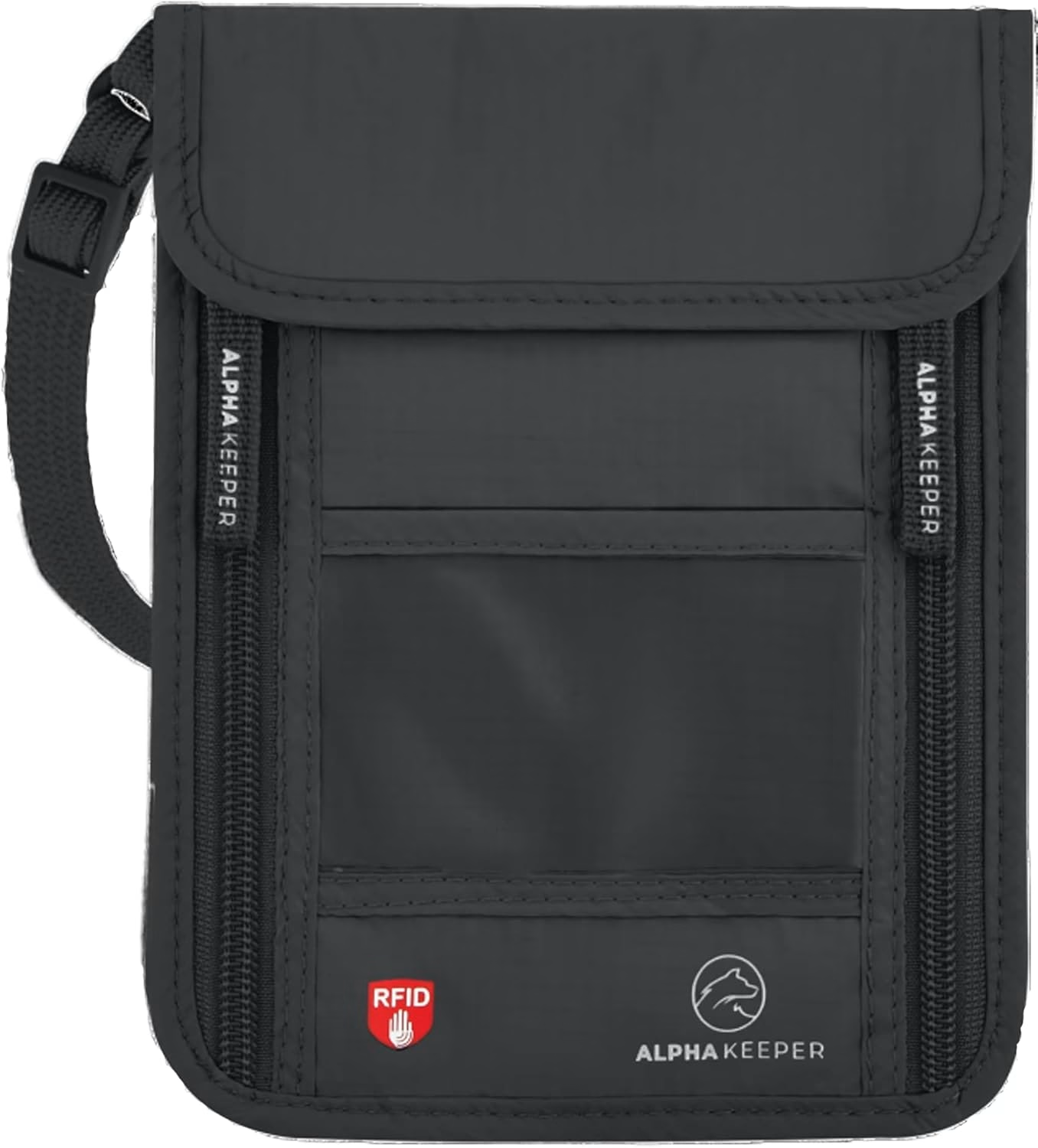
A standard travel wallet — even a slim one — sits in a pocket or bag, which means it's accessible to someone other than you the moment your attention shifts. An RFID-blocking neck wallet like the Dark Grey RFID Neck Wallet sits under your shirt, against your sternum, blocked on all sides by both fabric and metal-fiber RFID shielding, and physically requires someone to reach under your clothing to access it — which is not a subtle operation. The trade-off is retrieval time: pulling it out at a border crossing takes 10 seconds instead of 2. For Jordan specifically, where you'll cross borders (potentially Israel or Iraq land crossings), show your passport at Petra entry, and pay in JOD cash at markets, that 10-second overhead is worth every second of knowing your documents are safe.
Jordan Money Basics: JOD, Card Acceptance & How Much Cash to Carry
The Jordanian Dinar (JOD) is pegged to the USD at roughly 1 JOD = $1.41, making it one of the world's most stable currencies — and one of the more expensive for budget travelers. ATMs are reliable in Amman and Aqaba; Petra (Wadi Musa) has functional ATMs but limited options after hours. Cards are widely accepted at hotels and larger restaurants, but the souks, Bedouin tea stops inside Petra, and Dead Sea beach vendors are cash-only. Our practical split: keep 50–80 JOD in daily spending cash in a front-pocket slim wallet, and keep your backup card plus 200 JOD emergency reserve in your neck wallet or money belt — separated, so a snatch-and-run at the market doesn't clean you out completely. The Beige RFID Money Belt works perfectly for the reserve layer: it tucks under a waistband and is completely undetectable under Jordan's light summer linen.
Frequently Asked Questions
Is Jordan safe for solo travelers worried about theft in 2026?
Yes — Jordan is one of the safer countries in the Middle East for tourists, with violent crime against travelers being genuinely rare. The real risk is opportunistic petty theft in crowded tourist sites like Petra's Siq, Amman's downtown medina, and Dead Sea beach areas. A flat RFID money belt or neck wallet worn under clothing eliminates the most common theft vectors entirely.
Do I need RFID blocking for my cards in Jordan?
Yes. Jordan's contactless payment infrastructure has expanded significantly and RFID skimming hardware is found in dense market environments like Amman's souks and Wadi Musa near Petra. RFID-blocking card sleeves (blocking 13.56 MHz) protect Visa PayWave, Mastercard PayPass, and NFC passport chips — the most commonly targeted credentials.
What's the safest way to carry money at the Dead Sea?
Leave non-essential cards and bulk cash in your hotel safe. Bring only daily spending cash and one backup card to the beach in a wipe-clean, splash-resistant neck wallet — like the Brown RFID Neck Wallet — hung visibly on your chair or held by a non-swimming companion. Never leave a bag unattended on a Dead Sea beach towel; the floating experience is a known distraction-theft window.
Ready to upgrade?
Heading to Petra or Amman? Clip the Black RFID Neck Wallet under your shirt before you enter the Siq — your passport, cards, and emergency JOD cash stay locked against your chest through every crowded canyon, souk, and border crossing.