Pickpockets lifted over £2.1 million worth of valuables from tourists across Scotland in a single recent year — and Edinburgh's Royal Mile ranks among the UK's top five tourist-targeted theft hotspots. Scotland feels safe. That's exactly why travelers drop their guard.
Scotland is generally safe for tourists, but Edinburgh's Old Town, Glasgow's Buchanan Street, and crowded Highland tour buses are active pickpocket zones. Use a hidden RFID-blocking money belt or neck wallet to keep your passport and cards undetectable — your biggest risk is complacency, not crime.
How Real Is the Theft Risk in Scotland in 2026?
Real enough to plan around — but not enough to ruin your trip. Police Scotland data shows that theft of personal property in tourist-dense areas of Edinburgh spikes every summer festival season (August is peak), and Glasgow's city-centre retail corridors see consistent bag-dipping incidents year-round. The Highlands present a different threat: isolated car parks at Glencoe, Loch Ness, and Ben Nevis trailheads are targeted by smash-and-grab thieves who know rental cars are full of luggage. The pattern is the same everywhere: distraction, crowd, gone. Your bank card, contactless-enabled and sitting in an outer pocket, is the easiest target of all.
RFID Skimming in Scotland: Hype or Genuine Threat?
Here's the honest answer: opportunistic RFID skimming — where a criminal uses a concealed reader to steal card data wirelessly — is less common than old-fashioned pickpocketing, but it is documented in dense urban transit environments, and Edinburgh's packed buses and Glasgow's Subway are exactly those environments. Every UK-issued contactless card and biometric passport broadcasts data wirelessly by design. A criminal with a £40 handheld reader can harvest card numbers and passport chip data from under 10 cm away without touching you. The fix is simple and permanent: slide your cards into an RFID-blocking sleeve before you leave home. The Black RFID Sleeve Set from Alpha Keeper uses multi-layer aluminum-lined shielding that blocks 13.56 MHz NFC signals — the exact frequency your Visa, Mastercard, and UK biometric passport use — and the slim profile means they still fit in any wallet.
Edinburgh Old Town & the Royal Mile: Your Highest-Risk Zone
The Royal Mile is a masterclass in distraction theft: buskers, narrow closes, slow-moving crowds, and tour groups crammed shoulder-to-shoulder on a single street. Pickpockets work in teams — one bumps you near St Giles' Cathedral, another is already three steps ahead with your wallet. Standard travel advice says 'use a money belt,' but most money belts are bulky and betray themselves through your shirt. The Azure RFID Money Belt from Alpha Keeper sits flat against your abdomen under clothing, fits folded banknotes, two to four cards, and a folded emergency document without creating a visible bump — even under a fitted shirt. At 22 cm × 12 cm with a smooth nylon finish, it doesn't rustle when you move, which matters when you're trying to retrieve something discreetly.
Glasgow City Centre: Buchanan Street, the Barras & Public Transport
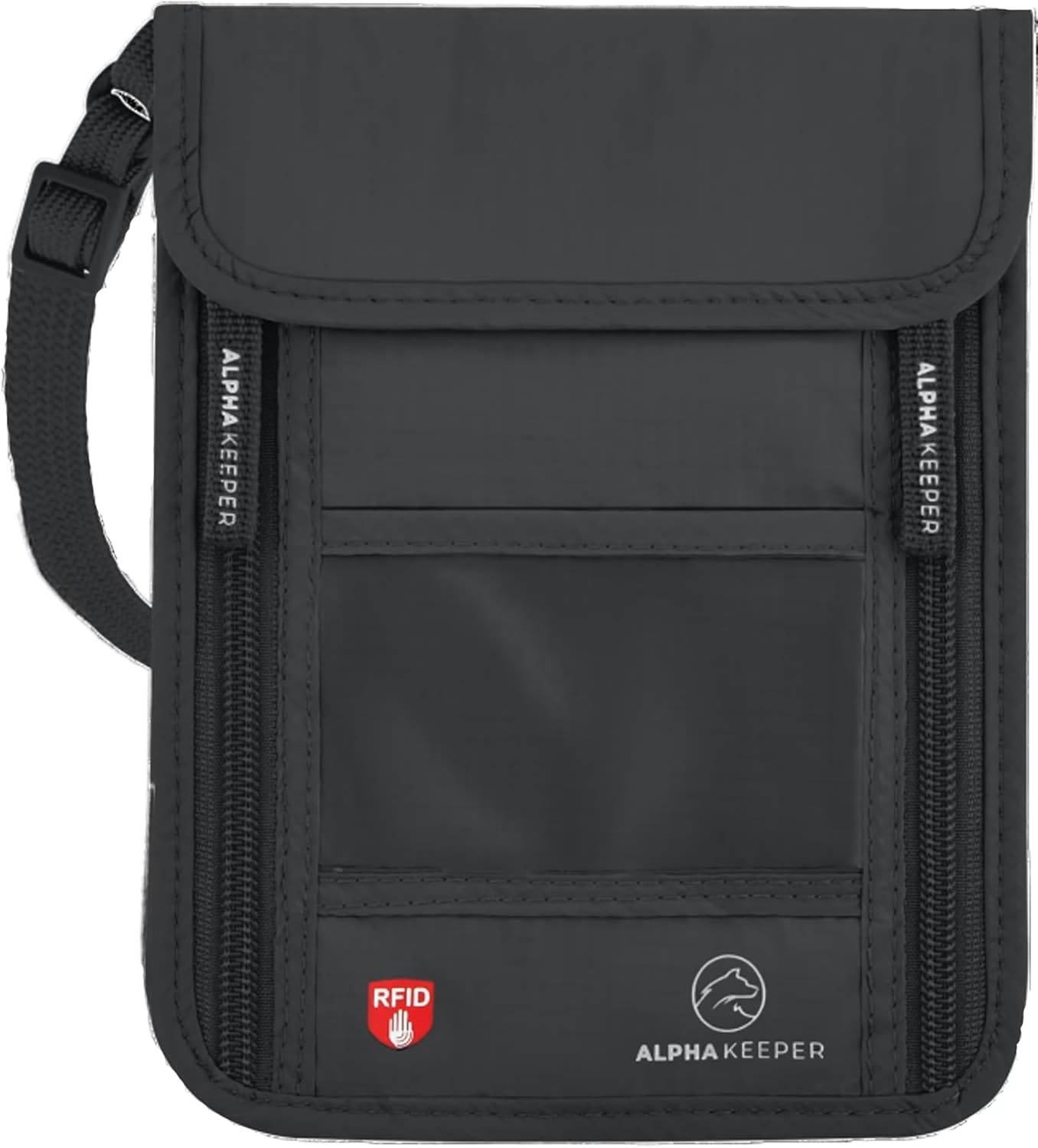
Glasgow gets unfairly maligned for street crime — the city has transformed dramatically — but its busy shopping precincts and the famous Barras market are still prime territory for opportunistic theft. The Subway (the world's third-oldest underground railway) is cramped, and the door-crush at Buchanan Street station during rush hour is a pickpocket's ideal moment. For Glasgow, a neck wallet is often smarter than a money belt: you can access it quickly at a market stall without lifting your shirt in public, and it keeps your passport completely hidden under a jacket or fleece. The Dark Grey RFID Neck Wallet has a breakaway-resistant cord, two zippered compartments, and RFID-blocking lining throughout — it holds a passport flat, four cards, and folded cash without flopping around as you walk.
The Highlands: Different Risks, Same Solution
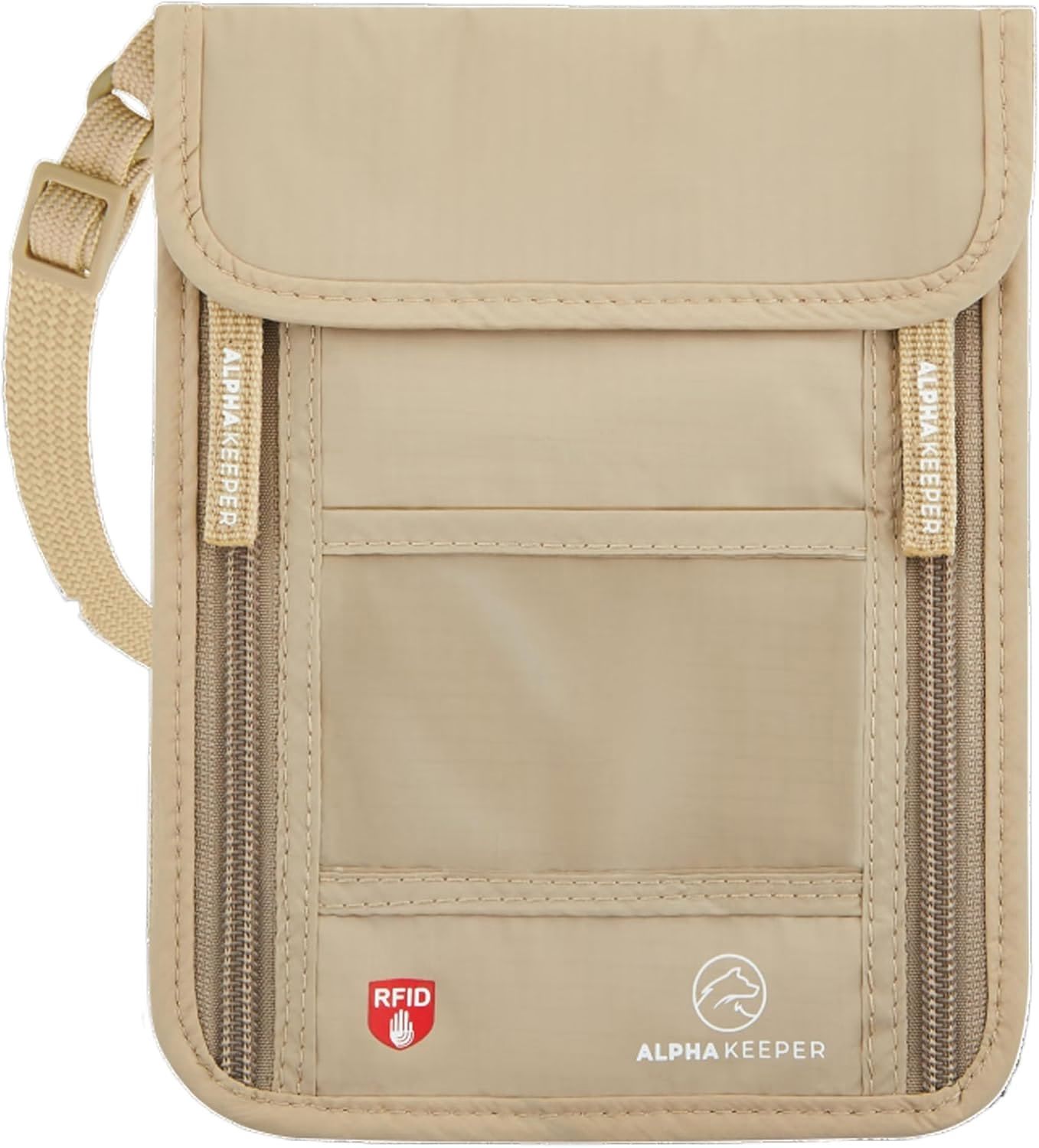
Violent crime in the Scottish Highlands is vanishingly rare — you're more likely to be headbutted by a Highland cow than mugged on a trail. The real threats are car park thieves at scenic stops and the simple chaos of losing your wallet on a ferry to Skye or Mull. Remote areas mean no quick bank branch, no easy card replacement, and limited mobile signal to freeze accounts. Layering your money here makes sense: keep daily spending cash in a regular wallet, and stash your backup cards, emergency cash (£150 minimum), and passport copy in a neck wallet worn under your waterproof jacket. The Beige RFID Neck Wallet from Alpha Keeper includes two luggage tag holders — genuinely useful when you're checking bags onto CalMac ferries — alongside its full RFID-blocking passport sleeve.
Honest Comparison: Hidden Money Belt vs. Regular Travel Wallet
A regular travel wallet — even a slim one — lives in your pocket or bag, which means it's accessible to you and to anyone watching you. A dedicated hidden money belt like the Blue RFID Money Belt sits against your skin under your clothing and is genuinely invisible to a passing thief. The trade-off: slightly less convenient access. You won't want to open it at every coffee shop, which is actually the point — you carry a small decoy wallet with £20 and one non-essential card for daily spending, and your real valuables stay locked against your body. The Blue RFID Money Belt uses a hypoallergenic polyester lining and adjustable elastic band to stay comfortable across a full day of walking Edinburgh's cobblestones or hiking Cairngorms trails without riding up or chafing.
What to Actually Carry: A Practical Scotland Packing List
Keep it simple with a three-layer system. Layer one: a decoy wallet in your front pocket with £20 cash and a pre-loaded travel card (Wise or Revolut). Layer two: an RFID money belt under your shirt with your main credit card, emergency cash (£150), and a passport photocopy. Layer three: your actual passport stored in the hotel safe whenever legally possible — many Scottish attractions accept a driving licence or passport photo on your phone. For cards you want quick access to, the Fiber RFID Sleeve Set or the Retro RFID Sleeve Set drops individual card protection into any wallet or phone case; both use woven metallic fiber construction that blocks NFC without adding visible bulk. This system costs less than one night's accommodation and eliminates 95% of your financial exposure.
Frequently Asked Questions
Is Scotland safe for tourists in 2026?
Yes — Scotland is one of the safer European destinations. However, Edinburgh's Old Town (especially the Royal Mile during festival season), Glasgow's Buchanan Street, and Highland car parks at scenic viewpoints all have documented pickpocketing and vehicle break-in problems. Keeping valuables in a hidden RFID money belt or neck wallet under your clothing eliminates most of your exposure.
Do I need RFID protection for travel in Scotland?
It's a genuine, low-cost precaution worth taking. Edinburgh's crowded buses and Glasgow's Subway create close-contact environments where handheld RFID readers can wirelessly harvest contactless card data. UK biometric passports also broadcast chip data. RFID-blocking sleeves or a wallet with shielded lining cost under £20 and provide permanent protection — the risk is real enough that the fix is worth it.
What is the best money belt for Scotland travel?
A flat, under-clothing RFID money belt is the best choice for Scotland. Look for one that sits flush against your abdomen without visible bulk under a shirt, holds a folded passport or copy, cards, and emergency cash, and uses RFID-blocking lining. The Azure RFID Money Belt and Blue RFID Money Belt from Alpha Keeper both meet these criteria — slim profile, adjustable fit, and shielded against NFC card skimming.
Ready to upgrade?
Heading to Edinburgh or Glasgow this summer? Grab the Azure RFID Money Belt before you fly — it disappears under any shirt, blocks electronic card theft, and keeps your passport and emergency cash genuinely hidden from the Royal Mile to the Isle of Skye.