Tourists lose an estimated $1.7 billion worth of valuables to travel theft every year — and jewelry tops the list. The worst part? Most of those losses were completely preventable.
To travel with jewelry safely in 2026, leave irreplaceable pieces at home, carry only what you'd survive losing, store it on your body in a hidden neck wallet or money belt, and never pack it in checked luggage. Physical concealment beats any lock or TSA pouch.
The First Rule: Decide What Actually Deserves to Leave the House
Before you pack a single ring, ask yourself one cold question: if this piece disappeared tomorrow, would I be devastated? If yes, it stays home. Engagement rings, heirlooms, anything over $500 replacement value — leave them. Travel jewelry should be affordable, duplicable, and emotionally survivable. A $30 layered necklace from a local boutique photographs just as well as a $3,000 gold chain on Instagram, and nobody on a Roman street corner cares about the difference. Pack two or three versatile pieces max — a minimalist ring, one necklace, one pair of earrings — and build outfits around them rather than hauling a jewelry roll that turns your carry-on into a treasure chest.
How to Pack Jewelry So It Doesn't Get Lost, Tangled, or Stolen
Checked luggage is a hard no for jewelry — baggage handlers have opportunity, and your suitcase can be lost entirely. Everything valuable goes in your carry-on, on your person, or in the hotel safe. For organization without bulk, small ziplock bags, pill cases, or a dedicated travel jewelry pouch with individual compartments prevent the tangled-chain nightmare that makes you want to throw everything away at 6 a.m. For earrings specifically, thread them through a button or a strip of foam to keep pairs together. The single biggest mistake travelers make is tossing jewelry loosely into a toiletry bag — it migrates, it tangles, and it's the first thing a thief grabs in a snatch-and-run.
The Smartest Place to Keep Jewelry While You're Actually Out: On Your Body, Hidden
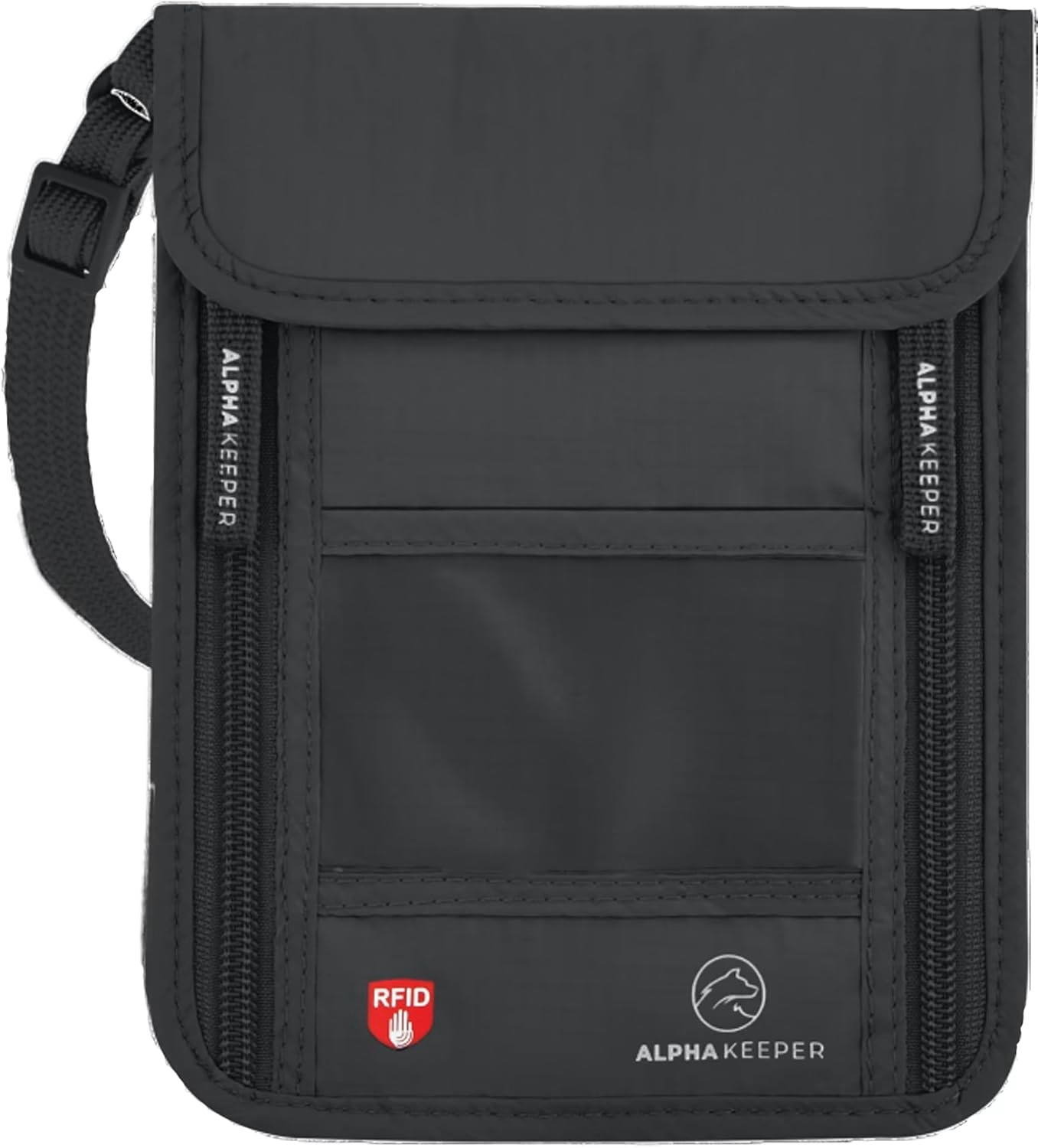
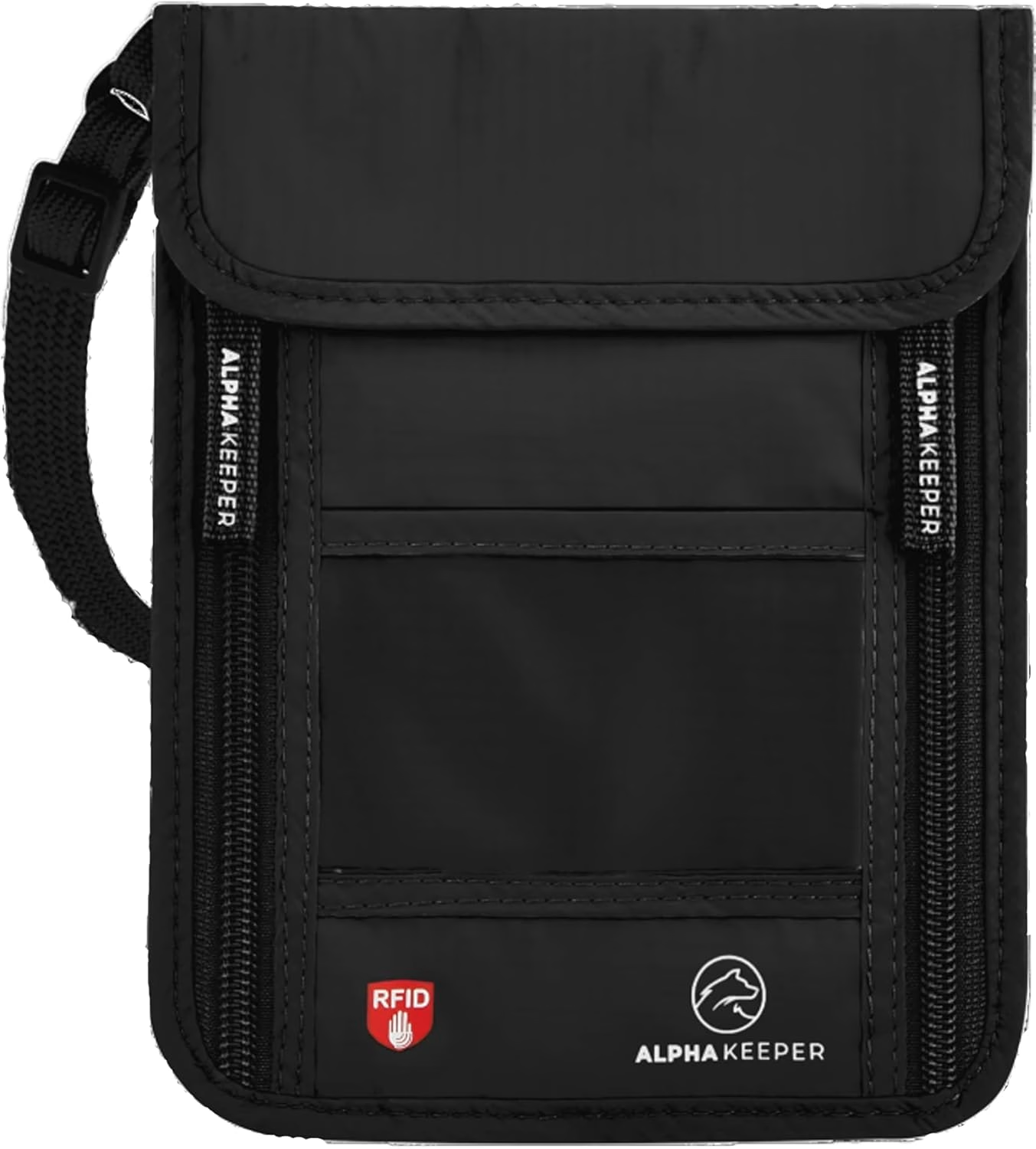
Pickpockets and hotel room thieves share one weakness: they want fast, visible targets. A hidden neck wallet worn under your shirt eliminates both threats simultaneously. Alpha Keeper's Dark Grey RFID Neck Wallet and Black RFID Neck Wallet sit flat against your chest with an adjustable strap — you can tuck one or two slim jewelry pieces alongside your passport and cards without creating any visible bulk. The RFID-blocking lining is a bonus for your cards, but the real value here is that nothing is accessible without lifting your shirt. For longer trips or beach destinations where you'll be changing frequently, the Azure RFID Money Belt worn under a waistband keeps small pieces equally secure. Neither solution is glamorous — that's exactly the point.
Hotel Rooms: Safer Than You Think, Riskier Than You Assume
Hotel room safes are useful but not infallible — staff generally have override codes, and small safes can be physically removed in under two minutes. That said, a safe is dramatically better than leaving a necklace on the nightstand. Best practice: use the safe for jewelry you're not wearing that day, but never leave everything in one place. Split your pieces — wear one item, safe another, and keep a third in your locked carry-on. If the room has no safe, the inside pocket of a locked bag inside a wardrobe is a reasonable second. Some travelers swear by leaving a cheap obvious piece on the dresser as a decoy — not bad psychology, actually.
At the Airport: Where Jewelry Goes Missing Most Predictably
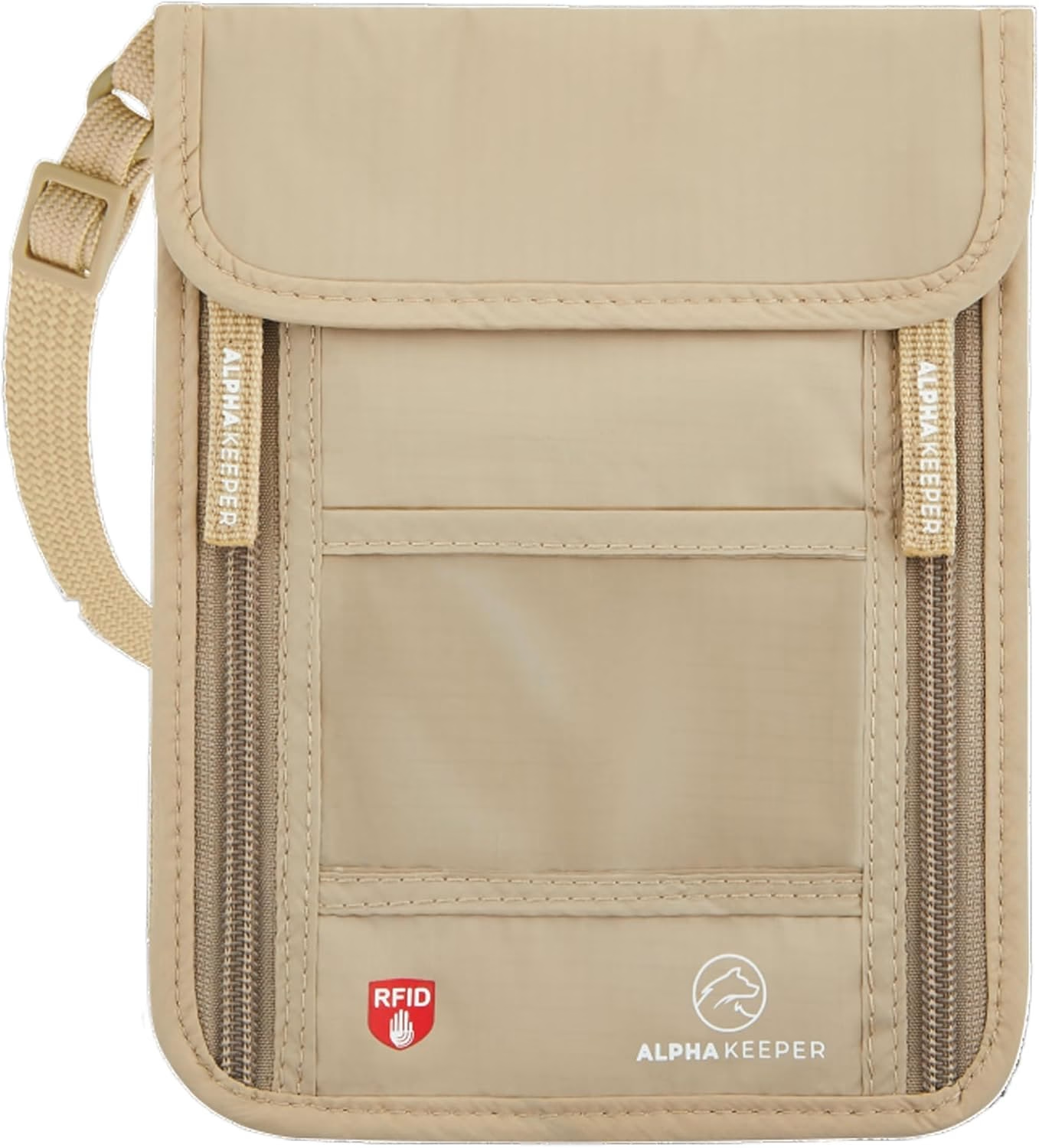
TSA security is a chaos window that thieves — and distracted travelers — exploit constantly. The conveyor belt is where rings, watches, and earrings disappear: you're flustered, the line is moving, and a small item rolls to the edge of a bin. The fix is simple and takes 30 seconds: remove all jewelry before you reach the checkpoint and store it in the inside zip pocket of your carry-on before you queue. Do not wait until you're at the machine. If your carry-on goes into the X-ray while you're stuck at the body scanner, nobody is watching your bin. Alpha Keeper's Beige RFID Neck Wallet — which doubles as a passport holder with luggage tags — is an ideal transit piece: it passes through the scanner flat under light clothing without triggering alarms in most cases, and everything stays on your body.
Travel Insurance for Jewelry: Read the Fine Print Before You Need It
Standard travel insurance policies cover jewelry only up to about $250–$500 per item with a total personal effects cap that's often under $1,500 — far less than most people assume. If you're traveling with pieces worth more than that, you need either a scheduled personal articles floater on your homeowner's or renter's policy (which typically covers items worldwide for actual appraised value) or a standalone jewelry rider. Get a written appraisal dated within the last two years before you travel, photograph every piece against a ruler for size reference, and email the photos to yourself so they're cloud-stored. Filing a claim without documentation is an exercise in disappointment. For pieces under $200 replacement value, skip the rider — self-insure and just don't bring them.
Honest Comparison: Wearing Your Jewelry vs. Storing It in a Hidden Wallet
Wearing jewelry openly is the highest-risk choice in crowded tourist areas — it signals wealth, creates snatch opportunities, and can't be hidden quickly. Storing pieces in a hidden neck wallet while sightseeing and only putting them on at dinner is genuinely the smarter behavioral strategy. The Dark Grey RFID Neck Wallet costs under $20, weighs almost nothing, and has a dedicated slim pocket that holds two or three small jewelry items flat alongside your documents. Compare that to a hotel safe (accessible to staff, fixed location, zero portability) or a jewelry pouch in your daypack (vulnerable to bag-slashing and snatch theft). The neck wallet wins on portability, concealment, and actual physical security — the only trade-off is that you'll need to visit a bathroom to retrieve your earrings before dinner.
Frequently Asked Questions
Should I bring real gold or silver jewelry when traveling abroad in 2026?
Only if the piece is under $300 replacement value and insured. For high-value real gold or silver, leave it home and wear quality costume jewelry instead — the risk of loss or theft abroad outweighs the aesthetic benefit for most trips.
Can I wear a hidden neck wallet through airport security with jewelry inside it?
Lightweight pieces like rings and thin necklaces inside a fabric neck wallet typically don't trigger metal detectors at standard sensitivity, but it varies by airport and scanner type. The safest approach: remove bulkier metal pieces before the checkpoint and store them in your zipped carry-on pocket until you're past security.
What's the single best way to prevent jewelry theft in a hotel room?
Split your pieces across two locations — use the in-room safe for items you're not wearing, and keep the rest locked inside your carry-on bag. Never leave all jewelry in one spot. A hotel safe is useful but not theft-proof; staff override codes are real, and portable safes can sometimes be physically removed.
Ready to upgrade?
Stop letting your jewelry be the most vulnerable thing you're carrying. Grab the Dark Grey RFID Neck Wallet from Alpha Keeper — it holds your passport, cards, and a few slim jewelry pieces flat against your chest, completely out of sight, for under $20.