In Barcelona's La Boqueria market, a skilled pickpocket can unzip a jacket pocket and replace it — empty — in under three seconds. The question isn't whether to hide your valuables. It's where.
For most travelers in 2026, a dedicated RFID-blocking money belt wins on pure security: it sits under clothing against bare skin, has no exterior seam a thief can target, and blocks electronic card skimming. Hidden pocket clothing is more convenient for day access but is easier to defeat and rarely RFID-shielded.
What 'Hidden Pocket Clothing' Actually Means — and Where It Falls Short
Hidden pocket clothing typically means pants, shorts, or shirts with zippered inner pockets sewn into the lining — think the inner thigh pocket in zip-off travel pants or an underarm stash in a travel hoodie. They're genuinely useful for a folded $20 bill or a spare card. But here's the hard truth: most of these pockets sit inside a waistband or lining that a determined thief can feel and locate in under ten seconds. The fabric is standard woven nylon or polyester — zero RFID shielding — so a contactless card sitting in a hidden pants pocket is still electronically readable by a skimmer within 2–4 inches. And after three sweaty days of walking, that inner-thigh pocket stops feeling 'hidden' and starts feeling like a damp inconvenience.
Why a Money Belt Provides Deeper Security in High-Risk Destinations
A proper travel money belt — like the Azure RFID Money Belt or the Black RFID Travel Money Belt | Hidden Travel Gear from Alpha Keeper — sits flat against the abdomen under your shirt, held by an elastic band at roughly 1–2mm profile thickness. To reach it, a pickpocket would have to lift your shirt, which is a conspicuous, high-risk move even in a crowded metro. More importantly, purpose-built money belts incorporate RFID-blocking metallic fabric layers that block the 13.56 MHz frequency used by contactless Visa, Mastercard, and passport chips — hidden pocket clothing almost never does. Research consistently shows that electronic skimming incidents cluster at transit hubs like train stations and airports, exactly where you're juggling bags and distracted. A money belt eliminates that vector entirely.
The Honest Comparison: Security vs. Accessibility
Here's where hidden pocket clothing genuinely wins: grab-and-go speed. Ducking into a café to pay? Unzipping a hidden waist pocket takes five seconds; pulling out your money belt under your shirt in public takes an awkward twenty. Experienced travelers use a two-layer system — a slim wallet or RFID sleeve in an accessible pocket for daily spending cash (under $50 equivalent), and a money belt for passport, backup card, and emergency funds. Alpha Keeper's Fiber RFID Sleeve Set and MultiColor RFID Sleeve Set are purpose-built for exactly this: they protect the cards you're actually reaching for without requiring you to undress at the register. Use the hidden pocket for your spending layer; use the money belt as your vault.
Neck Wallets: The Middle-Ground Option Worth Considering
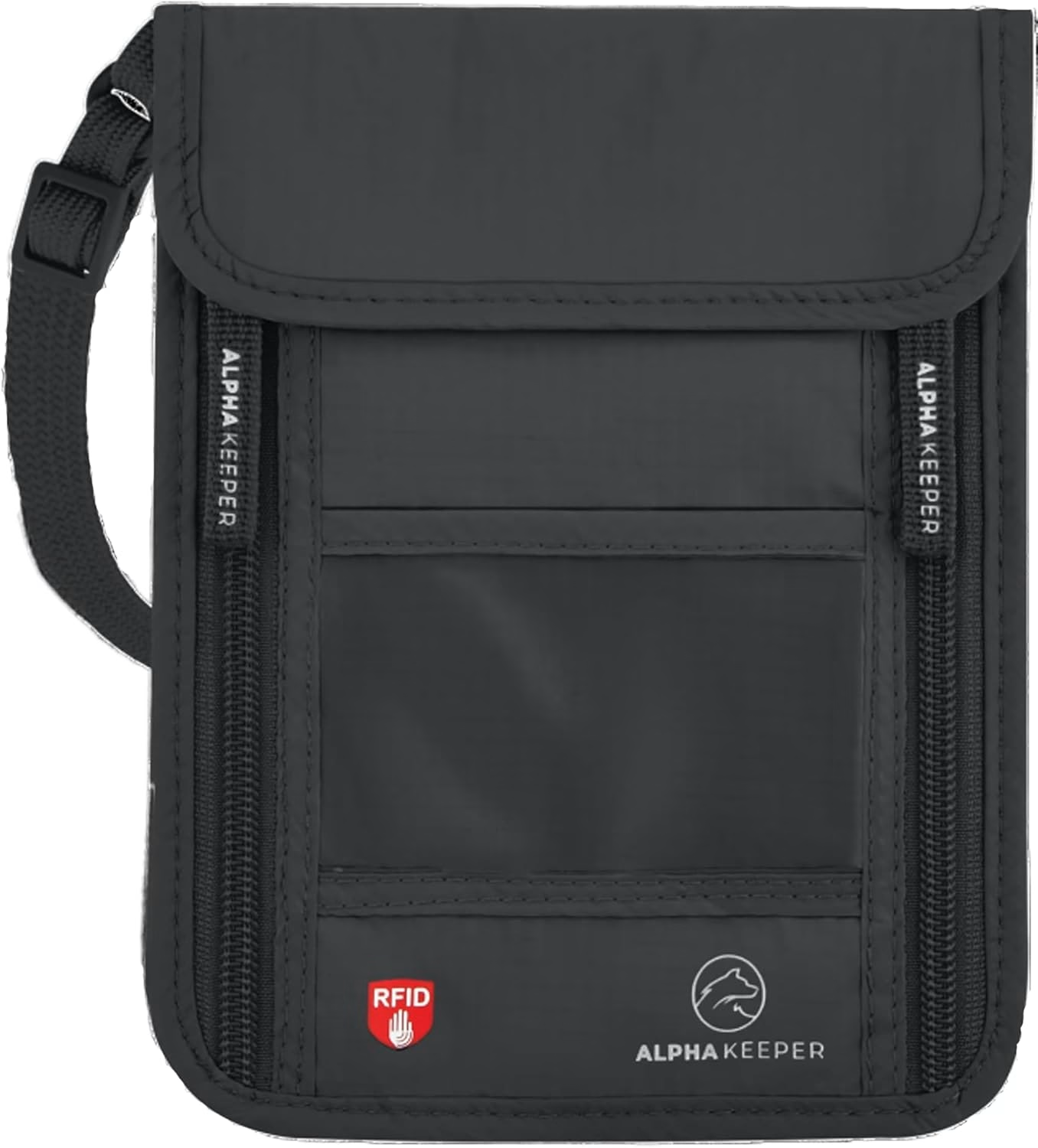
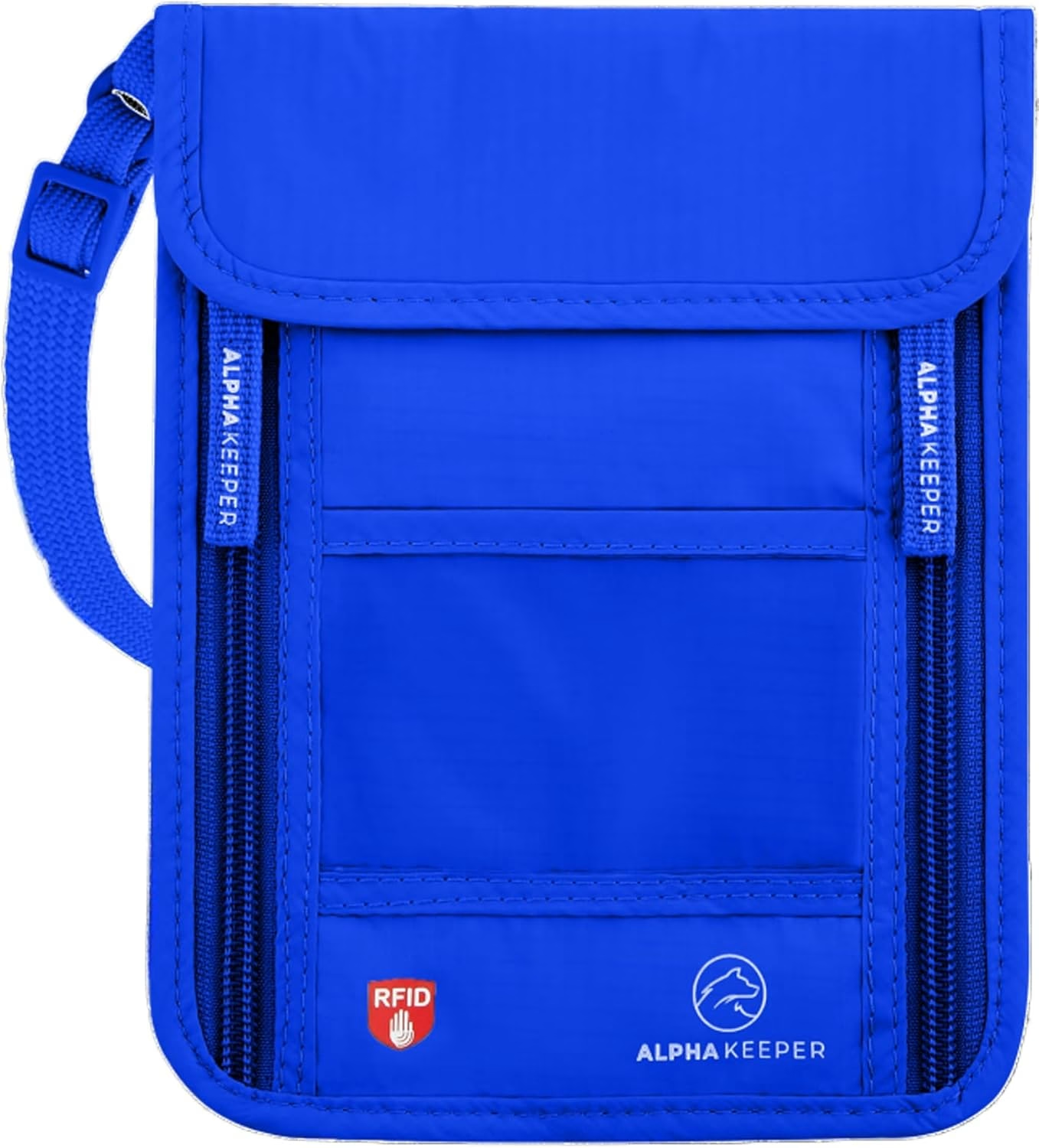
Neck wallets occupy genuinely useful middle ground — they hang under a shirt at chest level, accessible by reaching inside your collar, but they're far more discreet than a money belt when you need quick document access at border crossings or hotel check-ins. Alpha Keeper's Dark Grey RFID Neck Wallet and Blue RFID Neck Wallet are built from soft ripstop nylon with integrated RFID blocking, sized to hold a full passport plus two cards and folded bills — approximately 5.5 × 4.3 inches flat. The tradeoff versus a belt: a neck wallet has a cord that can occasionally show above a collar, and for very active travel (cycling, long hikes), the pendulum swing of the wallet gets annoying fast. For city travel, cultural sites, and transit, though, a neck wallet beats hidden pocket clothing on both security and RFID protection without the full commitment of a belt.
The Verdict: Which Should You Actually Buy?
If you're headed somewhere with a high pickpocket risk — Rome, Paris, Bangkok, Istanbul, any major Latin American city — lead with a money belt for your passport and backup funds; the Beige RFID Money Belt or Brown RFID Money Belt from Alpha Keeper are slim enough to forget you're wearing them in normal temperatures. For destinations with moderate risk or heavy outdoor activity where you'll be reaching into pockets constantly, a neck wallet with RFID blocking is your best compromise. Layer either of those with an RFID sleeve set for your daily-use cards, and you've essentially built a three-tier security system for under $50 total — which is considerably cheaper than replacing a stolen passport ($165 emergency fee plus days of lost travel time in 2026).
Frequently Asked Questions
Can pickpockets detect a money belt through clothing?
An experienced pickpocket can sometimes feel a bulky or poorly fitted money belt through thin fabric. Choose a slim, flat model — 1–2mm profile — and wear it centered under a non-clingy shirt. Properly fitted RFID money belts like those from Alpha Keeper sit flush against the abdomen and are essentially undetectable through a standard travel shirt.
Does hidden pocket clothing block RFID skimming?
Almost never. Standard hidden pocket clothing is made from woven nylon, cotton, or polyester — none of which block the 13.56 MHz radio frequency used by contactless cards and passports. Only clothing specifically marketed with metallic RFID-blocking fabric provides real electronic protection. A dedicated RFID sleeve or RFID-blocking wallet inserted into that pocket is a far more reliable solution.
Is a neck wallet or money belt better for airport security?
Money belts win at airport security because you leave them on through the body scanner — the elastic band contains no metal and triggers no alarm, while your passport and cards stay hidden. Neck wallets require you to tuck them inside your shirt through the scanner, which also works fine. Hidden pocket clothing is slightly more convenient but offers no RFID protection once you've placed your belongings in a tray.
Ready to upgrade?
Stop treating your passport like an afterthought — clip on the Black RFID Travel Money Belt | Hidden Travel Gear before your next trip and put your valuables in the one place pickpockets can't casually reach.