One in three tourists who report theft in Ireland say it happened in broad daylight — friendly crowd, bumped shoulder, empty pocket. Dublin's Grafton Street alone accounts for more tourist pickpocket reports than any other single location on the island.
In 2026, the safest way to protect money in Dublin, Cork, and Galway is to keep cards in an RFID-blocking sleeve, store your passport and emergency cash in a hidden neck wallet or money belt worn under clothing, and carry only daily spending money in an accessible wallet. This two-layer approach blocks both physical and electronic theft.
Where Theft Actually Happens in Ireland — and Why Tourists Are Easy Targets
Dublin's Temple Bar district, the Grafton Street pedestrian strip, and the queues outside Trinity College are the three highest-risk zones in Ireland for tourist theft in 2026 — not dark alleys, but packed, joyful, broad-daylight crowds. In Cork, the English Market and the St. Patrick's Street shopping corridor see the most incidents. In Galway, the Latin Quarter during festival weekends (particularly Galway International Arts Festival in July) is prime territory. The common thread: distraction. A dropped map, a busker performance, a friendly stranger asking for directions — these are not coincidences, they're techniques. Contactless card skimming, while less common than physical pickpocketing, is a real secondary risk anywhere your wallet rides in a back pocket or open bag.
RFID Blocking: Is It Actually Necessary in Ireland in 2026?
Yes — but not for the reason most people argue. Modern contactless cards use rolling encryption that makes a single skim largely useless for a full transaction, but relay attacks and data harvesting for resale do still occur in high-density tourist zones. More practically, the habit of keeping cards in an RFID sleeve forces you to be deliberate every time you pull a card out — that moment of intentionality alone reduces accidental card drops and opportunistic grabs by a measurable margin. The Fiber RFID Sleeve Set is the cleanest everyday solution: slim enough to fit inside any wallet, blocks 13.56 MHz (the standard for Visa/Mastercard contactless and e-passports), and costs under $15 for a full set. For travelers who want color-coding — one sleeve per card category — the MultiColor RFID Sleeve Set lets you instantly know which sleeve holds your travel card versus your backup card without fumbling. The sleeves add less than 1mm of thickness per card, so there is genuinely no bulk trade-off.
The Money Belt vs. Neck Wallet Debate: An Honest Comparison
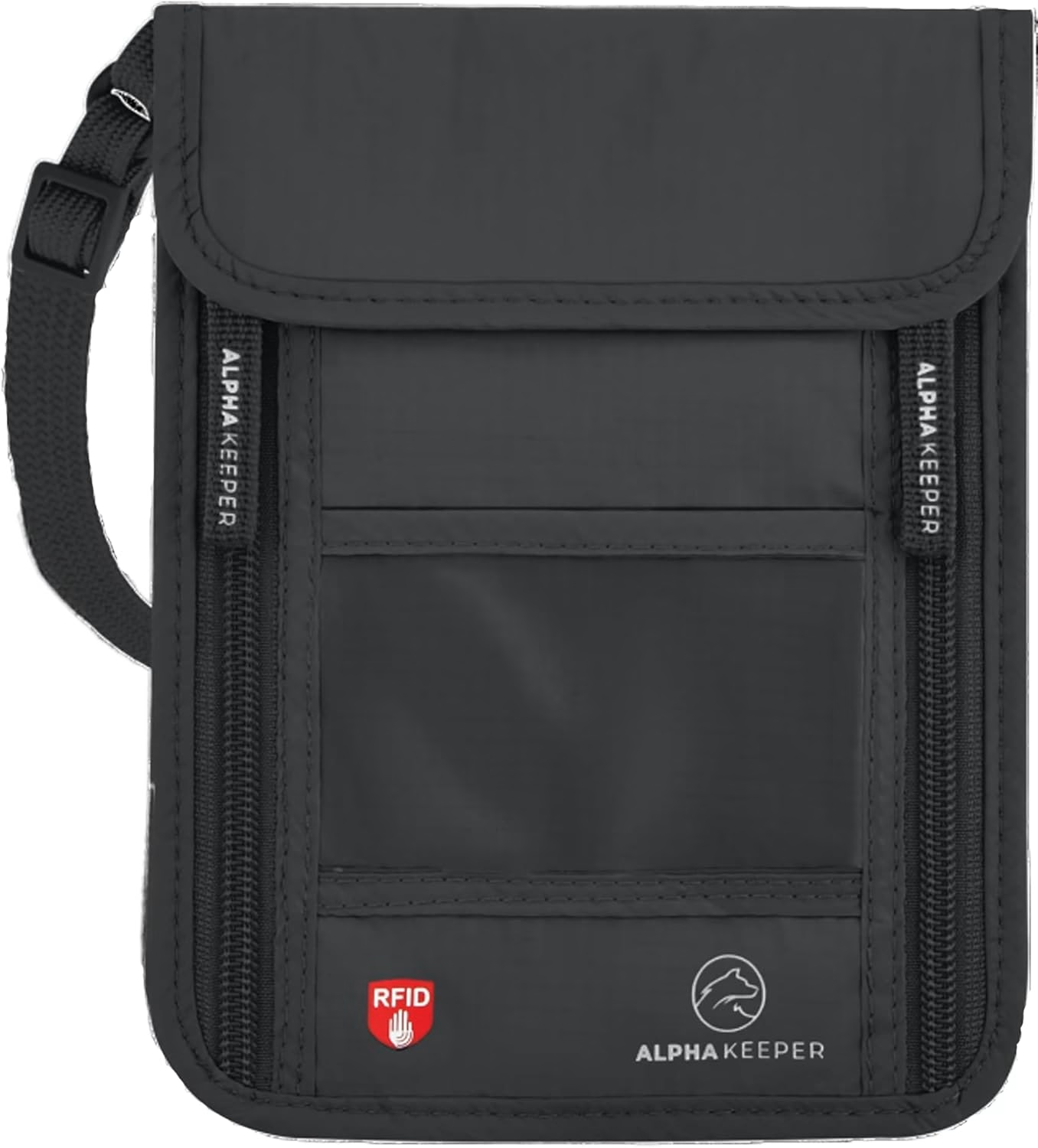
Money belts sit flat against your stomach under your shirt, completely invisible, and are best for all-day walking tours, pub crawls, or any situation where you won't need frequent access. The Black RFID Travel Money Belt is the benchmark here — it fits euros, a backup card, and a folded photocopy of your passport in a profile so flat it won't print through a fitted shirt. Neck wallets hang under your shirt from an adjustable cord and are better for airport transit, day trips, and situations where you need to access your passport regularly (ferry crossings from Rosslare, for example). The Dark Grey RFID Neck Wallet holds a full passport plus three cards plus folded bills, weighs almost nothing, and the breakaway safety cord prevents a grab-and-run. The honest trade-off: money belts are more secure in crowds but less convenient for quick access; neck wallets are easier to reach discreetly but require a slightly more deliberate hide under a loose layer. For a two-week Ireland trip with airport stops, ferry crossings, and city walking, most experienced travelers carry both and use each for its purpose.
City-by-City Breakdown: Dublin, Cork, and Galway Specific Advice
In Dublin, the risk is highest on public transport (Luas tram lines, particularly the Red Line through the city center) and in the pre-function crush outside popular pubs on Friday and Saturday nights — wear your Azure RFID Money Belt under your shirt from the moment you leave your accommodation. In Cork, the risk profile is lower overall but the English Market's narrow indoor corridors create shoulder-to-shoulder conditions ideal for a skilled pickpocket; keep your daily cash in a front pocket, everything else secured. In Galway, the combination of festival crowds, narrow medieval streets, and heavy backpack-wearing tourists (backpacks are the single easiest theft target in Europe) means a neck wallet worn under a light layer is your best friend for the Latin Quarter evenings. One universal rule across all three cities: the zip pocket on the back of a daypack is not secure; treat it as empty storage only.
The Two-Layer System: How to Set Up Your Ireland Travel Security
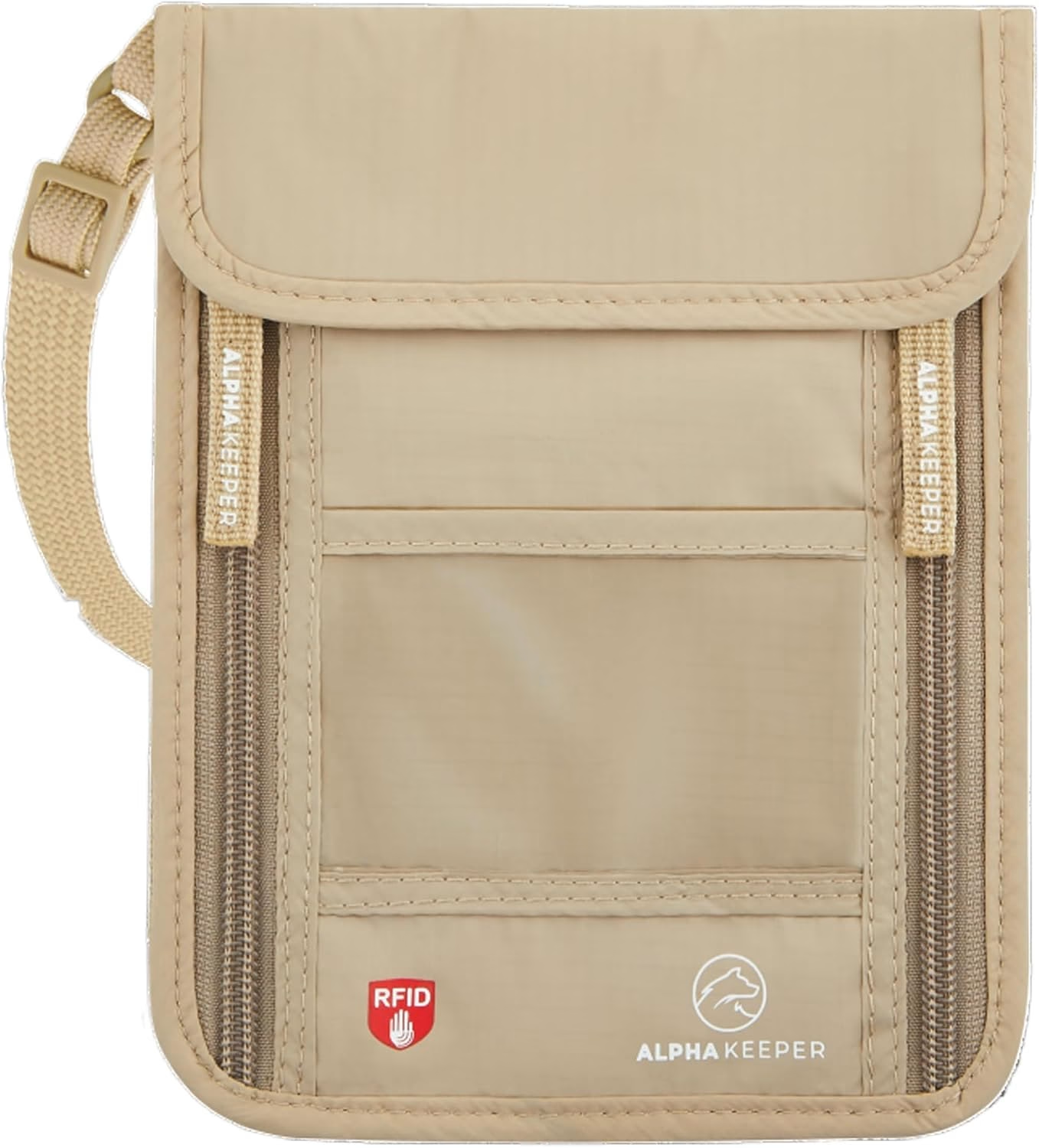
Layer one is your hidden layer — a money belt or neck wallet with your passport, backup credit card, emergency cash (€100–€200 in euros), and travel insurance card. You touch this layer only at airports, ferry terminals, and hotels. Layer two is your accessible layer — a slim wallet or card sleeve with your daily spend card, €30–€50 in cash, and a transit card if you're using Dublin's Leap Card system. The Beige RFID Neck Wallet is particularly well-suited as a layer-one holder because it includes luggage tag holders, which means your passport holder doubles as your bag-identification solution — one less thing to buy or carry. The key discipline is psychological: decide before you leave your hotel room what your daily spending budget is, pull that cash into your accessible wallet, and leave the hidden layer alone until you need it. Travelers who do this report a measurably less stressful experience because they stop the constant pat-check anxiety that makes tourists visibly identifiable as nervous and carrying valuables.
Frequently Asked Questions
Is Dublin safe for tourists in 2026?
Yes — Dublin is a genuinely welcoming city and violent crime against tourists is rare. The practical risk is opportunistic pickpocketing in crowded areas like Temple Bar, Grafton Street, and busy tram lines. Wearing an RFID money belt or neck wallet under your clothing and keeping only daily spending cash accessible reduces your real risk to near zero.
Do I need to carry euros in cash in Ireland, or can I use cards everywhere?
Ireland uses the euro and card acceptance is excellent in Dublin, Cork, and Galway — most pubs, restaurants, and shops accept contactless. However, some rural attractions, smaller B&Bs, and traditional market stalls are cash-only, so carry €50–€100 in euros at all times. Store backup cash in a hidden money belt, not your main wallet.
Will RFID-blocking sleeves slow down contactless payments at Irish terminals?
No — you simply remove the card from its sleeve to tap and pay, which takes under three seconds. The sleeve only blocks the signal when the card is inside it. This brief extra step is the intentional security feature: it ensures your card never transmits wirelessly unless you choose to use it.
Ready to upgrade?
Before you land in Dublin, set up your two-layer security system: grab the Dark Grey RFID Neck Wallet for your passport and backup card, and pair it with the Black RFID Travel Money Belt for all-day hidden carry — together they cover every scenario from Grafton Street to the Galway festival crowds.