A car is broken into somewhere in the United States every 43 seconds — and tourists sitting in rest-stop parking lots are among the easiest targets on the map. If your passport, cards, and emergency cash are locked in the glove box, you're not protected; you're just delayed.
The safest way to keep valuables on a road trip is to carry them on your body — not in your car. Use an RFID-blocking money belt or neck wallet worn under clothing, leave nothing visible in the vehicle, and treat every stop like a high-theft zone. Physical separation from your bag is your best insurance.
Why Your Car Is the Worst Safe You Own
Smash-and-grab thieves can breach a locked car window in under 8 seconds — that's faster than you can finish paying for gas. A glove box is not a safe; it's a latched drawer any crowbar opens in one motion. The trunk is marginally better, but only if you load it before you park, never after — criminals watch people transfer bags from backseat to trunk at rest stops constantly. The hard truth: no compartment in a standard road-trip vehicle meets even the baseline definition of secure storage. Your body, covered by clothing, is the one container a thief cannot access without a confrontation.
The Body-Carry System: How to Structure What You Keep Where
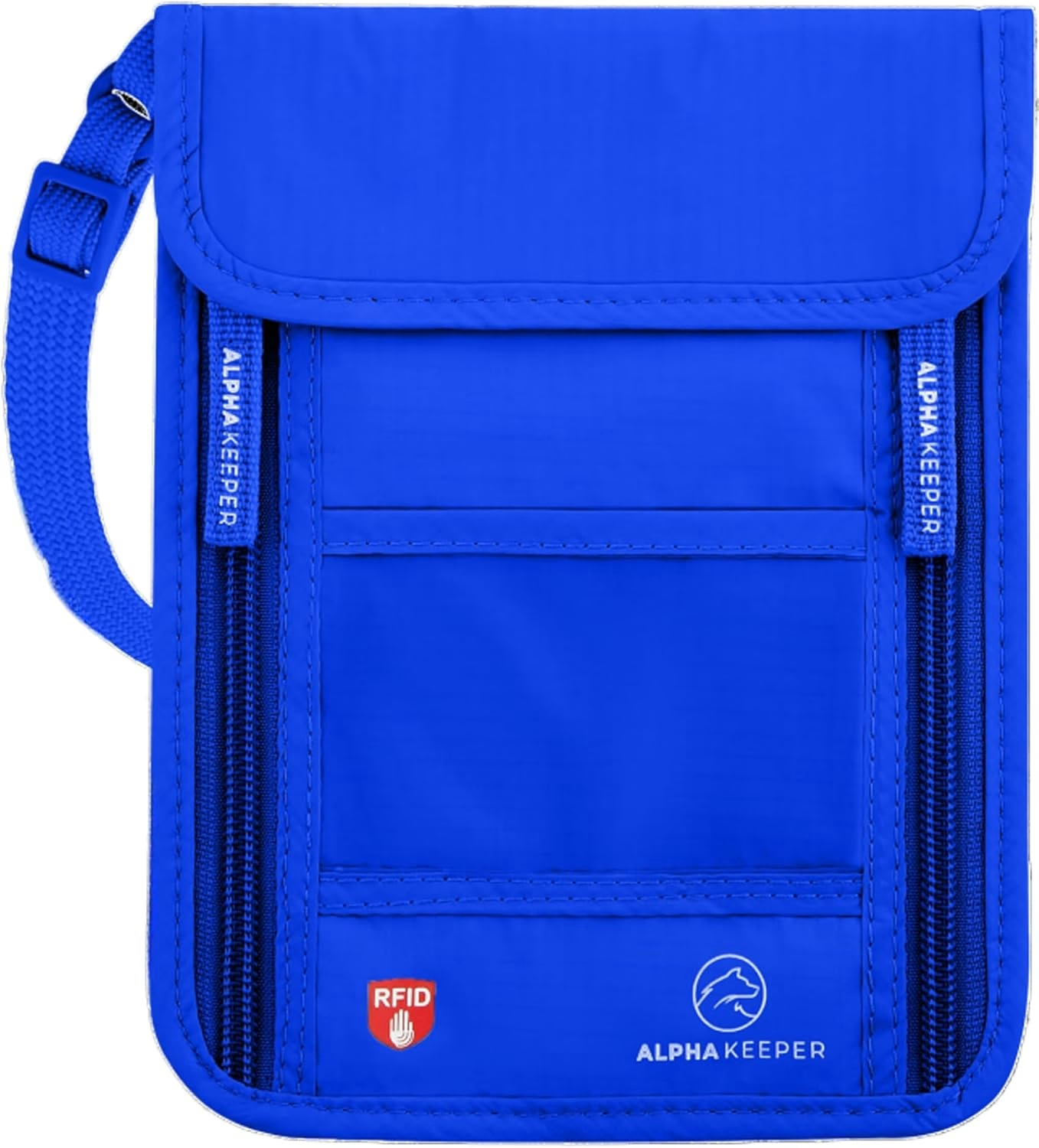
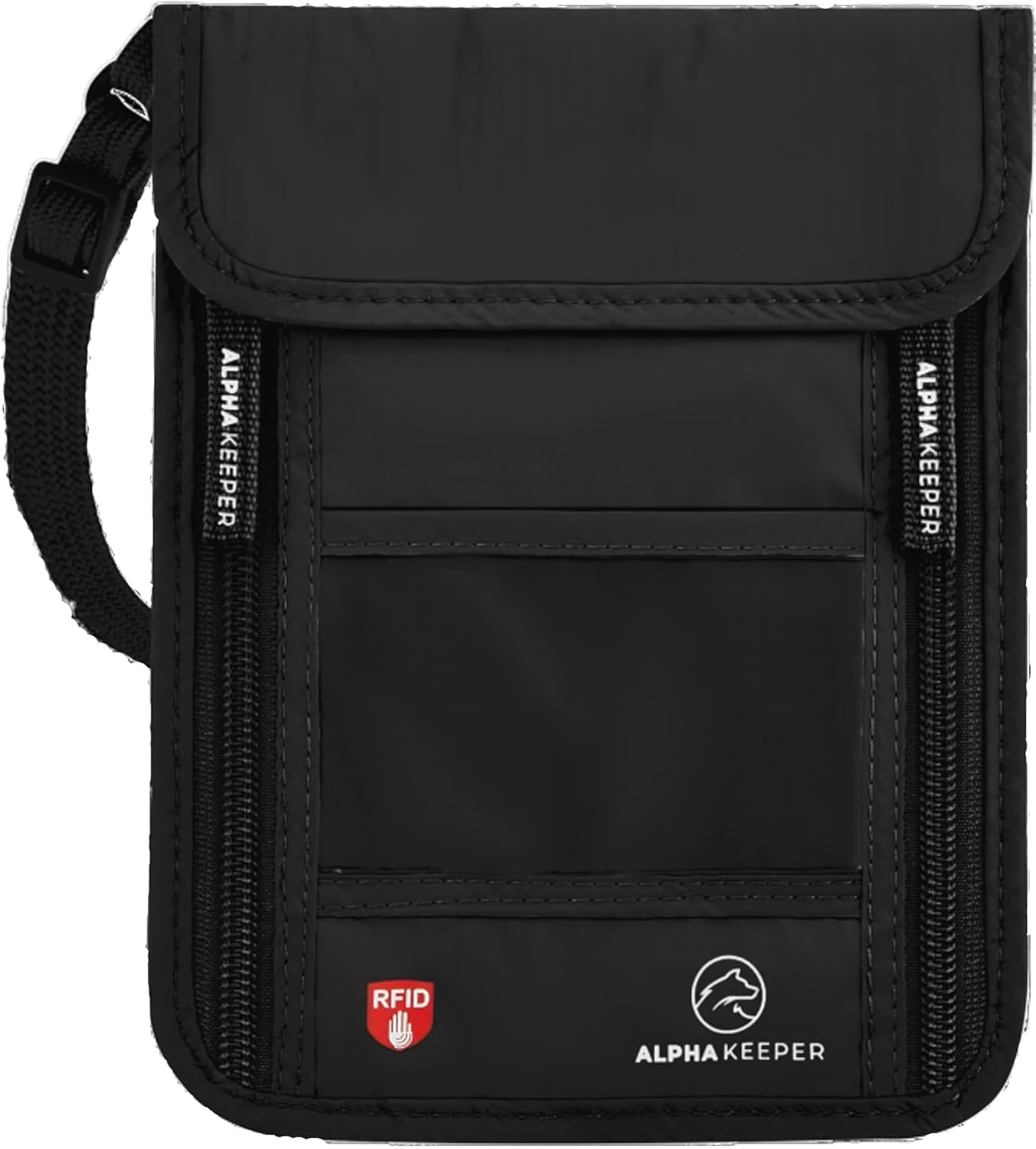
Think in three tiers. Tier one — daily essentials you'll need every hour (one card, some cash, your phone) — goes in a front pocket or a slim wallet. Tier two — your passport, backup cards, and travel insurance documents — belongs in an RFID-blocking neck wallet worn flat against your chest under a shirt; the Black RFID Neck Wallet from Alpha Keeper sits at roughly 6.3 x 4.7 inches, holds a passport plus four cards, and disappears entirely under a t-shirt. Tier three — bulk cash reserves — wraps around your waist in something like the Black RFID Travel Money Belt | Hidden Travel Gear, which uses a zippered under-clothing design and military-grade RFID blocking rated to 13.56 MHz so contactless skimmers at gas station readers get nothing. The rule: never carry all three tiers in the same physical location at the same time.
RFID Skimming at Gas Stations and Rest Stops Is a Real 2026 Threat
The FBI reported over 1,200 physical card-skimming device seizures at US gas pumps in 2025 alone, and the 2026 data is trending worse as Bluetooth-enabled skimmers get smaller and harder for staff to detect. Modern contactless cards and passport chips broadcast on 13.56 MHz — readable through a jacket from up to a few inches away with off-the-shelf equipment sold openly online. RFID-blocking card sleeves are the cheapest fix per card: Alpha Keeper's Fiber RFID Sleeve Set provides six sleeves made from a metallic fiber composite that independently lab-tested blocks 13.56 MHz signals, and the whole set costs less than a single fraudulent charge will cost you in time and stress. Slide your most-used cards into sleeves and leave them in — the tap-to-pay still works when you pull the card out of the sleeve, so there's zero daily friction.
Parking Strategy: The Decisions That Matter Before You Walk Away
Choose illuminated, high-traffic parking spots over convenient-but-secluded ones — crime data consistently shows corner spots near building entrances have lower break-in rates than mid-lot or back-of-lot spaces. Never leave bags, chargers, sunglasses cases, or anything that suggests a bag might be nearby; even an empty reusable grocery bag signals 'this person leaves stuff in cars.' If you're camping or doing overnight road stops, put every single item of value in a dry bag or packing cube inside a zipped duffel in the trunk — out of sight, out of mind for a thief doing a 10-second window scan. Steering wheel clubs and OBD port locks add another deterrent layer for roughly $25–$60, which is cheap relative to a $300 deductible and the week you'll lose canceling cards mid-trip.
The Honest Comparison: Money Belt vs. Hidden Pouch vs. Hotel Safe
Hotel safes are better than nothing but have a documented weakness: most budget and mid-range hotel room safes use a master override code (often 0000 or 9999) that staff and savvy thieves know. A hidden car pouch (the magnetic kind that sticks under dashboards) is clever until the magnet fails or a detail-oriented thief knows the common hiding spots. An under-clothing money belt like the Azure RFID Money Belt wins on every practical road-trip dimension: it's on your person at every gas stop, every diner, every trailhead, and it blocks electronic skimming simultaneously. The trade-off is comfort in heat — a thin cotton-blend belt like Alpha Keeper's design minimizes sweat contact, but in 95°F summer road trips you will feel it; switching to a neck wallet in extreme heat is a reasonable warm-weather adaptation.
The Road Trip Packing Checklist for Valuables (Keep This Short on Purpose)
One rule before the list: every item you don't bring is an item that can't be stolen. Carry your actual passport only if crossing borders — otherwise a digital copy on an encrypted app plus a physical photocopy stored separately covers most roadside situations. The essentials to keep on your body: one primary debit card in an RFID sleeve, one backup credit card in a separate RFID sleeve (stored in your neck wallet, not the same pocket), your driver's license, and cash split into a 'spending' amount in your front pocket and a larger emergency reserve in your money belt. Leave your Social Security card, extra store loyalty cards, and secondary IDs locked at home — they have no road-trip utility and massive identity-theft downside if lost.
Frequently Asked Questions
Is it safe to leave a passport in a hotel room safe during a road trip?
Only if you have no better option. Most hotel room safes use well-known master override codes and thin steel construction. A better approach: keep your passport in an RFID-blocking neck wallet on your body during the day, and store it in the hotel safe only when you're sleeping in the room with the door locked — never when you're out sightseeing.
Do RFID-blocking wallets and sleeves actually work against gas station skimmers?
Yes, for contactless skimming. Gas station Bluetooth skimmers that intercept tap-to-pay signals are blocked by metallic RFID sleeves rated to 13.56 MHz. They don't protect against physical card readers where you insert or swipe the card — for that, use tap-to-pay via your phone's encrypted wallet whenever possible, and inspect card readers for tampering before inserting.
What's the best place to hide valuables in a car if I have no choice but to leave them?
Load items into the trunk before you park — never transfer bags from the cabin after arriving, since thieves watch for this. Inside the trunk, use an opaque bag and position it under other luggage. Avoid under-seat magnetic pouches, which are now a known hiding spot. That said, no car location is reliably secure; splitting valuables and keeping the most critical items (passport, primary card) on your body is always the superior strategy.
Ready to upgrade?
Don't leave your passport and backup cards in a car another mile — clip the Black RFID Travel Money Belt | Hidden Travel Gear under your shirt before your next stop and carry your most critical documents where no smash-and-grab can reach them.