One in eight tourists in Costa Rica reports theft — and the most common crime isn't a violent mugging, it's a hand sliding into your daypack while you're distracted by a beautiful sunset in Manuel Antonio. The pickpocket never broke a sweat.
To protect valuables in Costa Rica in 2026, wear an RFID-blocking money belt or neck wallet under your clothing, carry only a day's spending cash in a decoy wallet, and never leave bags unattended on beaches or buses. San José's tourist corridors and crowded beach towns are the highest-risk zones.
Why Costa Rica Is Higher-Risk Than Most Travelers Expect
Costa Rica ranks among Latin America's most-visited destinations — over 2.3 million international arrivals in 2025 alone — and its reputation as a safe, eco-friendly paradise leads many travelers to let their guard down. That's exactly the window opportunistic thieves exploit. San José's Mercado Central, the Coca-Cola bus terminal, and the beachfront promenades of Jacó and Manuel Antonio are consistently flagged by the U.S. Embassy and Costa Rican Tourism Board as high-theft zones. Express kidnappings and phone grabs are rising in 2026, but bog-standard pickpocketing and bag-snatching from café chairs remain by far the most common crimes against tourists. The single biggest mistake travelers make: keeping passport and all cards in one easily accessible spot.
The Honest San José Threat Map: Where Your Stuff Gets Stolen
San José's La Uruca bus terminal and the blocks surrounding Parque Central see the densest concentration of tourist theft reports in the country. The Barrio Amón neighborhood — gorgeous for colonial architecture — has a hard edge after dark; a single wrong turn onto a less-lit street puts you in a different risk category entirely. Crowded public buses on Route 200 (San José to Jacó) are a known hunting ground: a distraction at the front, a swift hand at the back. Thieves work in pairs, often well-dressed, and target the external pockets of backpacks and crossbody bags with practiced efficiency. The fix isn't paranoia — it's geometry: keep your most critical items flat against your skin, not hanging off your shoulder.
Beach Town Risks Are Different — and Sneakier
Theft in Jacó, Tamarindo, and Manuel Antonio doesn't look like city crime; it looks like a friendly local offering to watch your bag while you swim, then vanishing. Rental car break-ins are epidemic — Costa Rican authorities recorded thousands of vehicle thefts targeting tourists near trailheads and beach parking lots in 2025, and the trend has accelerated into 2026. The ocean is its own accomplice: you can't take your wallet into the surf, which means it's sitting on a towel. Smart travelers use a waterproof neck wallet worn into the water for the absolute essentials (one card, some colones, ID copy), and leave nothing of value in the car. A hidden money belt worn under board shorts or a cover-up is genuinely invisible and costs less than one stolen credit card dispute.
RFID Skimming in Costa Rica: Real Threat or Overhyped?
RFID skimming — where a criminal uses a handheld reader to wirelessly steal contactless card data — is a documented threat in high-tourist-density areas of Central America, and San José's crowded markets are textbook environments for it. Your Visa or Mastercard with a contactless symbol transmits data up to 10 cm without you knowing; in a tightly packed queue at a market or bus stop, that's trivially easy to exploit. The protection is simple and cheap: an RFID-blocking sleeve around each card creates a Faraday cage that blocks the 13.56 MHz frequency these readers use. The Alpha Keeper Fiber RFID Sleeve Set uses a woven metallic-fiber lining that blocks 100% of that frequency range — it's about the thickness of a business card when the card is inside, so it adds zero bulk to a slim wallet. Honest take: RFID skimming is less common than pickpocketing, but it's also the easiest threat to eliminate entirely for under $15.
The Best Gear Setup for Costa Rica in 2026 (Honest Comparison Inside)
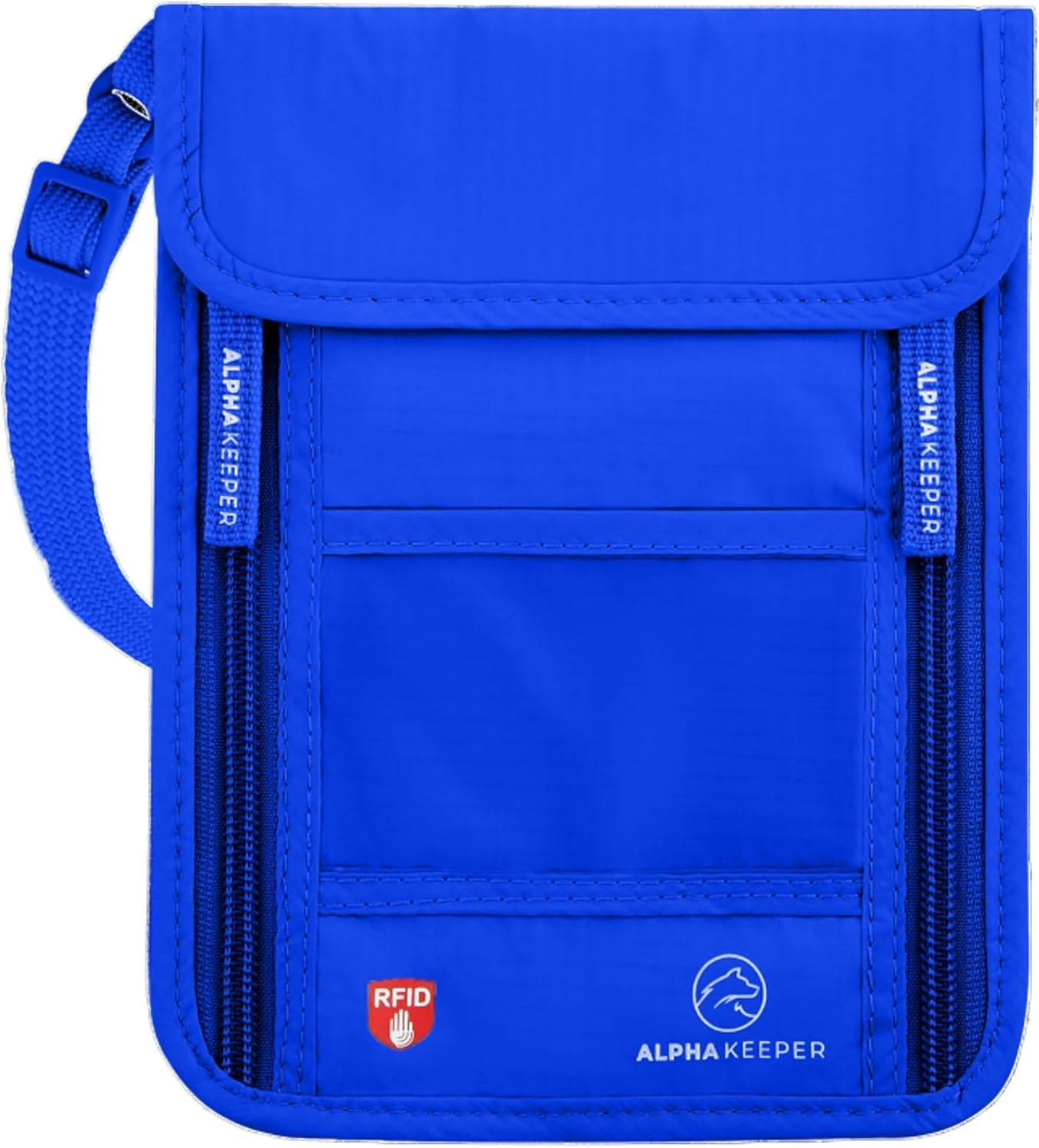
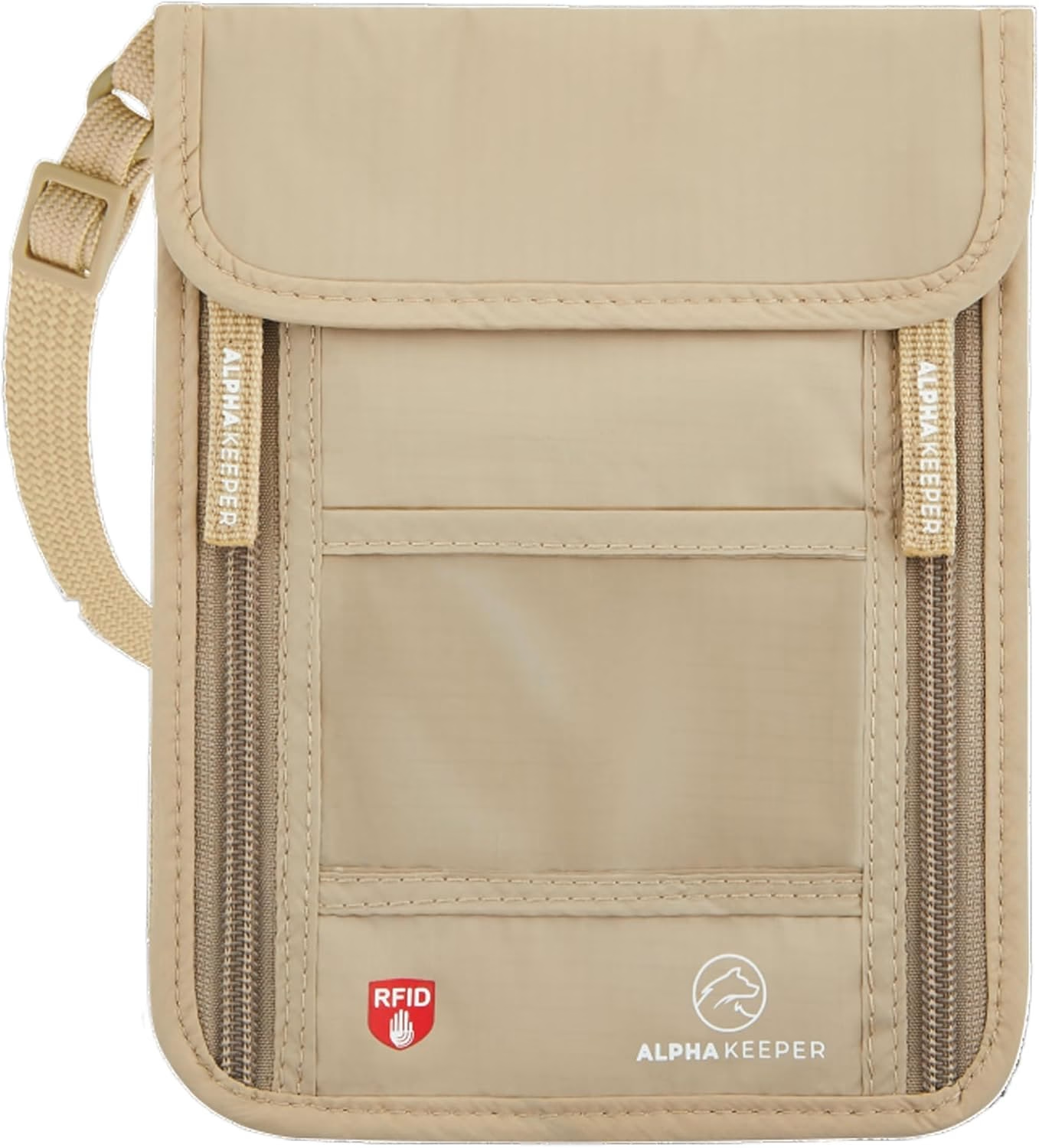
For city days in San José, the ideal setup is a flat money belt worn under your waistband — the Black RFID Travel Money Belt | Hidden Travel Gear sits at roughly 5mm thin, holds a passport, 4-6 cards, and folded bills, and is completely invisible under a light linen shirt in 30°C heat. For beach days, a neck wallet worn under a swimsuit cover-up or rash guard is more practical; the Blue RFID Neck Wallet has a waterproof-rated compartment, adjustable cord, and fits an A4 folded document. For everyday card protection without switching wallets, slide each card into a sleeve from the Colorful RFID Sleeve Set — they come in multiple colors so you can color-code cards by type (travel card = blue, emergency card = red). The one honest trade-off: a money belt is more secure than a neck wallet in a crowd because there's no dangling cord to grab, but neck wallets are faster to access at border crossings — and Costa Rica's land borders at Peñas Blancas and Sixaola involve standing in long, exposed queues where speed matters.
A Practical Daily System That Actually Works
Adopt a two-wallet system: a 'sacrificial' wallet in your front pocket holding $20 in local colones and one expired card — enough to satisfy a mugger and walk away — and your real valuables in a concealed money belt or neck wallet against your skin. Before leaving your hotel, transfer only what you need for that day; ATMs in Costa Rica dispense both USD and colones, so there's no reason to carry a week's cash. Make digital copies of your passport's photo page and store them in a password-protected cloud folder; Costa Rican immigration accepts certified copies at most checkpoints. On buses, keep your day bag on your lap with the zipper facing your body — never in the overhead rack. These aren't paranoid habits; they're the same ones expats who've lived in San José for 20 years follow without thinking twice.
Frequently Asked Questions
Is Costa Rica safe for tourists in 2026?
Costa Rica remains one of Central America's safest tourist destinations in 2026, but petty theft — pickpocketing, bag-snatching, and rental car break-ins — is genuinely common in San José, Jacó, and Manuel Antonio. Violent crime targeting tourists is rare; opportunistic property crime is not. Wearing a concealed money belt and using RFID-blocking card sleeves eliminates most of the risk.
Do I need RFID blocking in Costa Rica?
Yes, especially in crowded markets, bus terminals, and tourist areas of San José. Contactless cards transmit data wirelessly up to 10 cm, and handheld RFID skimmers are small enough to fit in a jacket pocket. An RFID-blocking sleeve or wallet blocks the 13.56 MHz signal completely and costs under $15 — it's the cheapest insurance you'll buy for your trip.
Should I use a money belt or neck wallet in Costa Rica?
Use a money belt for crowded city environments like San José — it's flatter, has no external cord, and is harder to grab or detect. Switch to a neck wallet for beach days and border crossings where you need quick access to your passport. Many experienced Costa Rica travelers carry both and switch based on the day's itinerary.
Ready to upgrade?
Before your flight lands in San José, clip a Black RFID Travel Money Belt | Hidden Travel Gear under your waistband — it's the one piece of gear that makes every other safety tip easier to follow, and you'll forget it's even there.