The currency exchange booth at Rome's Fiumicino Airport charges up to 15% above the mid-market rate — and they're completely legal doing it. Every year, travelers lose hundreds of dollars not to pickpockets, but to bad exchange math they never noticed.
To exchange currency abroad without getting scammed in 2026: use local ATMs on the Visa/Mastercard network, always decline 'dynamic currency conversion,' avoid airport kiosks and hotel desks, check the real mid-market rate on Google beforehand, and carry exchanged cash in a hidden money belt — not your back pocket.
The Mid-Market Rate Is Your Compass — Know It Before You Land
The mid-market rate (also called the interbank rate) is the real, unmarketed exchange rate you see on Google or XE.com. Every exchange service makes money by offering you worse than this rate — the question is how much worse. Airport kiosks typically add a 10–15% spread; hotel desks can be even greedier. A bank or credit union back home might charge 3–5%. A local ATM abroad using your debit card typically lands at 1–3% after network fees. Before any trip, pull up the mid-market rate on Google (just type '1 USD to EUR'), screenshot it, and use it as your benchmark every time someone quotes you a rate. If the math doesn't get close, walk away.
Best Places to Exchange Currency in 2026 (Ranked Honestly)
Ranked from best to worst: 1) **Local ATMs in your destination country** — withdrawing from a bank-branded ATM (not a random third-party machine in a tourist shop) using a Schwab, Wise, or Revolut debit card is almost always the cheapest option, typically 0–2% above mid-market. 2) **Wise or Revolut multi-currency cards** — these apps let you convert at or near mid-market digitally before you travel, then spend like a local. 3) **Your home bank's travel branch** — call ahead; some major banks (Chase, Bank of America) offer free currency orders for account holders. 4) **Licensed exchange bureaus in city centers** — not airports, not tourist hotspots; look for government-licensed offices in commercial districts. 5) **Airport kiosks and hotel desks** — use only as a last resort for a small emergency amount, knowing you're paying a premium. Never exchange money on the street, no matter how good the rate sounds.
Dynamic Currency Conversion: The Polite Scam You Need to Refuse Every Time
When you pay by card abroad and the terminal asks 'Would you like to pay in your home currency?' — always say no. That option is called Dynamic Currency Conversion (DCC), and it lets the merchant's bank apply its own exchange rate, which research from 2026 consumer finance studies consistently pegs at 3–8% worse than your card network's rate. It sounds helpful. It is not. The rule is simple: always pay in the local currency and let your card issuer do the conversion. This applies to ATMs too — if an ATM asks whether you want to 'lock in a conversion rate,' decline and choose to be charged in the local currency. Some ATMs are particularly aggressive about this in Eastern Europe, Southeast Asia, and popular cruise ports.
How Much Local Cash Should You Actually Carry?
In 2026, cashless payment infrastructure is genuinely excellent in Western Europe, Japan, Singapore, Australia, and most major cities globally — but it falls off fast in rural areas, local markets, temples, small restaurants, and anywhere that primarily serves locals rather than tourists. A practical rule: carry enough local cash to cover 2–3 days of small purchases, tips, transit, and one emergency meal. For most destinations that's USD 100–200 equivalent. Don't carry your full travel budget in cash at once — it's unnecessary risk. The real danger isn't exchanging money; it's carrying too much of it in an obvious wallet where a pickpocket, a bump on a crowded subway, or a distraction scam can clean you out in under four seconds. Experienced travelers split their cash across at least two separate locations on their body.
Where You Keep Exchanged Cash Matters as Much as Where You Get It
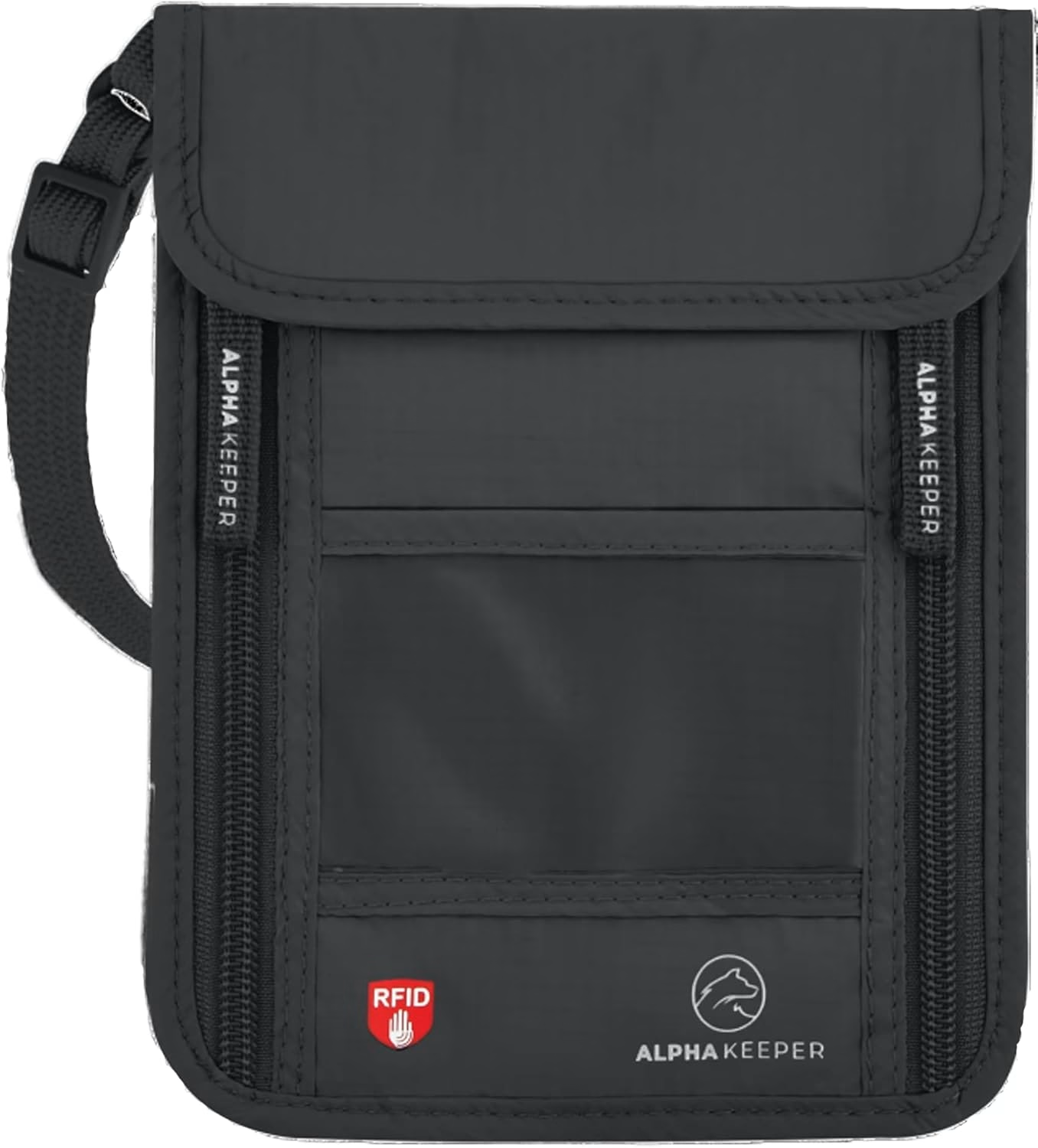
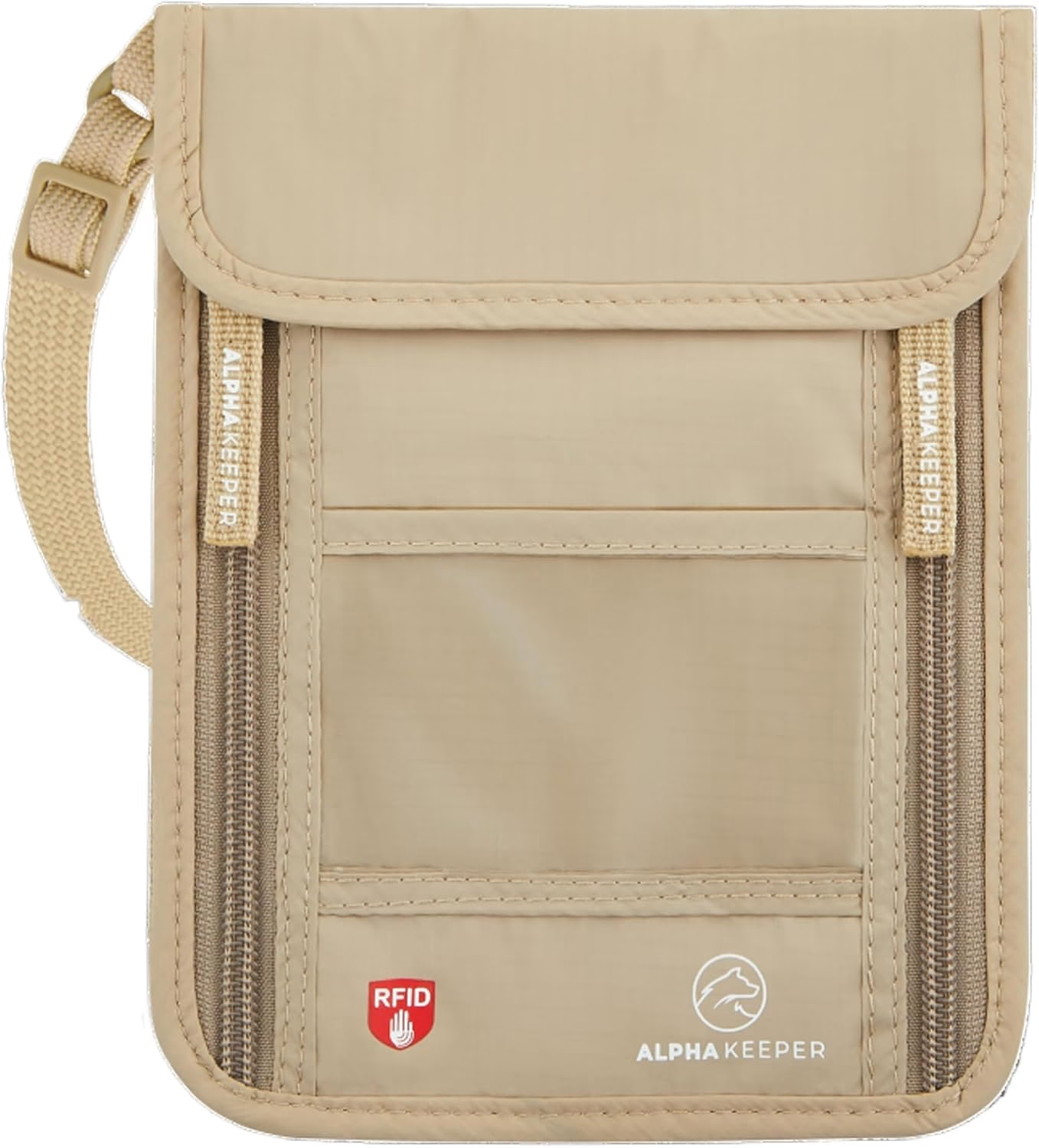
You did everything right — used a local ATM, declined DCC, got a fair rate — and then you lost €200 to a pickpocket on the Barcelona Metro because it was folded into your back pocket. This is exactly where physical security completes the financial strategy. Serious travelers keep bulk cash and a backup card in a hidden layer: either an under-clothes money belt worn against the skin or a neck wallet tucked beneath a shirt. Alpha Keeper's Black RFID Travel Money Belt | Hidden Travel Gear sits flat against your waist under clothing, blocks RFID skimming on cards stored inside, and holds cash, a card, and a folded backup ID — without creating a visible bulge. For a neck-worn option, the Dark Grey RFID Neck Wallet holds a passport, cards, and folded bills and hangs beneath your shirt on an adjustable cord. Keep only your spending money for the day in an accessible outer pocket; everything else stays hidden.
The Currency Exchange Scams Locals Know (That Tourists Don't)
Beyond bad rates, there are active scams targeting currency exchangers. The 'short change' trick: a vendor or cashier counts money back to you quickly and confidently, but miscounts by one bill — betting you won't recount slowly in public. Always recount. The 'old notes' trick: someone exchanges genuine currency for bills that have been demonetized (withdrawn from circulation) — look up the current valid notes for your destination before you go. The 'broken ATM' redirect: a 'helpful' local tells you the bank ATM is broken and steers you to a private machine with predatory fees; ignore them and check the machine yourself. The 'street money changer' offer: illegal in most countries and almost always a setup for counterfeit bills, short counts, or worse. And finally, fake exchange office receipts that don't reflect the rate actually applied — always check the receipt math on the spot before walking away.
RFID Skimming at Currency Exchange Points: Real Risk or Overblown?
Here's an honest take: active RFID skimming in the wild remains relatively rare compared to low-tech pickpocketing — but the risk is not zero, and the consequence is a compromised card number on a trip where you need that card to function. Crowded currency exchange lines, tourist-district ATM lobbies, and busy transit hubs are the environments where skimming devices have historically been placed closest to people's wallets. The cost of prevention is trivial: RFID-blocking card sleeves from a set like the Fiber RFID Sleeve Set or the Colorful RFID Sleeve Set slip over individual cards and block the 13.56 MHz frequency used by modern contactless payment cards and chip passports. They add almost no bulk. If you're already thinking carefully about currency security, spending an extra 30 seconds sleeving your cards is a sensible, low-effort addition to the same trip prep.
Frequently Asked Questions
Is it better to exchange currency before or after you arrive at your destination?
In most cases, exchanging after arrival at a local bank ATM gets you a better rate than buying foreign currency at home. The exception: if you're traveling to a destination with limited ATM access or a currency that's hard to source abroad, buy a small emergency amount (USD 50–100 equivalent) before you leave from your home bank. For the bulk of your cash needs, wait and withdraw locally using a low-fee debit card like Schwab or Wise.
What fees should I expect when using a debit card at a foreign ATM in 2026?
Expect up to three potential fees: your bank's foreign transaction fee (typically 1–3%), your bank's out-of-network ATM fee (often $3–$5 flat), and the foreign ATM operator's own fee (varies widely, sometimes zero, sometimes $3–$6). Cards from Charles Schwab, Wise, and Revolut rebate or waive most of these — making them the go-to choices for frequent international travelers in 2026. Always check your card's specific foreign fee schedule before departure.
How do I keep my exchanged cash and cards safe from pickpockets and electronic theft while traveling?
Split your cash: carry only the day's spending money in an accessible outer pocket, and store your backup cash, spare card, and passport in a hidden under-clothing layer. An RFID-blocking money belt worn against the skin (like Alpha Keeper's Azure RFID Money Belt or Blue RFID Money Belt) prevents both physical theft and electronic card skimming. For your cards, RFID-blocking sleeves add a second layer of protection at negligible bulk and cost.
Ready to upgrade?
Before your next trip, secure your exchanged cash where no pickpocket or skimmer can reach it — the Black RFID Travel Money Belt | Hidden Travel Gear sits flat under your clothes, holds cash, cards, and a backup ID, and blocks RFID skimming so the only person who benefits from your smart currency exchange is you.