A 2026 Euromonitor report found that 1 in 3 international tourists experience some form of theft or scam on a trip — and most victims say they never saw it coming. The scam didn't look like a scam; it looked like a friendly local, a great deal, or a perfectly normal taxi.
To avoid travel scams in 2026, know the 15 most common tourist traps — from fake taxi meters and friendship bracelet tricks to RFID card skimming — and carry your valuables in an RFID-blocking money belt or neck wallet worn under your clothes, away from grabbing hands and wireless theft.
1. The Fake Taxi / Unmarked Cab Scam
At airports and train stations worldwide — Cairo, Bangkok, Rome, Bogotá — unofficial drivers pose as licensed cabs, quote a flat rate, then add 'luggage fees,' 'toll fees,' or simply demand triple the agreed price when you arrive. Always use the official taxi rank, a metered cab with a visible license, or a pre-booked ride-hailing app. Screenshot your route before you get in. If a driver 'doesn't have change,' he's counting on you not to fight over it with bags in his trunk.
2. The Friendship Bracelet Trap
A stranger on a bridge in Paris or Montmartre approaches, compliments you, and 'gifts' you a bracelet — tying it tight around your wrist before you can object. Suddenly it's not a gift; it's €20 and you're being aggressively held until you pay. The real trick: while your attention is on the bracelet, an accomplice is working your bag or back pocket. Keep walking, hands in pockets, and say a firm 'No thank you' without slowing down.
3. The Dropped Ring / Found Valuables Con
Someone bends down and 'finds' a gold ring near your feet, then offers it to you — it's actually brass and worth almost nothing. The goal is to create obligation and distraction long enough for a partner to lift your wallet. Variations include dropped phones, spilled wallets, and 'lost' jewelry. The honest truth: nobody on a busy tourist street is giving you found gold. Keep moving.
4. The Petition / Clipboard Distraction
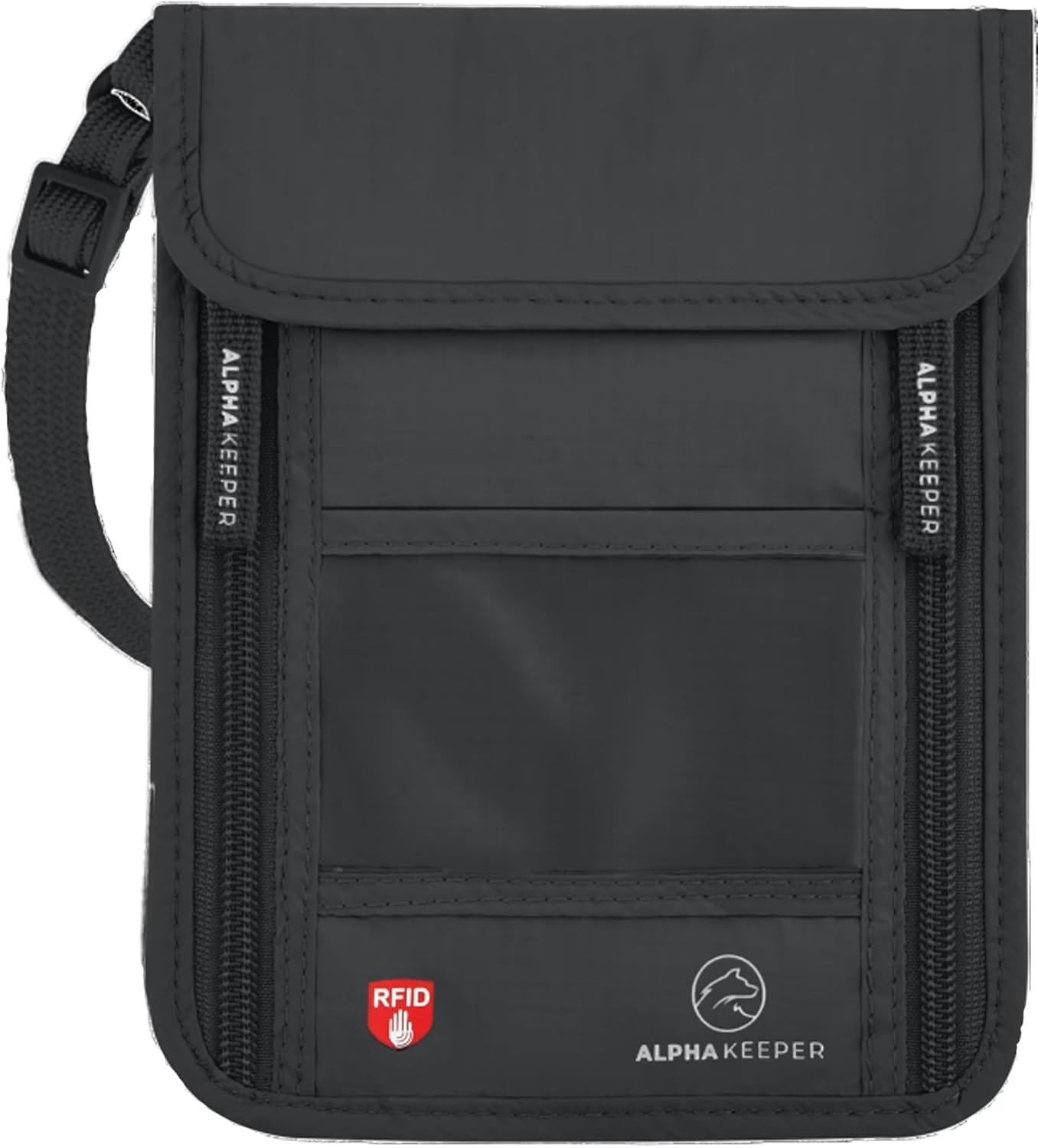
A group of people, often young women, rushes up with clipboards asking you to sign a petition for a worthy cause — deaf children, endangered animals, peace. While you're reading or signing, fingers are in your bag, pocket, or around your neck wallet strap. The fix is simple: don't stop for clipboards. If you're wearing a Dark Grey RFID Neck Wallet under your shirt, there's nothing reachable anyway — and that's the point of wearing it underneath, not outside.
5. The Rigged Meter Taxi (Meter Tampering)
Different from the fake cab scam, this one uses a real-looking licensed taxi with a meter that runs 3–4x faster than legal rates — common in parts of Southeast Asia, Eastern Europe, and North Africa. The fare from the airport to your hotel that should cost $8 hits $40 before you're halfway there. Always check local rate apps like Rome2rio or Google Maps estimated fares before you ride, and agree on a price upfront or photograph the meter when you get in.
6. The 'Closed for the Day' Redirect
You're heading to a famous museum, temple, or restaurant, and a helpful local intercepts you: 'Closed today — national holiday. But I know a great place nearby.' The place nearby pays him a commission on every tourist he brings. The real attraction is almost never closed. Check official websites before you leave your hotel — and when someone on the street tells you otherwise, pull out your phone and verify right in front of them.
7. RFID Card Skimming in Crowds
Modern contactless credit cards and passports with RFID chips can be scanned wirelessly in under a second by a criminal with a reader hidden in a bag or jacket — no physical contact required. Busy metros, ferry queues, and airport security lines are prime locations. This isn't science fiction: in 2026, contactless fraud accounts for a growing share of card-not-present fraud in the EU and UK. The solution is physical shielding: RFID-blocking sleeves like the Fiber RFID Sleeve Set wrap each card in a Faraday-cage layer that blocks all 13.56 MHz reads without adding bulk.
8. The Currency Exchange Sleight of Hand
Street money changers, and even some legitimate-looking kiosks, use a fast-hands trick: they count out the right amount in front of you, fold it, and hand you a smaller stack. You don't recount because it feels rude. Always count every note before you leave the window, in plain sight. Better yet, withdraw local currency from a bank ATM inside the airport arrivals hall — the rates are fair and nobody's palming bills.
9. The ATM Skimmer
Card skimming devices fitted over real ATM card slots can clone your magnetic stripe in milliseconds, while a tiny pinhole camera records your PIN. In 2026, skimmers are thinner and harder to spot than ever, often indistinguishable from the original plastic. Rule: only use ATMs attached to a bank branch during opening hours, cover the keypad with your hand every single time, and always check your card accounts via your bank app within 24 hours of a withdrawal.
10. The Spill / Mustard Trick
Someone squirts ketchup, bird dropping, or 'accidentally' spills something on your jacket. A kind stranger immediately offers to help clean it. While you're distracted by the mess and the helper, your bag is being opened behind you. If this happens, your first instinct should be to grab your bag or press it against your body — before anything else. If your passport and cards are in an Azure RFID Money Belt worn flat against your abdomen under your shirt, this scam has nothing to find.
11. The 'Free' Photo Offer
A stranger offers to take your photo at a famous landmark — then refuses to hand back your phone or camera until you pay. Or they run. Phone snatching at tourist photo spots is among the fastest-growing petty crimes in Barcelona, Lisbon, and Amsterdam in 2026. Use a wrist strap on your phone, ask another tourist to take the photo, or use a selfie stick. The two seconds you spend handing over your device can cost you $800 and all your photos.
12. The Overpriced Restaurant with No Menu Prices
A charming host outside a restaurant near a major sight invites you in with a 'special price for tourists.' The menu has no prices, the food is mediocre, and the bill is stunning — sometimes 10x what a local would pay two streets away. Rule: never enter a restaurant without seeing a priced menu first. If the host says 'don't worry about price,' worry intensely about price.
13. Fake Police Officers Demanding Documents
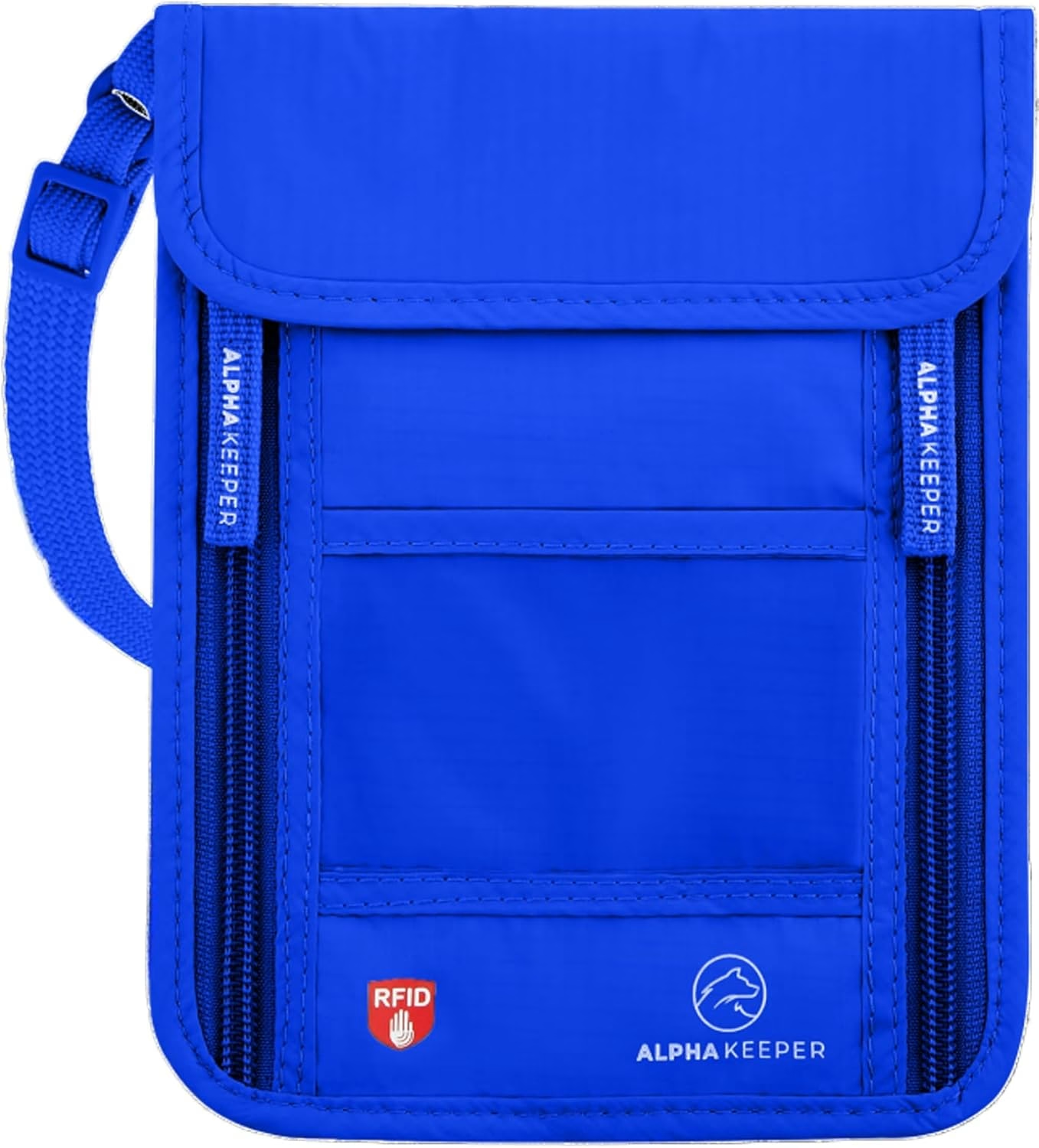
Two men approach you, flash unofficial-looking badges, and say there's a problem — drug check, counterfeit currency inspection, routine tourist verification. They ask to see your wallet and passport. Real police do not randomly approach tourists to inspect cash on the street. If approached, say you'll walk to the nearest police station together. Watch their reaction; real officers welcome it, fake ones vanish. Your passport should stay in a Blue RFID Neck Wallet under your clothes — not in a jacket pocket where it can be 'inspected' and swapped.
14. The Wi-Fi Honeypot
Free Wi-Fi networks named 'AirportFree,' 'CafeGuest,' or 'HotelWiFi' are sometimes rogue hotspots set up to intercept logins, banking sessions, and personal data. In 2026, with more travelers doing banking and booking on mobile, this attack is more lucrative than ever. Always use a VPN on public Wi-Fi, avoid logging into financial accounts on unknown networks, and ask staff for the exact SSID name before connecting. Better yet, use your phone as a personal hotspot.
15. The Packed Metro Pickpocket Pinch
This is the oldest scam on the list and still the most successful: multiple people crowd you onto a metro or tram — sometimes deliberately blocking the door — and while you're compressed and distracted, one person reaches into your bag, jacket, or back pocket. The distraction is often a loud argument, a dropped item, or a tourist asking you for directions. If your cards and passport are in a Black RFID Money Belt strapped flat under your waistband, a pickpocket would have to undress you to reach it. That's the entire value proposition of a hidden belt over a regular wallet.
The Honest Comparison: Hidden Money Belt vs. Front-Pocket Wallet
A slim front-pocket wallet is better than a back-pocket one — but it's still accessible to a skilled pickpocket in a crowd. A hidden money belt worn under clothing requires the thief to physically touch your body under your shirt, which creates noise, resistance, and attention. For passport-carrying situations — airports, border crossings, busy markets — the Black RFID Travel Money Belt | Hidden Travel Gear wins on security; a front-pocket wallet wins on daily convenience. The smart move: use both. Belt for passport and backup card, slim wallet for daily spending cash.
Your 2026 Anti-Scam Gear Checklist
Great awareness prevents most scams, but layered physical protection closes the gap. RFID-blocking sleeves protect every card individually — the Fiber RFID Sleeve Set fits neatly in any wallet and blocks all contactless reads without any behavioral change required. For full passport protection, a neck wallet worn under a shirt is the gold standard: the Silver RFID Neck Wallet lies flat against your chest, is invisible under a t-shirt, and holds a passport plus four cards comfortably. For destinations with aggressive pickpocket risks — Rome, Barcelona, Marrakech, Bali — add a money belt under your waistband. The Beige RFID Money Belt in particular disappears under light clothing and doesn't bulk under shirt fabric.
Frequently Asked Questions
What is the most common travel scam in 2026?
The packed-crowd pickpocket remains the most widespread scam globally, followed by fake taxi overcharging and RFID card skimming. All three can be countered by staying aware of your surroundings and keeping valuables in an RFID-blocking money belt or neck wallet worn under clothing rather than in an accessible bag or pocket.
Do RFID-blocking products actually prevent card skimming?
Yes — RFID-blocking sleeves and wallets use a Faraday-cage layer of metallic shielding that blocks the 13.56 MHz radio frequency used by contactless cards and passports. When a card is inside a quality RFID sleeve, a reader held inches away cannot detect or clone it. Products like the Fiber RFID Sleeve Set have been independently verified to block standard RFID and NFC reads.
Should I carry my passport with me when sightseeing?
In most countries, yes — local law may require you to carry valid ID, and hotels sometimes ask for it unexpectedly. The safer approach is to carry your passport in a hidden neck wallet or money belt under your clothes rather than in a bag or back pocket. The Dark Grey RFID Neck Wallet, worn under a shirt, keeps your passport both legally accessible and physically secure throughout the day.
Ready to upgrade?
Before your next trip, gear up with the Black RFID Travel Money Belt | Hidden Travel Gear — it sits flat under your waistband, blocks RFID skimming, and is completely invisible to the pickpockets who are already watching the crowds.