Hawaii's most popular beaches see dozens of rental car break-ins every single week — and most victims left their bags in the trunk thinking it was safer than the back seat. It wasn't.
Hawaii rental car break-ins and beach theft remain serious risks in 2026, especially at Oahu's North Shore, Maui's Road to Hana pullouts, and Kauai's trailhead lots. The safest strategy: carry only what you need, lock nothing visible in your car, and keep cash, cards, and your passport in a body-worn RFID-blocking travel wallet.
How Bad Is Hawaii Theft in 2026? (The Numbers Are Not Comforting)
Honolulu consistently ranks among the top U.S. cities for property crime per capita, and tourist-targeted vehicle break-ins at beach parking lots account for a disproportionate share of those incidents. In 2026, Hawaii visitor safety reports show rental car smash-and-grabs spike sharply between June and August — peak tourist season — with popular spots like Haena State Park, Hanauma Bay, and the Waianae Coast topping the hotspot lists. The average loss per incident runs $800–$1,200 once you factor in electronics, cash, and the replacement costs rental companies charge for a shattered window. What makes Hawaii uniquely risky is the parking lot math: high tourist turnover means thieves can case a lot, clock a rental car (they know the license plate patterns), watch you walk to the beach, and be gone in under 90 seconds. Awareness is the first layer of defense — but awareness alone won't stop someone who's already watching you.
The Rental Car Break-In Playbook (And How to Beat It)
Professional car thieves in Hawaii tourist zones use a simple system: spot a rental plate, watch for bags being stashed, wait for you to disappear over the sand dune, and strike. The trunk is not safer — thieves watch you put things there. The single most effective countermeasure is bringing nothing worth stealing to the parking lot in the first place. Leave your passport, extra cards, and backup cash at your hotel safe; bring only one card and a small amount of local cash to the beach. If you must carry documents — say, you're driving straight from the airport to a waterfall hike — use a body-worn solution like the Black RFID Travel Money Belt | Hidden Travel Gear, which sits flat under a shirt and is genuinely invisible under a linen beach layer. No bag in the car means no smash-and-grab score, full stop.
Beach Theft: The Towel-and-Flip-Flops Problem
Even if you beat the car break-in risk, the beach itself is a theft zone. Valuables left under a towel while you snorkel at Molokini or surf Sunset Beach are low-hanging fruit — someone only needs 30 seconds and eye contact with your stuff to know you're not watching. The practical solution most experienced Hawaii travelers use in 2026 is a neck wallet worn into the water for calm snorkel conditions, or a designated 'beach buddy' system where one person stays with gear at all times during activities. For waterside situations, the Azure RFID Neck Wallet is slim enough (roughly the footprint of a folded dollar bill) to tuck under a rash guard or sit flat against your chest in the surf — it holds two cards, some folded cash, and an emergency ID without any visible bulk. The honest trade-off: neck wallets aren't comfortable for aggressive swimming or diving, so use waterproof cases for those scenarios and save the neck wallet for snorkeling and casual beach days.
RFID Skimming in Hawaii: Real Threat or Tourist Myth?
Contactless card skimming — where a criminal with a concealed reader harvests your card data in a crowd — is a genuine documented threat in dense tourist environments, and Hawaii's airport terminals, luau venues, and resort corridors qualify. The Waikiki strip in particular sees dense foot traffic where card-in-pocket skimming is technically feasible. In 2026, modern contactless cards operate at 13.56 MHz, and a motivated thief with a commercial-grade reader can pull data from up to 4 inches away through fabric. An RFID-blocking sleeve reduces that attack surface to effectively zero — the Fiber RFID Sleeve Set uses a carbon-fiber-look material with embedded metallic shielding that blocks the 13.56 MHz band completely, and the set covers multiple cards so you're protected at the airport, on the bus, and in the resort gift shop without changing your routine. It's a $15 insurance policy against a $4,000 card fraud headache.
Your Hawaii Theft-Proof Setup: What to Carry and How
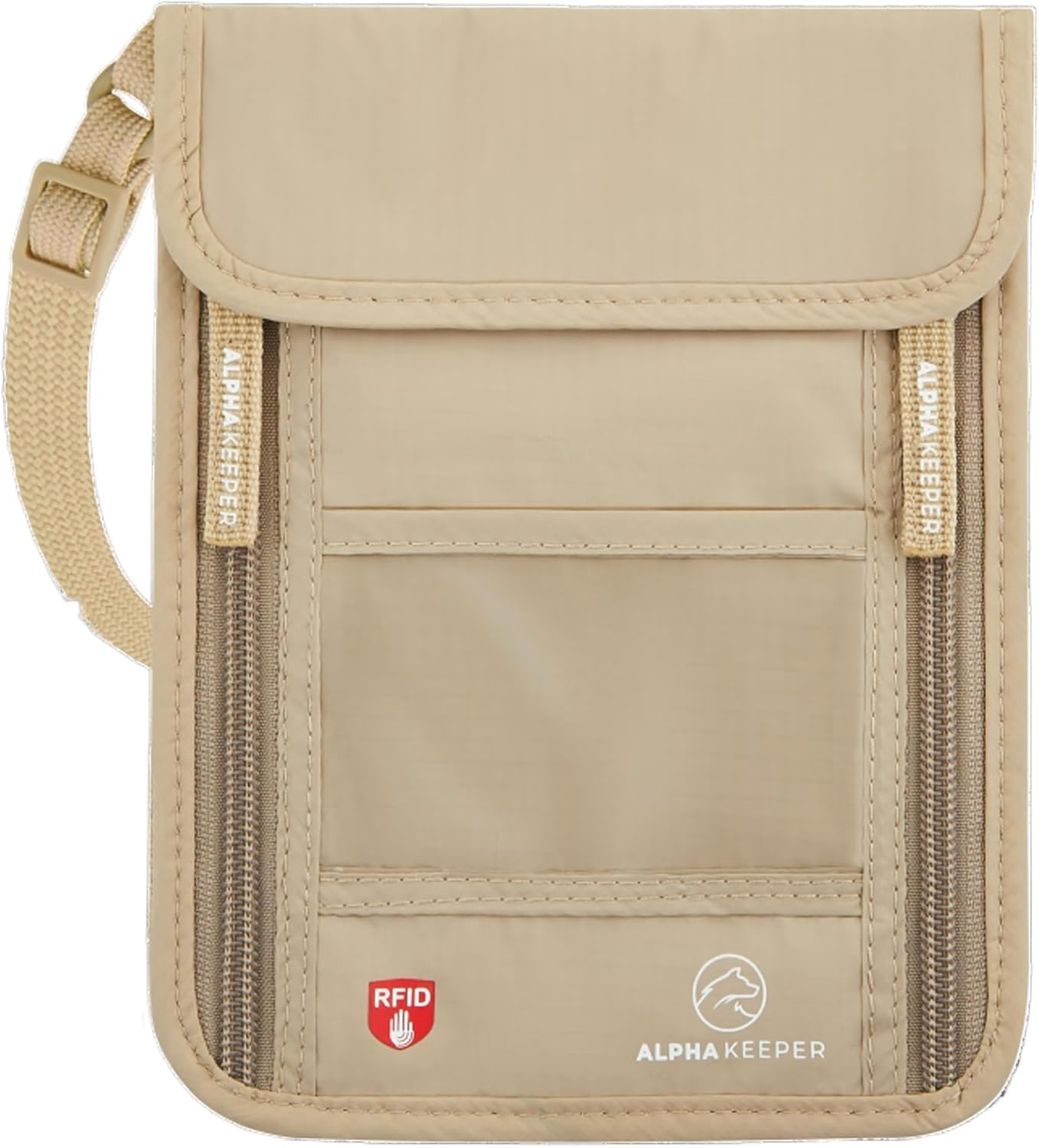
The optimal Hawaii security loadout in 2026 looks like this: passport and backup card stay in the hotel safe (full stop — you do not need your passport on the beach); your daily wallet carries only one card sleeved in a Fiber RFID Sleeve Set card protector; and a body-worn option like the Blue RFID Money Belt handles any larger cash stash or travel documents during driving days. For island-hopping flights, the Beige RFID Neck Wallet with its dual luggage tag slots is a smart airport-to-beach transition piece — you go through TSA, land in Maui, and your documents are on your body the entire time. The key philosophy: layer your protection so that even if someone steals your bag, your actual financial instruments and ID are still on you. Redundancy isn't paranoia in Hawaii — it's the difference between a minor inconvenience and an emergency evacuation from paradise.
Honest Comparison: Body-Worn Security vs. Leaving Stuff in a Hotel Safe
Both strategies have a real place in a Hawaii trip, and the smartest travelers use both. Hotel safes are excellent for items you genuinely don't need for the day — a second credit card, your actual passport, travel insurance documents. But they don't help you when you're at a trailhead parking lot, standing in an airport line, or getting jostled at a night market in Lahaina. Body-worn gear like a money belt or neck wallet covers the mobile hours — the car, the beach approach, the excursion. The honest limitation of money belts: they can feel warm against your skin in Hawaii's humidity, so breathable materials matter. Alpha Keeper's Silver RFID Money Belt uses a thin, moisture-wicking fabric panel that sits more comfortably in tropical heat than bulkier nylon alternatives. Together — hotel safe for home base, money belt for movement — you've closed 95% of the theft risk window.
Frequently Asked Questions
Is it safe to leave anything in a rental car in Hawaii in 2026?
No. Nothing of value should be left in a rental car in Hawaii, including items placed in the trunk. Professional thieves specifically target rental plates at beach and trailhead lots, and a trunk smash-and-grab takes under two minutes. Take documents and electronics with you or leave them in your hotel safe — never in the vehicle.
What is the best way to carry your passport in Hawaii?
For most beach days, leave your passport in the hotel safe and carry only a photo of it on your phone. On travel days — airport to hotel, inter-island flights, car rental pickup — wear it in a body-worn neck wallet like the Beige RFID Neck Wallet or Azure RFID Neck Wallet, which sits flat under a shirt and blocks RFID skimming simultaneously.
Do I really need RFID protection in Hawaii?
Yes, more than in many destinations. High-density tourist corridors in Waikiki, resort lobbies, and Hawaii's busy airports create close-quarters environments where contactless card skimming is feasible. RFID-blocking sleeves like the Fiber RFID Sleeve Set cost around $15 and permanently eliminate that attack vector — a worthwhile trade-off against even a single fraudulent card charge.
Ready to upgrade?
Don't let a 90-second smash-and-grab wreck your Hawaiian vacation — grab the Black RFID Travel Money Belt | Hidden Travel Gear and keep your cash, cards, and ID on your body where no one can reach them.