A loose pocket on a 70 mph roller coaster emptied a Florida family's cash, park tickets, and one very unhappy teenager's phone — all gone before the lap bar unlocked. Theme park pickpockets and physics are both working against your wallet.
The best money belt for theme parks in 2026 sits flat against your torso under clothing, uses RFID-blocking fabric to stop digital skimming, and stays locked in place through inversions and sprints between rides. Under-clothing waist belts and zippered neck wallets are the two ride-safe formats that actually work.
Why Regular Wallets (and Fanny Packs) Fail at Theme Parks
Theme parks are a pickpocket's paradise: 40,000+ daily visitors at major parks, crowded queues where shoulder-to-shoulder contact is unavoidable, and the growing use of tap-to-pay terminals means an RFID skimmer held near your back pocket can silently clone your card in under a second. Fanny packs worn outside clothing are slightly better than loose pockets, but they're still visible, still accessible to a quick-hands thief in a crowd, and they bounce violently on inverted coasters. Wristlets and crossbody bags must be stowed in a locker before most major rides, costing you $3–$6 every time. The math on a 10-ride day adds up fast — and that's before you factor in the anxiety of leaving your passport copy and emergency credit card in a rented locker.
What Makes a Money Belt Truly 'Ride-Safe'
Ride-safe means three things: it stays put during sustained G-force, it doesn't dig into your skin after six hours of walking, and it doesn't create a visible lump that telegraphs 'I have valuables here.' Slim, under-clothing waist belts with a wide elastic band and a low-profile zipper tick all three boxes — the band distributes pressure evenly, the zipper stays closed under centrifugal force, and the belt sits below your shirt hem. Neck wallets with breakaway-resistant cords are the runner-up format; they land flat against your chest, tuck under a shirt, and add zero bulk to your waistline. RFID-blocking lining is non-negotiable in 2026: park payment systems, hotel key cards, and transit passes all broadcast 13.56 MHz signals that scanners can read from 10–30 cm away in a dense crowd. Materials matter too — moisture-wicking or quick-dry fabric keeps a belly belt from becoming a sweaty, uncomfortable mess on an August day in Orlando or Anaheim.
The Alpha Keeper Lineup: Honest Picks for Park Days
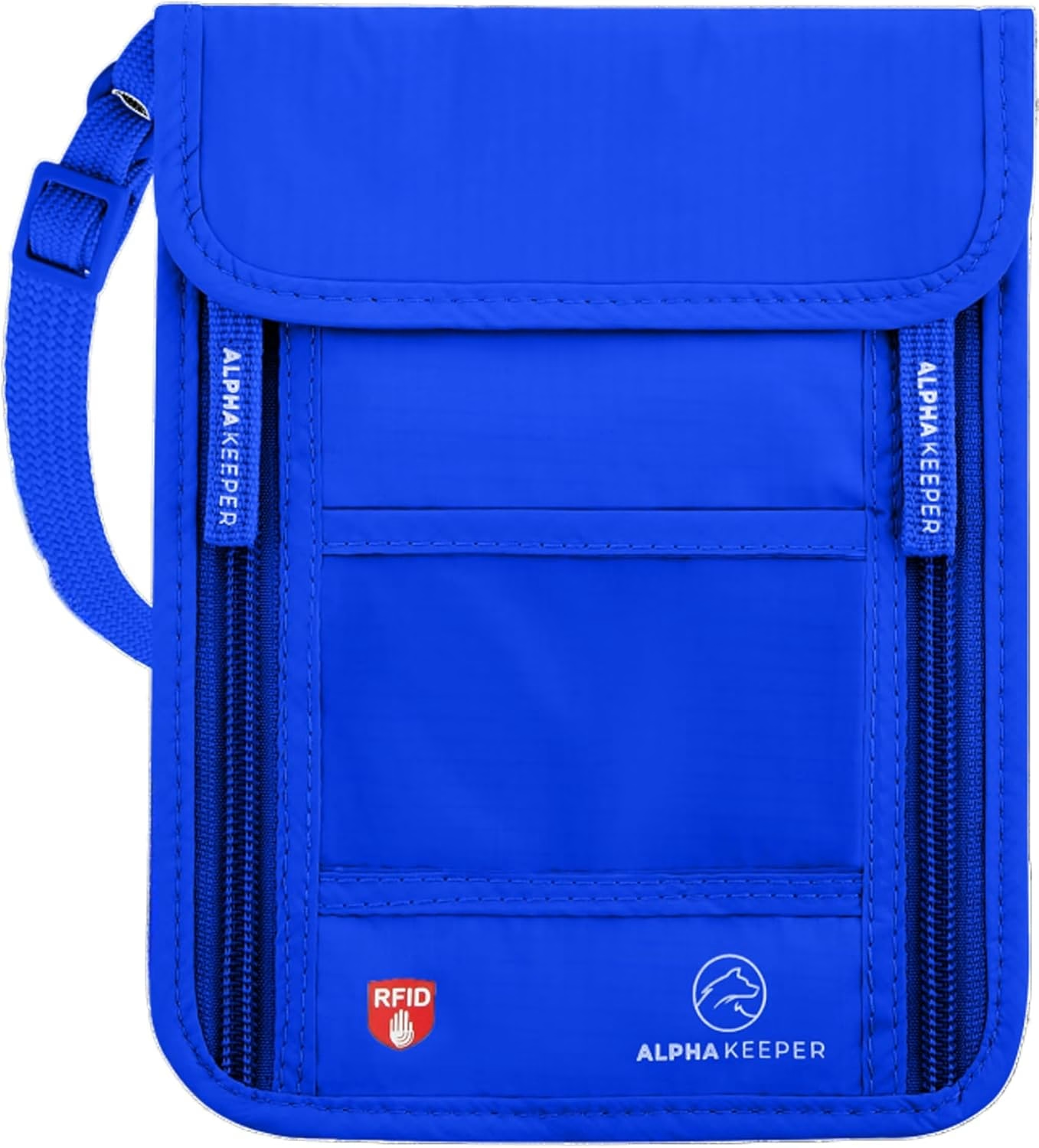
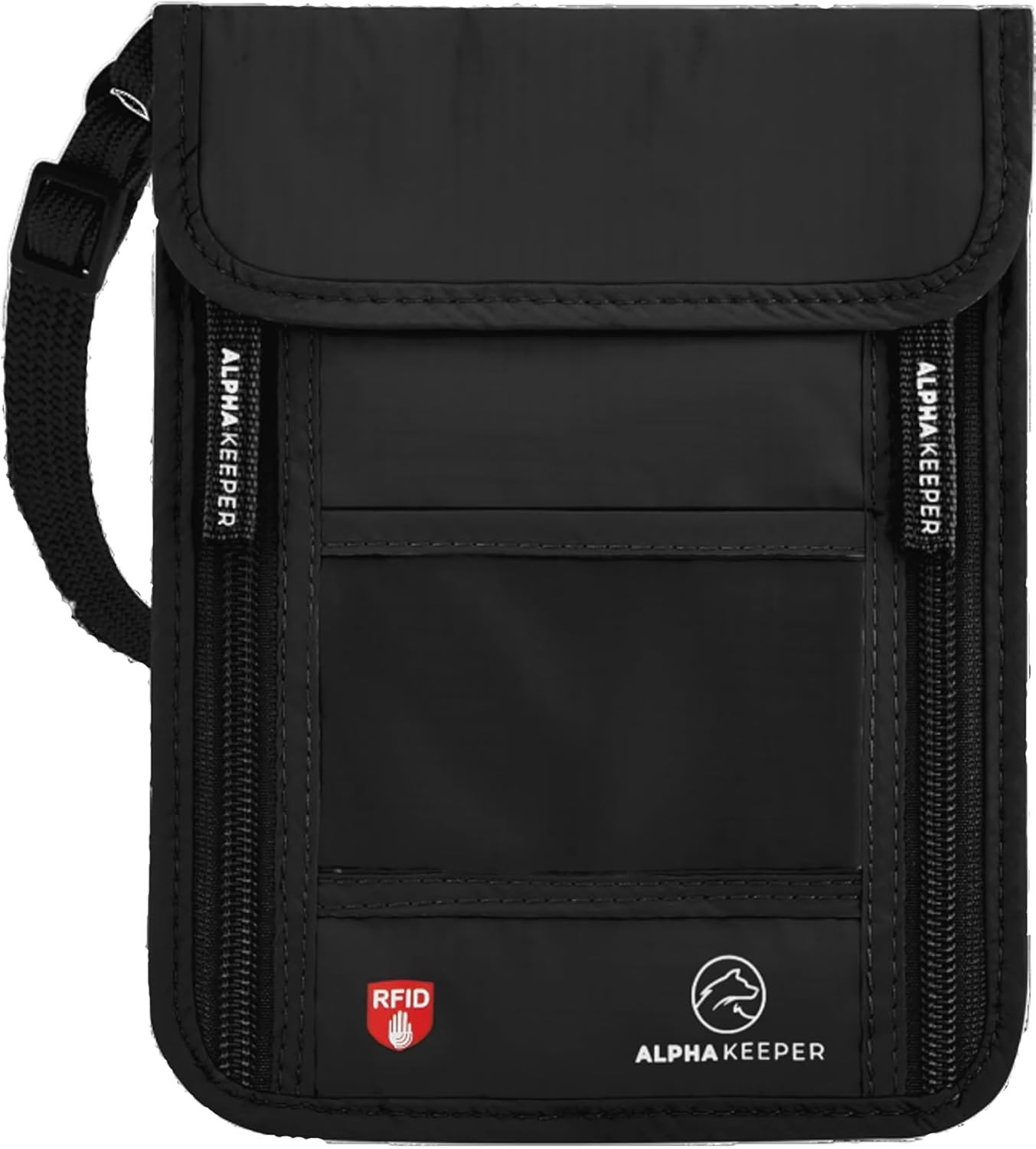
For the waist-belt format, the Azure RFID Money Belt is the standout park choice: slim enough to disappear under a T-shirt, wide elastic band that doesn't roll or bunch during rides, and a zippered main compartment plus a secondary slot sized perfectly for a folded paper park map or emergency cash. The Blue RFID Money Belt and Silver RFID Money Belt offer the same construction in colors that match more outfits — useful if you're pulling it out briefly at a food stand and don't want it to look purely utilitarian. If you run hot or sweat heavily (theme park summer, need we say more), the Beige RFID Money Belt uses a breathable weave that stays drier longer. For neck wallet fans who prefer chest-carry, the Black RFID Neck Wallet is the flattest profile in the lineup — it sits flush against the sternum, the cord tucks inside a collar, and the zippered compartment holds two cards, folded bills, and a standard ID without creating any tell-tale bulge. The Azure RFID Neck Wallet and Blue RFID Neck Wallet are functionally identical but lighter in color, which some people prefer for quick visual confirmation they've grabbed the right pocket.
Honest Comparison: Alpha Keeper vs. Typical Theme Park Belt Pouches
Most budget belt pouches sold in airport shops or theme park gift stores are single-layer nylon with no RFID shielding, a single thin drawstring or snap closure, and no moisture management — fine for holding a hotel key, useless for serious card protection. Alpha Keeper belts use multi-layer RFID-blocking fabric that blocks signals across the 13.56 MHz range used by modern contactless cards and passports. The zipper closures are tested to stay shut under inversion rather than relying on a snap or velcro that can catch on ride restraints. The price difference is typically $5–$15 in Alpha Keeper's favor compared to branded 'travel pouches' sold at airport retailers — so you're paying less for meaningfully better protection.
How to Wear a Money Belt at a Theme Park (Without Looking Like You're Wearing One)
Wear the belt against bare skin, not over a base layer — bare skin grip stops it migrating up during rides. Position the zipper at the front-center or slightly to the side so the buckle (if any) doesn't press into your navel on a lap-bar ride. Load it with only true essentials: one payment card, your park ticket or wristband confirmation, ID, and folded emergency cash — 20s, not a thick stack of singles. Leave everything else in the hotel safe. For neck wallets, route the cord under your shirt collar and tuck the pouch inside your shirt; the cord should be short enough that the wallet rests high on the chest, not flopping around your stomach. Pre-load your RFID sleeves from the MultiColor RFID Sleeve Set onto your individual cards before the trip so you're adding a second layer of shielding even when cards are briefly out of the belt at payment terminals.
Theme Park-Specific Scenarios: Which Format Wins
Water rides and splash zones change the calculus — here, a waist belt under a swimsuit or board shorts beats a neck wallet because it stays dry against your skin while the neck wallet cord gets soaked and the pouch may slip outside your shirt. For parks with heavy bag-check requirements (certain thrill-ride zones at Universal, for instance), the under-clothing belt means you never have to interact with lockers at all — you walk through security, board, and ride with everything secured on your body. Families with kids will appreciate that waist belts free up both hands completely for child-wrangling, stroller pushing, and that critical moment of catching a dropped churro. Solo travelers or couples doing fast-paced park-hopping between multiple parks in a single day will find the neck wallet format slightly faster to access at ticket scanners — flip it out, tap, tuck it back.
Frequently Asked Questions
Will a money belt set off metal detectors at theme park security?
Almost certainly not. Alpha Keeper money belts and neck wallets use no metal framing — only fabric, elastic, and plastic zipper pulls. The RFID-blocking layer is a metallic-fiber weave, but it's not a solid sheet and produces no alarm at standard walk-through or wand detectors used at park entrances.
Can I wear a money belt on inverted roller coasters and water rides?
Yes — under-clothing waist belts worn against bare skin stay in place through inversions because skin friction and the elastic band hold them firm. Zipper closures remain shut under G-force. For water rides, waist belts under swimwear stay driest; neck wallets should be tucked fully inside a shirt before boarding any splash attraction.
How much can I fit in a theme park money belt?
A slim waist belt like the Azure RFID Money Belt comfortably holds 2–3 cards, a folded ID, and up to 10 folded bills without creating a visible bump under a T-shirt. A neck wallet like the Black RFID Neck Wallet fits the same card load plus a passport-sized document. The rule of thumb: essentials only — one payment method, ID, backup cash, park ticket.
Ready to upgrade?
Ready to ride worry-free? Grab the Azure RFID Money Belt — it rides flat under any shirt, blocks RFID skimming, and won't move an inch whether you're on Space Mountain or sprinting to beat the queue.