A pickpocket in Barcelona's Las Ramblas can clean out a back pocket in under 4 seconds — and you won't feel a thing until you're at the cash register two hours later. The good news: stopping them is embarrassingly simple if you set up right before you leave.
To keep money safe while traveling, split your cash and cards across 3 locations, wear an RFID-blocking money belt or neck wallet under your clothes for the bulk of it, carry only one day's spending money in an outer pocket, use RFID card sleeves, and keep a backup card hidden in your luggage.
Split your money across at least 3 hiding spots
Never keep everything in one wallet — that's the single biggest mistake travelers make in 2026. Carry small daily spending cash (around $40-60) in a front pocket or zipped day bag, stash the bulk of your cash and primary card in a hidden money belt or neck wallet under your shirt, and leave a backup credit card plus emergency $100 USD locked in your hotel safe or hidden in luggage. If one stash gets lifted, your trip isn't over — it's just annoying.
Wear a money belt or neck wallet under your clothes
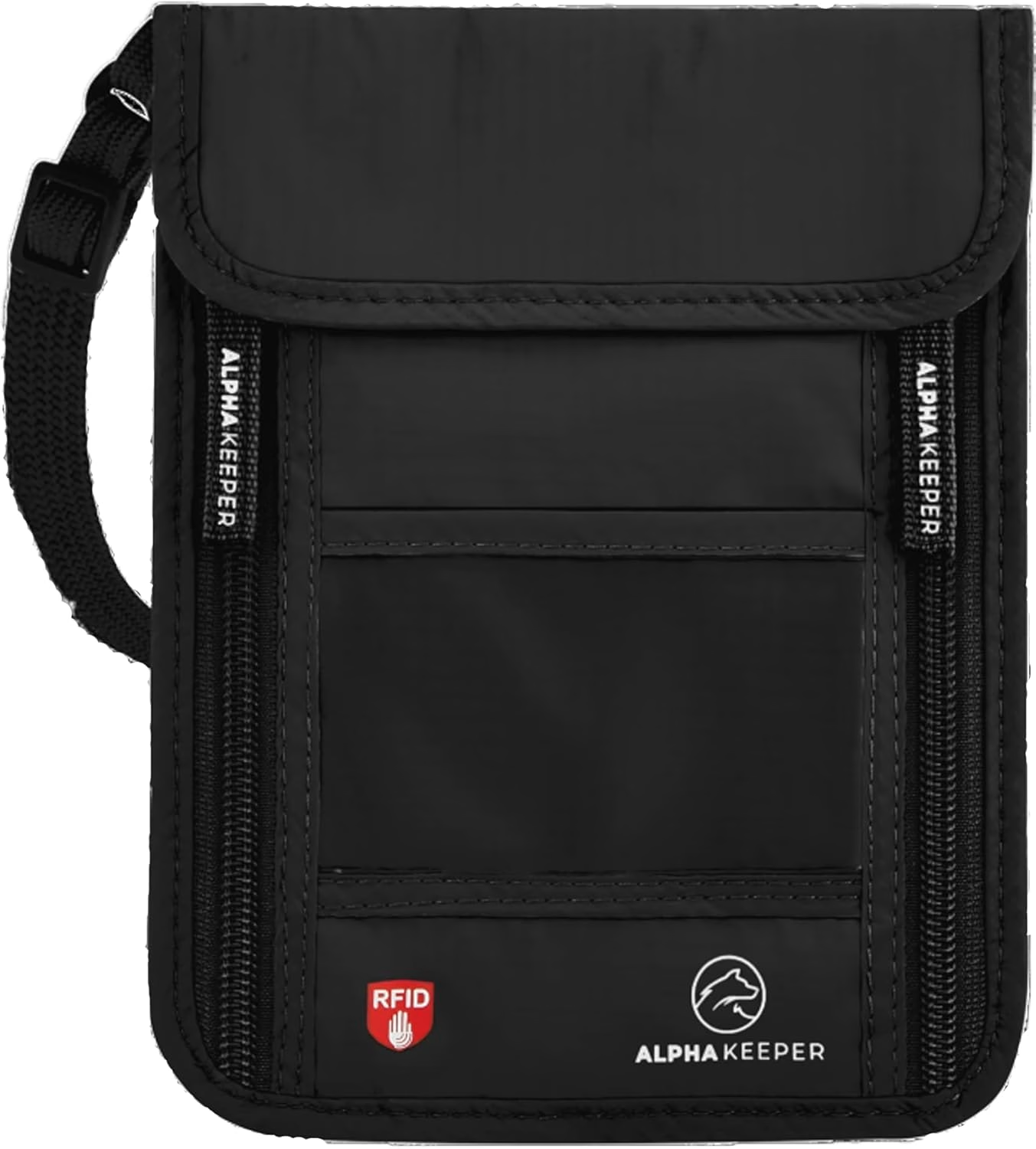
External fanny packs and visible cross-body wallets are pickpocket bait — they scream 'tourist with valuables.' A flat money belt worn under your waistband, like the Black RFID Travel Money Belt | Hidden Travel Gear, sits invisibly against your skin and holds passport, cards, and bills without printing through a t-shirt. If you're wearing a dress or loose top, the Black RFID Neck Wallet or Azure RFID Neck Wallet hangs under your shirt on an adjustable cord. Both options use RFID-blocking fabric rated to stop 13.56 MHz card scanners — the frequency 90% of contactless cards use.
Block electronic skimming with RFID sleeves
Contactless card cloning is no longer sci-fi — handheld skimmers cost under $30 on shady marketplaces and can grab card data from 4-6 inches away through a pocket. Drop each credit card and your passport into RFID-blocking sleeves like the Black RFID Sleeve Set or Fiber RFID Sleeve Set before you pack. They're 0.3mm thin, fit any wallet, and turn your cards into Faraday cages. Cheaper than replacing a cloned card and dealing with fraud disputes from a hostel in Lisbon.
Money belt vs. neck wallet: which should you pick?
Money belts win for hot climates, beach destinations, and anyone wearing fitted clothing — they're flatter and don't move when you walk. Neck wallets win for cold-weather trips with layers, women in dresses, or travelers who frequently access their passport (think multi-country train journeys through Europe). If you're doing a single beach destination, get a money belt. If you're hopping borders, get a neck wallet. Many serious travelers, honestly, own both.
Behavior beats gear: the habits that actually save you
The best money belt in the world won't help if you flash a fat wallet at a tapas bar. Withdraw cash from ATMs inside bank lobbies during daylight hours — never sketchy street machines. Photograph your passport, cards (front and back), and travel insurance and email them to yourself. Set up tap-to-pay on your phone so you barely need to pull cards out. And use a dummy wallet with $20 and expired cards in your back pocket — if someone does grab it, they leave happy and you keep walking.
Frequently Asked Questions
Is a money belt still worth it in 2026 with Apple Pay and Google Pay?
Yes. Phone payments fail when your battery dies, in rural areas, at cash-only markets, and at the moment you most need to pay a bribe to get out of a jam. You still need physical cash and a backup card — and those still need to be hidden.
How much cash should I actually carry on me each day?
Roughly the equivalent of $40-80 USD in local currency, depending on the destination. Enough to cover meals, transport, and a taxi home, but not enough to ruin your day if it disappears. Top up from your hidden stash in private — never at a restaurant table.
Do RFID-blocking products really work or is it marketing hype?
They work — independent tests show quality RFID sleeves and wallets block 13.56 MHz signals used by contactless cards and e-passports. The real question is whether you're a target, and in tourist-heavy cities like Rome, Bangkok, and Mexico City, the answer is yes.
Ready to upgrade?
Heading abroad in the next 90 days? Grab the Black RFID Travel Money Belt | Hidden Travel Gear and a Black RFID Sleeve Set before you pack — under $40 of insurance against the worst day of your trip.