One in eight international tourists is pickpocketed — and the sneakier threat is the scanner you never see: a criminal with a $30 RFID reader can lift your card data through your jeans pocket in under two seconds. Your wallet choice is your first line of defense.
The best travel wallets in 2026 combine RFID-blocking materials with a hidden or body-worn carry position — money belts, neck wallets, or slim card sleeves. Look for ripstop or tyvek construction, passport capacity, and a profile thin enough to stay invisible under clothing. Top picks start under $20.
Why 'RFID-Blocking' Actually Matters in 2026
Modern contactless cards and e-passports broadcast on 13.56 MHz — readable from up to 10 cm with off-the-shelf hardware that costs less than a fast-food meal. In high-footfall transit hubs like Barcelona's La Sagrada Família or Tokyo's Shinjuku Station, the risk isn't theoretical; European fraud bureaus logged a 34% spike in contactless card skimming at tourist hotspots between 2024 and 2026. A genuine RFID-blocking wallet uses a metallic mesh or carbon-fiber lining that attenuates that frequency to zero — not just 'reduces' it. The Alpha Keeper Fiber RFID Sleeve Set uses a military-grade carbon-fiber weave that blocks 13.56 MHz completely, verified to ISO/IEC 14443 test standards. If a wallet doesn't cite a specific blocking standard, treat the claim as marketing noise.
Money Belt vs. Neck Wallet vs. Card Sleeve: Which One Should You Buy?
Money belts sit flat against your stomach under your shirt — genuinely invisible, but slightly inconvenient at checkout; ideal for passport + emergency cash on travel days. Neck wallets hang under your collar on a cut-resistant cord and give faster access, making them better for day-tripping where you need your boarding pass repeatedly. Card sleeves are the lightest option — a set like the MultiColor RFID Sleeve Set weighs under 15 grams and slides into any existing wallet, adding RFID protection without changing how you carry. The honest trade-off: sleeves don't protect against physical theft, just electronic scanning. For serious travel security, layer a card sleeve in a front-pocket wallet AND a hidden money belt for your passport — two layers, two threat vectors covered.
The Best Money Belts for 2026: Hidden, Flat, and Theft-Proof
The ideal travel money belt in 2026 is under 6mm thick when loaded, made of moisture-wicking fabric (you're wearing this against your skin in 30°C Roman heat), and closes with a silent YKK zipper — no velcro scratching against bare skin. The Black RFID Travel Money Belt | Hidden Travel Gear from Alpha Keeper checks all three: it measures 5.5mm loaded with four cards and a folded passport, uses a breathable ripstop nylon shell, and costs under $20. For travelers who prefer a softer aesthetic, the Beige RFID Money Belt blends into skin tone under white linens — a detail that actually matters when you're wearing thin summer clothes. Avoid belts with bulky buckles or raised logos; they print through clothing and telegraph 'tourist with valuables' to exactly the people you're trying to avoid.
Best Neck Wallets for Frequent Flyers and Day Trippers
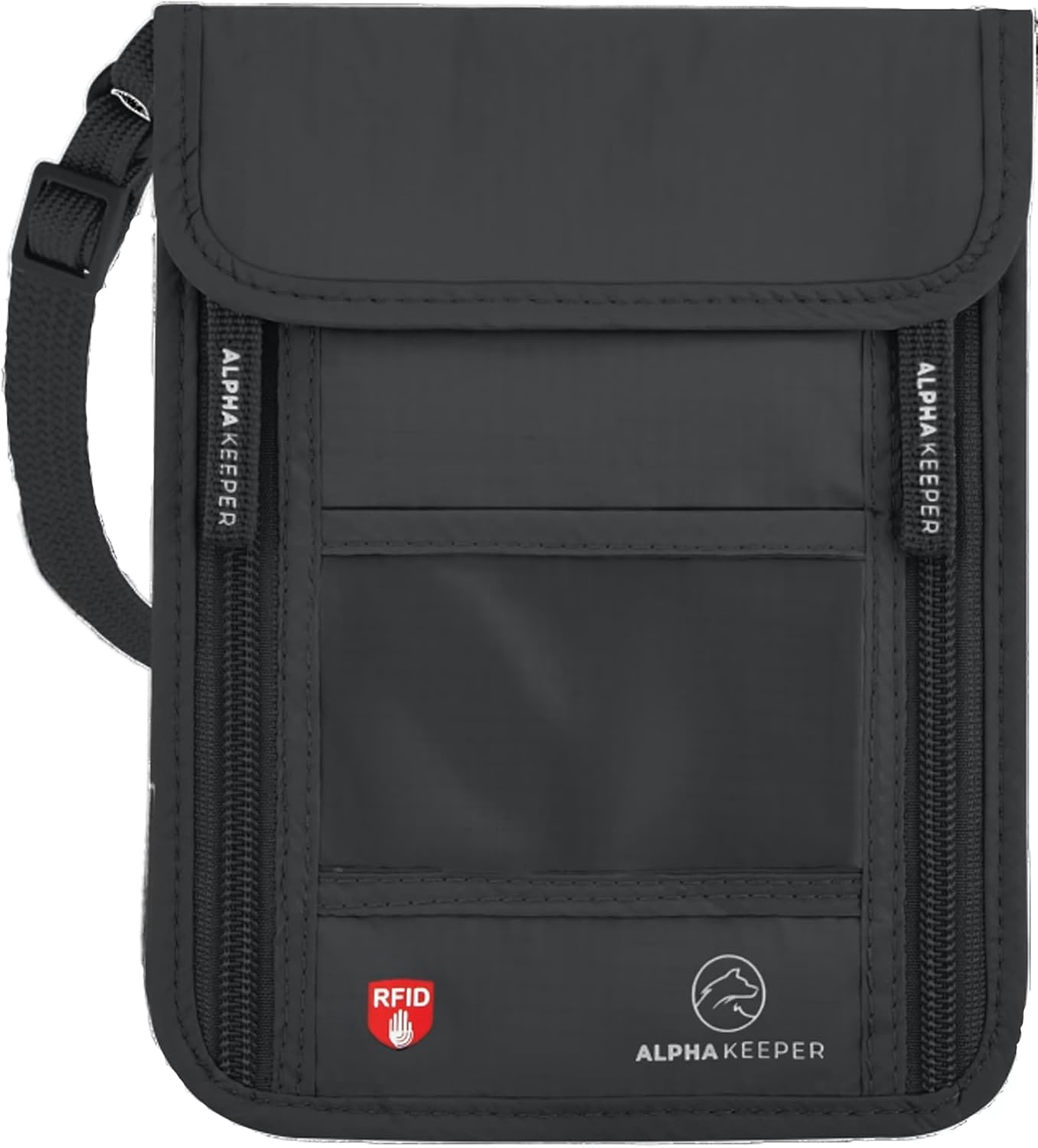
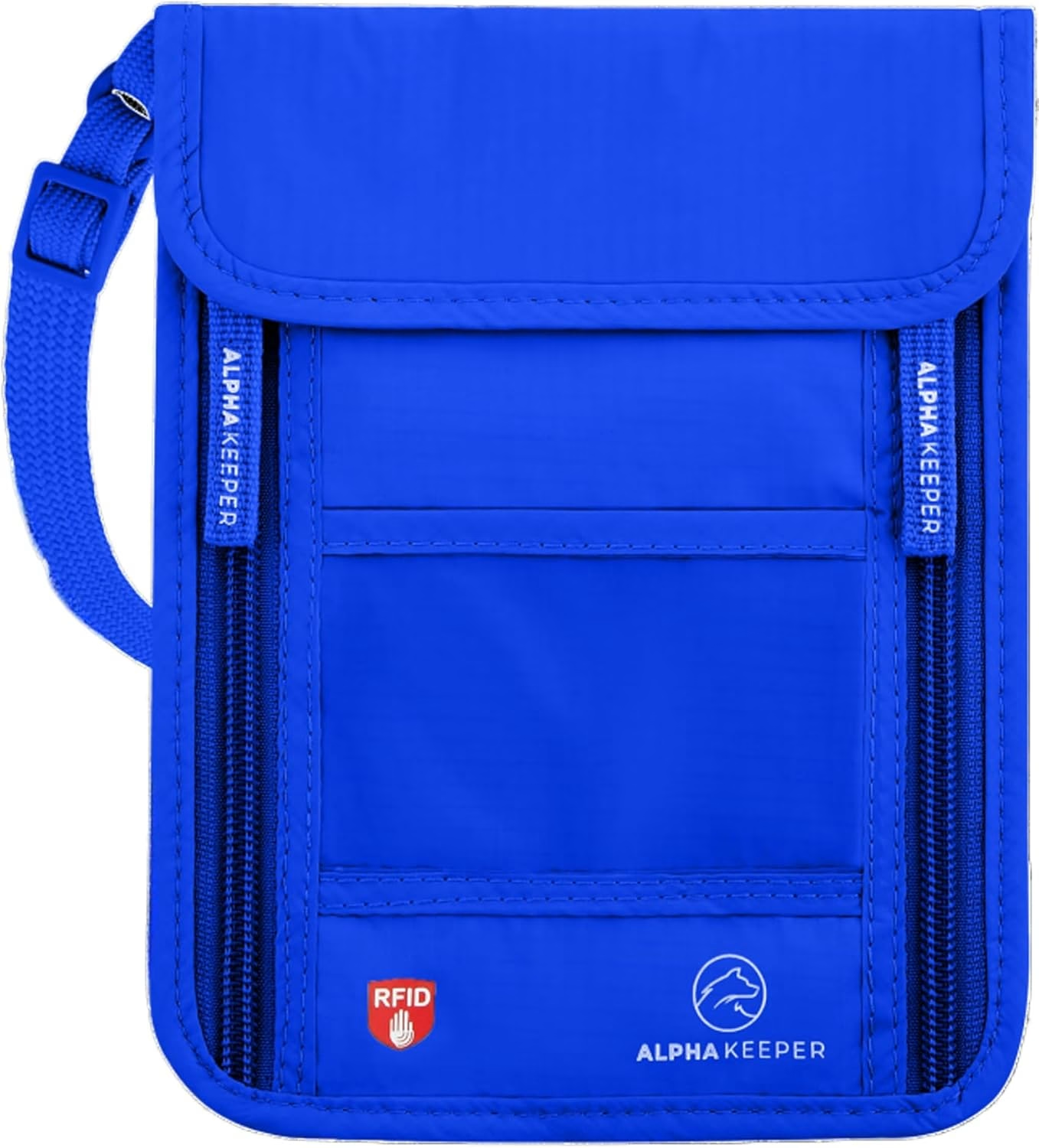
Neck wallets earn their place on any flight-heavy itinerary because they keep your passport, boarding pass, and travel card in one grab — critical when you're sprinting a connection at Frankfurt with 22 minutes to spare. The Blue RFID Neck Wallet from Alpha Keeper fits a standard biometric passport plus four cards and has a zippered rear compartment specifically for emergency cash — a thoughtful design detail most competitors skip. The Dark Grey RFID Neck Wallet is the low-profile choice: its matte finish and slim 7mm profile disappear under a crew-neck tee. One feature worth demanding: a breakaway or cut-resistant cord. Thin paracord snaps under 50N of force; Alpha Keeper's neck wallets use a reinforced nylon lanyard rated to resist slashing, which is the actual attack vector in busy markets.
Card Sleeves: The Lightest RFID Protection You'll Actually Use
If you refuse to change your carry habits — and most people do — card sleeves are the pragmatic answer. Slide them into your existing wallet and you've blocked RFID on every card that matters in under 30 seconds. The Colorful RFID Sleeve Set ships with six color-coded sleeves so you can assign colors by card type: red for credit, blue for debit, green for transit — zero fumbling at the turnstile. For minimalists, the Black RFID Sleeve Set delivers the same ISO-certified blocking in a monochrome profile that doesn't shout. The Retro RFID Sleeve Set adds a kraft-paper aesthetic that's genuinely attractive — a rare thing in travel security gear. At under $15 for a full set, sleeves are the single best cost-per-protection product in travel security, period.
Honest Comparison: What You Get vs. Generic Airport Store Wallets
Walk through any international departure hall and you'll find generic 'RFID wallets' for $8 with no listed blocking standard, no material spec, and a zipper that splits after three weeks. The difference isn't just marketing — it's measurable. Alpha Keeper products cite specific test frequencies and use verified metallic-mesh linings, while generic options often use a single layer of aluminum foil laminate that degrades after washing or repeated flexing. The Azure RFID Money Belt, for example, uses a four-layer construction: outer ripstop, RFID mesh, foam padding, and moisture-wicking inner — compared to the two-layer construction typical of airport impulse buys. Price premium is real: Alpha Keeper products run $15–$25 versus $8 generics — but one compromised credit card transaction costs you $500 in headaches minimum. The math is obvious.
How to Choose the Right Travel Wallet for YOUR Trip Type
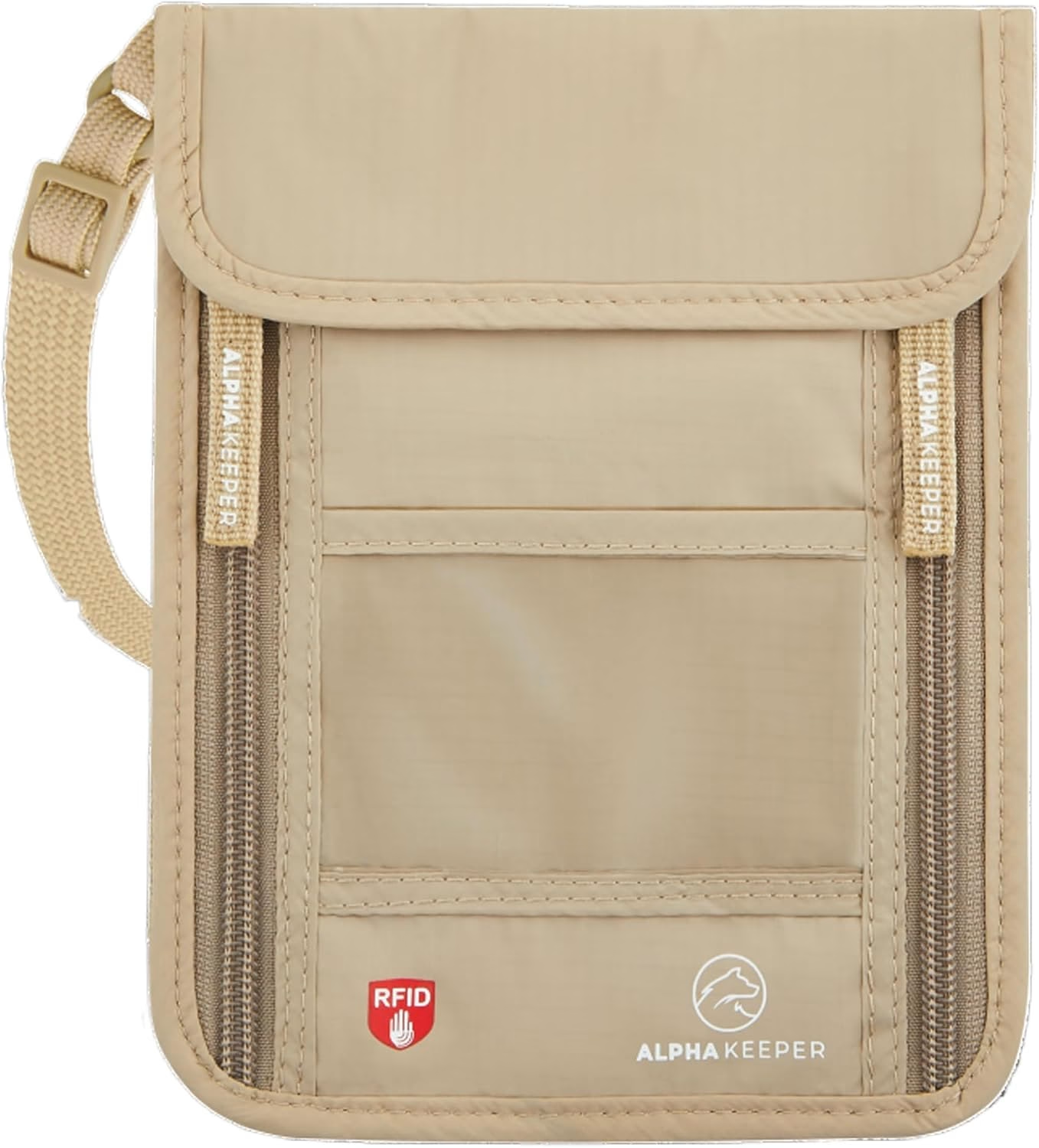
Weekend city break to Paris or Amsterdam: a set of card sleeves like the Fiber RFID Sleeve Set inside a slim front-pocket wallet is enough — you're not carrying your passport all day, just cards. Multi-country backpacking trip: a neck wallet like the Silver RFID Neck Wallet for daily use plus a money belt for passport storage while in transit is the smart two-piece system. Beach or adventure travel where you're in swimwear or athletic gear: the Azure RFID Money Belt's slim waistband profile is the only viable option — it's the one thing that stays on your body when there's no pocket to be found. Business travel: the Beige RFID Neck Wallet includes two detachable luggage tags, which is genuinely useful for frequent flyers who check bags and need their ID details accessible without fishing through luggage.
Frequently Asked Questions
Do RFID-blocking travel wallets actually work, or is it just marketing?
Genuine RFID-blocking wallets — those using metallic mesh or carbon-fiber lining tested to ISO/IEC 14443 — do block 13.56 MHz card skimming completely. Products that only claim 'RFID protection' without citing a material or standard are often just foil laminate that degrades quickly. Always check for a specific blocking standard before buying.
Should I use a money belt or neck wallet for international travel?
Use a money belt on travel days when your passport stays hidden for hours at a time — it's more secure and invisible. Use a neck wallet for active sightseeing or day trips when you need faster access to cards and boarding passes. Many experienced travelers carry both: a neck wallet for daily use and a money belt for passport storage.
What's the thinnest travel money belt that still fits a passport?
The best slim money belts measure under 6mm when loaded with a passport and four cards. The Black RFID Travel Money Belt | Hidden Travel Gear from Alpha Keeper achieves this with a ripstop nylon shell and a flat-profile zipper design, making it genuinely invisible under a tucked shirt — unlike bulkier canvas belts that visibly print through fabric.
Ready to upgrade?
Don't leave your passport and cards to luck on your next trip — grab the Black RFID Travel Money Belt | Hidden Travel Gear and travel knowing your most critical documents are invisible, protected, and genuinely secure.