A security researcher once walked through a Barcelona metro car with a $30 reader hidden in a backpack and pinged 14 contactless cards in under 4 minutes. The unsettling part? Most victims were standing less than 18 inches away — and never felt a thing.
Yes — RFID blocking money belts genuinely work. Independent lab tests show quality belts with woven metallic-fiber linings block 13.56 MHz signals used by passports and contactless cards at distances over 4 cm, the range most skimmers operate in. They won't stop physical pickpockets, but against electronic theft, they're effective and worth the $20–$40.
The Short Answer: Yes, But Only the Well-Made Ones
A money belt with a proper RFID-shielding layer creates a Faraday cage around your cards and passport — the radio waves bounce off instead of reaching the chip. In 2026, the shielding tech has matured: most reputable belts use a woven aluminum-polyester composite that blocks the 13.56 MHz frequency used by passports and tap-to-pay cards. The catch? Cheap belts often slap an 'RFID-blocking' sticker on regular nylon and call it a day. Look for belts that publish their attenuation rating (good ones hit 60 dB+) or come from brands with consistent third-party testing.
What RFID Belts Actually Protect You From
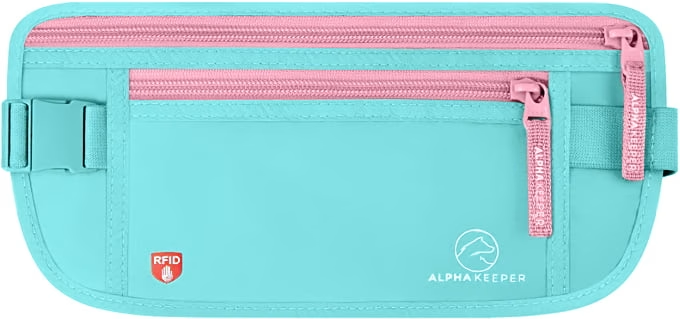
The real threat isn't a hacker draining your bank account from across the room — it's opportunists with cheap NFC readers brushing past you in crowded transit hubs, capturing card data, and cloning low-limit contactless purchases. RFID belts neutralize that. They also shield your e-passport's biometric chip from being read and logged at borders or hostels. The Beige RFID Money Belt and Black RFID Travel Money Belt | Hidden Travel Gear both wear like ordinary canvas belts but hide a zippered cavity lined with shielding fabric — perfect for emergency cash, a backup card, and a folded passport copy.
What They Don't Do (And Why That's Fine)
Let's be honest: most modern EMV chip cards already encrypt transmitted data, and US-issued cards rarely include unencrypted magnetic stripe data in their RFID broadcast. So the financial risk from skimming has dropped since 2020. But passports? Still a juicy target — your name, nationality, photo, and date of birth sit on that chip. And in countries where contactless limits are high (€100+ in much of the EU), tap-cloning is still profitable. An RFID belt is cheap insurance, not paranoia.
Money Belt vs. Neck Wallet vs. Sleeves: The Honest Comparison
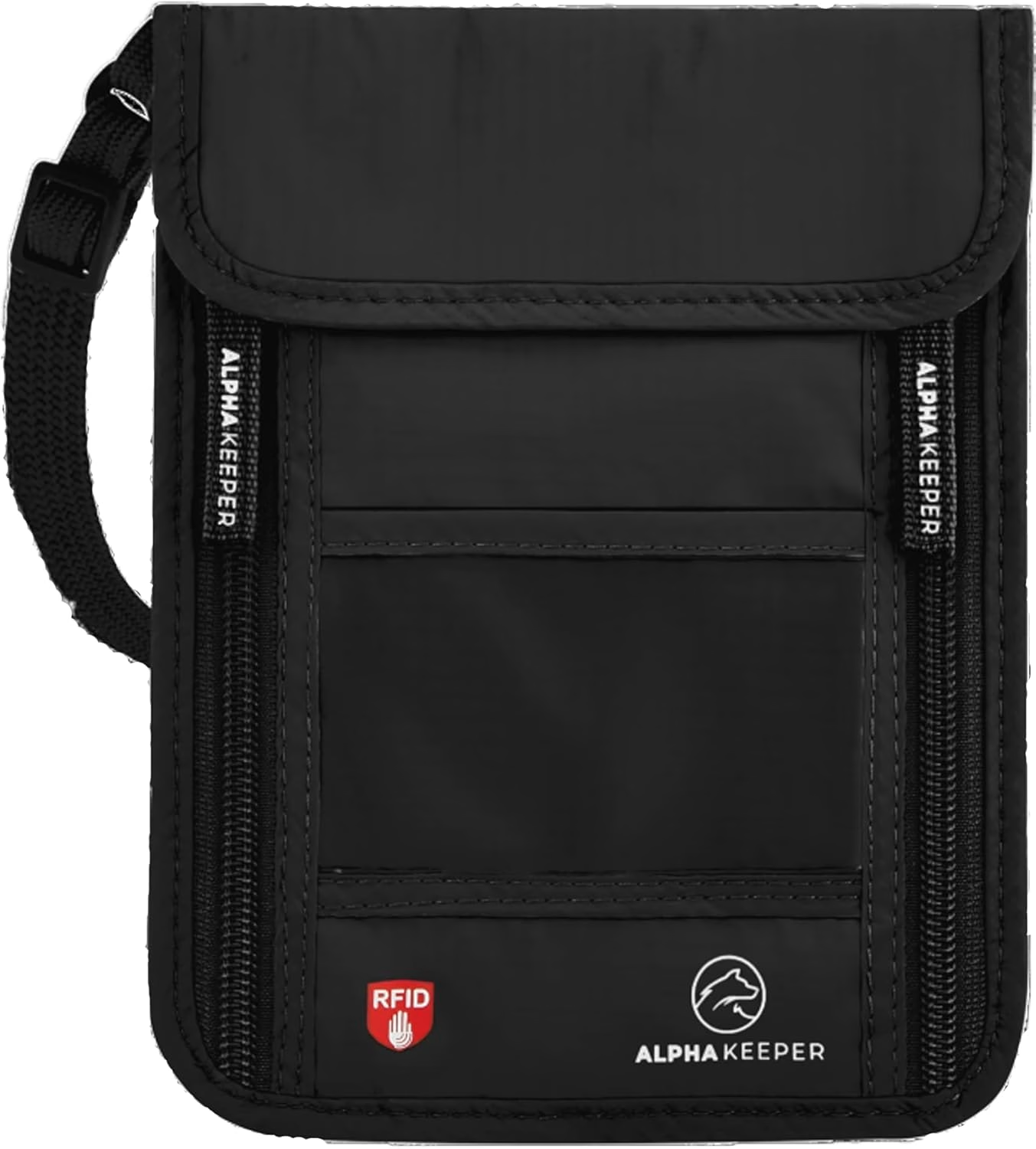
A belt wins on stealth — nobody pats down your waistband. A neck wallet like the Black RFID Neck Wallet holds more (passport, boarding pass, currency stacks) but prints through thin shirts in hot climates. RFID sleeves like the Fiber RFID Sleeve Set are the cheapest entry point — drop them into any wallet and you're protected, but they don't solve physical theft. For two-week international trips, I recommend pairing a belt for emergency reserves with sleeves for daily-carry cards.
How to Tell a Real RFID Belt From a Marketing Gimmick
Three quick tests. First, the belt should feel slightly stiffer in the hidden compartment — that's the metallic weave. Second, the product page should specify which frequencies it blocks (13.56 MHz minimum; 125 kHz is a bonus for older hotel keycards). Third, try the at-home test: put a contactless card inside, then tap a payment terminal. If it doesn't read, the shielding works. The Brown RFID Money Belt and Azure RFID Money Belt both pass this test reliably.
Frequently Asked Questions
Can pickpockets still scan my card through clothing?
Through fabric alone, yes — most clothing offers zero RF shielding. A skimmer 4–10 cm away can read an unprotected card through a shirt or pocket. Inside a properly lined RFID money belt, the signal is blocked before it leaves the compartment.
Do RFID money belts wear out or lose effectiveness?
The metallic shielding fabric can degrade if creased or washed repeatedly at the same fold lines. Most quality belts maintain full blocking performance for 3–5 years of regular travel use. Hand-wash gently and avoid sharp folds in the hidden pocket.
Are RFID belts allowed through airport security?
Yes, completely. They contain no electronics or batteries — just woven shielding fabric. You can wear one through TSA scanners and international security checkpoints without issue, though you'll want to remove cash and metallic contents before the body scanner.
Ready to upgrade?
Heading somewhere crowded this year? Grab the Black RFID Travel Money Belt | Hidden Travel Gear — it disappears under your shirt, shields your passport and cards, and costs less than one cancelled-card courier fee abroad.