Here's a number that should make you pause: Thamel, Kathmandu's tourist epicenter, accounts for a disproportionate share of Nepal's traveler theft reports — and most victims didn't feel a thing until they reached for their wallet at the next chai shop.
In Nepal, the biggest money threats are opportunistic pickpockets in Kathmandu's Thamel district, distraction scams around Pokhara's Lakeside, and remote-trail theft during treks. Wear an RFID-blocking money belt or neck wallet under your clothing, keep only one day's cash accessible, and never store your passport in your daypack.
The Real Threat Landscape: Where Nepal's Theft Risks Actually Live
Forget the movie image of a shadowy pickpocket — in Nepal, most theft is casual and opportunistic. Thamel's narrow, shoulder-to-shoulder alleys are the highest-risk zone: crowd surges near Freak Street and the Garden of Dreams entrance are prime moments for a clean wallet lift. Pokhara's Lakeside strip is lower-key but scams involving 'trekking guides' demanding upfront cash payments (then vanishing) are rising in 2026. On the trails themselves — especially the Annapurna Circuit and Everest Base Camp route — theft is rare but not zero; teahouses share walls with strangers, and unattended bags in common rooms are genuinely vulnerable. The pattern: urban areas reward concealment, remote areas reward locked storage and minimal valuables carried.
RFID Risk in Nepal: Real Concern or Overhyped?
Nepal's contactless card infrastructure is expanding fast — Kathmandu's major hotels, tourist restaurants, and ATMs in Thamel increasingly support tap-to-pay in 2026, which means RFID-skimming hardware is also more viable than it was three years ago. The classic attack requires a reader within 5–10 cm of your card, easily achievable in a packed minibus from the airport or a crowded Boudhanath stupa circuit. While physical pickpocketing remains statistically more common, the cost of RFID protection is so low — a good sleeve set adds essentially zero bulk — that skipping it is a poor risk trade-off. Slipping your Visa and Mastercard into the MultiColor RFID Sleeve Set (aluminum-lined, blocks 13.56 MHz HF signals) costs less than one bad transaction and adds nothing to your pack weight.
The Best Carry System for Kathmandu & Pokhara (Urban Nepal)
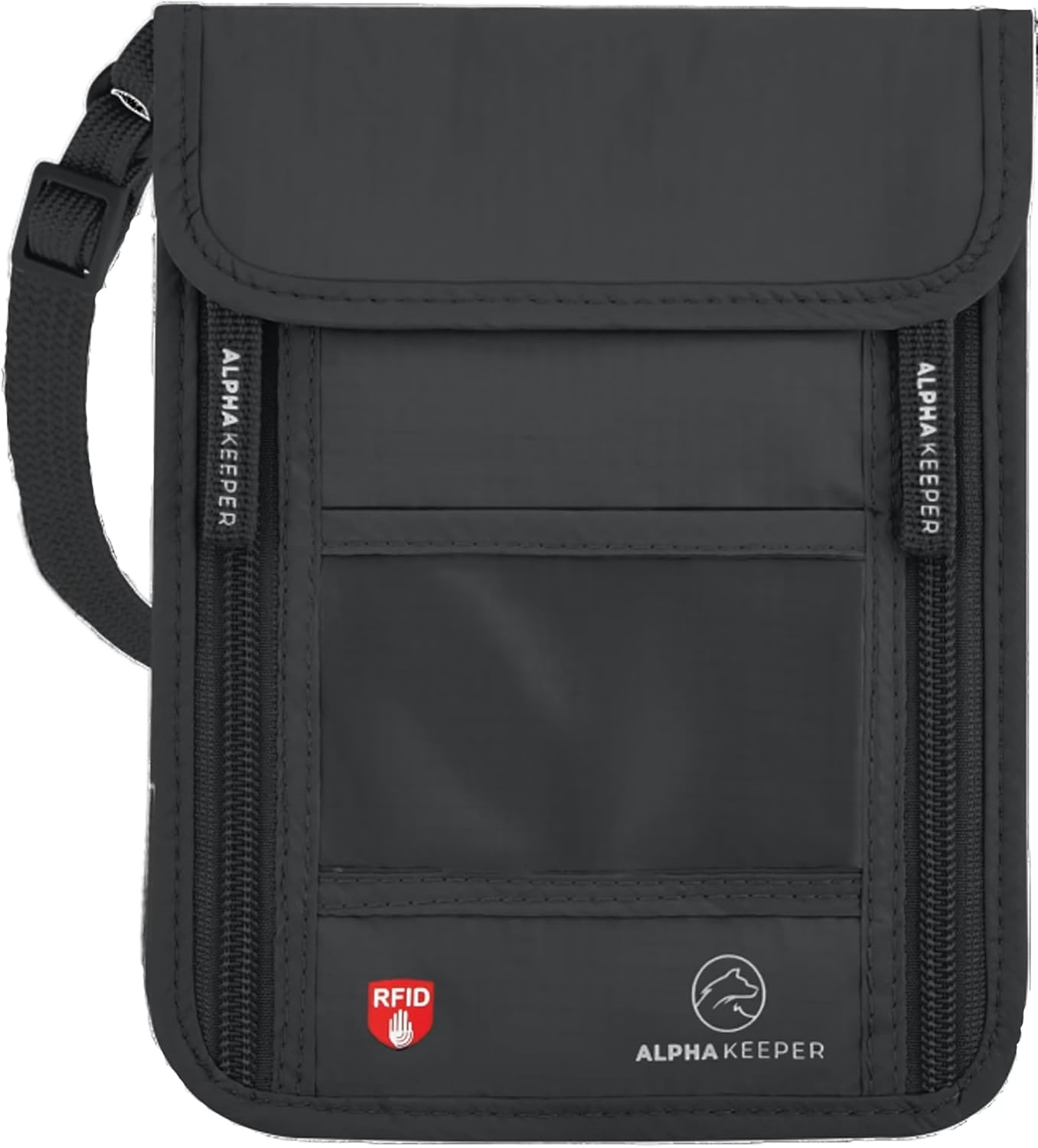
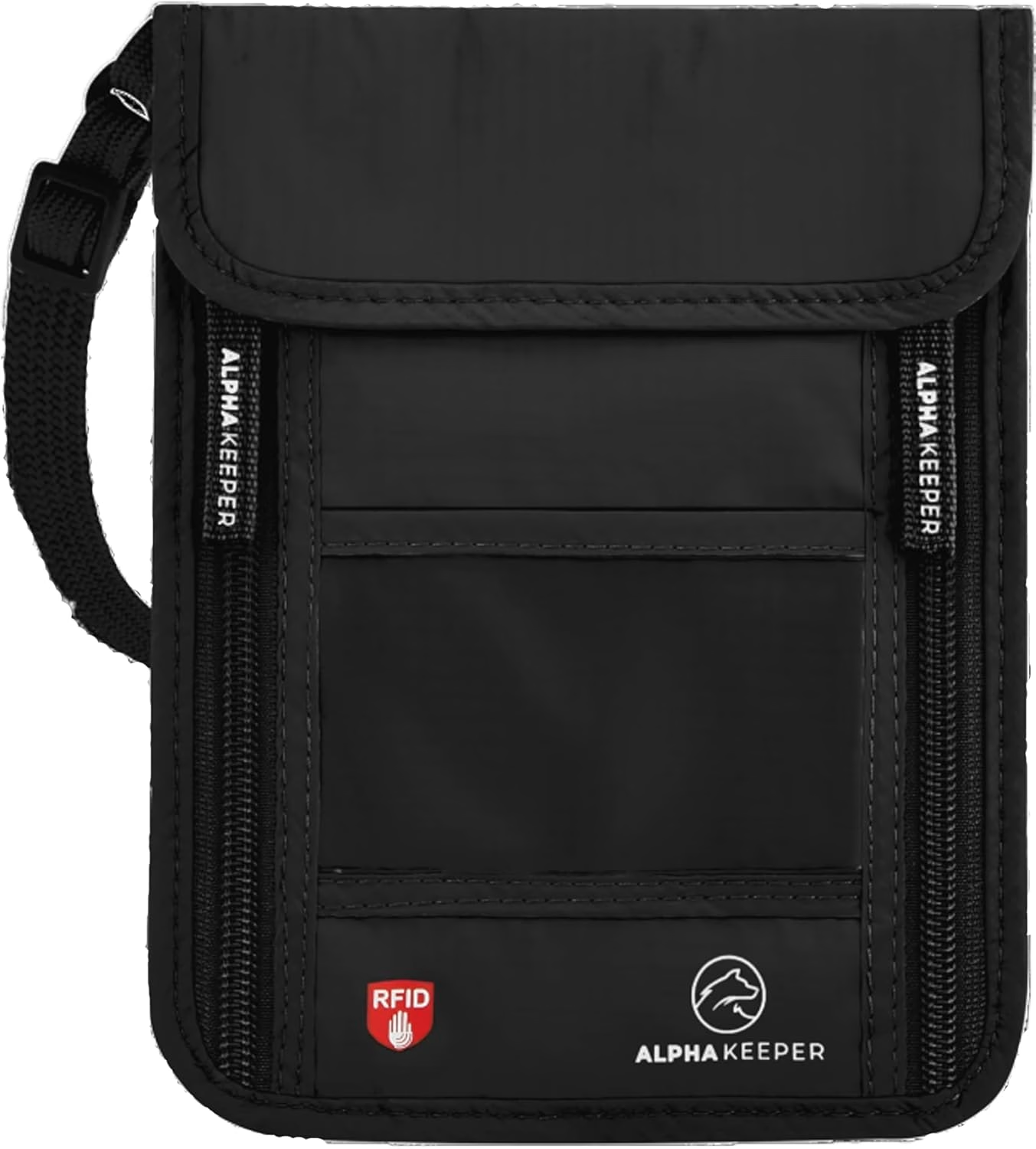
In cities, layered concealment beats any single solution. The optimal system: a hidden neck wallet worn under your shirt holds your passport, emergency cash (US$100–200 in small bills is still the most universally accepted backup currency in Nepal), and one backup card. The Black RFID Neck Wallet sits flat against your sternum, its adjustable cord keeping it above the waistband regardless of whether you're crouching at a street food stall or weaving through Asan Bazaar. Your outer daypack carries only what you can afford to lose that day — one card, local NPR notes for meals and tuk-tuks, your phone. This two-layer system means a successful pickpocket gets your decoy; your real assets stay unreachable.
Trekking-Specific Money Protection: Annapurna, Everest & Langtang
Above 3,000 meters, your security concerns shift. Teahouse common rooms, crowded acclimatization rest days in Namche Bazaar, and porter handoffs are the moments of highest exposure — not aggressive thieves, but absent-minded misplacement and opportunistic grab-and-go. A money belt worn under your base layer solves both: the Blue RFID Money Belt, for example, lies flat under a merino wool base, invisible under your down jacket, and the thin breathable nylon won't cause heat rash even on a sweaty 1,000-meter ascent to Thorong La Pass. Critical trekking rule: TIMS permits and your trekking permit are irreplaceable on the trail — store them in your neck wallet's document sleeve, never loose in a hip belt pocket. Budget for the trail in 1,000 NPR notes; ATMs disappear after Lukla.
Honest Comparison: Hidden Neck Wallet vs. Standard Bum Bag
The bum bag (fanny pack) is still the most common tourist choice in Kathmandu — and the worst. It sits outside clothing, screams 'valuables here,' and a sharp tug or a cut strap ends the conversation. A hidden neck wallet worn under your shirt is invisible, slash-resistant via the cord, and accessible in under five seconds through your collar in a private moment. The trade-off: slightly warmer in heat, and you can't access it mid-crowd without looking like you're adjusting your shirt. For Nepal's climate (cool mornings, warm afternoons, cold at altitude), that's a non-issue — you're in layers anyway. The Dark Grey RFID Neck Wallet's slim profile (fits passport + 4 cards + folded bills) is genuinely undetectable under a lightweight trekking shirt.
Currency, ATMs & What to Actually Carry Day-to-Day
Nepal's currency is NPR (Nepalese Rupee); as of 2026, 1 USD ≈ 133–135 NPR, though rates at Thamel money changers vary by up to 8% — always compare three windows before exchanging. ATMs are reliable in Kathmandu and Pokhara but charge 500–800 NPR per foreign withdrawal; withdraw larger amounts less frequently to minimize fees. Above Lukla on the Everest trek, assume cash-only from Phakding onward — no ATMs, no card readers, no digital wallets. Carry enough NPR for your full trekking leg plus a 20% buffer for teahouse rate increases or an extra rest day. Organize your bills by denomination in a Fiber RFID Sleeve Set so you're not flashing a fat wad at a teahouse counter — hand over exact change for a 600 NPR dal bhat without revealing your emergency stash.
The One Honest Comparison: Alpha Keeper Neck Wallet vs. Generic Amazon Travel Pouch
Generic travel pouches from unbranded Amazon listings typically use a simple polyester shell with a sewn-in foil layer — RFID blocking that degrades after washing and offers no verified shielding standard. Alpha Keeper's neck wallets use a tested aluminum-fiber composite lining verified against ISO/IEC 14443 card standards, with reinforced cord stitching rated to 15 kg pull force. The difference matters on a 14-day Annapurna circuit where you'll sweat through the pouch daily and hand-wash it at teahouses. A generic pouch at $6 looks identical in a product photo; it doesn't look identical after day 9 at Manang. The Silver RFID Neck Wallet's nylon exterior dries in under two hours and maintains its block rating after repeated washing — that's the practical spec that matters on a long trek.
Frequently Asked Questions
Is RFID skimming a real risk in Nepal in 2026?
Yes, increasingly so. As Kathmandu and Pokhara expand contactless payment infrastructure, RFID-skimming hardware becomes more viable — particularly in crowded minibuses, tourist markets, and busy temple circuits. The protection cost is negligible: a quality RFID sleeve set or neck wallet blocks 13.56 MHz signals and adds no meaningful bulk. Given that one fraudulent transaction can exceed the cost of protection by 100x, it's a straightforward call.
What's the safest way to carry my passport in Nepal?
Wear it in a hidden neck wallet under your clothing — not in your daypack, not in a hotel room safe you haven't tested, and not in a jacket chest pocket. Your passport is your only exit document and replacing it in Kathmandu means a US Embassy visit that can consume 3–5 days. The Black RFID Neck Wallet or Dark Grey RFID Neck Wallet hold a full passport flat against your chest, invisible under any shirt.
Are there ATMs on the Everest Base Camp or Annapurna Circuit trek?
On the Everest Base Camp route, ATMs exist only in Lukla and Namche Bazaar — and Namche's machines frequently run dry during peak season (March–May and October–November 2026). Above Namche, it's cash only. On the Annapurna Circuit, ATMs are available in Besisahar and Chame but unreliable beyond that. Always carry enough NPR cash for your full trekking leg plus a 20% emergency buffer before leaving the last reliable ATM point.
Ready to upgrade?
Before you land in Kathmandu, gear up with the Black RFID Neck Wallet — slip your passport, emergency cash, and backup card under your shirt and forget they exist for the rest of your trip.