Every 30 seconds, a traveler somewhere reports a stolen passport — and the majority of those thefts happen not at gunpoint, but during a distracted moment on a crowded metro or a busy market street. The good news: the right carry method makes you a virtually impossible target.
The safest way to carry your passport while traveling is flat against your body in an RFID-blocking neck wallet or money belt worn under your clothing. Keep only a photo backup on your phone for daily sightseeing, and store the physical passport on your body only when you genuinely need it.
Why 'Just Keep It in Your Bag' Is the Riskiest Advice You'll Hear
A backpack zipper takes under three seconds to open and close — pickpockets in tourist-heavy cities like Barcelona, Rome, and Bangkok have timed this. In 2026, passport theft remains one of the top five travel emergencies reported to U.S. and UK embassies abroad, and replacing a stolen passport mid-trip costs anywhere from $150 to $300 in fees alone, plus 2–5 days of your itinerary. The real damage isn't the document; it's the missed flights, hotel nights, and the bureaucratic nightmare of proving who you are without ID. Your bag — however nice — is external, detachable, and slash-able. Your body is not.
The Gold Standard: Body-Worn RFID-Blocking Carriers
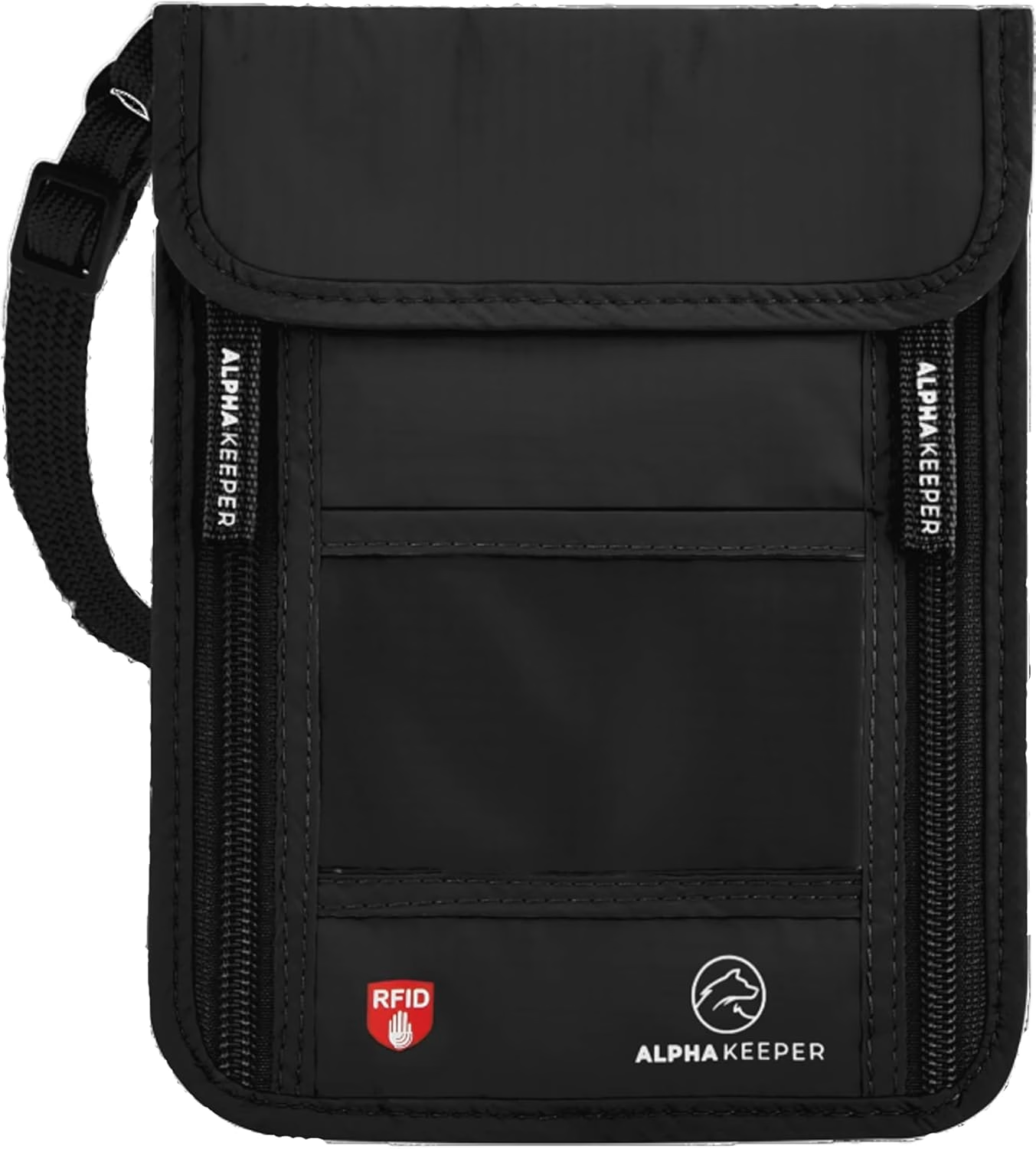
Worn under a shirt or tucked inside waistband clothing, a slim neck wallet or money belt is invisible to opportunistic thieves and blocks the low-frequency electronic skimming that contactless card readers can perform from up to 10 cm away. The Black RFID Neck Wallet from Alpha Keeper sits flat enough that it disappears under a standard t-shirt, holds a full-size passport plus four cards and folded bills, and weighs just grams when loaded. For travelers who prefer waist-level carry, the Black RFID Travel Money Belt | Hidden Travel Gear wraps flush against the skin, secured by an adjustable elastic band — no awkward bulge, no dangling. The key material spec to look for is a genuine aluminum-threaded RFID-blocking layer rated to block 13.56 MHz (the frequency used by modern passport chips and contactless cards); both Alpha Keeper options meet this standard.
Neck Wallet vs. Money Belt: Which One Is Right for You?
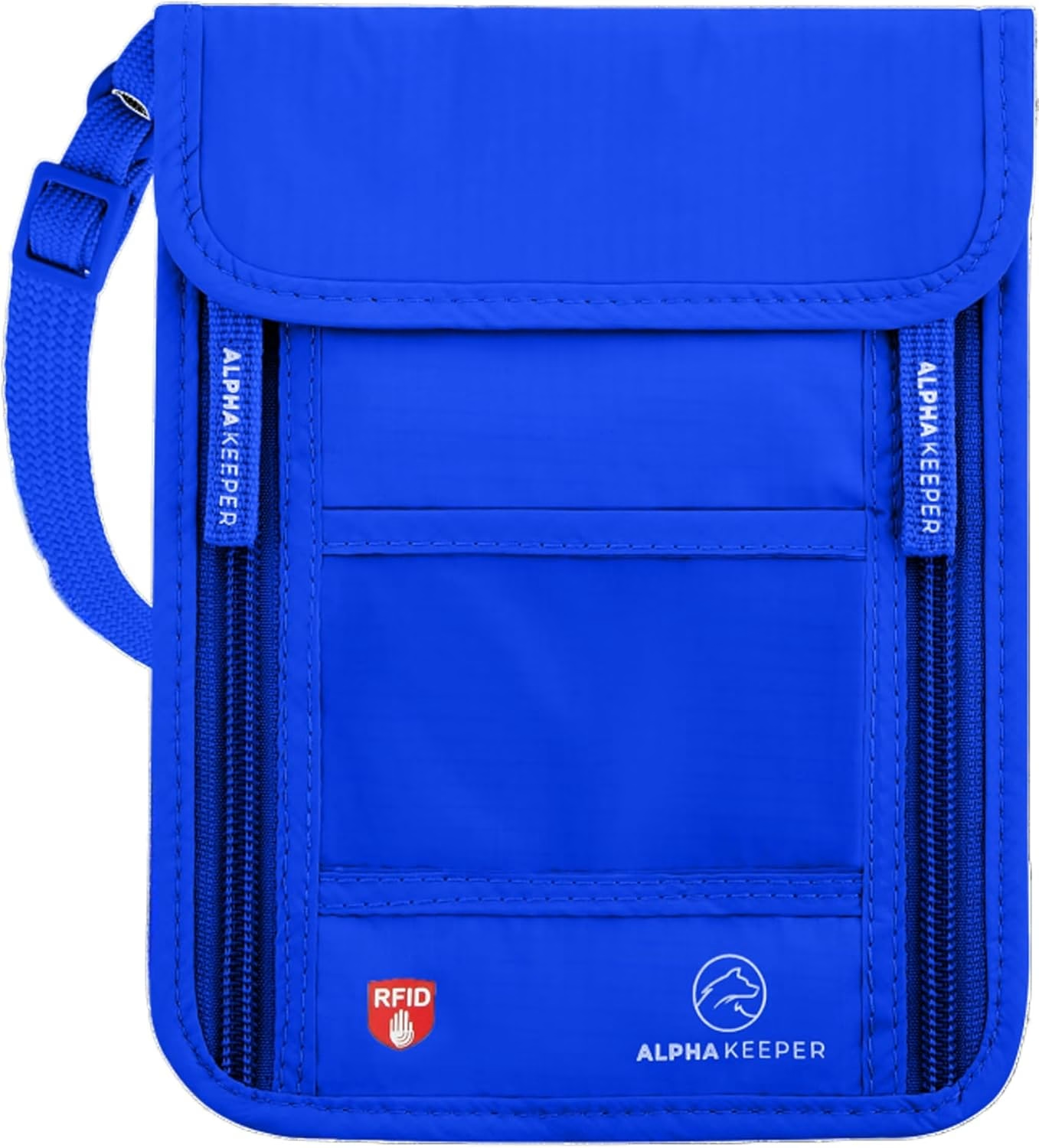
Neck wallets are faster to access — you can dip a hand under your collar in seconds — making them better for trips with frequent ID checks (border crossings, age-gated attractions, wine regions). Money belts sit lower and flatter under pants or a skirt, which makes them marginally more concealable and a better pick for beach destinations or light summer clothing where a neck cord might show. The honest trade-off: neck wallets can feel warm against the chest in hot climates, while money belts require unbuckling your pants to access — not ideal in a busy customs queue. Our recommendation for most travelers is the neck wallet for city trips and the money belt for beach or adventure travel. The Blue RFID Neck Wallet and the Azure RFID Money Belt represent the two categories cleanly, both at under $25 — a fraction of one hour of embassy emergency fees.
RFID Sleeves: The Lightweight Backup Layer Worth Owning
If you refuse to part with your normal wallet but still want electronic skimming protection for your passport and cards, RFID-blocking sleeves are a $10–15 add-on that slot over your existing documents. The Fiber RFID Sleeve Set and the Multicolor RFID Sleeve Set are particularly good: each sleeve is rigid enough to add minor bend-resistance to your passport cover while the embedded metallic fiber layer kills any attempted chip read. They don't solve the physical theft problem — a pickpocket can still grab your wallet — but they close the digital theft gap entirely. Think of sleeves as insurance on top of insurance: cheap, weightless, and genuinely effective.
The 'Decoy Wallet' Strategy: Smart Redundancy for 2026 Travelers
Experienced travelers often carry a secondary 'decoy' wallet in their outer bag containing a small amount of local cash (enough to hand over without heartbreak), an expired card, and a color photocopy of their passport ID page. The real passport, the real cards, and the bulk of cash stay body-worn in an RFID neck wallet or money belt. This strategy gives you something to hand over if you're ever pressured, costs nothing to set up, and means your actual documents stay physically on your person at all times. Store a high-res scan of your passport in a secure cloud folder (not just your camera roll) so your embassy can verify your identity remotely if the worst happens.
When You Actually Need Your Passport Out: Situational Rules
You need your physical passport for: checking into hotels, crossing land borders, boarding international flights, and cashing traveler's checks or currency exchange in some countries. For everything else — bar entry, day tours, museum discounts — a government-issued photo ID card or a digital ID app is usually accepted in 2026, especially across the EU and in major US cities. The practical rule: leave your passport locked in the hotel safe (use the inner safe, not the main door lock) on beach days and low-stakes sightseeing, and body-carry it on travel days or whenever you'll cross any checkpoint. This dramatically reduces your exposure window without compromising your ability to produce the document when genuinely required.
Honest Comparison: Alpha Keeper RFID Neck Wallet vs. a Generic Passport Pouch
Generic passport pouches you'll find at airport kiosks are typically made of polyester with no verified RFID-blocking layer — the labeling is often aspirational marketing, not tested shielding. Alpha Keeper neck wallets use a documented aluminum-fiber composite layer, tested to block 13.56 MHz signals, with reinforced nylon cord that resists simple blade cuts. The profile is slimmer (roughly 5mm loaded with a passport and three cards), the zipper is YKK-grade rather than no-name, and the price point ($18–24) is competitive with airport-sold alternatives that offer a fraction of the verified protection. It's not a vanity purchase — it's a functional difference in materials and construction.
Frequently Asked Questions
Is it safe to leave your passport in a hotel safe while traveling?
Yes, a bolted-in hotel room safe is generally safer than carrying your passport around all day. The exception: travel days, border crossings, and check-in — always body-carry your passport during those moments. Use an RFID neck wallet or money belt for transit, and switch to the safe for beach days or low-risk sightseeing days.
Does RFID blocking actually matter for passports in 2026?
Yes. Modern e-passports issued since 2007 contain an NFC chip readable at close range. While passive skimming in a crowd requires specific hardware, the risk is real enough that both the US State Department and UK HMPO recommend RFID-shielded passport covers. An RFID-blocking neck wallet or sleeve costs under $25 and eliminates the risk entirely.
What's the best way to carry a passport for women travelers specifically?
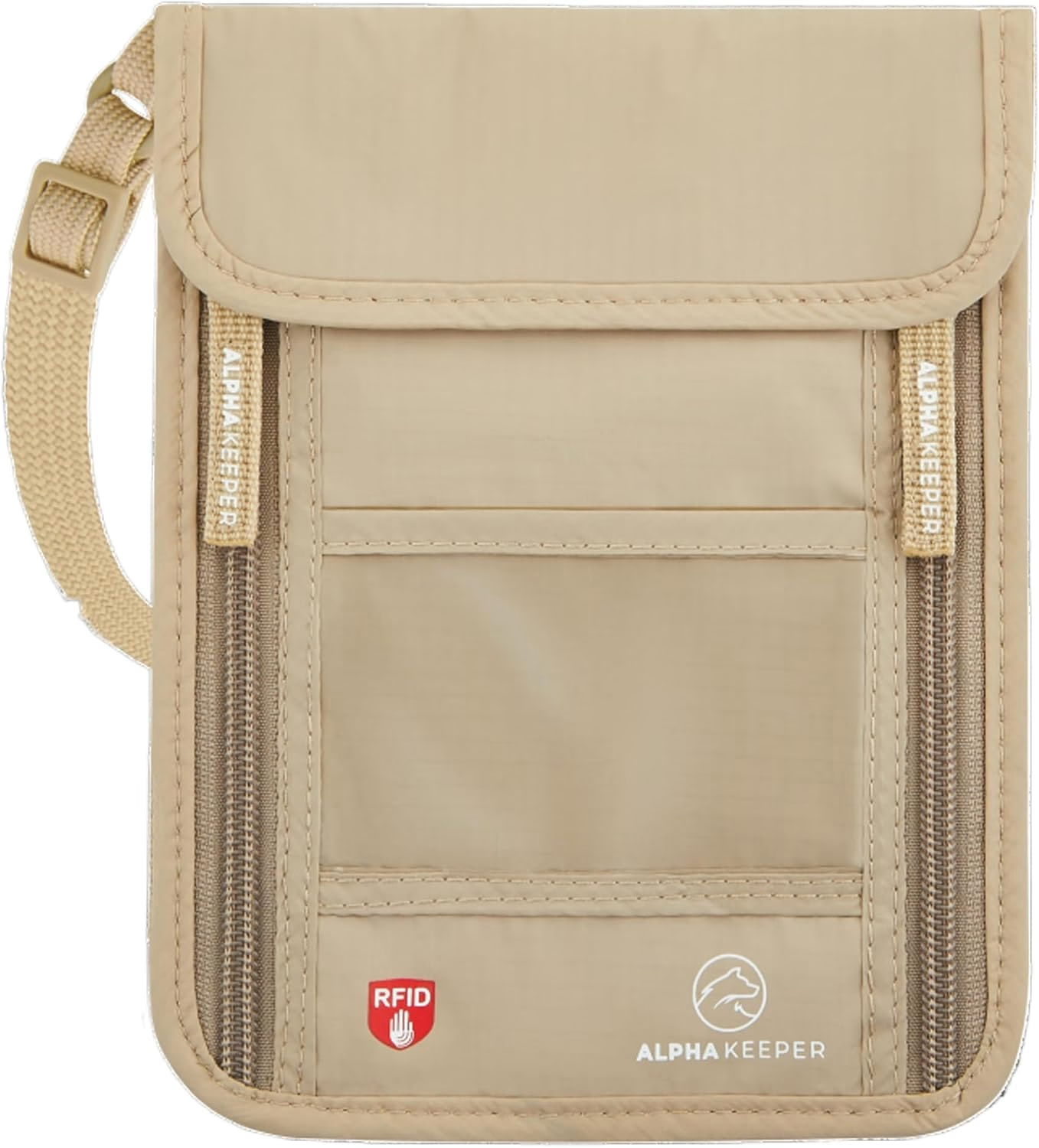
Women's clothing often has shallow or nonexistent pockets, making body-worn carriers even more essential. A slim neck wallet worn under a blouse or dress is the most practical option — it's invisible, hands-free, and fully accessible without removing layers. The Beige RFID Neck Wallet and Azure RFID Neck Wallet both come in lighter colorways and slim profiles suited to fitted clothing.
Ready to upgrade?
Ready to stop worrying about your passport on every crowded train and market street? Grab the Black RFID Neck Wallet — it fits under any shirt, blocks electronic skimming, and costs less than one replacement passport fee.