One in three international travelers reports a theft attempt on a trip — and couples are twice as exposed because pickpockets love targeting distracted pairs. If you're both carrying your passports in the same bag, you're one snatch away from a catastrophic vacation.
The best money belt setup for couples in 2026 splits valuables between two people using individual RFID-blocking neck wallets or under-clothes money belts — never a shared bag. Alpha Keeper's RFID neck wallets and slim money belts give each partner independent, body-worn security for under $30 each.
Why Couples Need Two Security Layers, Not One Shared Bag
The most dangerous thing a couple can do is consolidate passports, cards, and cash into one person's bag — lose that bag and you've lost everything for both travelers simultaneously. Smart couples split risk: Partner A carries both passports and emergency cash in a body-worn money belt, Partner B carries daily-spend cards and a backup card in a neck wallet. This way a single theft never strands you both. It's the travel equivalent of not putting all your eggs in one basket, except the stakes are your entire trip.
The Best RFID Money Belt for Each Partner: Under-Clothes Options
For the partner carrying passports and larger bills, Alpha Keeper's Azure RFID Money Belt is a standout: it sits flat against the skin under a shirt, measures roughly 11" × 5", holds a passport plus six cards and folded bills, and uses a multi-layer RFID-blocking lining that blocks 13.56 MHz signals used by modern contactless cards and e-passports. The Blue RFID Money Belt and Brown RFID Money Belt offer the same internal architecture in neutral tones that work for any gender — important for couples shopping together. At around $20–$25 each, outfitting both partners costs less than one restaurant meal in most European cities, and the protection value is orders of magnitude higher.
Best RFID Neck Wallet for the Daily-Spend Partner
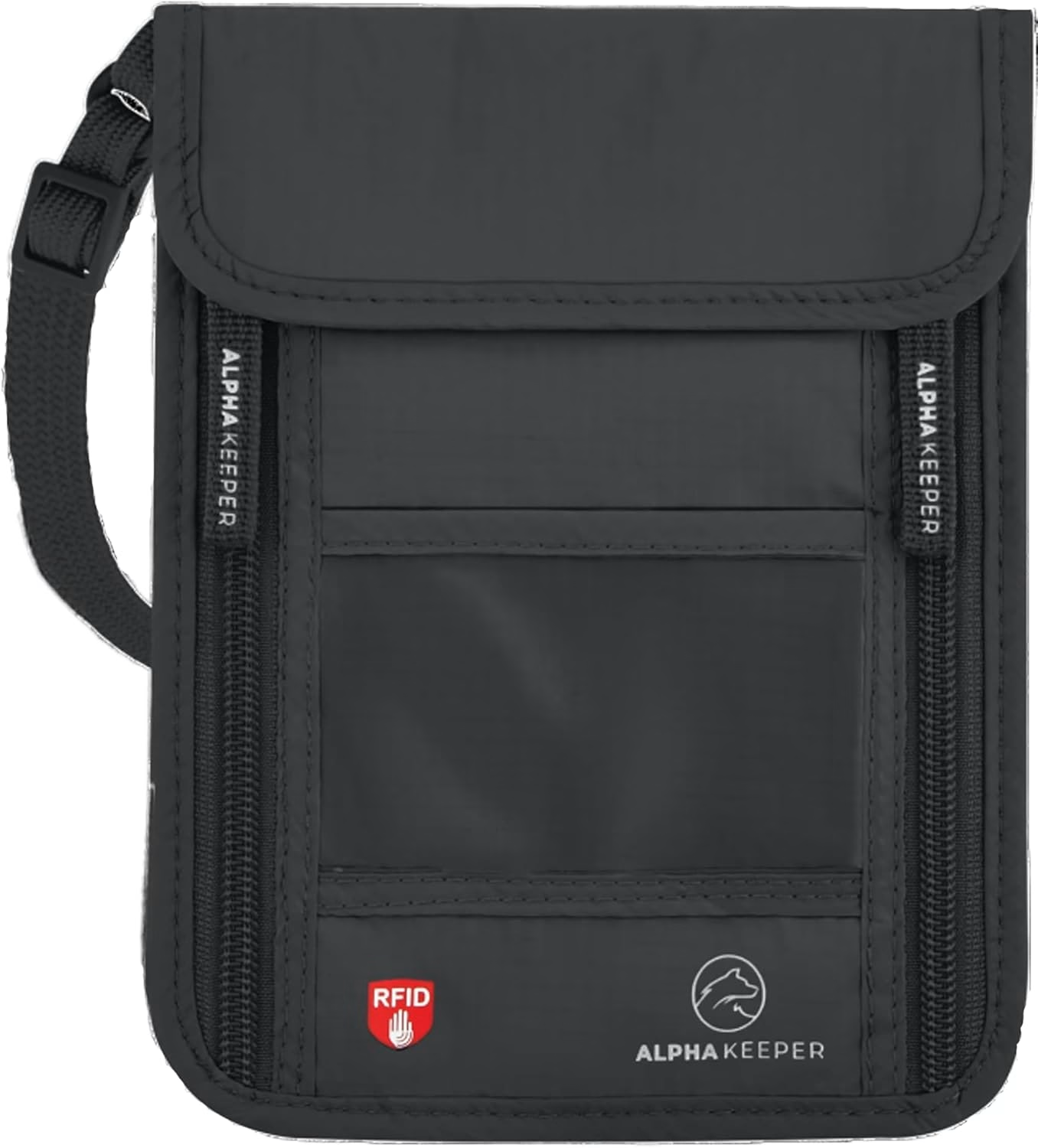
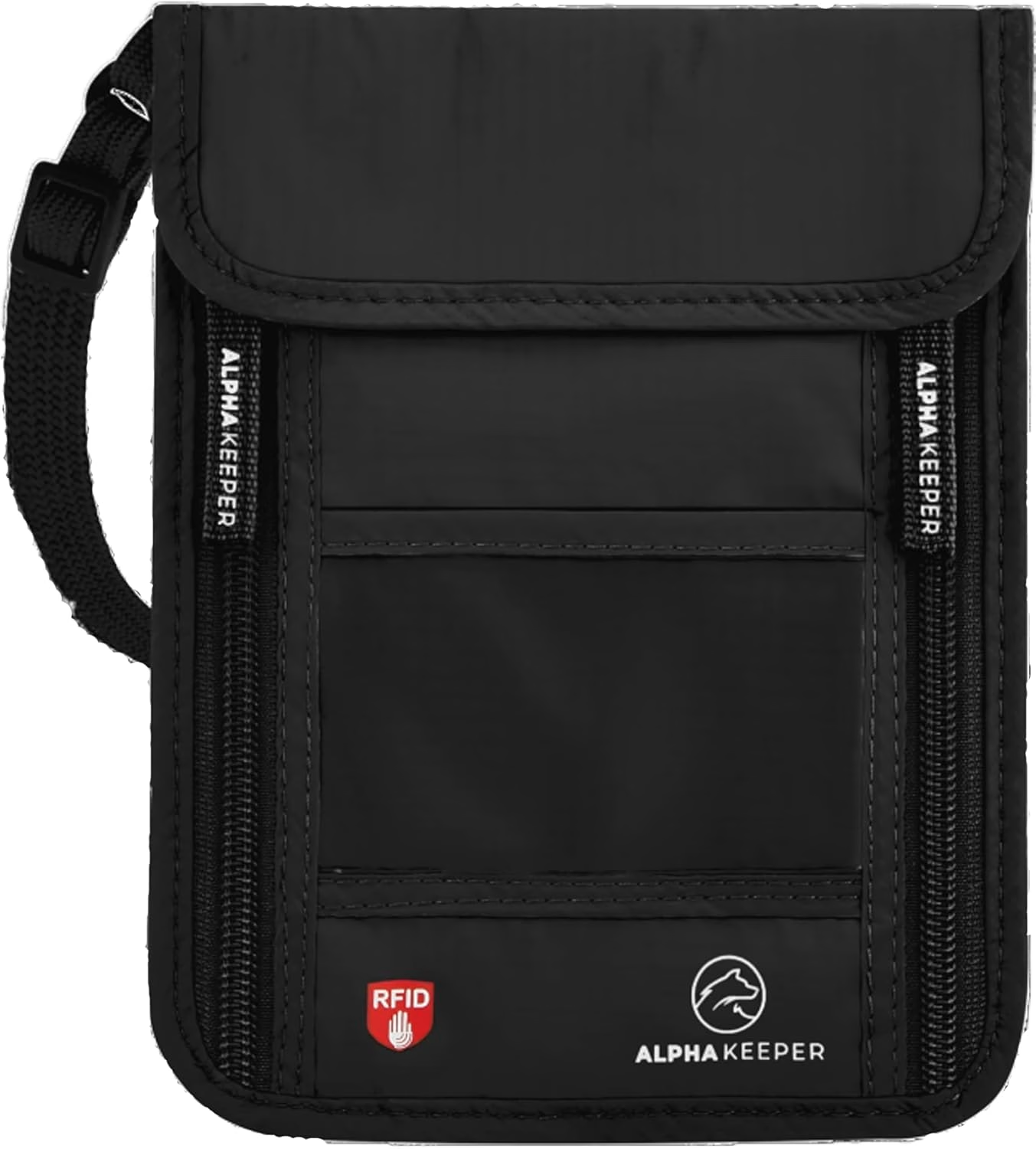
The second partner — typically the one navigating, pulling up maps, and paying for things — needs faster card access without exposing a full money belt. Alpha Keeper's Dark Grey RFID Neck Wallet threads under a shirt on an adjustable cord, has a slim profile (roughly 5.5" × 4"), and fits two cards, folded bills, and a SIM card envelope — everything you need for a day of exploring. The Black RFID Neck Wallet is equally popular for its clean, unisex look, and the Azure RFID Neck Wallet adds a subtle color cue so couples can quickly identify whose wallet is whose at airport security. Neck wallets are particularly good in crowded markets, on metro systems, and at tourist sites where money-belt access would be awkward.
RFID Sleeve Sets: The Couples Upgrade That Costs Almost Nothing
If you already have wallets you love and just want RFID protection for your cards, Alpha Keeper's sleeve sets are the couples' secret weapon — buy one set and split the sleeves. The MultiColor RFID Sleeve Set gives you color-coded sleeves so each partner's cards stay visually organized, a genuine quality-of-life upgrade when you're swapping cards at a hotel check-in. The Fiber RFID Sleeve Set offers a more premium textured feel for travelers who want durability over years of use. Each sleeve blocks the same 13.56 MHz RFID frequency, so your tap-to-pay cards and passport chips are protected whether the sleeve is in a money belt, neck wallet, or jacket pocket.
Honest Comparison: Alpha Keeper vs. Generic Airport Security Wallets
Generic 'travel wallets' sold in airport shops or on discount marketplaces often claim RFID protection but use a single thin foil layer with no independent lab verification — and they're frequently sized only for one person's documents, forcing couples back into the shared-bag trap. Alpha Keeper's money belts and neck wallets use multi-layer blocking material, come in his-and-hers-friendly colorways, and are designed to be worn under clothes rather than carried — which is the only position that meaningfully reduces pickpocket risk. The price difference is minimal; the security difference is not.
The Couples Security Setup: A Practical System for 2026
Here's a concrete system that works for most couples: Partner 1 wears a Blue RFID Money Belt or Brown RFID Money Belt with both passports, a backup credit card each, and emergency cash (suggest $200 USD equivalent). Partner 2 wears a Dark Grey RFID Neck Wallet or Black RFID Neck Wallet with daily-spend cards and local currency for the day. Both use individual RFID sleeves from the MultiColor RFID Sleeve Set for any cards not in the belt or wallet. At the hotel, the belts come off and valuables go in the safe — but you've been protected all day during the highest-risk window. Total setup cost: under $60 for two people.
Frequently Asked Questions
Should couples share one money belt or each have their own?
Each partner should have their own money belt or neck wallet. Sharing one concentrates all your valuables in a single point of failure — if it's stolen or lost, both travelers lose everything simultaneously. Individual RFID money belts from Alpha Keeper cost around $20–$25 each, making two-belt setups affordable and far safer.
What's the difference between a money belt and a neck wallet for couples travel?
A money belt clips around your waist under clothing and holds more — ideal for passports and larger bills carried by one partner. A neck wallet hangs on a cord under your shirt and offers faster card access — ideal for the partner handling daily purchases. Many couples use one of each for a complete split-risk security system.
Do RFID-blocking money belts actually stop electronic theft in 2026?
Yes. Modern RFID-blocking travel accessories, including Alpha Keeper's money belts and neck wallets, block the 13.56 MHz frequency used by contactless credit cards, debit cards, and e-passports. This prevents drive-by scanning attacks where thieves use portable readers in crowds. The threat is real in high-density tourist areas, and a quality RFID-blocking layer costs under $25 — making it one of the highest-value travel security decisions you can make.
Ready to upgrade?
Outfit both partners properly before your next trip: grab the Dark Grey RFID Neck Wallet for the daily-spend partner and the Blue RFID Money Belt for the passport carrier — two-belt security for the price of one bad airport meal.