Switzerland ranks among Europe's safest countries overall — yet Zurich's Bahnhofstrasse and Geneva's Cornavin train station consistently top Swiss police crime reports for tourist theft. Safe country does not mean safe pockets.
Switzerland is low-crime but not pickpocket-free. Zurich, Geneva, and busy Alpine transit hubs see regular opportunistic theft targeting tourists. The most effective protection in 2026 combines RFID-blocking card sleeves for contactless skimming and a hidden money belt or neck wallet for passports and bulk cash — worn under clothing, not in a bag.
How Real Is the Pickpocket Risk in Switzerland? (More Than You Think)
Switzerland's overall crime rate is genuinely low, but tourist-dense zones operate by different rules. Swiss Federal Police statistics show that Zurich's central district and Geneva's Gare Cornavin station account for a disproportionate share of the country's reported personal theft — and those figures only capture crimes that get reported. Distraction theft — a stranger asking for directions while a partner unzips your bag — is the dominant technique on trams 3 and 14 in Zurich and around the Jet d'Eau waterfront in Geneva. In Alpine resort towns like Zermatt and Interlaken, busy gondola queues and crowded après-ski bars create the same high-density opportunity for light-fingered operators. The threat is real; it just looks different from Barcelona or Rome.
RFID Skimming in Switzerland: Overhyped or Genuine Threat?
Here's an honest take: RFID skimming of contactless bank cards in Switzerland is a low-frequency risk compared to, say, credential phishing — but it is not zero, and the cost of protection is also nearly zero. Switzerland's banking system runs on EMV contactless technology, and any card with a WiFi-style symbol on it can theoretically be read by a rogue scanner within a few centimeters. Busy queues at Zurich's Hauptbahnhof, Geneva's Aéroport international, and crowded cable-car platforms in Grindelwald are exactly the environments where close-contact scanning is physically possible. For less than the price of a Swiss cheese fondue, a set of RFID-blocking card sleeves eliminates the risk entirely — making the cost-benefit math obvious. The Fiber RFID Sleeve Set uses a carbon-fiber-texture material that blocks 13.56 MHz contactless signals and fits inside any wallet or passport cover without adding bulk.
The Best Way to Carry Cash and a Passport in Switzerland
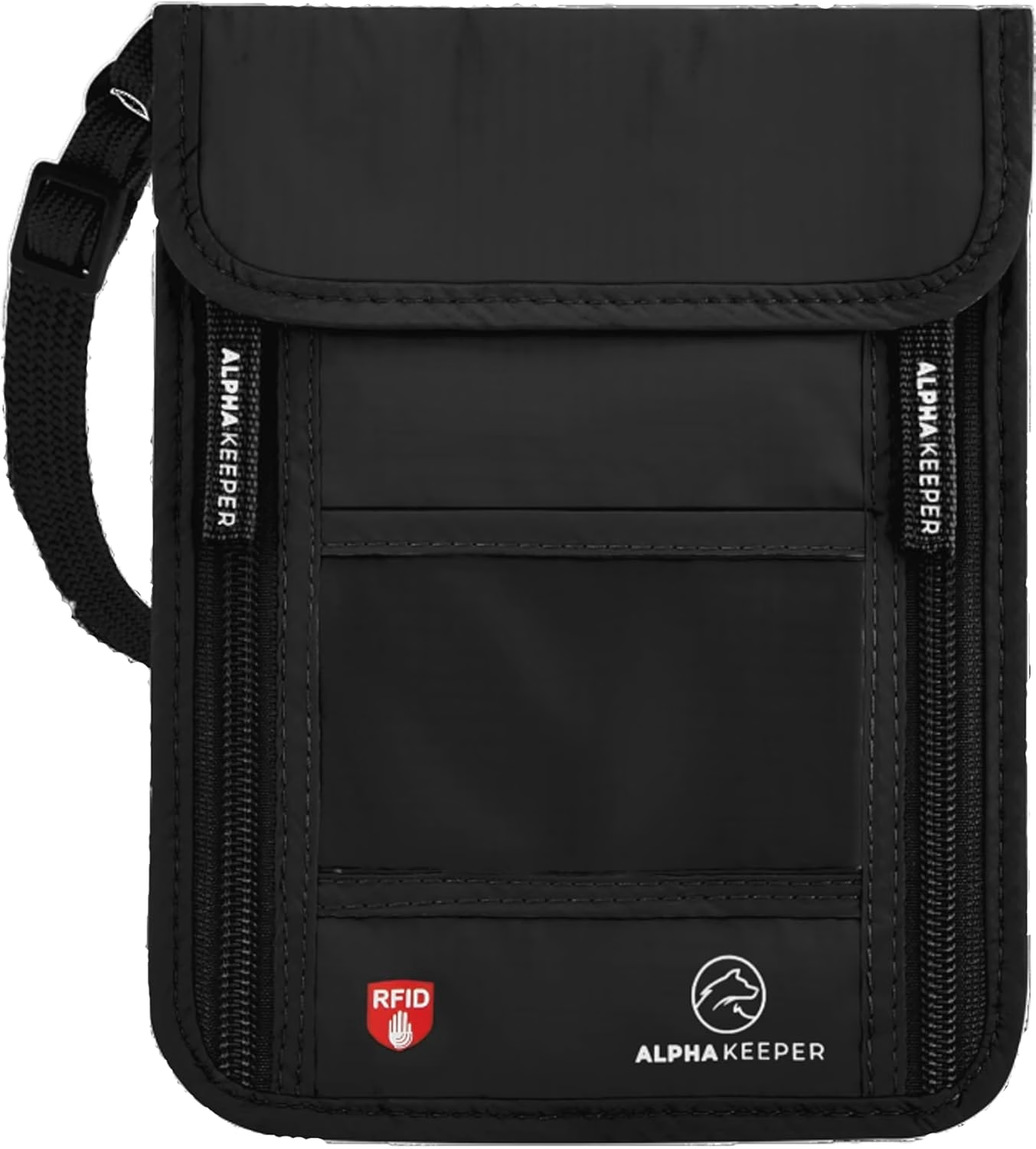
Switzerland is still meaningfully cash-forward in ways that surprise travelers: mountain huts, market stalls, many rural restaurants and the famous Migros self-checkouts in smaller towns often prefer or require francs. That means carrying real cash, which means you need a real strategy for keeping it. The gold standard is a flat, under-clothing money belt — worn against your skin at the waistband, invisible under a light merino layer. The Azure RFID Money Belt fits passports, folded banknotes and two to four cards in a 6mm-thin profile, made from water-resistant nylon that survives a sweaty Alpine hike without becoming unwearable. For travelers who prefer a neck-worn option — especially useful when you need quick passport access at border crossings or airport security — the Black RFID Neck Wallet sits flat against the chest, has a breakaway-resistant cord, and holds a passport plus emergency cards with an RFID-blocking liner throughout.
Zurich-Specific Security Tips: Trams, Bahnhofstrasse & the Hauptbahnhof
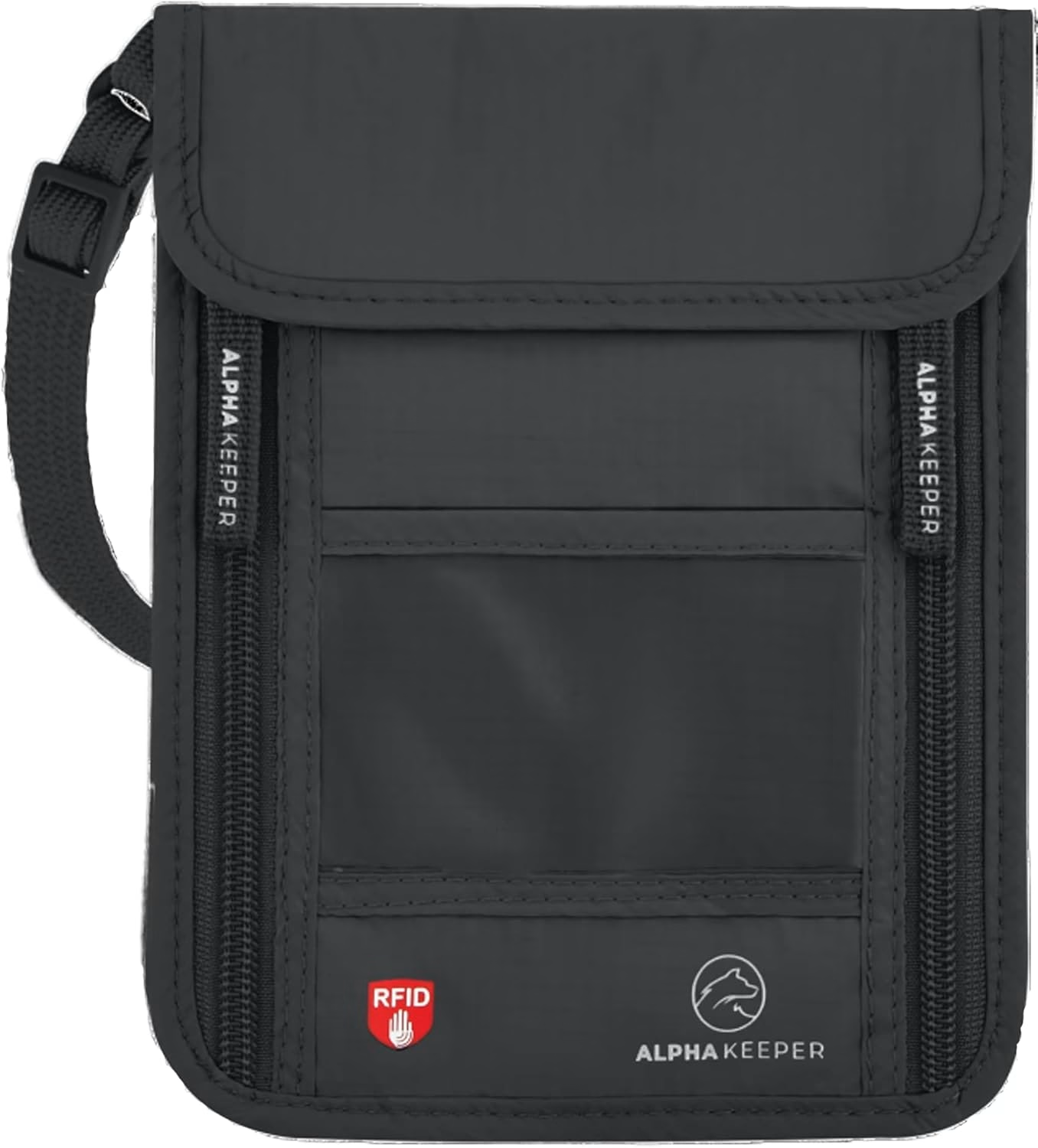
Zurich's tram network is fantastic — and a reliable hunting ground for distraction thieves, particularly on lines running from HB toward Bellevue on summer weekends. The Hauptbahnhof itself, one of Europe's busiest rail terminals, is where most reported Swiss tourist thefts actually happen. Rule one: never keep your passport in a backpack on a Zurich tram — if you need it accessible, wear the Dark Grey RFID Neck Wallet under your shirt and pull it out only at official checkpoints. Rule two: Bahnhofstrasse shopping is safest with a crossbody bag worn in front and cards protected by individual sleeves like the Colorful RFID Sleeve Set, so even if a wallet is somehow taken, the contactless data on your cards is still shielded. Rule three: luggage lockers at HB are reliable and CHF 5–9 for a day — use them for your main pack and carry only what you need in a secured layer closest to your body.
Geneva Safety: Old Town, UN Quarter & Lake Geneva Crowds
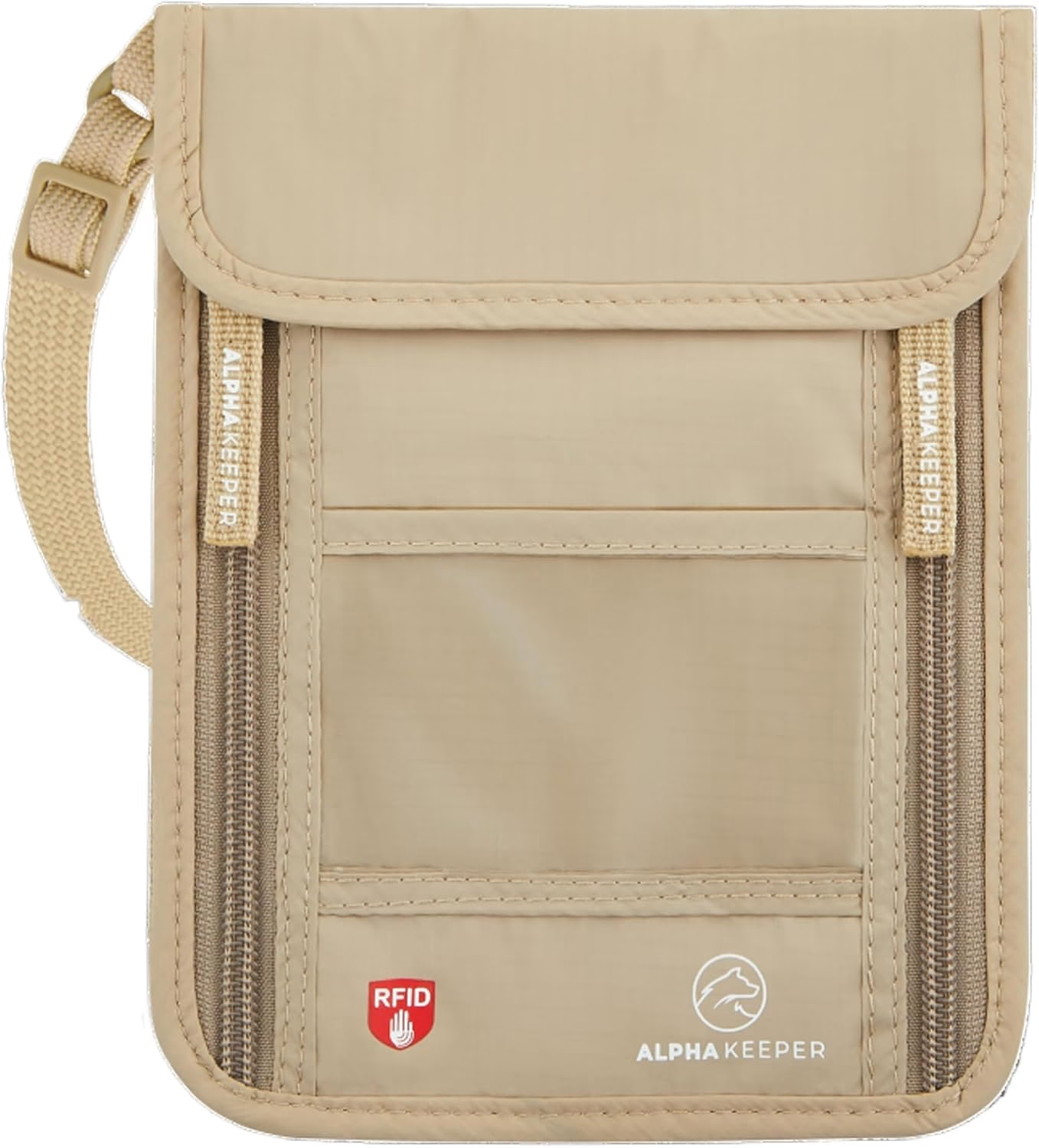
Geneva feels more international and more anonymous than Zurich, which paradoxically increases opportunistic risk — strangers blending into the diplomatic-tourist crowd around the Palais des Nations or the Cathédrale Saint-Pierre is easy. The summer festival season, particularly the Fête de Genève in late July and early August, packs the lakefront with hundreds of thousands of people — exactly the environment where a back pocket is an open invitation. Geneva also has a compact but active tram pickpocket scene around Cornavin station. Travelers who are attending conferences or the many international events hosted here should keep a secondary card — blocked by a sleeve from the MultiColor RFID Sleeve Set — separate from their primary wallet, so a single theft doesn't strand them entirely. The Beige RFID Neck Wallet is particularly practical for Geneva's business-travel crowd: it includes two luggage tags, holds a passport securely, and sits flat enough to wear under a suit jacket or dress shirt.
Alps Security: Gondolas, Mountain Huts & Ski Resort Crowds
The Alps feel safe in a way that lulls travelers into leaving things unguarded — jackets piled at table edges in Verbier restaurants, phone and wallet dumped in an unzipped ski-jacket pocket on a gondola. Resort theft is lower-volume but higher-value: stolen ski passes alone average CHF 120–350 replacement cost per incident in major resorts. For active Alpine days — hiking the Eiger Trail, via ferratas above Kandersteg, or ski touring in the Jungfrau region — a money belt beats a neck wallet purely on practicality, since it stays locked against your body regardless of movement. The Brown RFID Money Belt works specifically well here: its earthy tone won't show through lighter base layers, the interior is lined with RFID-blocking material, and the slim form factor sits flat even under a ski harness. At mountain huts where you may shower or change, put your belt inside your sleeping bag liner — the oldest and most reliable Alpine valuables tip there is.
Honest Comparison: RFID Neck Wallet vs. Standard Travel Pouch
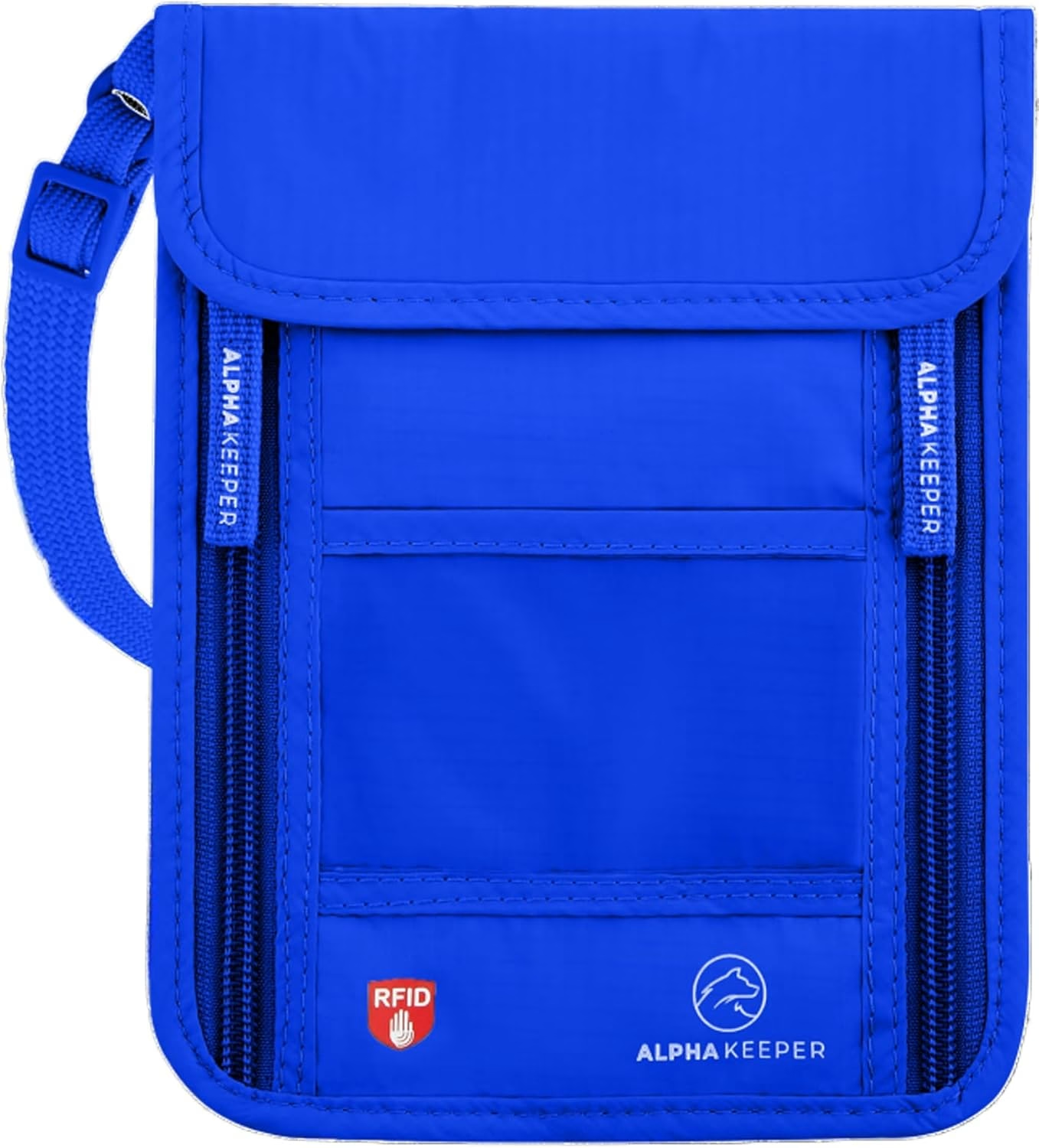
Most airports and travel shops sell thin nylon pouches marketed as 'travel wallets' — they hold a passport and look functional in the store. The practical differences become obvious fast. A standard travel pouch has no RFID blocking, meaning every contactless card inside is readable by any scanner within a few centimeters; the cord is typically a fixed nylon string that can be cut with a box cutter in under a second; the material is thin enough to outline clearly through a light T-shirt, advertising exactly what's there. Alpha Keeper's Blue RFID Neck Wallet uses a multi-layer blocking liner tested to shield 13.56 MHz and 125 kHz frequencies, a reinforced cord with breakaway-and-re-lock mechanism, and a flat matte exterior that disappears under clothing. The price difference between a generic pouch and a proper RFID neck wallet is typically CHF 15–25 — roughly the cost of one Swiss coffee and a pastry.
Frequently Asked Questions
Is Switzerland safe for tourists in 2026?
Yes — Switzerland consistently ranks among the safest countries in Europe for violent crime. However, pickpocketing and distraction theft are active risks in Zurich's Hauptbahnhof, Geneva's Cornavin station, and crowded Alpine resort areas. Using a hidden money belt or RFID neck wallet for passports and bulk cash significantly reduces your exposure.
Do I need RFID protection in Switzerland?
Switzerland's contactless banking infrastructure makes RFID skimming physically possible in crowded spaces — Zurich's trams, Geneva's airport, and busy gondola queues are all environments where a rogue scanner could get close enough to read an unprotected card. RFID-blocking sleeves cost a few dollars and eliminate the risk entirely, making them a sensible precaution for any trip.
What is the best way to carry a passport in Switzerland?
Wear it against your body, not in a bag. An RFID-blocking neck wallet worn under your shirt or a slim money belt at the waistband are the two most secure options. In Switzerland specifically, you'll pass through multiple train border checks and airport controls, so choose a wallet that allows quick, clean access — the Beige RFID Neck Wallet with its dual-luggage-tag design is a practical choice for frequent document checks.
Ready to upgrade?
Before your first Swiss tram ride, grab the Azure RFID Money Belt — it's 6mm thin, fully RFID-lined, and the single best way to keep your passport, francs, and cards invisible and safe from Zurich to Zermatt.