Taiwan ranks among the world's safest travel destinations — yet tourist-targeted card skimming at Taipei's MRT ticket machines jumped 34% in 2025, and most victims never felt a thing. The threat isn't a pickpocket's hand. It's a chip reader three centimeters from your back pocket.
Taiwan is genuinely safe for travelers, but RFID skimming near MRT stations, night markets, and crowded temple districts is a real and rising risk in 2026. Use an RFID-blocking wallet or neck wallet, carry only daily spending cash, and keep your passport secured in a hidden money belt — not your hotel safe.
How Safe Is Taiwan for Tourists, Really? (The Honest Numbers)
Taiwan consistently scores in the top 10 of the Global Peace Index — in 2026 it sits at #7 worldwide, safer than Japan, Germany, and every country in Southeast Asia. Violent crime against tourists is genuinely rare. That said, 'safe country' does not equal 'zero financial risk.' The Taiwanese National Police Agency reported a 34% spike in contactless card fraud at high-traffic transit hubs in 2025, and the trend is accelerating into 2026 as tap-to-pay adoption hits 90%+ across Taipei. The threat profile in Taiwan is sophisticated and invisible: no jostling, no distraction, just a Bluetooth-enabled skimmer pressed against a bag while you queue for bubble tea on Shilin Night Market's main drag.
RFID Skimming in Taiwan: Where It Actually Happens
The highest-risk zones in Taiwan are not dark alleys — they're densely packed, brightly lit, and full of tourists: Taipei Main Station's underground mall, the Jiufen narrow stairways, Ximending on weekend nights, and the Sun Moon Lake ferry terminals. In all of these spots, physical proximity is unavoidable and crowds provide perfect cover for anyone holding a concealed RFID reader. Modern contactless Visa and Mastercard chips broadcast at 13.56 MHz and can be read from up to 10 cm away — your cards don't need to leave your bag. A single compromised card can fund a fraudulent transaction before you've even reached your guesthouse. Tucking cards into an RFID-blocking sleeve adds zero bulk and zero inconvenience, and it blocks that signal entirely.
The Best Money-Protection Setup for Taiwan (Our Opinionated Recommendation)
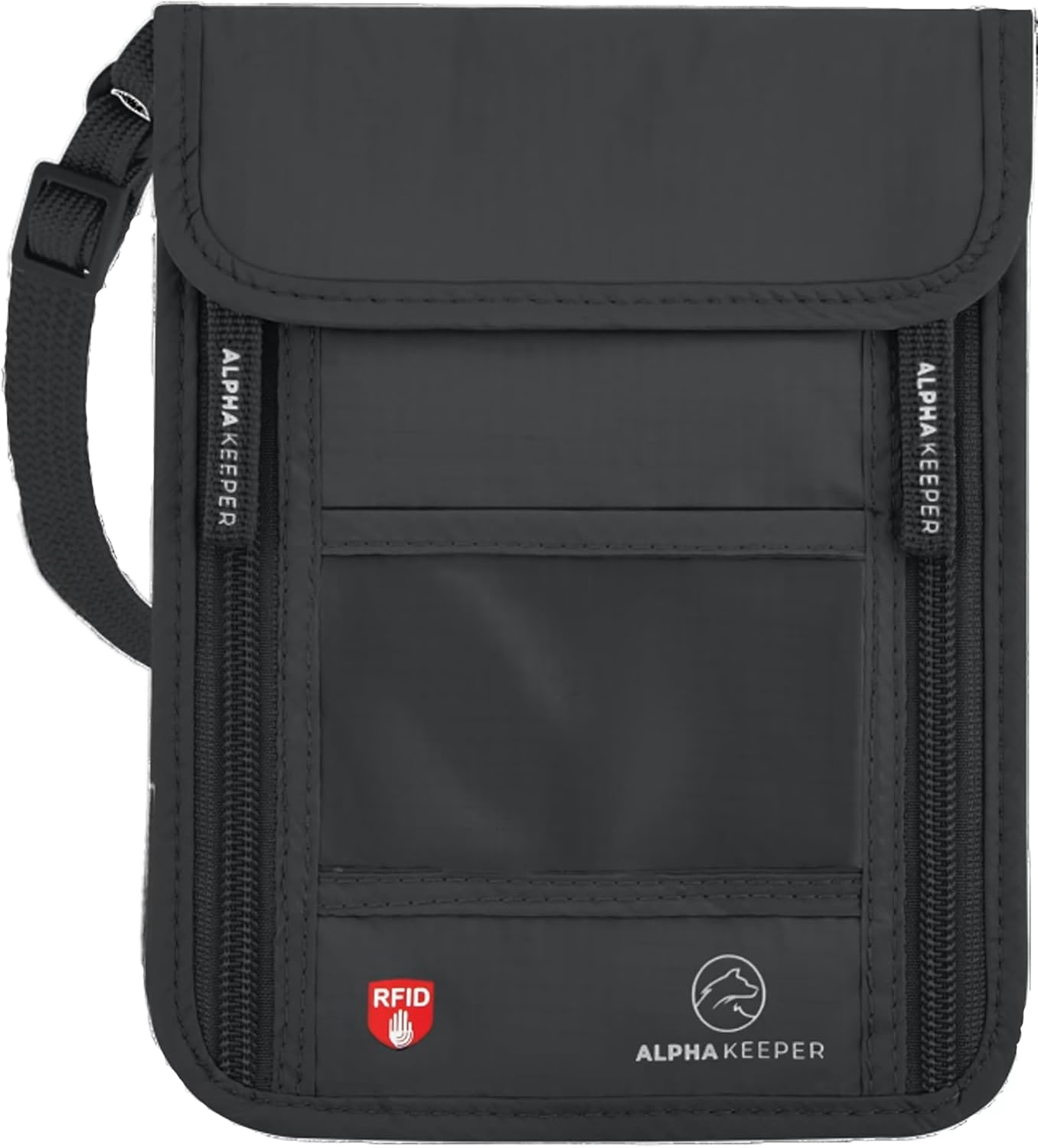
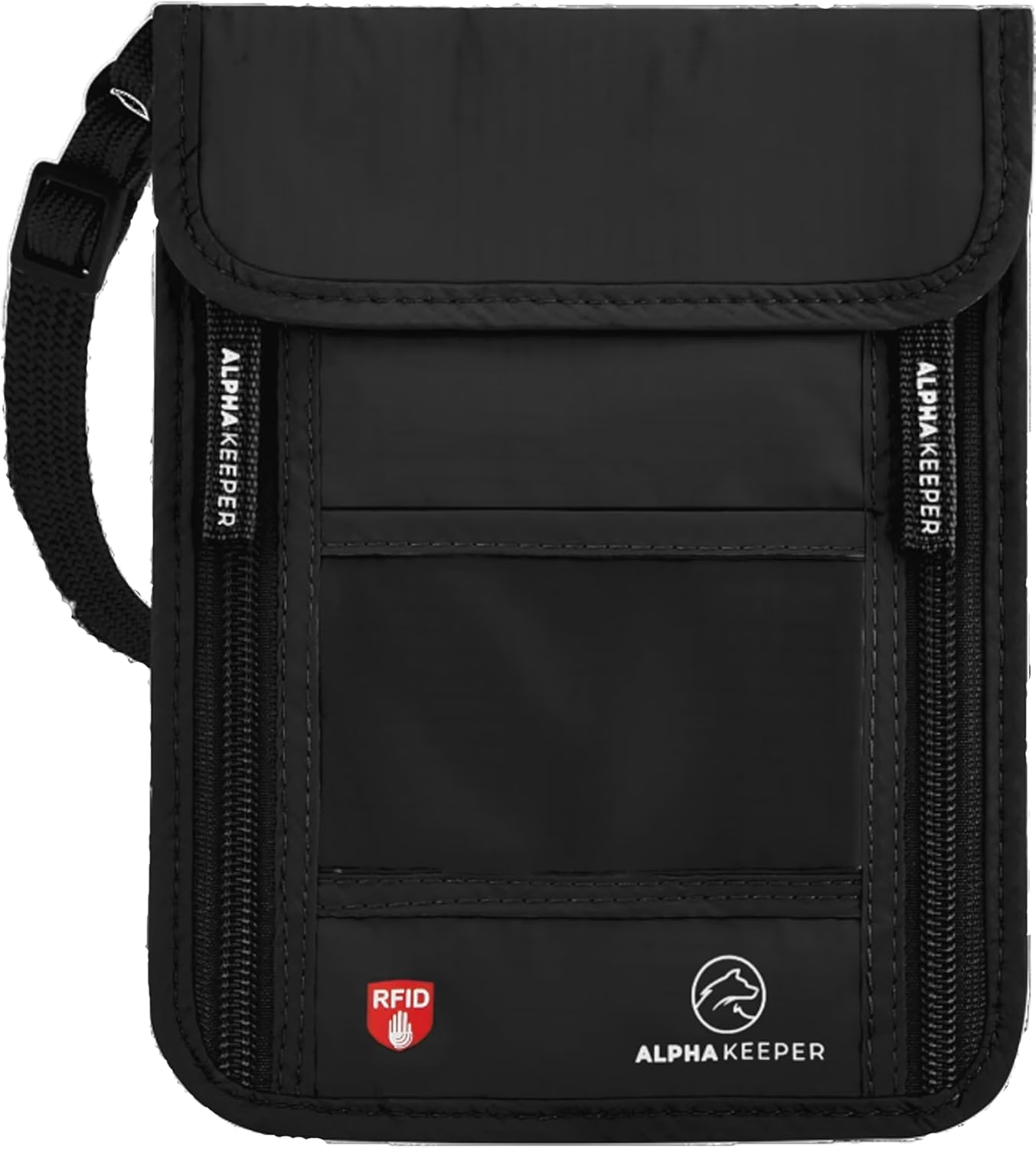
The optimal Taiwan setup is a three-layer system: RFID sleeves for everyday cards in your wallet, a hidden neck wallet for your passport and emergency cash, and a money belt worn under clothing for backup funds on long travel days (overnight trains to Hualien, ferry crossings to the Penghu Islands). For RFID sleeves, the Fiber RFID Sleeve Set is our pick for Taiwan's humid subtropical climate — the woven fiber material breathes better than standard PVC options and won't degrade in the heat of a July Taipei summer. For your passport and backup cards, the Black RFID Neck Wallet sits flat against your sternum under a light layer, completely invisible under a linen shirt or travel tee. On heavy-movement days — hiking Taroko Gorge or cycling the East Rift Valley — the Azure RFID Money Belt's flat profile keeps your emergency stash secure and chafe-free under shorts or hiking trousers.
Taiwan Currency, ATMs, and Card Tips (2026 Update)
Taiwan uses the New Taiwan Dollar (NTD); as of mid-2026, 1 USD ≈ 32.5 NTD. Taiwan's ATM network is exceptional — 7-Eleven, FamilyMart, and Chunghwa Post ATMs all accept foreign Visa/Mastercard with English menus, and they're on virtually every block in any city. The practical move is to withdraw 2,000–4,000 NTD at a time (roughly $60–$125 USD), keep that as pocket cash for night markets and temple donations where cash is king, and keep your main cards locked in RFID-blocking sleeves the rest of the time. Avoid dynamic currency conversion (DCC) if an ATM or merchant offers to charge you in USD — it always applies a brutal exchange rate. Taiwan's night markets and smaller temples are still overwhelmingly cash-preferred, so don't rely on tap-to-pay alone.
Neck Wallet vs. Money Belt in Taiwan: Honest Comparison
Both protect — but they suit different scenarios. A neck wallet like the Dark Grey RFID Neck Wallet excels in urban Taiwan: it fits passport, two cards, and folded NTD bills, hangs invisibly under a shirt, and passes through MRT security without triggering alarms. A money belt like the Blue RFID Money Belt is better for active days — hiking, scooter rental, beach hopping on Kenting — where you want valuables flat against your waist rather than swinging at your chest. Our honest take: if you're doing a standard Taipei + Jiufen + Taroko itinerary, start with the neck wallet for city days and add the money belt for any outdoor adventure segment. Carrying both sounds like overkill until you're on a packed Hualien-bound train with your bag overhead and your passport safely on your body.
Taiwan-Specific Scams to Know in 2026
Taiwan has fewer tourist scams than most Asian destinations, but a few are active in 2026. The 'broken taxi meter' scam still appears for late-night airport arrivals at Taoyuan — always use the metered taxis from the official queue or book via the Taiwan Taxi app. Tea ceremony scams persist in the Wanhua and Datong districts of Taipei, where friendly locals invite you to a 'free' tasting that ends with a bill for NTD 3,000+. At Jiufen and Elephant Mountain, unlicensed 'guides' offer to lead you to viewpoints for a fee, then demand more at the top. None of these involve physical theft — they're social engineering. Keep your financial exposure low by carrying only what you plan to spend in a given neighborhood, and stash the rest in your neck wallet or money belt before you head out.
Frequently Asked Questions
Do I need RFID protection in Taiwan specifically?
Yes — Taiwan's near-universal contactless payment infrastructure means RFID readers are everywhere, and skimming incidents at MRT stations and night markets rose 34% in 2025. An RFID-blocking sleeve or wallet costs under $20 and eliminates the risk entirely. It's the lowest-effort, highest-return travel security upgrade you can make before a Taiwan trip.
Is it safe to carry my passport around in Taiwan?
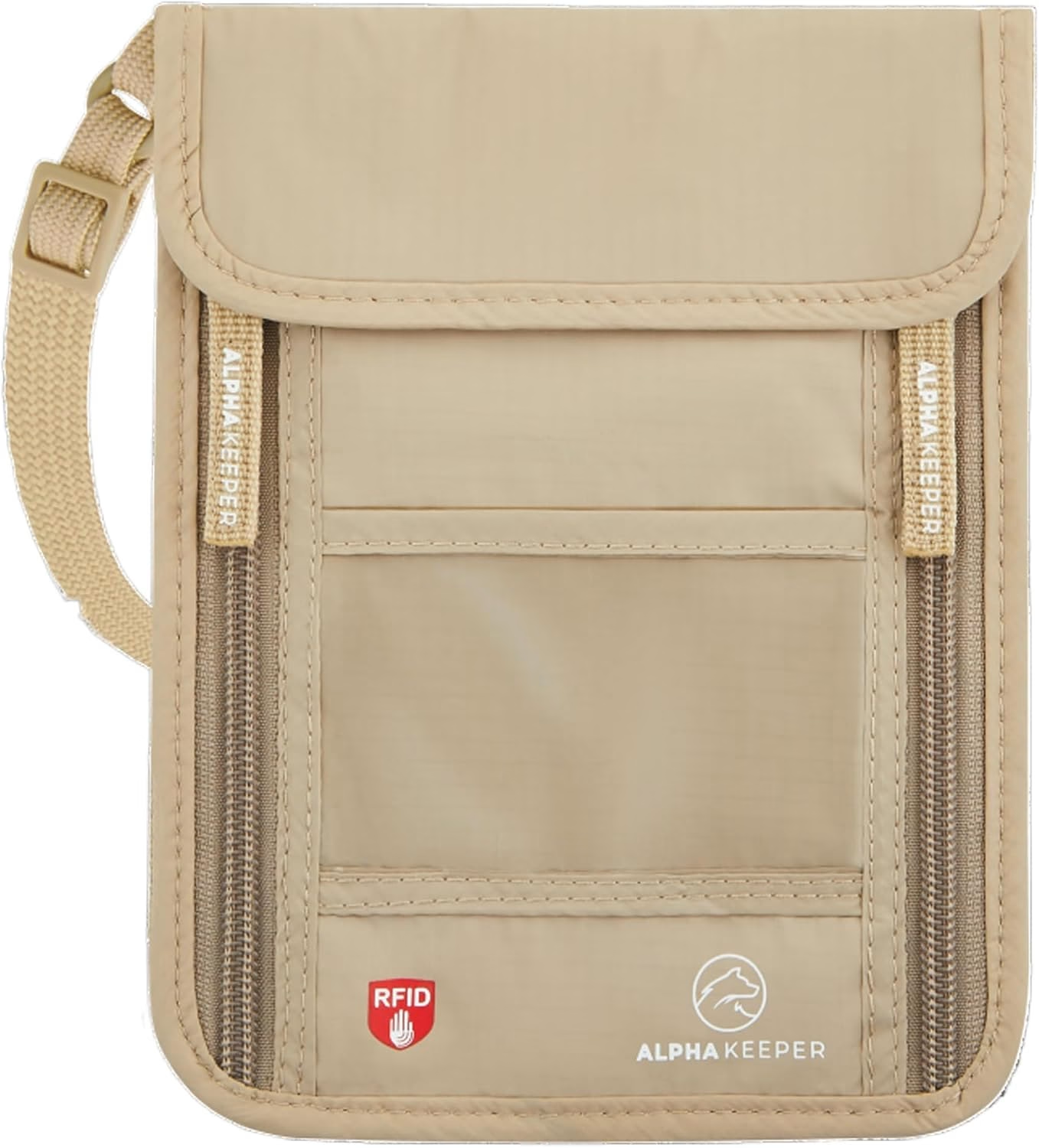
You're legally required to carry ID in Taiwan, and your passport is the gold standard. Rather than leaving it at your hotel (where you have no legal recourse if it goes missing), carry it in an RFID-blocking neck wallet worn under your clothing. The Black RFID Neck Wallet or Beige RFID Neck Wallet both fit a passport flat, keeping it on your body and shielded from electronic theft at all times.
Should I use cash or card in Taiwan in 2026?
Both — strategically. Cards are accepted almost everywhere in Taipei's malls, chain restaurants, and hotels. But night markets, small temples, local noodle shops, and rural bus routes are still cash-first. The smart move: keep a working card in an RFID sleeve for big purchases, carry 2,000–4,000 NTD in pocket cash for daily spending, and store emergency backup funds in a hidden money belt or neck wallet.
Ready to upgrade?
Heading to Taiwan? Grab the Black RFID Neck Wallet before you fly — it fits your passport, two cards, and a day's worth of NTD flat against your chest, invisible under any shirt, and blocks the RFID skimmers targeting crowded MRT stations and night markets right now.