A pickpocket in Barcelona takes your wallet in under three seconds — and if that wallet holds everything, your entire trip collapses with it. The single most effective travel security move isn't a lock, a gadget, or travel insurance: it's deliberately splitting your money across multiple locations before you ever leave the hotel.
Split your travel money into at least three separate stashes: a small daily-spend wallet in your pocket, a hidden neck wallet or money belt worn under clothing for your main cash and backup card, and an emergency reserve locked in your accommodation. Never carry more than one day's spending cash in any single accessible location.
The 3-Stash Rule: Exactly How to Divide Your Money
Stash 1 is your 'sacrifice wallet' — keep one card and roughly $20–$40 in local currency in a front-pocket slim wallet. If someone lifts it, you lose almost nothing. Stash 2 is your main reserve: a hidden neck wallet or money belt worn against your skin, holding your backup debit card, emergency cash ($150–$200 USD equivalent), and a passport photocopy. Stash 3 lives in your accommodation — a locked bag or safe — and holds your actual passport, a second backup card, and roughly 20–30% of your total trip budget in emergency funds. This three-layer system means a pickpocket can only ever reach Stash 1, and you always have a recovery path.
Why 'Just Be Careful' Is Not a Strategy (And What the Data Says)
The European Travel Safety Index 2026 reports that tourist theft incidents in high-traffic cities like Rome, Paris, and Prague remain stubbornly clustered around crowded transit hubs — over 70% of reported pickpocketing happens on public transport or at tourist attractions, not dark alleys. Distraction is the method: a bump, a dropped item, a 'helpful' stranger. The average victim loses their entire wallet because they kept everything together out of convenience. Splitting money doesn't eliminate risk — it caps your maximum loss at one stash, which is the entire point.
Choosing the Right Hidden Carrier: Neck Wallet vs. Money Belt
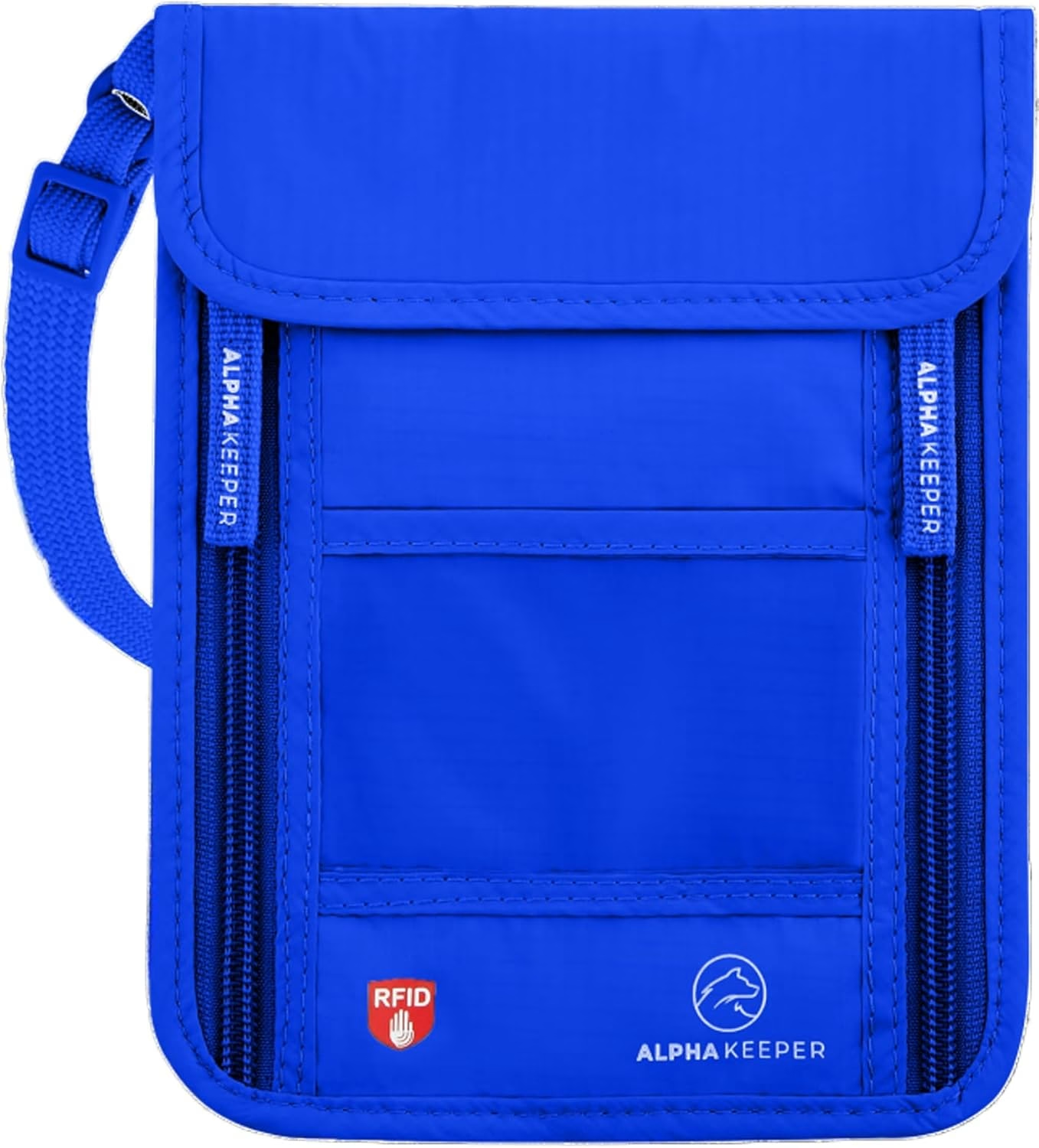
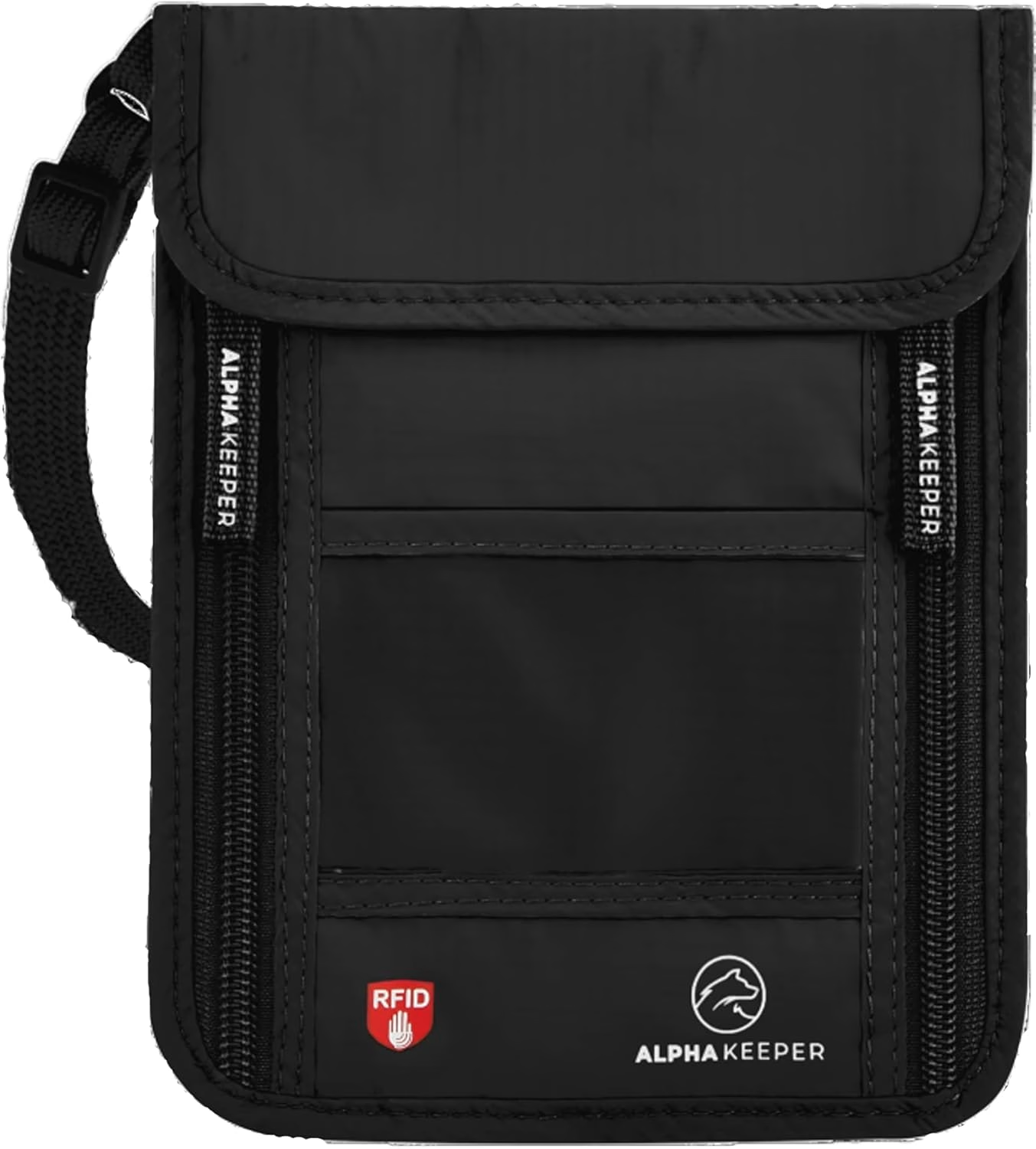
A neck wallet hangs under your shirt on an adjustable cord and works best for travelers who move between venues frequently — it's fast to access in a restroom or private moment. A money belt sits flat against your waist under a waistband and is nearly impossible to access without your knowledge, making it the stronger choice for chaotic environments like busy markets or festival crowds. Both options from Alpha Keeper use RFID-blocking fabric that stops contactless card skimming — a threat that's grown sharply with the global expansion of tap-to-pay infrastructure in 2026. The Black RFID Neck Wallet is a clean, low-profile choice for urban travel, while the Black RFID Travel Money Belt | Hidden Travel Gear sits flat enough under jeans or travel pants that it's genuinely invisible.
RFID Protection: Why Physical Splitting Alone Isn't Enough
Splitting cash is only half the equation. Modern contactless cards — Visa, Mastercard, and transit cards — broadcast signals up to 10 cm, and a reader disguised as a phone or scanner can lift card data in a crowd without ever touching you. In 2026, with NFC payments embedded in everything from hotel keys to transit passes, the skimming surface has expanded dramatically. Every card in your hidden stash should sit inside an RFID-blocking sleeve or wallet. Alpha Keeper's MultiColor RFID Sleeve Set gives you a full set of individually color-coded sleeves — practical when you're managing multiple cards across your three stashes and need to grab the right one fast.
The Honest Comparison: RFID Neck Wallet vs. a Regular Travel Pouch
Generic travel pouches sold at airport shops are often made from thin nylon with no shielding, no reinforced cord, and zippers that can be opened silently. Alpha Keeper's neck wallets use cut-resistant cord, RFID-blocking lining tested to block 13.56 MHz signals (the frequency used by most contactless cards and passports), and a slim profile that doesn't create a visible chest bulge under a t-shirt. The trade-off is that a neck wallet isn't instant-access — you shouldn't be fishing under your shirt at a coffee counter. That's exactly why the 3-stash system works: the neck wallet holds your backup, not your daily spend.
Practical Scenarios: Where to Keep What
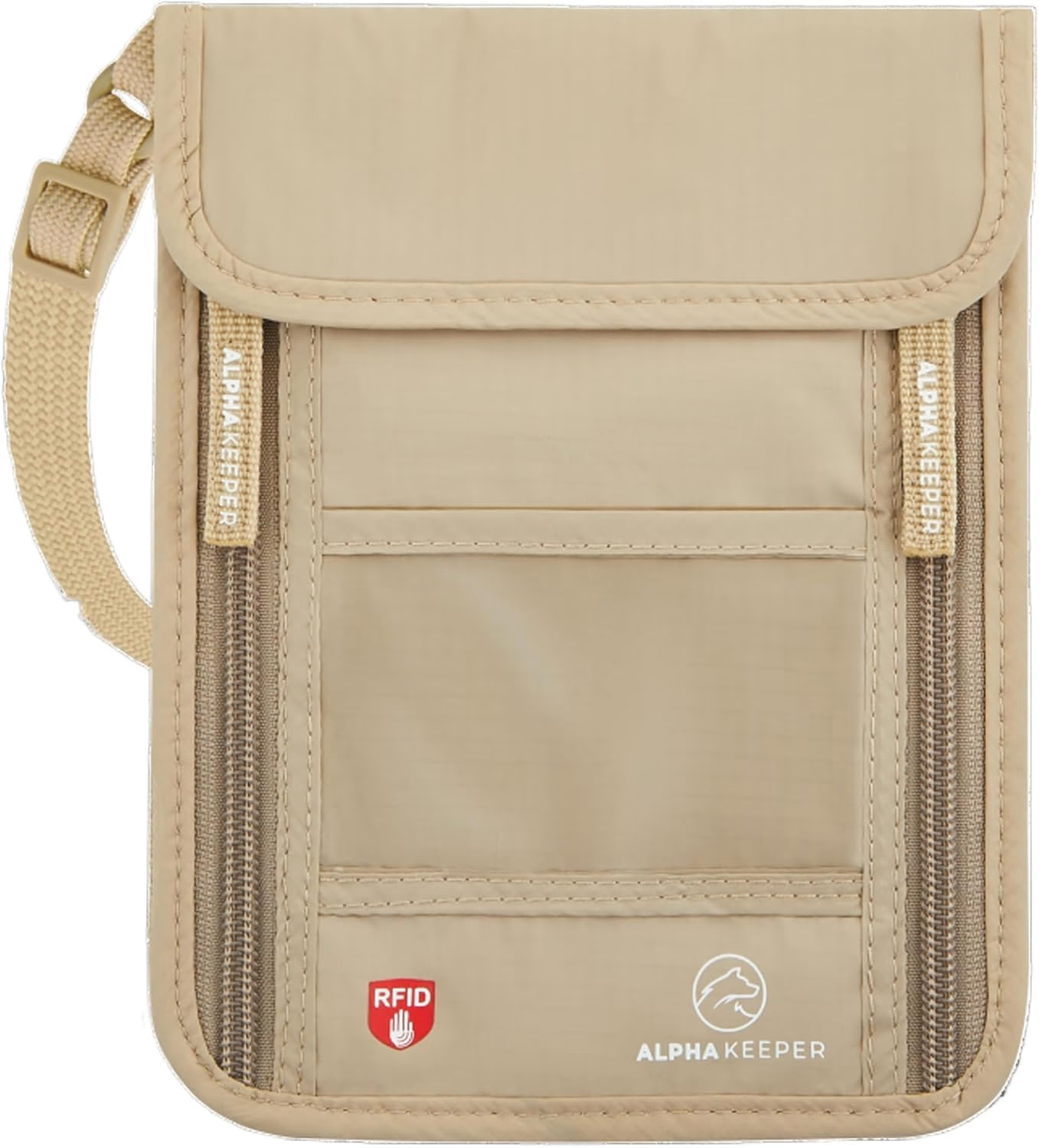
Beach day: leave your passport and backup card at the hotel, carry only a waterproof card sleeve with one card and small cash. City walking tour: sacrifice wallet in front pocket, neck wallet under shirt, hotel safe locked. Overnight bus or train: money belt under clothing, absolutely nothing valuable in overhead bags or seat pockets. Airport: wear your money belt through security (it won't trigger metal detectors), shift your passport temporarily to your hand, then return it to the belt. The Beige RFID Neck Wallet is a strong pick for travelers who also need luggage tag functionality — it ships with two RFID-blocking luggage tags, useful for identifying bags without exposing your home address to a scanner.
Emergency Cash: The Denominations That Actually Help You
Don't stash a single $100 bill as your emergency fund — in many countries, large-denomination foreign currency is difficult or impossible to break, and you'll lose 10–15% to unfavorable exchange rates at tourist traps. Instead, carry your emergency reserve as a mix: two $50 USD bills (or equivalent in euros, which are accepted widely across Europe, North Africa, and parts of Asia), plus some local currency in small denominations. Keep this in your neck wallet or money belt — never in your main wallet. The goal of emergency cash isn't daily spending; it's covering a taxi to a consulate, a last-minute hotel night, or a replacement SIM card when everything else goes wrong.
Frequently Asked Questions
How much cash should I carry on my person when traveling?
Carry only one day's expected spending — typically $20–$50 USD equivalent — in your accessible 'sacrifice' wallet. Keep your main backup cash ($150–$200) in a hidden neck wallet or money belt under clothing, and leave 20–30% of your total budget locked in your accommodation.
Do RFID-blocking wallets and neck wallets actually work against card skimming?
Yes, when they use proper shielding material. Effective RFID blocking covers the 13.56 MHz frequency used by contactless payment cards and passports. Alpha Keeper's RFID neck wallets and money belts use tested shielding fabric that blocks this frequency, preventing remote reading of your card data even in crowded environments.
Is a money belt or a neck wallet better for splitting travel money?
It depends on your itinerary. A money belt (worn under a waistband) is more secure in chaotic, high-theft environments like markets and festival crowds because it's almost impossible to access without your knowledge. A neck wallet offers faster access and is better for travelers who frequently need their backup documents. Many experienced travelers carry both and assign different stashes to each.
Ready to upgrade?
Ready to build your backup system? The Black RFID Travel Money Belt | Hidden Travel Gear lies completely flat under any waistband and blocks contactless skimming — pair it with a MultiColor RFID Sleeve Set to color-code your cards across all three stashes, and you're set before your next boarding call.